Breeding Silkie chickens is more than putting a hen and a rooster together. You need healthy birds with strong bodies and good feathers. This can help you raise healthy chicks with the features you want.
Silkies have soft fluffy feathers and a gentle nature. Many Silkie hens also like to sit on eggs and care for their chicks. This makes them a good choice for people who want to hatch chickens at home. However their fluffy feathers and small bodies need extra care during breeding.
Start by choosing healthy hens and roosters. Keep the right number of hens with one rooster and give them a safe place to live. When the hens lay eggs you can collect them and check if they are ready for hatching. Good care will help keep the adult birds and their chicks healthy.
This guide will show you how to choose and pair Silkie chickens. You will also learn how to collect fertile eggs and care for hens and chicks during hatching.
How to Choose Healthy Silkie Hens and Roosters for Breeding
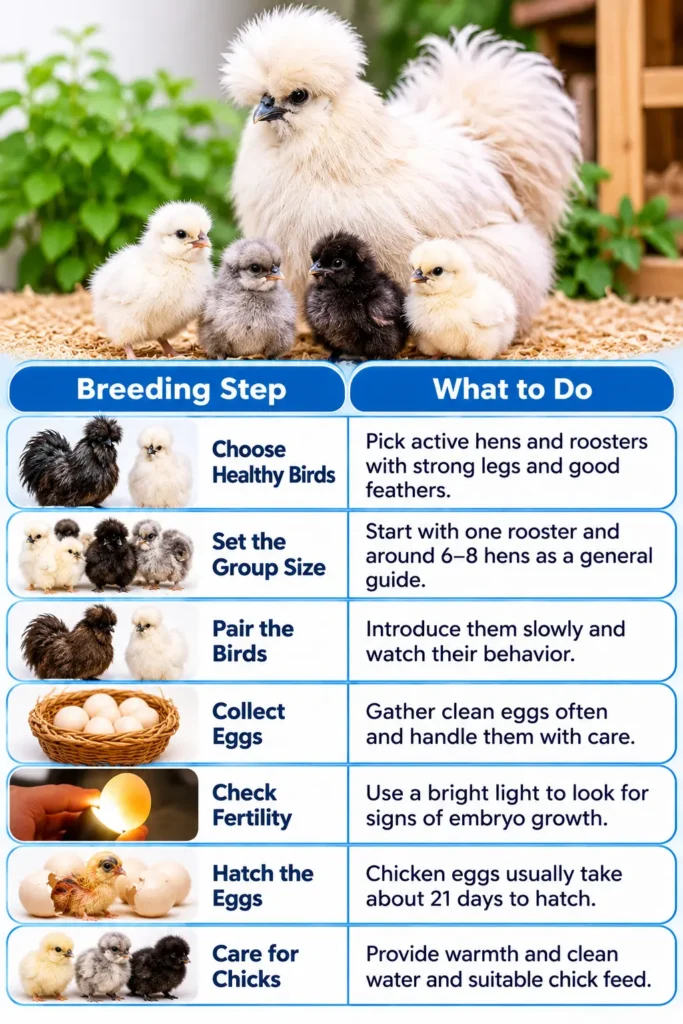
Choosing healthy birds is the first step in Silkie breeding. Healthy parents can help produce strong chicks. Pick hens and roosters that are active and in good shape. They should walk well and eat and drink normally.
Check each bird before adding it to your breeding group. Look for clear eyes and clean nostrils. Check the legs and feet for swelling or cuts. Make sure the toes look healthy and the bird can stand and walk without trouble. Its feathers should look clean and full. Avoid birds with large bald spots or signs of mites and lice.
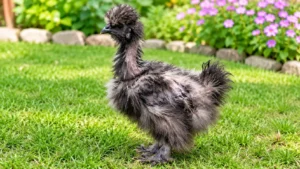
Silkies have special features that make them easy to spot. They have soft fluffy feathers and feathered legs. They also have five toes on each foot. If you want to raise purebred Silkies then choose birds with these features. Look for good body shape and healthy feathers too.
Do not breed chickens with serious health problems or body defects. Do not choose a bird only because it has a nice color. Good health should always come first. Try to choose birds from different family lines. This can help lower the risk of health problems caused by close breeding.
Before breeding season starts:
- Check both birds for mites and lice.
- Make sure they have a healthy weight.
- Watch how they walk.
- Check their feet and toes.
- Keep sick or weak birds out of the breeding group.
Healthy parents give you a good start when raising strong Silkie chicks.
What Is the Best Hen-to-Rooster Ratio for Silkie Chickens?
The right number of hens for one rooster helps keep the flock calm. A good starting point is one rooster for every 6 to 8 hens. This number can change from one flock to another. It depends on the rooster’s age and health and how the birds behave.
For a small Silkie flock you can start with one healthy rooster and several hens. Watch the birds to make sure the rooster does not hurt the hens. Some roosters mate more often than others. Too much mating can damage the feathers on a hen’s back and neck.
Keeping too many roosters in a small space can also cause problems. They may fight over the hens or try to control the same space. This can lead to stress and injuries. If you keep more than one rooster make sure they have enough room. Keep extra roosters in a separate pen if they fight or bully other birds.
Watch for these signs that a hen is getting too much attention:
- Missing or broken feathers on her back.
- Scratches on her skin.
- Hiding from the rooster.
- Looking tired or stressed.
- Getting chased or mounted too often.
Give your birds enough space to move around and rest. Provide fresh water and good feed every day. A calm flock helps keep your hens safe and healthy during breeding.
How to Pair Silkie Hens and Roosters for Breeding
Pairing Silkie chickens takes time and care. Do not put a new rooster with the hens right away and leave them alone. New birds may fight or feel scared while getting used to each other.
First keep the rooster in a separate pen near the hens. This lets them see and hear each other without touching. Watch them for a few days. If they stay calm you can let them meet for a short time in a safe place. Stay nearby while they get used to each other.
When the birds seem comfortable you can put them together in the breeding pen. Watch them closely for the first few days. Some chasing and mating behavior is normal. But do not allow the rooster to attack or hurt the hens.
During mating the rooster climbs onto the hen’s back. He then brings his body close to hers so the sperm can enter her body. The sperm may then fertilize the eggs as they develop.
Silkies have thick and fluffy feathers. These feathers can sometimes make mating harder. Watch the birds to make sure they can mate properly. If you are not sure then ask an experienced chicken keeper or a vet for help.
Keep the breeding pen clean and dry. Add soft bedding and low nesting boxes. Silkies are not good flyers so low nests are easier for them to reach. Keep aggressive birds apart and give stressed hens a quiet place to rest.
How to Collect and Check Fertile Silkie Chicken Eggs
A hen can lay eggs without a rooster. But these eggs will not hatch into chicks because they are not fertile. When a rooster mates with a hen his sperm can join with the egg inside her body. The egg then gets a shell before the hen lays it.
Collect eggs from the nest every day. Choose eggs with clean and strong shells. Do not use eggs that are cracked or very dirty. Do not wash eggs that you plan to hatch. Washing can remove the natural coating that protects the shell.
If you are not ready to put the eggs in an incubator then keep them in a cool place. Keep them away from sunlight and sudden changes in temperature. Try to place them in the incubator within 7 days. This can help improve the chance of hatching.
How to Check Eggs With Candling
Candling means using a bright light to look inside an egg. You can use an egg candler or a strong flashlight in a dark room. Hold each egg gently and do not keep it away from the incubator for too long.
Check the eggs after 5 to 8 days of incubation. A growing chick may show small blood lines and a dark spot inside the egg. If the egg looks clear it may not be fertile. The chick may have also stopped growing. If you are not sure then check the egg again after a few days.
Chicken eggs usually take about 21 days to hatch. The time may be a little different for some eggs. Write down the day you start incubation so you know when the chicks may hatch.
How to Care for Silkie Hens During Breeding and Hatching
A Silkie hen needs good care when she is laying eggs and getting ready to hatch chicks. Give her good chicken feed with enough protein and nutrients. Make sure she has clean water every day. Good food helps her stay healthy and strong.
Keep her nest clean and dry. Choose a quiet place where other chickens cannot bother her. Add fresh bedding to make the nest soft. Keep rats and other animals away. A safe nest helps the hen sit on her eggs without stress.
Caring for a Broody Silkie Hen
Silkie hens often have a strong desire to sit on eggs. A hen that wants to hatch eggs is called broody. She may spend most of the day in her nest. She will leave for short times to eat and drink. Hen may also puff up her feathers and make warning sounds when someone comes near her nest.
When your Silkie hen becomes broody you can place some fertile eggs under her. Make sure she can cover all the eggs with her body. A small hen may not be able to keep too many eggs warm. Around 6 to 10 eggs may work for many Silkie hens. The right number depends on the hen’s size.
Keep food and water close to the nest. Check that she leaves the nest every day to eat and drink. Watch her weight and health because some hens may not eat enough while sitting on eggs.
Caring for Newly Hatched Silkie Chicks
After the chicks hatch keep them in a warm and dry place. If the mother hen is caring for them then give them a safe area to stay together. Keep other chickens away if they may hurt the chicks.
If the mother hen is not raising them then use a brooder. A brooder is a warm place for young chicks. It should have dry bedding and enough space for them to move around. Give them chick starter feed and clean water in a shallow drinker.
Follow these simple care tips:
- Keep the chicks warm and away from cold air.
- Change wet or dirty bedding.
- Give them fresh water every day.
- Feed them good chick starter feed.
- Keep cats and other animals away.
- Watch for weak chicks or signs of illness.
Young Silkies need extra care because their fluffy feathers can get wet easily. Keep them dry and check them every day. Good care during their first weeks will help them grow strong and healthy.
Common Silkie Breeding Problems to Watch For
Even with good care some breeding problems can happen. A hen may not accept a rooster. A rooster may also show little interest in the hens. Stress and poor health can affect breeding too.
Some eggs may not be fertile. This can happen if the rooster does not mate properly or the hens are not healthy. Hot weather and poor food can also cause problems. If many eggs do not hatch then check the health of your birds and their living space.
Watch for feather loss as well. A rooster may pull or break a hen’s feathers during mating. Check your hens for bare spots and skin injuries. If a hen gets hurt then keep her away from the rooster until she heals.
Other breeding problems include:
- Dirty or cracked eggs.
- Eggs that stop growing during incubation.
- Hens that leave their nests too often.
- Roosters that fight with other birds.
- Chicks that become cold or weak after hatching.
Keep a record of your breeding group. Write down which hens you pair with each rooster. Also note when you collect the eggs and how many chicks hatch. These records can help you see what works best and plan your next breeding season.
Final Thought
Silkie chicken breeding starts with healthy hens and roosters. Choose birds with strong bodies and good feathers. Keep enough hens with one rooster. Watch your chickens for signs of stress or injury.
Collect clean eggs and check them while they are hatching. Give broody hens a quiet place to sit on their eggs. Make sure they have good food and fresh water. Keep new chicks warm and safe.
Good care can help you raise healthy Silkie chicks. Take your time and check your chickens every day.