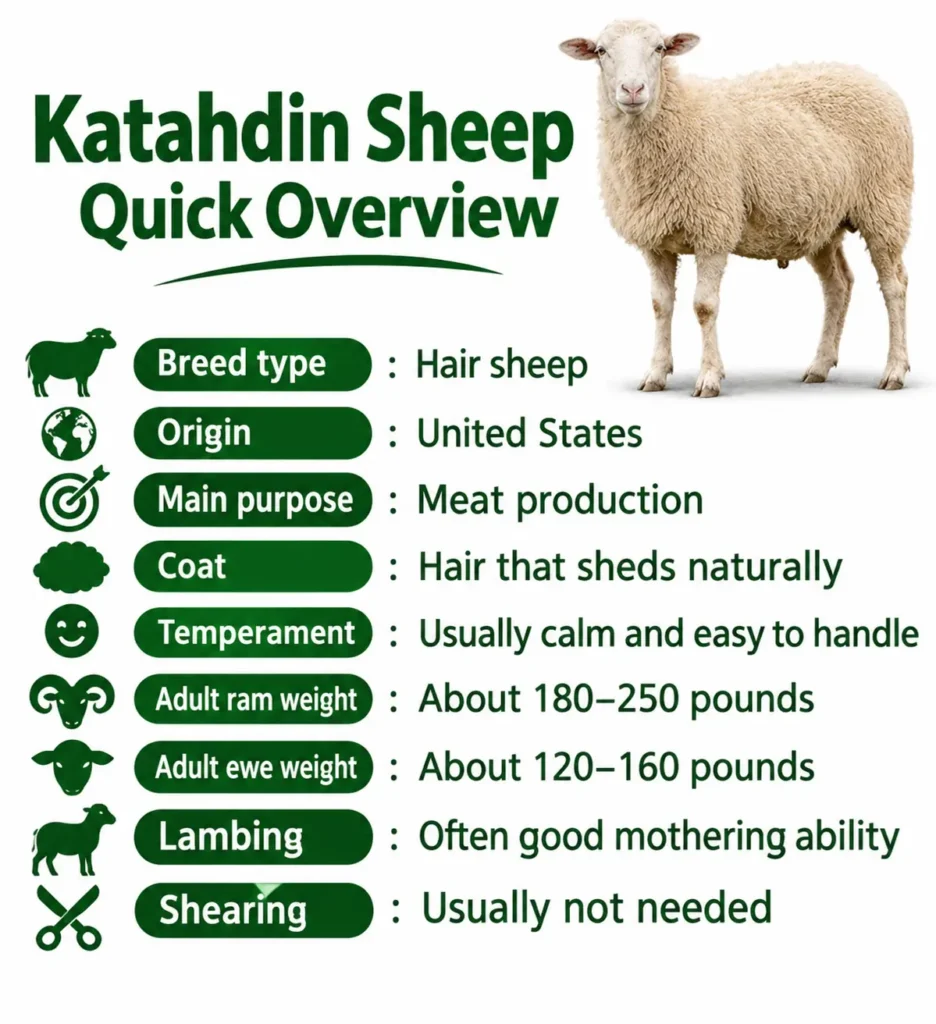
Katahdin sheep are a popular hair sheep breed raised for meat in the United States. They have a coat that sheds on its own as the weather gets warmer. Farmers do not need to shear them like wool sheep. They can also live in different types of weather.
These sheep were developed in the United States for meat production and easy care. They are known for raising healthy lambs and caring for their young. Their calm nature makes them a good choice for small farms and large farms.
Katahdin sheep still need good daily care. They need fresh water and good pasture. They also need proper minerals and a dry place to rest. Farmers should check them for worms and hoof problems to keep them healthy.
This guide explains the history and appearance of Katahdin sheep. It also covers their size and behavior along with feeding and breeding. You will learn how to care for them at every stage of life.
What Is a Katahdin Sheep?
Katahdin is a medium-sized sheep breed raised mainly for meat. It is a good choice for farmers who want to raise sheep without shearing wool every year. Its coat gets thicker in cold weather and sheds when the weather gets warm.
Many American farmers like this breed because it can live in different climates and graze on pasture. Katahdin sheep are also good mothers and can handle some common sheep parasites better than many other breeds. Good food and proper care still help keep them healthy.
Katahdin sheep are not raised for wool. Farmers mainly raise them for their meat and healthy lambs. They can be a good fit for both small farms and large farms.
History and Origin of Katahdin Sheep
The Katahdin sheep breed started in Maine in the United States. In the late 1950s a farmer named Michael Piel brought hair sheep from the Caribbean to his farm. He wanted to create a meat sheep that did not need regular haircuts.
Piel bred these sheep with British sheep breeds. He mainly used Suffolk sheep to help improve their size and meat quality. The Caribbean sheep passed on their hair coats and ability to live in different conditions. The British sheep helped improve body size and muscle growth.
In the 1970s Piel also added Wiltshire Horn sheep to his breeding work. This helped improve their body size and meat shape. After years of careful breeding he named the new breed after Mount Katahdin in Maine.
After Piel died in 1976 other farmers continued to raise and improve the breed. In 1985 a breed group was formed to support Katahdin sheep and keep track of their bloodlines. Today these sheep are raised across North America and in other parts of the world.
Katahdin Sheep Appearance and Physical Characteristics
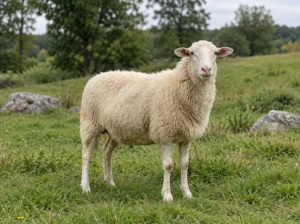
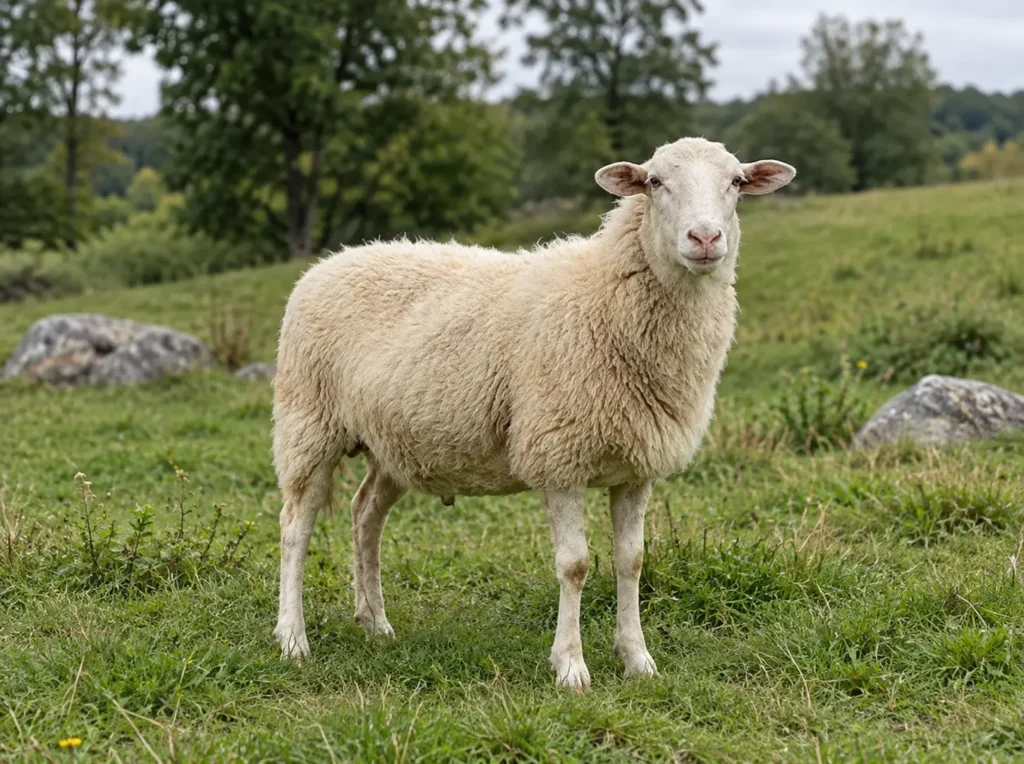
Katahdin sheep have strong bodies and good muscles. They are medium-sized sheep with wide backs and strong legs. Their bodies are made for meat production rather than wool.
Their coat is one of their best features. It can be white or have brown and black colors. Some sheep have spots or a mix of colors. Their coat has hair and a soft layer underneath. It gets thicker in cold weather and falls off when the weather gets warmer. This means most Katahdin sheep do not need shearing.
Katahdin sheep have alert faces and ears that point outward. They should have strong straight legs so they can walk and graze with ease. Many Katahdins are born without horns. Some may have horns.
When choosing a Katahdin sheep look for a strong body and healthy feet. Check its coat and legs as well. Do not choose a sheep based only on its color. Good health and strong muscles are more important.
Katahdin Sheep Size and Weight
Katahdin sheep are medium-sized meat sheep. Their adult weight depends on their genes and the food they eat. Their age and health also play a part.
| Sheep type | Average weight |
| Ewe | 120–160 pounds |
| Ram | 180–250 pounds |
| Twin lamb at birth | About 8 pounds |
These are common weight ranges for healthy Katahdin sheep. Some sheep may be lighter or heavier.
Newborn lambs are small but they grow well when they get enough milk and good care. Ewes with twins need enough food to produce milk for both lambs. As the lambs grow they can start eating grass and other suitable feed.
A sheep’s size depends on several things. Its genes play a big part. Good food and proper health care also help it grow well. Poor feeding or illness can slow its growth.
Weigh young lambs often if you can. This helps you check their growth. If a lamb stops gaining weight then check its food and health.
Katahdin Sheep Temperament and Behavior
Katahdin sheep are usually calm and easy to handle. They like to stay with other sheep but may not stick together as closely as some wool sheep. Their gentle nature makes them a good choice for small farms and new sheep owners.
Handle them slowly and calmly. Do not chase them or make sudden moves. Guide the flock with safe gates and strong fences. Sheep feel safer when you handle them with care.
Mother sheep may become protective when they have lambs. Give them enough space and let them care for their young. Rams may become more active during breeding season so always handle them with care.
If you are new to raising sheep start with a small group of healthy ewes. Learn how to feed them and check their feet and body condition. Keep a separate space for sick sheep and new animals.
Katahdin Sheep Meat Production
Katahdin sheep are mostly raised for meat. Their meat is lean and has a mild taste. Many farmers raise them to sell lamb meat at local markets or to provide food for their families.
Katahdin lambs can grow well on good pasture. Some farmers also give them extra feed to help them grow. Many farmers sell Katahdin lambs when they weigh around 95 to 115 pounds. The best weight depends on what local buyers want.
Farmers also use Katahdin sheep for crossbreeding. They can pass their hair coat and good mothering traits to other sheep. The young sheep may have different features based on the other breed.
Before raising Katahdin sheep for meat check what local buyers need. Some buyers may want heavier lambs while others may prefer younger ones. Keep a record of each lamb’s birth date and weight. This will help you know when it is ready to sell.
Katahdin Sheep Feeding and Nutrition
Good food helps Katahdin sheep grow strong and stay healthy. They can get most of their food from fresh grass when good pasture is available. They also need clean water and minerals made for sheep.
When grass becomes scarce or loses its quality give your sheep good hay. Pregnant ewes need extra food to support their growing lambs. Ewes carrying twins may need more energy and protein than those carrying one lamb. Young lambs also need enough food to grow strong and healthy.
A good feeding plan should include:
- Fresh grass or clean hay.
- Clean water every day.
- Minerals made for sheep.
- Extra feed when grass is not enough.
- More food for pregnant and nursing ewes.
Do not give sheep mineral made for cattle unless it is safe for sheep. Too much copper can harm them. Keep their food clean and dry. Make any changes to their diet slowly.
Check your sheep’s body weight and condition often. A thin sheep may need more food or a health check. An overweight sheep may need less feed. Ask a vet for help if you are unsure about the right amount of food for your flock.
Katahdin Sheep Breeding and Lambing
Katahdin sheep are good at breeding and caring for their lambs. Young ewes may become ready to breed early. However they should be fully grown and healthy before mating. Rams also need to be strong and healthy.
Katahdins can breed during a longer part of the year than some other sheep breeds. This gives farmers more choices when planning for lambing. Many adult ewes have twins. Some may have three or even four lambs.
A ewe stays pregnant for about 147 days. During this time give her good food and a clean place to rest. Watch her closely as the birth date gets near.
Most Katahdin ewes can give birth without help. They are usually good mothers and provide milk for their lambs. After birth make sure each lamb can stand and drink the first milk from its mother. This milk is called colostrum. It helps protect newborn lambs from illness.
Write down each lamb’s birth date and weight. Also record how many lambs each ewe has. These notes can help you choose healthy sheep for future breeding.
Katahdin Sheep Health Problems and Disease Prevention
Katahdin sheep can fight off some worms better than many other sheep breeds. But they can still get worms and other health problems. Keep their pasture clean and check your sheep often.
Worms can cause weight loss and slow growth. They may also make the inside of the eyelids look pale. Check your sheep for signs of weakness. Ask a vet about testing and the right treatment. Do not use deworming medicine too often because worms can become harder to treat.
Wet and dirty ground can also cause foot problems. Keep the resting area clean and dry. Check your sheep’s feet for swelling or a bad smell. Trim their hooves when needed.
Watch for these signs of illness:
- Not eating or drinking.
- Losing weight or feeling weak.
- Limping or sore feet.
- Coughing or hard breathing.
- Loose or unusual droppings.
- Pale eyelids or dull fur.
Ask a vet to help plan health checks and vaccines. Keep new sheep away from your flock for a short time before adding them. This can help stop diseases from spreading.
Katahdin Sheep Housing and Daily Care
Katahdin sheep do not need a large barn. They need a dry shelter that keeps them safe from heavy rain and strong winds. Their coat helps them stay comfortable in different weather. Young lambs and sick sheep may need extra care during cold weather.
A strong fence keeps sheep safe from predators and stops them from wandering away. Check the fence and gates often for damage. Give your sheep enough pasture to eat and move around. Rotational grazing gives the grass time to grow back and can help lower the risk of worms.
Keep the resting area clean and dry. Remove wet bedding and add fresh bedding when needed. Make sure every sheep has easy access to food and fresh water.
Check your sheep every day:
- Count your sheep to make sure none are missing.
- Watch how they walk.
- Make sure they are eating well.
- Look for signs of injury or illness.
- Check that their food and water are clean.
Katahdin Sheep Lifespan and Growth Stages
Katahdin sheep can live for about 10 to 12 years with good care. However some sheep may stop breeding at a younger age. This depends on their health and how well they can raise lambs.
Lambs grow fast during their first few months. They drink their mother’s milk at first. Later they start eating grass and other food. As they grow they become stronger and learn to live without their mother.
A healthy ewe can stay in the breeding flock for many years. Farmers should check her teeth and feet as she gets older. This helps make sure she can eat well and move without pain.
Good food and fresh water help lambs grow strong. Keep their living area clean and protect them from parasites and bad weather. Good daily care will help your Katahdin sheep stay healthy as they grow.
Katahdin Sheep Cost and Where to Buy
The price of Katahdin sheep depends on their age and quality. It also depends on where you buy them. Young lambs usually cost less than adult breeding sheep. A healthy ewe or ram with good breeding history may cost more.
Prices can be different from one farm to another. Check prices from a few local sheep breeders before you buy. Ask if the sheep are registered or just sold as Katahdin sheep.
Before buying a sheep check these things:
- Make sure its eyes are clear.
- Check that its coat looks healthy.
- Watch it walk to see if it has any leg problems.
- Ask about its age and health.
- Check its teeth and body condition.
- Ask about its parents if you want a breeding sheep.
- Look for signs of worms or other health problems.
Buy from a seller who knows about their sheep. You can also ask a vet or an experienced sheep farmer to check the animal before you buy it.
Final Thought
Katahdin sheep are a good choice for farmers who want strong meat sheep that do not need regular shearing. Their coats fall off naturally when the weather gets warm. They are also good mothers and are usually calm and easy to care for.
Good grass and fresh water help keep them healthy. Farmers should check their sheep for worms and foot problems. They should also give extra feed when needed. Good breeding and daily care can help raise strong lambs.
With proper care Katahdin sheep can do well on small farms and large farms.