A baby Highland cow is one of the cutest farm animals in the world. It is soft. It is small. It has a thick fluffy coat. It has a calm face and a sweet look that makes people love it at first sight. A baby Highland cow is also called a Highland calf. This calf belongs to the Highland cattle breed. This breed comes from Scotland. Highland cattle are known for their long hair. They are also known for their strong body and calm nature.
A baby Highland cow may look like a small fluffy pet. But it is still a real farm animal. It needs good care. It needs fresh water. It needs safe fencing. It needs clean bedding. It also needs a good mother or a good feeding plan if it is bottle fed. Many people want baby Highland cows because they look cute in photos. But before buying one it is important to know how they live and grow.
Baby Highland cows are not just cute animals. They are strong young cattle. They can grow into healthy cows or bulls if they get the right care. They can live for many years. A Highland cow can often live around 15 to 20 years. Some cows can keep having calves for many years. This makes the breed special for small farms and family farms.
In this guide you will learn what a baby Highland cow is. You will also learn about its size. Its weight. Its look. Its fluffy coat. It’s food. It cares. Its nature. Its growth stages. Its price. You will also learn if a baby Highland cow is good for a small farm.
A baby Highland cow is the young calf of Highland cattle. People often call it a baby Highland cow because the name sounds cute and easy. The correct farm word is calf. A female baby is called a heifer calf. A male baby is called a bull calf. Both can have the same fluffy look when they are young.
Highland cattle are an old cattle breed from Scotland. They were made strong by cold weather. They lived in rough land. They learned to eat grass and rough plants. This is why Highland cattle are known as hardy cattle. Hardy means strong and able to live in tough weather.
A baby Highland cow is usually born with soft hair. It can be red. It can be black. It can be yellow. It can be white. It can also be dun or silver. Red is the most common color. Many baby Highland cows have a teddy bear look because their hair is thick around the face and body.
A baby Highland cow stays close to its mother in the first weeks of life. The mother helps keep it warm. The mother gives it milk. The first milk is very important. This first milk helps protect the calf from sickness. A healthy calf will stand soon after birth and start drinking milk.
Many people love baby Highland cows for their sweet look. But they are not toys. They need farm care. They need space to move. They need other animals near them because cattle like to live in a herd. A baby Highland cow feels safer when it has its mother or other cattle around it.
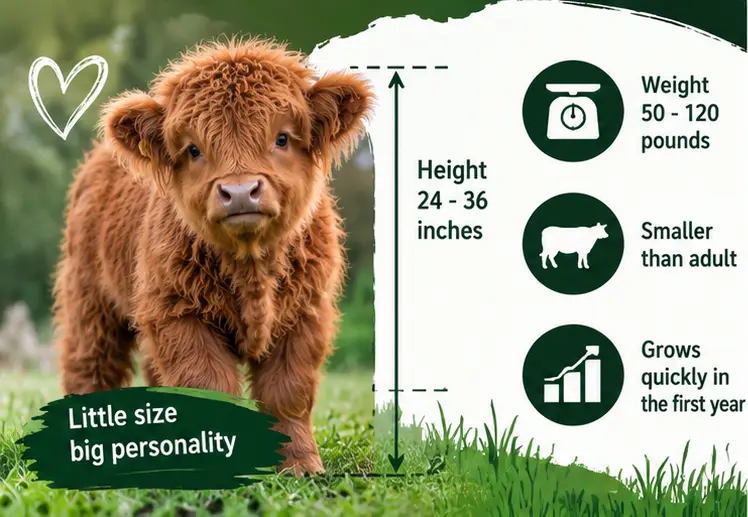
A newborn baby Highland cow is small when you compare it with many other large cow breeds. It looks soft and cute at birth. Its body is small but strong. Its legs may look thin at first but they are made to help the calf stand and walk soon after birth.
A baby Highland cow is often close to the size of a large dog when it is born. This makes it look very small beside its mother. The mother is much bigger and keeps the baby safe and warm.
The average birth weight of a baby Highland cow is usually about 65 to 70 pounds. Some calves can be a little lighter. Some calves can be a little heavier. This is normal because every calf is different. The weight of a baby Highland cow can depend on many simple things. It can depend on the size of the mother. It can depend on the health of the mother. It can also depend on food and family line. A healthy mother can help the calf start life with a good body weight.
In the first few days a baby Highland cow sleeps a lot. It also drinks milk many times a day. This milk helps the calf grow stronger. A healthy calf should try to stand soon after birth. It may look weak at first but it starts to gain strength quickly. The baby needs its mother in the first days. The mother gives milk. The mother also keeps the calf safe. The calf stays close to its mother and slowly learns how to walk better.
A baby Highland cow grows fast during the first few months. Milk is the main food at the start. After some time the calf starts to taste grass and hay. This helps the baby learn how to eat like a grown cow. As the calf grows it becomes more active. It may run in the field. It may jump and play with other calves. Its body becomes stronger. Its legs become better for walking and running.
A full grown female Highland cow can weigh around 900 to 1300 pounds. Some females may be smaller. Some may be bigger. The final weight depends on care food health and family line. Female Highland cows are strong animals. They are also known as good mothers. They can take care of their babies well when they are healthy and safe.
A full grown male Highland cow is called a bull. A Highland bull can weigh around 1300 to 1800 pounds. Some bulls can grow even heavier. Male Highland cattle are much bigger than baby calves. This is why a buyer should always remember that a cute baby Highland cow will not stay small forever.
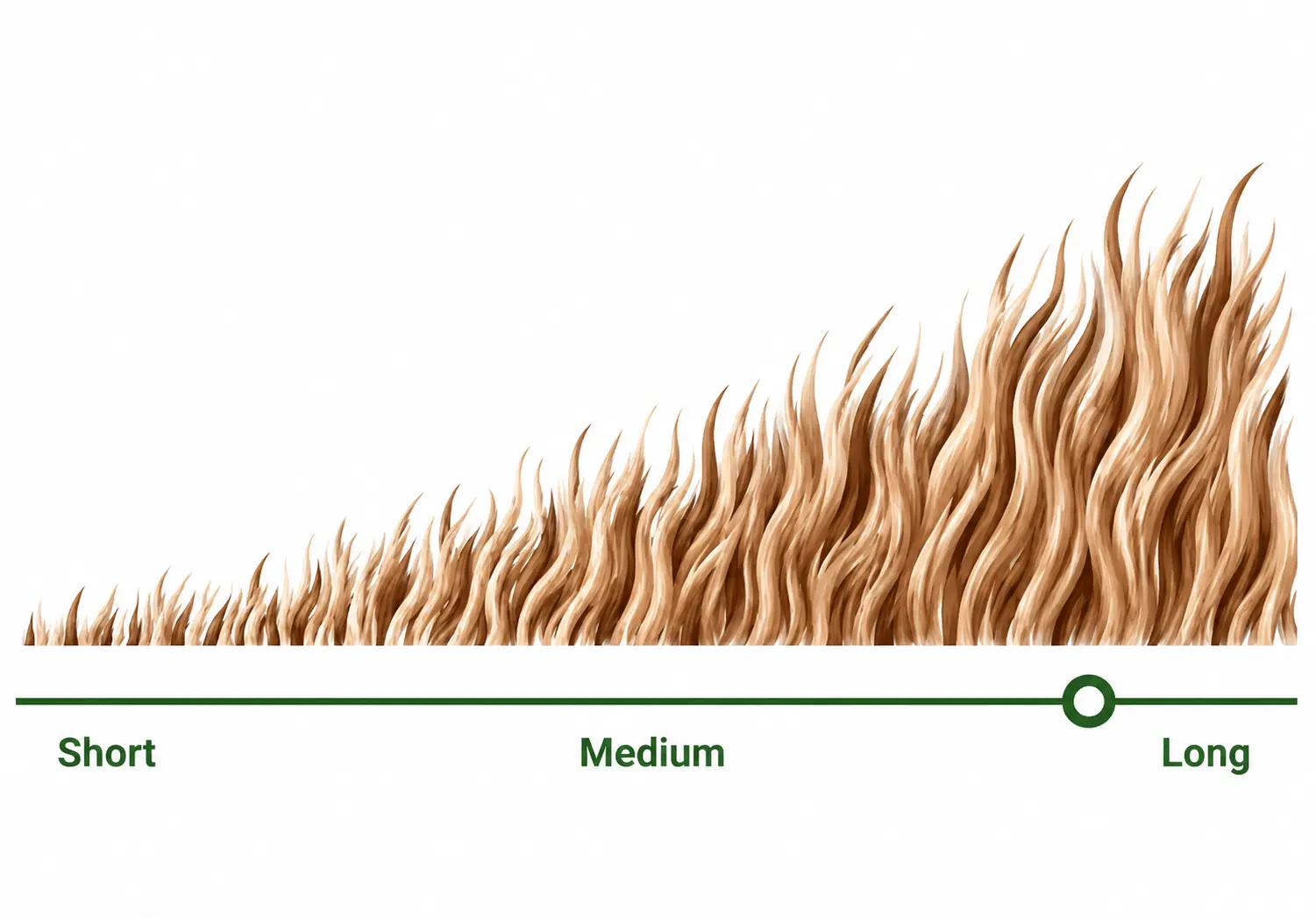
Highland cattle often look bigger because of their thick long hair. Their fluffy coat makes their body look round and heavy. This is one reason why baby Highland cows look like little teddy bears. The thick coat is not only for looks. It helps protect the calf from cold weather. It also helps keep the body warm in winter.
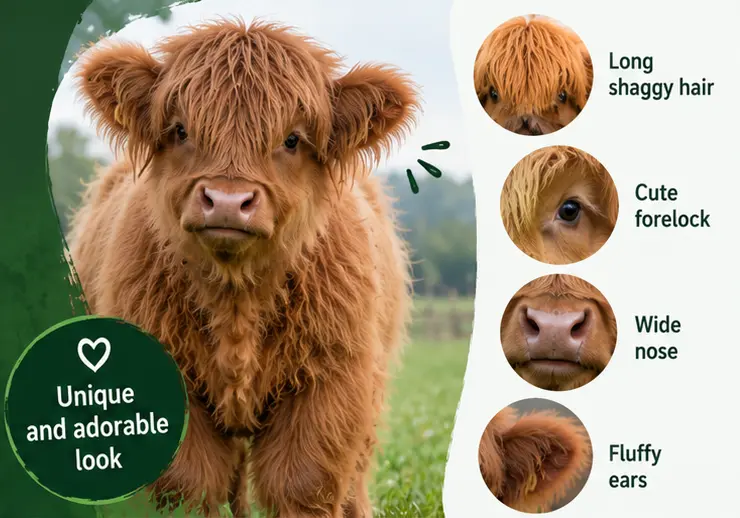
A baby Highland cow has a very cute and soft look. Its body is covered with thick hair. Its face is round. Its ears are small and furry. Its eyes often look calm and sweet. Many calves have a fluffy hair cap on the head. This hair can fall over the eyes as the calf grows.
The nose is usually wide and soft looking. The legs are short and strong. The body is compact. The tail has hair on the end. The whole calf looks like a small living teddy bear. This look is one big reason why baby Highland cows are popular on farms and online.
The coat color can be different from calf to calf. The most loved color is red or ginger. But Highland calves can also be black. They can be yellow. They can be white. They can be silver. They can be brindle. The color may also look lighter or darker as the calf grows.
Baby Highland cows do not have big horns at birth. Horns grow slowly over time. Small horn buds may appear later. Both male and female Highland cattle can grow horns. The horns become more clear as the animal gets older. Horn shape depends on sex and bloodline.
The hair around the face is called the forelock by many cattle people. It helps protect the eyes from wind. It can also help keep flies away. This long front hair is one of the most special parts of a Highland cow look.
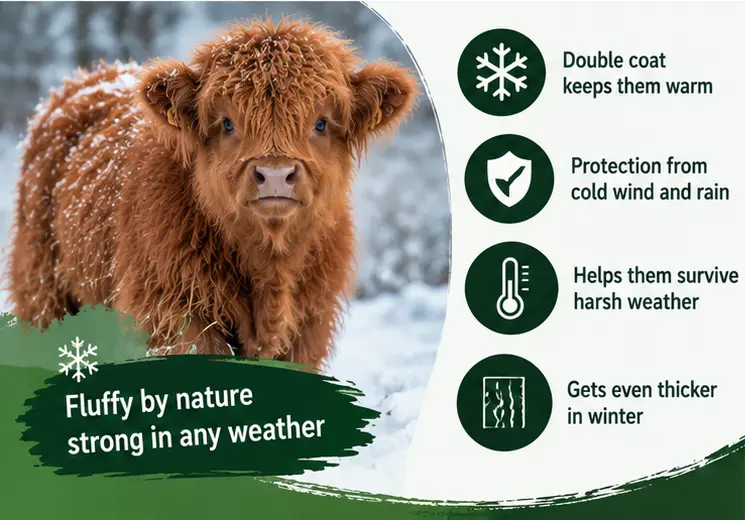
Baby Highland cows are fluffy because Highland cattle have a special coat. The coat has a long outer layer and a soft inner layer. The outer hair helps block rain and wind. The inner hair helps keep the body warm. This is why Highland cattle can handle cold weather better than many other cattle breeds.
The fluffy coat is not only for beauty. It has a real purpose. Highland cattle came from cold and wet places in Scotland. A thick coat helped them live outside in hard weather. The coat works like a natural jacket. It keeps the calf warmer during cold days.
Baby Highland cows often look extra fluffy because their body is small and their hair is thick. The hair makes them look round and soft. In winter the coat may become thicker. In warmer weather the coat can look lighter and less heavy.
A fluffy coat needs care. A calf can get mud and dirt in its hair. A gentle brush can help keep the coat clean. Brushing also helps the owner check the skin. It helps find cuts. It helps find bugs. It can also help the calf become more friendly with people.
Even though Highland calves are good in cold weather they still need dry shelter. A wet and dirty sleeping area can cause health problems. A simple dry shed or barn area can help keep the calf safe and clean.
A baby Highland cow needs milk first. The most important milk is the first milk from the mother. This first milk gives the calf a strong start. It helps the body fight germs. A calf should get this first milk soon after birth.
For the first weeks milk is the main food. If the calf stays with its mother it will drink from her many times a day. If the calf is bottle fed it should get a good calf milk replacer. The amount depends on body weight and health. A vet or breeder can help make the right feeding plan.
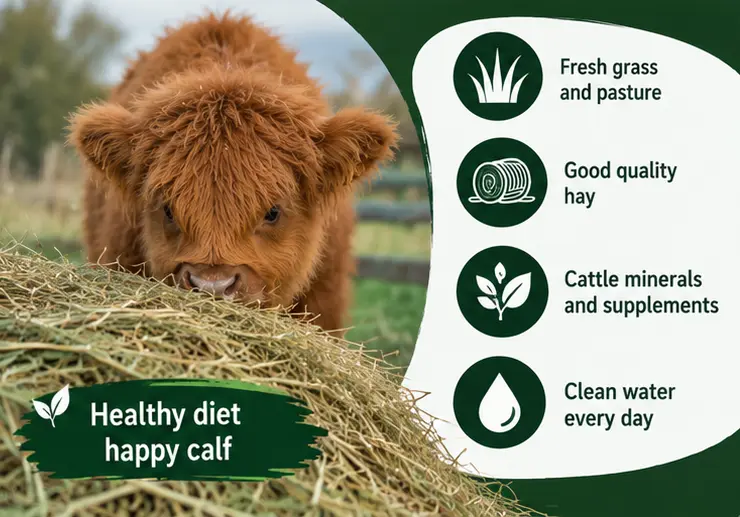
After a few weeks the calf can start trying solid food. It may nibble grass. It may chew hay. It may taste like calf starter feed. This is normal. The calf learns to eat like an adult cow over time. Fresh clean water should always be nearby.
Good hay is important when grass is not enough. Pasture grass is also important for healthy growth. Highland cattle are good at eating grass and rough plants. But a growing calf still needs enough food. Poor food can slow growth and cause weakness.
Do not give too much grain without advice. Too much rich food can upset the stomach. It can also make young cattle too fat. A simple food plan with milk first. Then hay. Grass. Water. Minerals. And a small amount of calf starter when needed is often best.
A baby Highland cow should always have clean water. Water bowls or tubs should be safe. They should not be too deep for a young calf. Dirty water can make a calf sick.
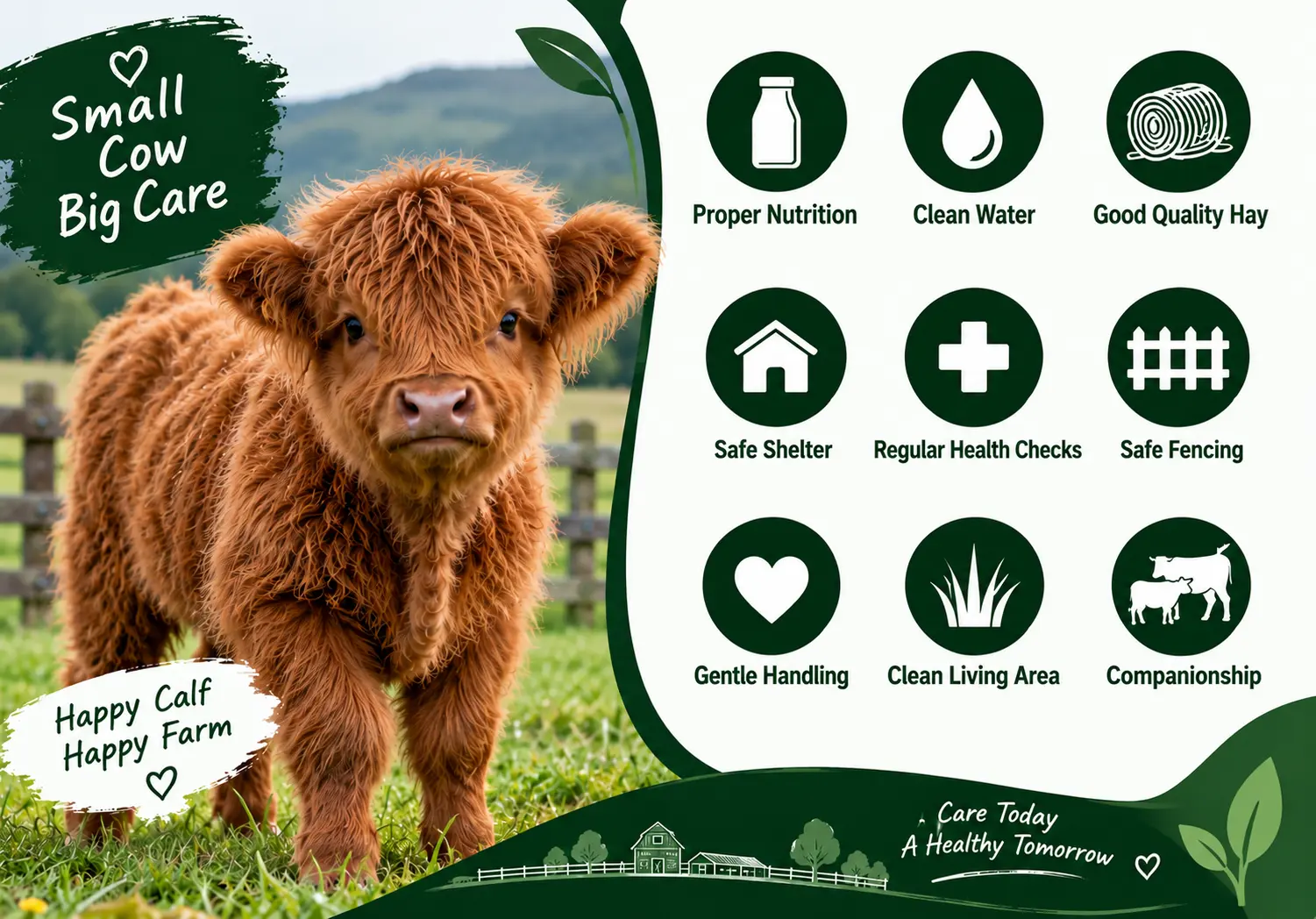
Caring for a baby Highland cow starts with a safe place. The calf needs a dry shelter. The shelter should block strong wind and heavy rain. It should have clean bedding. Straw or wood shavings can help keep the calf warm and dry.
Fencing is very important. Baby calves are curious. They can slip through small spaces. A fence should be strong and safe. There should not be sharp wire where the calf can get hurt. Gates should close well.
Daily checks are also important. Look at the calf every day. Watch how it walks. Watch how it eats. Watch if it drinks milk. A healthy calf is alert. It may play. It may stretch. It may come close to its mother. A sick calf may stop eating. It may lie down too much. It may cough. It may have runny eyes or loose stool.
A vet should help with health care. Ask a local vet about vaccines. Ask about deworming. Ask about hoof care. The right plan can be different in each area. Weather and local sickness risks can change the care plan.
Social care matters too. A baby Highland cow should not live alone if possible. Cattle are herd animals. They feel better with other cattle. If there is no other cow then another gentle farm animal can help for company. But another cow is best.
Gentle handling is very helpful. Talk softly. Move slowly. Do not chase the calf. Do not scare it. A calm start makes the calf easier to handle when it grows. Brush it gently. Let it learn that people are safe.
Baby Highland cows are often calm and sweet. The Highland breed is known for a gentle nature. Many calves are curious. They may watch people from a short distance. Some become very friendly when handled often.
A calm calf is easier to care for. It is easier to feed. It is easier to brush. It is easier to train with a halter. But every calf has its own nature. Some are shy. Some are bold. Some need more time to trust people.
The mother can affect the calf’s nature too. A calm mother often helps the calf feel safe. Highland cows are known as good mothers. They protect their calves. This is good for the calf. But people must still be careful around a mother with a new baby. Even a gentle cow can protect her calf if she feels danger.
A baby Highland cow should be handled with patience. Do not force too much too fast. Short calm visits are better than loud or rough handling. Over time the calf can learn to come near. It can learn to walk with a halter. It can learn to stand for brushing.
Children should be careful around calves. A baby calf is cute but still strong. It can jump. It can kick. It can step on its feet. An adult should always watch children near cattle.
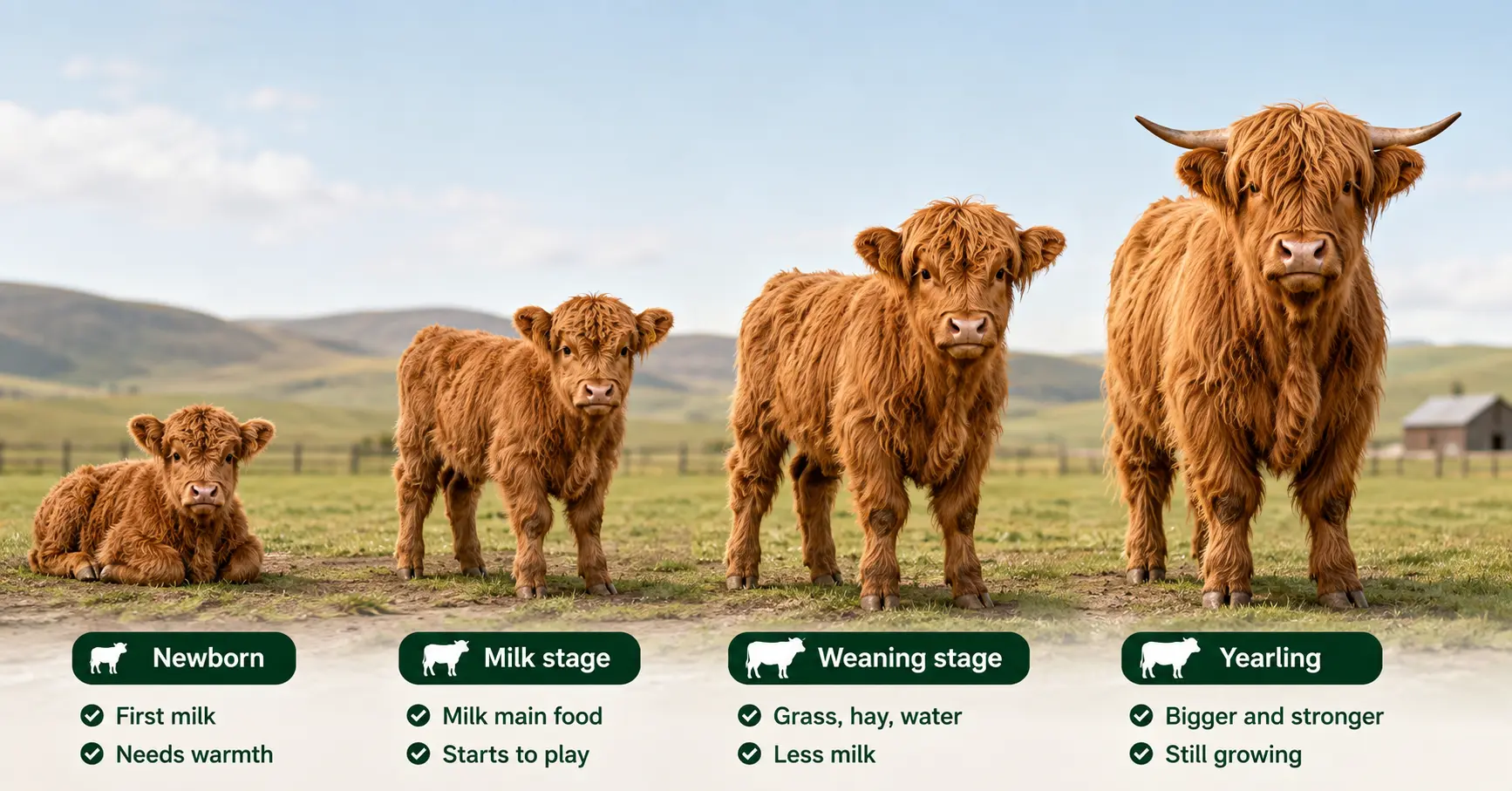
The first stage is the newborn stage. This is from birth to a few days old. The calf needs first milk. It needs warmth. It needs a clean place. It needs to stand and drink. This stage is very important for life and health.
The second stage is the milk stage. This is from the first week to a few months old. Milk is still the main food. The calf starts to move more. It starts to play. It may begin to taste grass and hay.
The third stage is the learning to eat stage. This can start around a few weeks old. The calf will chew hay and grass. It may eat calf starter feed. It will drink water. Its body starts to change so it can live more like an adult cow.
The fourth stage is the weaning stage. Weaning means the calf stops needing milk as its main food. This often happens after a few months. Some calves stay with the mother longer. Some are weaned earlier if bottle fed. The best time depends on health and farm plan.
The fifth stage is the young cattle stage. The calf is no longer a tiny baby. It grows taller and heavier. Horns may start to show more. The coat may change. The animal becomes stronger and needs more space.
The sixth stage is the yearling stage. This means around one year old. A yearling Highland is still not full grown. It is bigger and stronger but still growing. It needs good food and steady care.
A Highland cow grows slower than some fast beef breeds. This slow growth is normal. The breed is known for long life and strong body rather than fast size.
The price of a baby Highland cow can be high. In the United States a standard Highland calf may cost about 2500 to 5500 dollars. Registered calves from strong bloodlines may cost more. Mini Highland calves may also cost more because many people want them for small farms.
Price depends on many things. Age matters. A young bottle calf may cost less but needs much more care. A weaned calf may cost more because it is easier for a new owner. A heifer calf may cost more than a bull calf because she can grow into a breeding cow.
Bloodline matters too. Registered Highland calves with papers often cost more. Color can also affect interest. Very fluffy calves with a cute look can bring higher prices. Location changes price too. In some states there are fewer Highland breeders. That can make the price higher.
The buying price is only the first cost. A baby Highland cow also needs feed. Hay. Minerals. Vet care. Fencing. Shelter. Bedding. Water tubs. Grooming tools. And transport. These costs can add up.
Do not buy only because the calf looks cute. Ask for health records. Ask if the calf had first milk. Ask if it is eating well. Ask if it is weaned. Ask if it is registered. Ask about the parents. A good breeder should answer these questions.
Very cheap calves can be risky. A low price may mean the calf needs special care. It may not be healthy. It may not be pure Highland. It may not have papers. Always check before buying.
A baby Highland cow can be good for a small farm if the farm is ready. Highland cattle are hardy. They can handle cold weather. They can eat grass well. They are often calm. They can be a good fit for family farms and hobby farms.
But a small farm does not mean a tiny yard. A calf needs pasture. It needs strong fencing. It needs shelter. It needs room to grow. It will become a large animal. Before buying one you should think about the adult size. You should plan for the next 15 to 20 years.
A baby Highland cow is best for farms with safe grass land. It is also best when there is another cow or herd animal. It should not be kept alone for long. A lonely calf can become stressed. It may cry. It may try to escape. It may become hard to manage.
Highland cattle can do well on rough pasture. But that does not mean they can live on poor care. They still need clean water. They still need minerals. They still need hay in winter or dry months. They still need vet care.
Small farms should also think about laws and space rules. Some areas do not allow cattle. Some places have fence rules. Some need permits. It is smart to check before buying a calf.
A baby Highland cow is a good choice for a small farm owner who has time. It is good for someone who can feed daily. Check daily. Clean shelter. Call a vet when needed. And handle the calf with care.
A baby Highland cow is cute and special. It has a fluffy coat. It has a calm look. It has a sweet nature when raised with care. It starts life as a small calf and grows into a strong adult cow or bull.
This animal is not only for photos. It needs real farm care. It needs milk at the start. It needs its first milk after birth. It needs clean water. It needs grass and hay. It needs safe fencing. It needs dry shelter. It needs health checks. It also needs company because cattle do not like to live alone.
A baby Highland cow can be a great choice for the right small farm. It is hard. It is beautiful. It is calm in many cases. It can live for many years. But it should never be bought without planning. The owner must be ready for the cost. Space. Food. Vet care. And long term care.
If you want a baby Highland cow then learn first. Talk to a trusted breeder. Talk to a vet. Visit a farm if you can. Look at the mother and father. Ask about health and records. Make sure you have a safe place ready before the calf comes home.
A baby Highland cow can bring joy to a farm. It can grow with the family. It can become a gentle and beautiful animal. With love and good care this fluffy calf can live a healthy and happy life for many years.