The Mini Highland Cow it is got to be one of the most popular farm animals going around today. People go crazy for this little bundle of joy because its small size long shaggy hair and adorable personality just make it irresistible. Social media’s played a big part in making the mini highland cow a household name. People are constantly seeing pictures & videos of these cuties and before you know it, they’re hooked and wanting to get their hands on one.
A mini highland cow is a wee thing compared to the traditional highland cow, but it’s still got all the same beautiful features. Long hair curved horns & a calm nature – what’s not to love? These little beauties are becoming more & more popular on hobby farms, family farms & small properties. And it’s not hard to see why – they need heaps less space than full size cattle.
Before you go out & buy a mini highland cow, there are a few things you need to know. Like what to expect in terms of price, size, weight, lifespan, feeding requirements – & just how much effort they’ll need from you. This little guide’s here to give you the lowdown on everything you need to know – and we’ve written it in plain English, just in case.
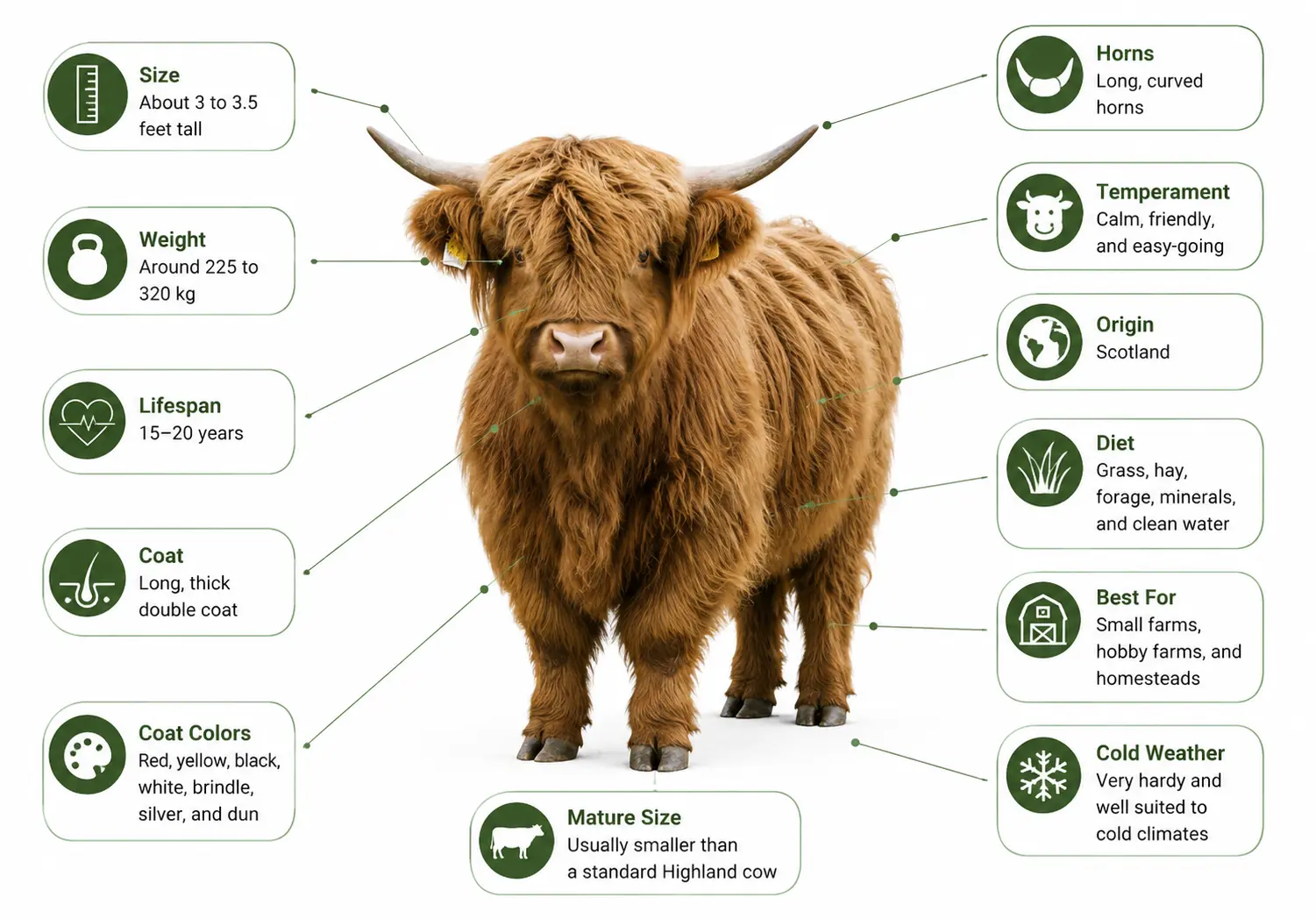
About 3 to 3.5 feet tall
Around 225 to 320 kg
15–20 years
Long, thick double coat
Red, yellow, black, white, brindle, silver, and dun
Long, curved horns
Calm, friendly, and easy-going
Scotland
Grass, hay, forage, minerals, and clean water
Small farms, hobby farms, and homesteads
Very hardy and well suited to cold climates
Usually smaller than a standard Highland cow
Did You Know? Mini Highland cows keep the famous fluffy coat and long horns of standard Highlands, just in a smaller body!
A mini highland cow is just a smaller version of the traditional highland cow. And those highland cattle – where did they come from? Yep, Scotland – where they grew to be super tough & able to survive the toughest weather conditions going. That thick coat of theirs is the key to keeping them safe in the cold, wind & rain.
Mini highland cattle are bred to be smaller than the standard highland cattle, & it’s a process that’s gone on over many generations. Breeders are looking to maintain all the classic & lovable features of a highland cow, but on a smaller scale. & guess what? They’re now found in all sorts of countries all over the world, including the States, Canada, Australia, New Zealand & loads of European nations.
One of the most common questions we get asked is whether mini highland cows are for real.
The answer is a big fat yes! Mini highland cows are as real as the nose on your face. But here’s the thing – there are heaps of different types of miniature cattle out there, & some of them might be naturally smaller Highland cattle, while others might be crossbred with smaller breeds.
A proper mini highland cow should still look like a classic highland cow, with long hair a broad body & curved horns. & let’s be real – a good breeder’s going to care more about breeding healthy animals that look & act like a proper highland cow, rather than trying to breed something that’s just tiny for the sake of being tiny.
When you’re looking to buy a mini highland cow, make sure you’re doing your research on the breeder first. A reputable breeder will give you all the info you need on bloodlines, health records & what size you can expect the animal to grow to.
The price of a Mini Highland Cow can vary like crazy depending on a bunch of factors. The age of the animal, whether it’s a boy or girl, its bloodline, where you live, and who you buy it from all factor into how much you’ll end up paying.
By 2026 the average price for one of these little guys will range from $3000 to $15,000 – with some of the really special ones going for as much as $20,000
Calves that are still just babies are usually a lot cheaper than a full grown breeding cow. Females are often more expensive than males, just because they can have calves. And of course registered animals with a strong pedigree are going to cost a pretty penny.
These little cattle have become super popular, and that’s driving up demand worldwide. That’s one reason prices aren’t coming down anytime soon.
New buyers always want to know how much to expect to pay for a Baby, Mini Highland Cow.
You’ll find a healthy little calf will set you back between $3000 and $6000 a young up-and-comer will likely cost between $5000 and $10,000 and a full grown breeding cow or bull might set you back $8000 to $15,000.
And then there are the super rare ones with really good bloodlines that’ll command a high price . Don’t forget to factor in transportation costs because moving cattle can get pricey.
The purchase price is just the beginning , you’ll also need to budget for feed , water , shelter , fencing and vet bills
A golden retriever and Highland cow friendship feels like a sweet farm story. People love this idea because both animals look soft calm and friendly. A golden retriever has a happy face and a loving nature. A Highland cow has long hair and a peaceful farm look. When they stand near each other they can look like two gentle friends.
This friendship can happen but only in a safe place. The dog and the cow should both be calm. They need open space slow meetings and a careful owner. A golden retriever is a pet but a Highland cow is a large farm animal. So their bond should never be forced or rushed.
Golden retrievers are usually friendly smart and easy to train. Highland cows are strong but they can also be calm when handled well. These traits can help them stay relaxed around each other. Still safety should always come first because a cow is much bigger than a dog.
A cute video may look easy but real animal friendship takes time. It needs trust training and a safe farm setup. With patience a golden retriever and Highland cow can learn to feel safe near each other. This guide will explain how this friendship can happen and how dogs and farm animals can get along safely.
One of the main reasons these little cows are so popular is because of how small they are.
Standard highland cows can stand over 4 feet tall at the shoulder , but a Mini Highland will only reach about 36-48 inches tall.
That makes them a lot easier to manage on a small farm or hobby property – a lot of people love them for this reason. Even though theyre called mini theyre still big animals , and you’ll need to make sure theyve got enough room to move around and graze.
A full grown Mini Highland Cow looks pretty much identical to a standard highland cow – the only difference is the size.
Most of these little guys will reach their full size between 3-4 years of age . At that point theyre got thick coats, strong bodies and those distinctive horns.
The females tend to be a bit smaller than the males – and the bulls end up being heavier and more muscle-bound.
Despite being pretty small these cattle are still tough and resilient – they can adapt to all sorts of different climates and living conditions as long as you take good care of them.
Weight varies a great deal depending on age, gender and genetics.
A full grown Mini Highland Cow usually weighs anywhere from 500 to 1,000 pounds – but some individuals can be a mite heavier or lighter, depending on their breeding and what their overall health is like.
Female cows as a rule weigh less than bulls do. It’s pretty clear that the right kind of nutrition plays a big part in keeping a healthy weight – just one of the things that owners need to keep an eye on.
You should keep a regular check on your cow’s body condition. If an animal gets too thin it’s probably not getting enough to eat, while an animal that’s carrying a bit too much weight may have health problems coming down the line.
The key to keeping a healthy weight is having a balanced diet and regular check-ins with the vet.
Mini Highland cattle are known for living a pretty long time.
A healthy Mini Highland Cow can make it anywhere from 15 to 20 years. Some do even better with good care.
There are several factors that can affect lifespan – nutrition, healthcare, living conditions, and genetics all play a part.
Making sure your cow gets regular vaccinations, keeping an eye on parasites and having access to clean water can all help a Mini Highland Cow live a long and healthy life.
When you buy one of these animals you need to view it as a long term commitment – they can be part of the family for a long time.
Loads of people wonder if Mini Highland cows make milk.
The answer is yes – they do produce milk, because they are cattle and that’s just what female cows do after they’ve had a calf.
However, Mini Highland cows aren’t usually kept for milk production, and their milk output isn’t quite the same as say a Holstein or Jersey cow.
Most people keep Mini Highland cows for breeding, companionship, or beef production, rather than milk – and they tend to do a pretty good job in those roles.
A nursing calf will usually take most of the milk from its mum, and if you’re looking to produce a lot of milk then you’re probably better off with a special dairy breed.
The Mini Highland Cow is a whole lot more than just a farm animal that’s just plain cute. It’s a ruggedly intelligent and friendly breed that’s grabbed the hearts of people all around the world. Whether you’re after a one-of-a-kind addition for your hobby farm a breeding animal or just curious about these utterly fascinating cattle, you can’t deny that Mini Highland cows have a lot to offer.
Before you go and buy yourself a Mini Highland Cow, you’ve got to have a clear understanding of what you’re getting yourself into – and that goes way beyond just the initial purchase price. The cost of keeping those animals healthy and happy – proper food, the right kind of shelter, regular vet visits, and enough space to graze to their hearts’ content – that’s the real investment. Doing your homework, sniffing out some reputable breeders, comparing prices and getting a handle on their needs will make all the difference when it comes time to make a decision.
With their laid back nature, their longevity and that instantly recognisable appearance you can see why Mini Highland cows are becoming more and more popular year in year out. For the owners who are willing to put in the work and give them the right care, though, these lovable cattle can be a true companion and a valuable addition to any farm for years to come.