Highland Cow Average Sizes
Highland cattle have a compact frame with a deep body and a wide chest. Their broad back and short strong legs give them a solid look. They are not the tallest cattle breed. Yet they carry plenty of strength and body weight.
The official Highland breed standard describes powerful legs with broad straight bones. It also values good front leg width and a balanced body. These traits help the animal move across rough ground without losing stability.
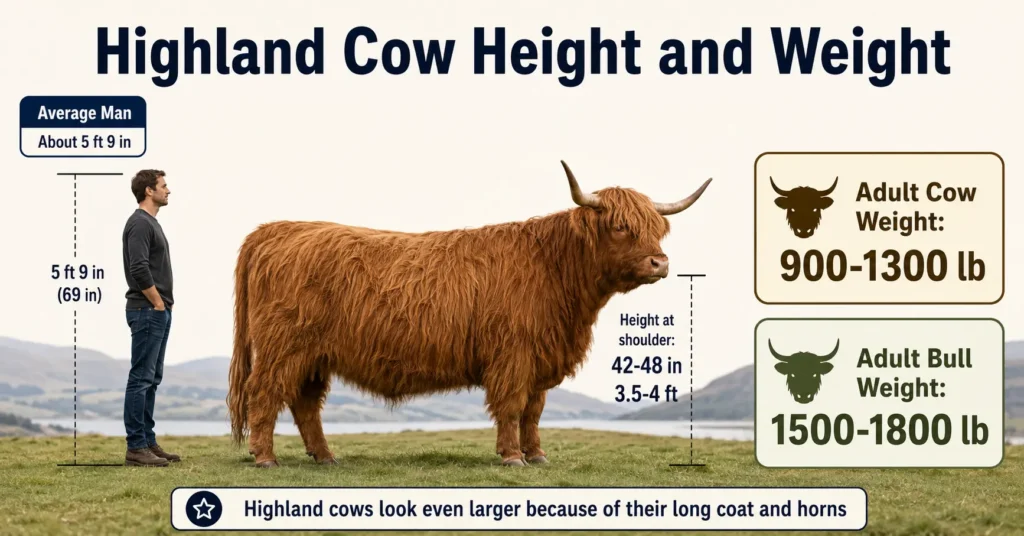
An adult female often stands around 42 to 48 inches at the shoulder height. Mature bulls usually reach around 44 to 52 inches. These are general height ranges rather than strict breed limits.
The final size changes with genetics and nutrition and sex and age. There is always some individual variation.
A mature Highland cow commonly weighs around 900 to 1200 pounds. A large mature cow may reach about 1300 pounds. A mature Highland bull often weighs around 1500 to 1800 pounds. A large mature bull may move close to 2000 pounds.
A newborn Highland calf begins life much smaller. Most weigh around 60 to 70 pounds.
I find that weight often gives a better idea of true size than height alone. A short Highland cow can still carry a deep chest and a heavy body.
An actual scale gives the most accurate result. A livestock weight tape can help when a scale is not available.
Average Highland Cow Height and Weight
| Highland Cattle | Average Height | Average Weight |
| Highland Cow (Female) | 42 to 48 inches | 900 to 1,300 pounds |
| Highland Bull (Male) | 44 to 52 inches | 1,300 to 1,800 pounds |
| Large Mature Bull | Up to 52 inches | Up to 2,000 pounds |
| Highland Calf at Birth | — | 60 to 70 pounds |
Summary
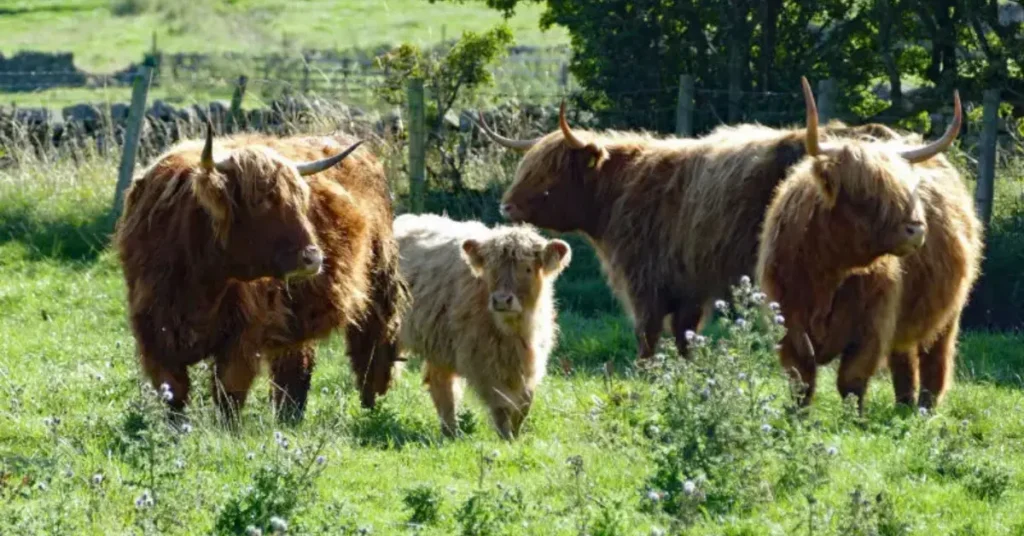
Highland cow size can look very different in a photograph. The long shaggy coat hides the real body shape. The wide horns also increase the animal’s visual size.
A thick winter coat can make a cow look huge. After warm weather shedding the same animal may look much narrower.
Highland cattle are usually classed as a medium-sized cattle breed. They are more compact than many modern dairy breeds and modern beef breeds. Yet they remain powerful farm animals.
A mature Highland has a broad chest with strong legs and wide hips. This solid frame helps the breed move across rough land.
A mature Highland cow usually weighs around 900 to 1200 pounds. Some females reach 1300 pounds. A mature Highland bull often weighs 1500 to 1800 pounds. Large bulls may reach 2000 pounds when genetics and feeding support that growth.
The American Highland Cattle Association publishes similar average mature weights for cows and bulls. The Livestock Conservancy also gives a slightly wider range.
A newborn Highland calf usually weighs 60 to 70 pounds. This smaller birth size often supports easy calving. Still pregnant cows need close observation and proper nutrition.
Buyers should plan for the full adult animal. A fluffy calf does not stay tiny. It will need good pasture and fresh water and minerals. It will also need shelter and secure fencing and veterinary care.
Good farm design must provide enough body room and horn clearance.
Why Highland Cows Look Bigger Than They Are
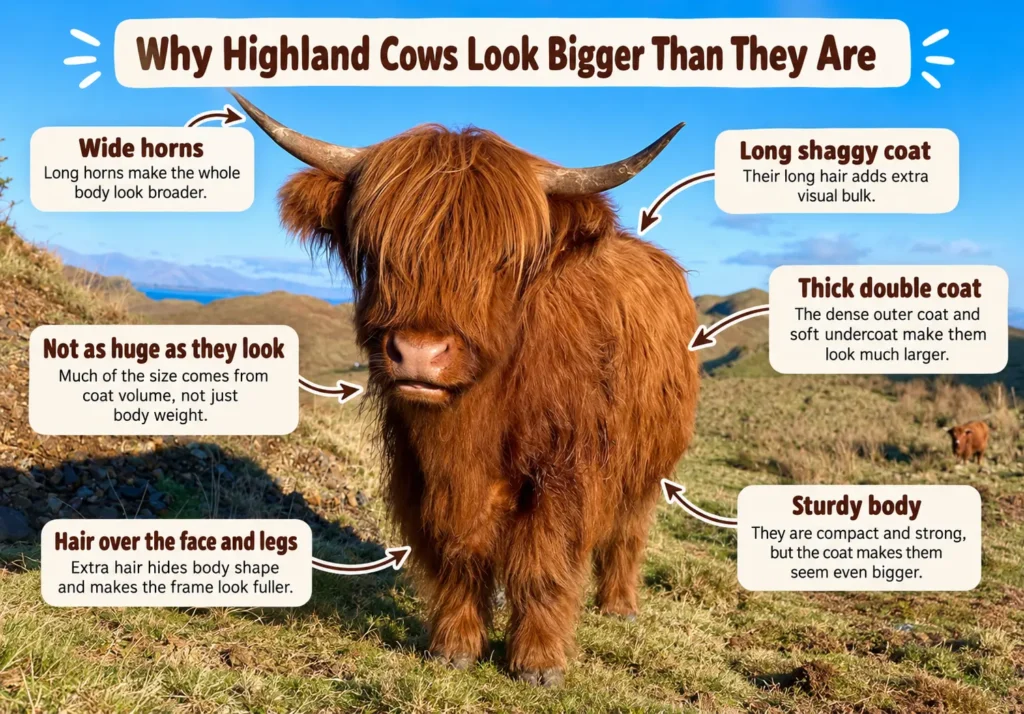
The double coat creates much of the Highland cow’s famous appearance.
The animal has a long outer coat and a soft undercoat. The outer hair stands away from the body and creates extra width. Heavy winter hair makes the shoulders and neck and sides look larger.
The coat can hide the true shoulder width and the rib line. It can also hide body fat and weight loss and changes in muscle condition.
A thick coat may cover the real hip shape and chest depth.
This is why experienced owners do not judge body condition from the hair coat alone. They watch the animal’s movement and check the spine and ribs and hips and tail head.
The horns also change the animal’s visual appearance.
A mature cow may carry long horns with an outward horn spread and an upward horn rise. A bull often has thicker horns with a more forward-facing horns shape.
This can make the head width look much larger than the body.
A winter photograph can therefore make a medium-sized cow look like a huge animal. The large farm animal appearance is real. Yet the coat adds much more size than people expect.
Highland Cow Height
Farmers measure cattle height from level ground to the highest shoulder point. This point is called the withers.
They do not measure head height. They also do not include the horns.
A Highland cow can change her head position at any time. Horn shape also differs between animals. The shoulder gives a more consistent measurement. A mature female often stands around 3.5 to 4 feet at the shoulder. Many bulls stand slightly taller and carry more front-end weight.
To measure the animal safely, place it on firm level ground. Keep all four feet in a natural position. Use a livestock measuring stick at the highest shoulder point.
Always think about horn safety.
Do not force an untrained animal to stand still. Use a secure pen when needed.
Height can show whether the animal has a compact frame or a tall frame. It cannot show the full size by itself.
Two cows may have the same shoulder height but carry different weights. One may have a deep body and greater muscle.
Highland Cow Weight
Highland cow weight changes with sex and age and pregnancy and feeding and health.
A mature female commonly weighs 900 to 1200 pounds. Some reach 1300 pounds. Mature bulls often weigh 1500 to 1800 pounds. A very large animal may approach 2000 pounds.
The American Highland Cattle Association gives similar figures for mature animals.
Weight affects feed planning and medicine dosage and trailer capacity. It also matters for pasture stocking and breeding decisions and calving management.
Correct weight helps owners choose safe handling equipment. It also affects market value and body-condition monitoring.
Visual guessing often fails because of the thick coat. A livestock scale gives the clearest result. A weight tape can provide a useful estimate.
Some owners measure the heart girth and body length. They then use a cattle-weight formula. Highlands handle rough grazing well. Their hardiness does not mean they can live without proper nutrition.
Every animal needs fresh water and the right minerals. It also needs enough protein and energy for its production stage. A growing heifer does not need the same ration as a lactating cow. A mature bull has different nutritional needs again.
What Affects Highland Cow Size?
Many factors shape Highland cow size and final size.
The main multiple factors include genetics and bloodline and sex. Age and nutrition also play a major role. Other influences include health and pregnancy and lactation. Climate and farm management can change growth too.
No single number predicts every Highland animal.
Genetics and Bloodline
Some Highland bloodlines produce heavier cattle and broader cattle. Other families produce more compact cattle.
Parent size gives buyers clues about future growth. It does not promise an exact adult height or adult weight.
A calf may show calf inheritance from either side of the family. Its frame size can come from the sire or the dam. The animal’s pedigree gives useful background. A careful parent inspection also helps. I would always ask to see mature relatives before buying a young calf. A tiny calf tells very little about final size.
Sex
Bulls usually grow larger than females.
They develop more body weight and stronger neck muscles. They also build heavier shoulder muscle and larger front quarters.
A steer can develop a large frame too. Yet it often lacks the heavy masculine shape of a breeding bull.
Sex makes one of the clearest differences in adult Highland size.
Age
Highland cattle show slow maturity.
A two-year-old animal may stand close to adult height. It may not have reached its full width or full weight. The skeleton can reach much of its adult height before the chest development and hindquarter development finish.
The Highland Cattle Society reported figures from its 2025 February event. Bulls averaged around 597 kg in two years and around 743 kg in three years.
This shows how much bull development can happen during one extra year.
Nutrition
Healthy growth needs enough energy and protein and minerals. Poor pasture can cause limited growth. The animal may remain lighter than its genetics allow. Overfeeding creates another problem. It may lead to excess fat and joint stress.
The best goal is steady development and healthy development. Farmers should not chase rapid weight gain at the cost of sound structure.
Health
Parasites can reduce growth. So can dental problems and chronic illness and mineral deficiencies. A sick animal may show reduced growth even when it receives good feed. The heavy coat can hide body condition loss. This is why regular health checks matter.
A sudden pause in growth deserves attention.
Pregnancy and Lactation
A pregnant cow gains body weight as the fetus and supporting tissues develop.
After calving the cow may show post-calving weight loss. Milk production also increases her nutritional needs. A measurement taken during late pregnancy does not show the cow’s true empty body weight.
Farmers should consider the production stage before comparing weights.
Climate and Management
Cold weather raises energy needs because the animal burns more energy to stay warm.
Hot conditions may cause reduced feed intake. Highlands carry a heavy coat and need good summer care. Mud can create harder movement and increase maintenance demands. Good shelter and shade and airflow support the animal. Plenty of clean water also helps maintain healthy growth.
Male vs Female Highland Cow Size
Male Highland cattle and female Highland cattle show clear size differences.
A bull is an uncastrated adult male. A steer is a castrated male. A heifer is a young female that has not entered calf production. She becomes a cow after calving. A mature female usually stays lighter and finer than a bull.
Female Highland Cow Size
A mature female often stands 42 to 48 inches at the shoulder height. Her weight commonly falls between 900 to 1200 pounds.
She usually has a deep body and a broad body. Her neck looks like a lighter neck when compared with a bull. Female horns often appear as longer horns and finer-looking horns. They may form a wide upward horn sweep.
A good cow also carries a strong maternal frame.
Some females reach 1300 pounds. Final size depends on body condition and bloodline and management. The Livestock Conservancy gives a similar upper range.
| Feature | Standard Highland | Animal sold as mini Highland |
| Breed status | May be registered pure Highland | May be purebred selective stock or crossbred |
| Adult size | Usually follows normal breed range | Varies widely by seller and genetics |
| Official universal class | Highland breed | No single universal mini class |
| Care needs | Full livestock care | Full livestock care |
| Space needs | Large pasture and facilities | May need less feed but still needs proper land |
| Buyer checks | Registration and health | Registration and parent size are especially important |
Male Highland Cow Size
A mature bull often stands 44 to 52 inches at the shoulder height.
Most weigh 1500 to 1800 pounds. Some may approach 2000 pounds. Bulls develop a thicker neck and a larger head. They also carry heavier shoulders and more front-body muscle.
Their thicker horns often have a more forward-facing horns direction. Farmers should value breeding fitness and sound movement more than extreme weight.
A calm bull is still a large powerful animal. Safe bull pens need strong fencing and safe gates. A clear escape route is essential. For beginners a cow or heifer or steer may offer an easier starting point.
Baby Highland Cow Size
A baby Highland cow is called a calf.
Newborn Highland calves have a fluffy coat and a small face. Most weigh around 60 to 70 pounds at birth weight. American Highland breed information links the smaller calf size with a lower risk of difficult calving.
Birth weight changes with mother size and sire genetics and calf sex. Pregnancy length also matters. Other factors include maternal nutrition and the number of calves and overall pregnancy health.
After birth the calf should show normal breathing. It should begin standing after birth and receive colostrum early.
Colostrum provides early energy and immune protection.
A healthy calf passes through several growth stages. Owners should plan for adult size planning from the start.
Birth to Three Months
From birth to three months the calf depends mainly on milk for early nutrition. The calf soon starts tasting grass and hay and other feed.
Its steady legs become stronger. Its body width slowly increases during this stage of early growth. The calf still looks small and soft. Yet important internal growth is already happening.
Three to Six Months
Between three months and six months the calf shows more rumen development. Its forage intake begins to rise. Milk still matters but grass and hay become more useful.
A healthy calf should show steady growth. Sudden weight loss or a rough coat may point to a health problem. Owners should not ignore these signs.
Six to Twelve Months
Between six months and twelve months many farms begin calf weaning. The timing depends on the farm system and the health of the young animal. After weaning the calf depends more on pasture and hay and minerals. Good post-weaning nutrition helps prevent a growth check.
One to Two Years
From one year to two years the animal may reach much of its adult height. It still needs more muscle development and body depth.
Young Highland cattle continue filling out after they look tall enough. This continued growth explains why a two-year-old may weigh much less than the same animal one year later.
Mini Highland Cow Size
The phrase mini Highland cow appears often in online advertising.
Buyers should approach these claims carefully.
Major Highland breed organizations register the registered Highland as one cattle breed. They do not follow one shared worldwide size system with an official standard class and miniature class and micro class. Terms such as mini and micro mini may depend on seller definitions.
The official breed information and registry information from the Highland Cattle Society and American Highland Cattle Association do not create one universal mini category.
A smaller Highland-looking animal may be a young standard Highland. It may be a compact purebred animal or a selectively bred smaller Highland.
It may also be a Highland cross or a small cattle breed cross. In some cases the size may come from poor early growth. An unofficial size label does not prove mature size.
Some sellers call animals between 36 to 42 inches miniature cattle. Without a shared registry standard the term gives no firm promise about future size.
Ask for the current age and measured shoulder height and current weight.
Also ask for the sire adult height and dam adult height. Check registration papers and breed percentages and health records.
A reliable breeder should give an expected adult weight and show mature relatives. A written sales agreement can also prevent confusion.
All newborn calves look small. That does not make every calf a miniature.
A tiny animal is not always healthy. Poor nutrition and illness can reduce growth. An animal may also have undesirable structure.
Choose sound feet and sound legs and a healthy body.
Even a small Highland needs pasture and companionship and fencing and shelter and veterinary care. It is not a house pet.
Standard Highland vs Mini Highland
A standard Highland follows the normal size and breed type seen in established Highland herds. Its adult body often falls within the mature weight ranges published by recognized breed organizations.
A mini Highland may have a lower weight and lower height. The buyer still needs owner verification and clear records.
The miniature term should encourage more buyer research.
Check breed status and whether the animal is a registered pure Highland. It may come from selective stock or be one of many crossbred cattle. Ask about expected adult size rather than trusting seller claims.
Genetics and parent records matter because there is no single official universal class for mini Highlands. Both types need full livestock care. Their space needs and feed needs may differ. Yet both require suitable land needs and safe facilities.
Always check registration and parent size.
How Fast Do Highland Cattle Grow?
Highland cattle do not show an extreme growth rate like some commercial breeds. They do not focus on rapid growth. They show steady development.
A calf often shows calf height gain before major body width and muscle development appear. A bull builds more bull neck mass and shoulder mass as he matures.
Growth changes with milk supply and weaning age and pasture quality. Winter feed also matters. Good parasite control and correct mineral intake support growth. So do sound genetics and a healthy disease history. Stress and weather can slow development.
Owners should keep weight records or heart-girth measurements at regular intervals. The growth pattern matters more than a single number. Steady gain gives more useful information than a random bloodline comparison. Do not blame poor growth on the breed without checking the teeth and parasites and illness and feed quality.
A proper investigation may reveal a problem that can be corrected.
Highland Cow Size Compared With Other Cattle
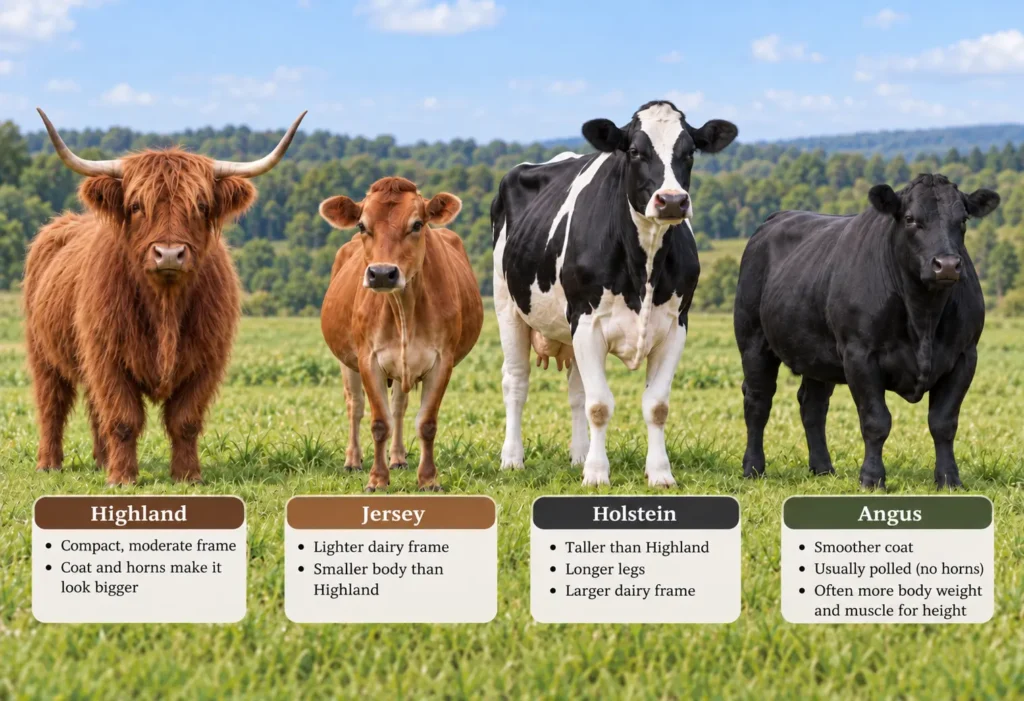
Highland cow size fits between many kinds of other cattle.
The breed has a compact frame and a moderate frame. A fair breed comparison should consider individual animals. Compare height and weight and body shape. Also remember that the coat and horns change the visual result.
Highland vs Angus
Highland cattle and Angus cattle have different body styles.
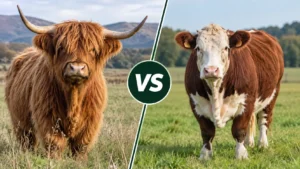
Angus have a smooth coat and are usually polled cattle. Many commercial Angus carry more body weight and muscle for their height. A Highland may show greater visual width because of Highland hair and Highland horns.
Highland vs Holstein
A Holstein cow usually stands taller than Highland cattle. Holsteins have longer legs and a larger dairy frame. Their bodies support high milk production. A Highland has a shorter body and a more rugged body shape.
Highland vs Jersey
A Jersey cow often has a lighter dairy frame than Highland cattle. The Highland usually shows a broader body and a heavier body. Its long hair and strong bone add to the solid appearance.
Highland vs Dexter
A Dexter is a smaller cattle breed than most Highland cattle. A standard Highland usually carries greater weight. It also needs more horn clearance in pens and feeders.
Highland vs Galloway
Galloway cattle and Highland cattle both come from Scotland. Both breeds have a thick coat. Galloways are naturally polled cattle. Highlands normally have both male horns and female horns. This creates an obvious breed distinction.
Does Coat Color Affect Size?
Highland cattle appear in many coat colors. These include red and black and yellow and dun and brindle and white and silver. The Highland Cattle Society recognizes the breed’s long coat and traditional colors.
Color does not control adult size.
A black cow is not always smaller. A red bull is not always heavier. Size comes from genetics and sex and age and nutrition and health. Some bloodlines may connect a certain color with a larger frame size because of breeder selection. That is a family-line effect rather than a true color rule.
How Much Space Does a Highland Cow Need?
Highland cow space depends on the whole farm setup. Highland cattle need enough pasture to graze without damaging the land. Good land protection requires the right stocking rate. The rate depends on soil and rainfall and grass growth and winter length. Different feeding plans also change land capacity.
Owners should provide grazing pastures and a winter sacrifice area. They also need hay storage and reliable fresh-water access. Provide mineral stations and warm-weather shade and dry shelter. Use strong perimeter fencing with wide gates and safe loading areas.
A proper cattle handling system needs enough horn clearance around feeders. A mature bull may weigh more than 1500 pounds. A weak gate or light pet fence cannot hold that animal force safely. A trailer needs the right trailer weight rating. Check the combined animal weight and equipment weight. Do not rely on an appearance estimate.
Why Body Condition Matters More Than Extreme Size
The largest Highland is not always the best Highland. A good breeding animal needs sound legs and sound feet and healthy movement. It should have enough muscle and a healthy reproductive condition. Excess fat can cause reduced fitness. Low weight may lead to reduced fertility and reduced immunity.
Look for a strong topline and good chest width. The animal should show balanced muscle and correct leg movement. Check for healthy skin and healthy hair. A steady appetite and normal manure also give useful health clues.
The goal is an appropriate body condition.
The breed standard values balance and structure and movement. It does not reward extreme size when it harms soundness. A healthy moderate cow may enjoy a longer productive life and a lower maintenance cost than an oversized animal.
Choosing the Right Highland Cow Size
The right Highland cow size depends on your farm needs. A smaller mature female may suit a homestead with limited handling equipment. A larger cow may produce a heavier calf. She may also have greater feed requirements. A bull needs extra fencing strength and more handling experience.
Check the available land and your winter hay storage.
Make sure the trailer adult weight rating can carry the animal. Check for wide gates and enough horn clearance. You also need cattle-safe handling equipment and a plan for bull separation. Think about veterinarian availability and whether you need registered breeding stock. Decide whether your goal involves beef animals or pets or conservation grazers.
Highlands are herd animals. You may need multiple animals because a small calf still needs cattle companionship. Keeping one animal alone is not a sound long-term plan. Complete an actual animal inspection rather than buying from a cute photograph. Ask about age and current measurements and the health record. Check the pedigree and registration.
A trusted breeder should explain the likely adult size honestly.
Final Thought
Highland cow size becomes easier to understand when you look past the thick coat and wide horns. A mature female often weighs 900 to 1200 pounds. Some reach 1300 pounds. A mature bull commonly weighs 1500 to 1800 pounds. Large animals may approach 2000 pounds.
Newborn calves usually begin at 60 to 70 pounds.
Common practical height ranges place cows at 42 to 48 inches in shoulder height. Bulls often stand 44 to 52 inches. These height estimates are not strict official limits. Final size changes with genetics and nutrition and age. Plan for the adult size rather than the fluffy calf stage. Check the parents and registration papers. Use proper animal measurement before buying. Prepare the fencing and pasture and trailer capacity before the animal arrives.
Highlands have a moderate frame. Yet they remain powerful cattle. With enough space and good nutrition and safe handling they can develop into strong healthy animals that work well in many farming systems.