A good milking schedule helps your Jersey cow stay healthy and comfortable. It also makes your daily farm work easier. Jersey cows are popular dairy cows because they produce rich milk with plenty of butterfat and protein. But every cow has different needs. Her age and health and milk production can affect how often you need to milk her.
Most Jersey cows are milked twice a day. Farmers usually milk them once in the morning and once in the evening. They keep about 12 hours between each milking. Some small farm owners milk their cows once a day when the calf stays with the mother or when the cow does well with fewer milkings. But this routine does not work for every cow.
The best Jersey Cow Milking Schedule depends on how much milk your cow produces and how her udder feels between milkings. You should also think about whether she has a calf and how much milk your family needs. A regular routine makes milking easier for you and your cow.
In this guide you will learn how often to milk a Jersey cow and how to make a simple routine that supports her health and milk production.
Quick Overview
| Milking Detail | What to Know |
| Common schedule | Twice a day |
| Morning milking | Around 5–7 a.m. |
| Evening milking | Around 5–7 p.m. |
| Time between milkings | About 12 hours |
| Once-a-day milking | Possible for some cows |
| Calf sharing | Can help reduce human milking to once a day |
| Main goal | Keep a steady routine and protect udder health |
| Important warning | Watch for swelling or signs of mastitis |
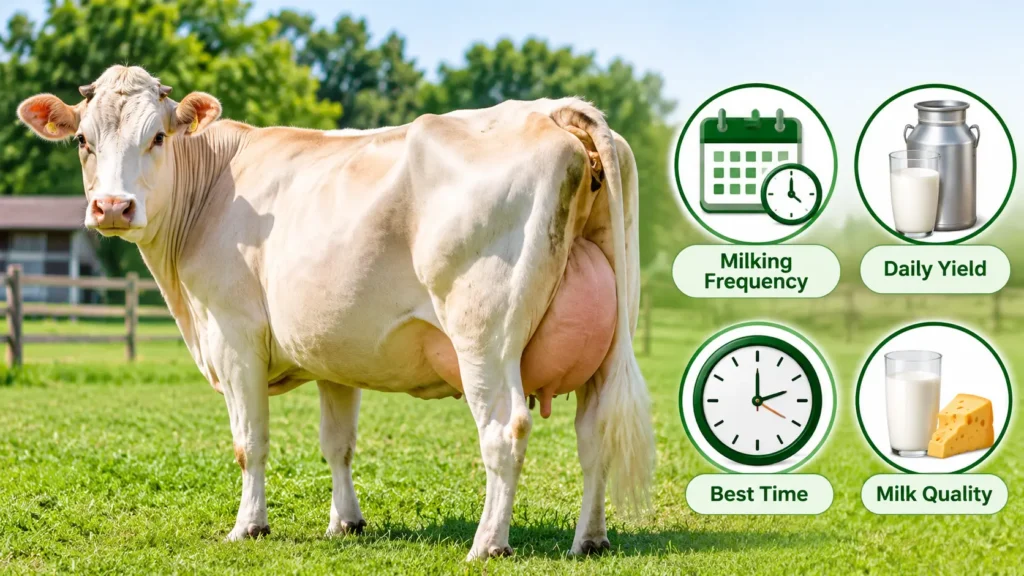
How Many Times a Day Should You Milk a Jersey Cow?
Most Jersey cows that produce milk regularly should be milked two times a day. This means milking once in the morning and once in the evening. Try to keep about 12 hours between each milking. This helps your cow follow a steady daily routine.
For example you can milk your cow at 6 a.m. and 6 p.m. You can choose other times if they fit your daily work better. The most important thing is to milk her at nearly the same times every day.
Jersey cows are known for producing plenty of milk for their body size. Their milk also contains a good amount of butterfat and protein. This makes them a popular choice for large dairy farms and small family farms.
Is Milking Once a Day Enough?
Some Jersey cows can be milked once a day. This may work well on a small farm where the owner does not need much milk. It may also work when the calf stays with its mother and drinks milk between your milking times.
However once-a-day milking is not right for every cow. A cow that produces a lot of milk may have a very full udder after a long break. This can make her uncomfortable and may lead to udder problems.
Before changing to once-a-day milking think about these points:
- How much milk does your cow produce?
- Does her udder become too full before milking?
- Is her calf drinking milk from her?
- Has she had mastitis before?
- Does she stay comfortable with a longer gap between milkings?
Do not choose once-a-day milking only to save time. Your cow’s health and comfort should always come first. Talk to a veterinarian or an experienced dairy farmer before making a big change to her milking routine.

Best Morning and Evening Milking Schedule for Jersey Cows
A morning and evening routine works well for many Jersey cows. It gives you two regular times to milk your cow and check her udder. It also helps you plan feeding and other farm work.
A simple milking schedule can look like this:
| Time | Daily Task |
| 5:30 a.m. | Bring the cow to the milking area |
| 5:45 a.m. | Check and clean the udder |
| 6:00 a.m. | Milk the cow |
| 6:30 a.m. | Give her feed and fresh water |
| 5:30 p.m. | Bring the cow back for evening milking |
| 5:45 p.m. | Check the udder and get ready to milk |
| 6:00 p.m. | Milk the cow |
| 6:30 p.m. | Clean the milking equipment |
These times are just an example. You can choose times that fit your daily farm routine.
Why Should You Keep the Same Milking Times?
Cows learn to follow a regular daily routine. When you bring your Jersey cow to the milking area at the same time each day she knows what to expect. This can help her stay calm during milking.
The milking area should also feel safe and familiar. A cow may feel scared in a new place. Give her time to get used to the area. Speak gently and avoid loud sounds or sudden movements. A calm place can make milking easier for you and your cow.
Try to follow the same morning and evening times every day. If you need to change the schedule do it slowly. Watch your cow to make sure she stays comfortable with the new routine.
How Jersey Cow Milking Frequency Affects Milk Production
The number of times you milk a Jersey cow can affect how much milk you get. When you milk her twice a day you remove milk at regular times. This helps keep her udder from getting too full and supports a steady milking routine.
If you milk her less often you may get less milk overall. The amount can change based on her health and how much milk she produces. It also depends on her stage of lactation. Lactation is the time when a cow produces milk after giving birth.
Jersey cows produce rich milk with a good amount of butterfat and protein. This makes their milk a popular choice for making cream and cheese.
Does Twice-a-Day Milking Produce More Milk?
Milking a Jersey cow twice a day often helps her produce more milk than milking her once a day. When you wait too long between milkings her udder stays full for a longer time. This can lower her milk production.
However getting more milk is not always the main goal for every owner. A family with one Jersey cow may only need enough milk for daily use. In this case calf sharing may be a good option. The calf nurses from its mother while the owner collects milk at a set time.
Some small farm owners use this method to milk their cows once in the morning. The calf nurses at other times of the day. However this method may not work for every cow. You must make sure both the cow and calf get proper care.
What Happens When You Leave Too Much Time Between Milkings?
Waiting too long between milkings can make your cow’s udder too full. This may cause pain and discomfort. It can also increase the risk of udder problems. High-producing Jersey cows need extra attention because they may fill their udders faster.
Watch for these signs:
- A tight or swollen udder.
- Warm or painful areas on the udder.
- Changes in milk color or texture.
- Small flakes or lumps in the milk.
- A sudden drop in milk production.
These signs may point to mastitis or another health problem. Contact a veterinarian if you notice any of them. Changing the milking schedule alone will not treat an infection.

How to Create a Consistent Milking Routine for Your Jersey Cow
A regular routine helps your Jersey cow feel safe and makes your daily work easier. It also gives you time to check her health twice a day.
First choose morning and evening milking times that you can follow every day. Keep the milking area clean and store your equipment in one place. Make sure your cow always has clean water and good feed.
Steps to Follow Before and During Milking
1. Bring your cow to the milking area. Walk her calmly along the same path each day. Give her time to enter the milking area without rushing her.
2. Check her udder. Look for swelling or extra warmth. Check for cuts or signs of pain.
3. Clean her teats. Use clean supplies to wash the teats. Dry each teat with a clean towel.
4. Milk your cow safely. Use clean hands or clean milking equipment. Make sure your method is gentle and comfortable for her.
5. Check the milk. Look for strange colors or lumps. Do not mix unusual milk with the milk you plan to use.
6. Clean your equipment. Wash and dry all milking tools after each use. This helps keep germs away.
7. Record the milk amount. Write down how much milk you collect in the morning and evening.
Keep a Simple Milk Record
A small notebook can help you track your cow’s milk production. Write down the date and the amount of milk you collect at each milking. You can also note any changes in her food intake or behavior.
Here is a simple example:
| Date | Morning Milk | Evening Milk | Notes |
| Monday | 2 gallons | 1.8 gallons | Normal |
| Tuesday | 2 gallons | 1.7 gallons | Normal |
| Wednesday | 1.5 gallons | 1 gallon | Check cow |
These numbers are only examples. Your Jersey cow may produce more or less milk.
If her milk amount drops suddenly check her food and water intake. Also watch her health and behavior. Your records can help you see if the drop happens once or continues for several days.
Signs Your Jersey Cow Needs a Change in Her Milking Schedule
Your Jersey cow cannot tell you when her milking routine makes her uncomfortable. But her udder and behavior can show signs that something is wrong. Watch her closely during every milking.
1. Her Udder Becomes Too Full
If your cow has a very full or tight udder before the next milking she may need to be milked more often. A long gap between milkings can make her uncomfortable. Ask a vet or dairy expert to help you choose the right schedule.
2. She Kicks or Does Not Stand Still
A cow may kick because she feels scared or nervous. Pain can also cause this behavior. An udder infection or teat injury may make milking painful. Check her udder for signs of pain and contact a vet if needed.
3. Her Milk Production Drops Suddenly
It is normal for milk amounts to change a little from day to day. But a sudden drop may be a sign of a problem. Poor feeding or lack of water can affect milk production. Illness and stress can also lower the amount of milk.
Make sure your cow eats well and drinks enough fresh water. Also check her for signs of illness.
4. Her Milk Looks Different
Healthy milk should not have unusual lumps or a strange color. Thick flakes or watery milk may be signs of mastitis. This is an infection in the udder. Contact a vet if you notice these changes. Do not mix unusual milk with milk for drinking.
5. She Has Recently Given Birth
A Jersey cow needs extra care during the first days after giving birth. Her udder may become full as milk production begins. She may need regular milking or time with her calf to nurse.
Check her udder after calving and watch for swelling or pain. Ask a vet or dairy expert to help you choose a safe milking routine.
Yes. Some small farm owners milk their Jersey cow once a day when her calf stays with her. The calf drinks milk from its mother during the day or night. The owner then collects some milk at a set time.
For example you can keep the calf away from its mother overnight. In the morning you can milk the cow and then let the calf nurse again. This routine depends on the calf’s age and health and the cow’s milk supply.
Calf sharing needs good care. A young calf needs enough milk to grow strong and healthy. You also need to make sure the cow does not have too much milk in her udder between milkings.
Keep these points in mind:
- Give the newborn calf colostrum after birth. It is the first milk and helps protect the calf from illness.
- Check that the calf drinks enough milk and gains weight.
- Watch the cow’s udder for swelling or pain.
- Make sure the calf gets enough milk before you collect your share.
- Ask a vet for advice about a safe feeding routine.
Calf sharing needs daily care and attention. Both the cow and calf must stay healthy.

Final Thought
A Jersey Cow Milking Schedule should match your cow’s health and milk supply. Most Jersey cows do well with two milkings a day. One in the morning and one in the evening. Try to keep about 12 hours between each milking. Some cows can be milked once a day when they have the right care and conditions.
Keep the milking times regular and use clean equipment. Check your cow’s udder every day and watch for changes in her milk or behavior. Keep a record of how much milk she gives. Contact a vet if her udder becomes swollen or painful or if her milk looks different.
A steady routine can make milking easier and help your Jersey cow stay healthy and comfortable.