Summary
A Scottish Highland bull is one of the most eye catching farm animals in the world. It has long hair. It has wide horns. It has a strong body. It also has a calm look that makes many people love it at first sight. This bull comes from the Highland cattle breed. The breed started in the Highlands and west islands of Scotland. These places are cold and rough. The weather can be hard. The grass can be thin. This is one reason the breed became strong and tough over time.
Many people know this animal by its long shaggy coat. The coat helps protect it from cold wind and wet weather. The Highland Cattle Society says Highland cattle are made by nature to face harsh conditions. The breed also comes in many colors such as red yellow brindle dun white and black.
A Scottish Highland bull is not just a pretty farm animal. It can be useful for beef. It can help improve a herd. It can live on rough land where some other cattle may not do well. It can also be a good choice for small farms when the owner has safe fences and enough land.
Quick Overview
Size
3.5 – 4 feet Tall
Weight
Usually 1,500–1,800 lbs
or 680–800 kg
Lifespan
15–20 years
Did You Know? Highland Cow Come in 3 Adorable Sizes!
What Is a Scottish Highland Bull?

A Scottish Highland bull is a male Highland cattle animal. It is part of an old cattle breed from Scotland. A bull is used for breeding. This means he can mate with cows and help make calves. He is usually bigger and stronger than a cow. He also has a more heavy neck and a more bold look.
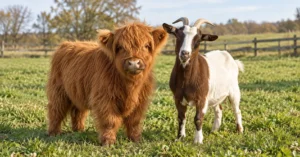
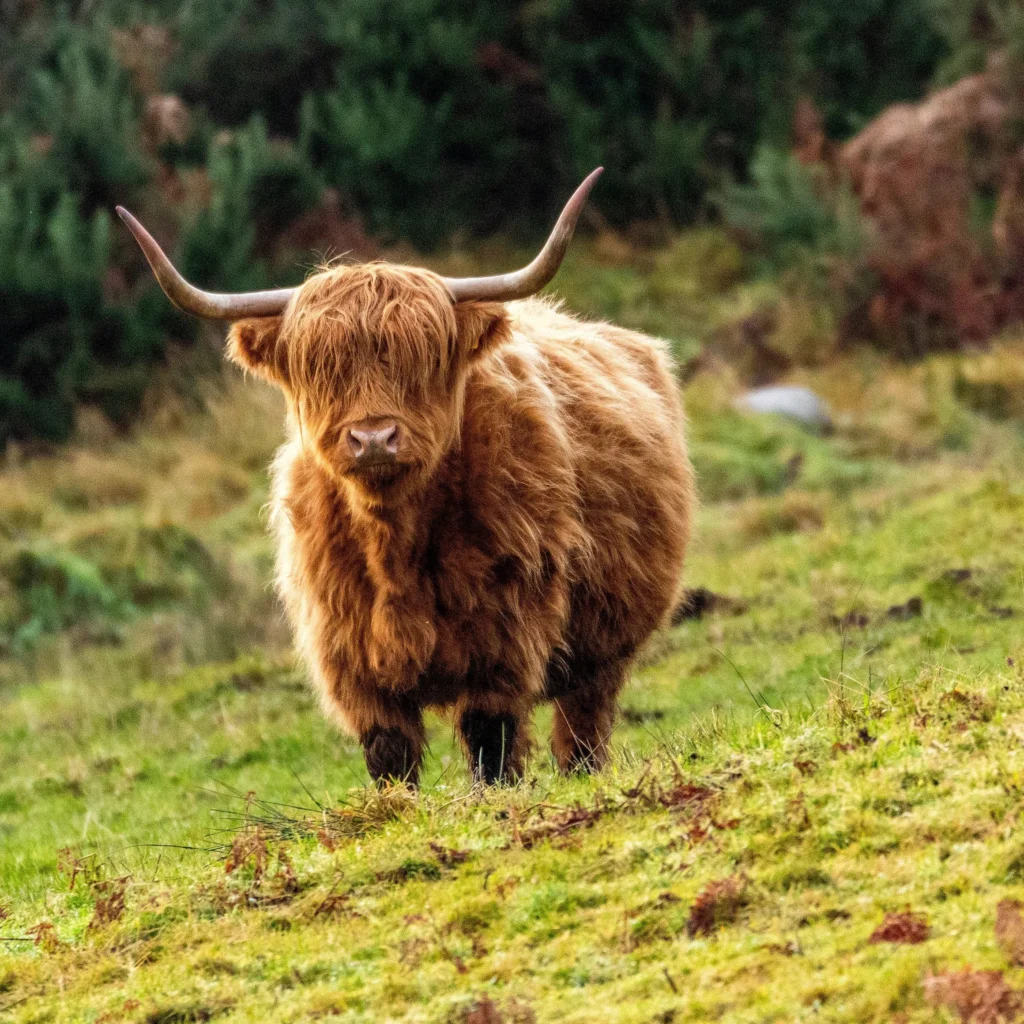
The Scottish Highland bull is famous for its long hair and big horns. The hair can cover the face and eyes. This long front hair is often called a fringe. It gives the bull a wild and cute look at the same time. The horns grow out from the head and curve upward. They can be very wide on a full grown bull.
Highland cattle are often called hardy cattle. This means they can live in tough places. They can do well in cold areas. They can also graze on land that is not perfect. They still need good care. They still need fresh water. They still need safe fences. They still need health checks. But they are known for being strong in hard farm settings.
The American Highland Cattle Association says it works to protect the breed and keep the American breed registry. This shows that Highland cattle are also important in the United States today.
History and Origin
The Scottish Highland bull comes from Highland cattle. This breed started in the Highlands and west coastal islands of Scotland. These areas are known for cold wind rain hills and rough land. The breed had to live in this kind of place for many years. That helped shape its body and coat.
Long ago there were two main types. One type was called Kyloe. It came from the western islands. These cattle were often smaller. Many were black or brindle. The other type came from the mainland. These were often bigger. Today both types are known as Highland cattle.
Highland cattle became part of farm life because they could live where other cattle might struggle. Farmers liked them because they were strong and could use rough grass. They were also useful for meat. Over time the breed became known in many countries. Today people raise them in Scotland. They also raise them in the United States Canada Australia and many other places.
The breed also has strong value because of its look. Many farm visitors love to see Highland cattle. Their long hair and wide horns make them easy to know. Their old Scottish story also adds charm. This is why many hobby farms and small farms like to keep them.
Size and Weight
A full grown Scottish Highland bull is a large animal. Mature Highland bulls can be very heavy. Oklahoma State University breed data says mature bulls weigh about 1800 pounds in breeding condition. It also says mature cows weigh about 1100 pounds.
The Highland Cattle Society also shares recent bull weight data from shows and sales. In February 2025 the average weight for 2 year old bulls was 597 kg. The average weight for 3 year old bulls was 743 kg. This shows that young bulls keep growing and filling out as they get older.
A Highland bull is not a small animal. Even if it looks fluffy and friendly it still has great power. This is very important for new owners. A bull needs strong fencing. A bull needs safe handling. A bull should not be treated like a pet dog. It may be calm but it is still a farm animal with size and force.
Height can change from one bull to another. Food care age and bloodline can all affect final size. A bull from large parents may grow bigger. A bull raised on good pasture may grow well. A bull with poor food or health problems may not reach its full size.
Appearance and Horns
The Scottish Highland bull has a very special look. The first thing most people see is the long coat. This coat can look shaggy and thick. It can hang over the face and body. The coat helps keep the animal warm in cold weather. The Highland Cattle Society says the breed is adapted by nature to face harsh conditions.
The horns are another famous feature. Both male and female Highland cattle have horns. A bull usually has thicker horns. The horns often grow out from the side of the head and then curve up. They can be wide and strong. Horns are beautiful but they also need respect. A bull can hurt a person or another animal even without meaning to.
The color can be red yellow black brindle dun white or other shades. Red is the most famous color today. Still the breed has many natural colors. A good herd may have a mix of colors.
A Highland bull also has a strong chest. It has short strong legs. It has a broad head. It has a deep body. The full body gives it a solid farm look. The long hair makes it look bigger and softer. This mix of power and beauty is the reason many people search for Scottish Highland bull pictures and facts.
Temperament
Scottish Highland cattle are often known for a calm nature. Many farmers say they are easier to handle than some other beef breeds when raised well. But a bull is still a bull. Any bull can be risky. A calm bull can still become dangerous during breeding season. A bull can also be unsafe if it feels trapped or scared.
Good handling starts early. A young bull calf should learn to be calm around people. It should learn basic farm routines. It should not be teased. It should not be treated roughly. Calm care helps build trust. Safe care helps protect both people and animals.
A Highland bull may look gentle because of its long hair and soft face. But owners should always keep space. It is best to use proper cattle gates and strong pens. Never turn your back on a bull. Never let young children walk near a bull alone.
Temperament also depends on bloodline and handling. Some bulls are very calm. Some are more bold. A good breeder can help you choose a bull with the right nature for your farm. If the bull will be used for breeding then calm behavior is very important.
Diet and Care
A Scottish Highland bull mostly eats grass and hay. Like other cattle it is a grazing animal. United Parks and Resorts says cattle can eat as much as 150 pounds of grass and graze about eight hours each day.
Good pasture is very helpful. A bull needs enough grass during the growing season. In winter or dry months it may need hay. It may also need minerals. Fresh water must always be ready. Clean water is one of the most basic needs for every farm animal.
Care also includes strong fences. A Highland bull is heavy and strong. Weak fencing can break. A good fence keeps the bull safe and keeps people safe. A bull also needs shade in hot weather. Even though the breed does well in cold weather it can still get heat stress in hot places.
Health care matters too. A vet can help with vaccines worm control foot care and breeding checks. The bull should be checked often for injury. The long hair can hide cuts or skin trouble. Owners should also watch body weight. A bull should not be too thin. It should not be too fat.
Cold Weather Survival
The Scottish Highland bull is famous for cold weather strength. This breed came from cold parts of Scotland. The weather there helped shape the breed over time. The long coat is one of its best tools for winter life.
The coat has a shaggy outer layer. This helps protect the body from rain snow and wind. The thick hair can keep the bull warm. This is one reason Highland cattle can do well on rough land and in cold climates. The Highland Cattle Society also notes that Highland cattle are adapted to harsh conditions.
Cold weather survival does not mean no care is needed. The bull still needs dry ground when possible. It needs water that is not frozen. It needs enough food because cold weather makes the body use more energy. Hay is very important in winter when grass is low.
Shelter is also helpful. A simple wind break can make a big difference. It does not need to be fancy. But it should help protect the bull from strong wind and wet ground. The goal is to keep the animal dry and fed.
In hot weather this same coat can be a challenge. Owners in warm areas need to give shade and water. Good air flow is also important. A Highland bull can live in many places but hot weather care must be taken seriously.
Bull vs Cow Difference
A Scottish Highland bull is male. A Highland cow is female. This is the main difference. A bull is used for breeding. A cow can give birth to calves and give milk for her calf.
Bulls are usually bigger and heavier than cows. Oklahoma State University breed data says mature bulls weigh about 1800 pounds while mature cows weigh about 1100 pounds.
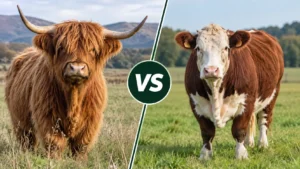
The body shape is also different. A bull often has a thicker neck. It has more muscle. It may have a stronger head. Its horns may look thicker and more bold. A cow may have a softer body shape. She may also be easier to manage in many farm settings.
Behavior can also be different. A cow may protect her calf. A bull may protect his space. A bull can become more active or more unsafe when cows are in heat. This is why handling a bull needs more care and more skill.
For a small farm a cow may be easier to start with than a bull. A bull needs strong fences and better handling tools. Some owners choose to use a bull only when breeding is needed. Others use artificial breeding. The best choice depends on farm size skill level and goals.
Price and Farm Use
The price of a Scottish Highland bull can change a lot. Age bloodline registration health and location all affect price. A 2026 price guide says Highland bulls often cost about $2000 to $7000. It also says young bulls may be around $2000 to $5000 and proven breeding bulls may be $4000 to $7000 or more.
Calves can also be costly. One 2026 calf price guide says Highland bull calves often range from $2500 to $5000. It also says standard Highland calves may range from $2500 to $5500.
A Scottish Highland bull is mainly used for breeding and beef herds. A good bull can improve a herd by passing on strong traits. These traits may include hardiness good coat good feet and calm nature. Farms may also keep Highland cattle for pasture use. They can graze rough land and help manage grass.
Some small farms keep Highland cattle for farm visits and photos. Their look is very popular. But owners should not buy a bull only because it looks cute. A bull needs land fences feed vet care and safe handling. The full cost is more than the buying price.
Before buying a bull always check health papers. Ask about registration. Ask about parents. Ask about temperament. Visit the farm if possible. A low price can be risky if the animal has health issues or unclear history.
Interesting Facts and Final Thoughts
Scottish Highland cattle are an old breed with a strong story. United Parks and Resorts calls them an ancient Celtic breed. It also says they were once quite rare and are now well developed in the United States and Britain.
One interesting fact is that both bulls and cows have horns. Another fact is that the long coat helps protect them from rough weather. Their coat colors can be red yellow black white dun and brindle. Red is the best known look today but it is not the only natural color.
A Scottish Highland bull can be a great farm animal for the right owner. It is strong. It is useful. It is beautiful. It has a deep link to Scotland. It can do well in cold weather and on rough pasture. But it also needs real care and respect.
This bull is not a simple backyard pet. It is large and powerful. It needs safe fences. It needs enough land. It needs good food. It needs vet care. It needs a skilled owner who understands cattle behavior.
For farmers and cattle lovers the Scottish Highland bull is a special animal. It brings beauty to the field. It brings value to a herd. It also carries a long history from the cold lands of Scotland. When raised with care and handled with safety it can become one of the most loved animals on a farm.