The Jersey vs Guernsey cow debate matters to dairy farmers and small homestead owners. Both breeds come from the Channel Islands. Both give rich milk. Both need less space than many large dairy breedhomes.
Still they are not the same.
A Jersey cow usually has a smaller body. Her milk often contains more butterfat and protein. A Guernsey cow has a larger frame. Her milk often has a warm golden color because of beta-carotene.
I have noticed that many new farmers choose a breed by looks. That can lead to a poor decision. A dairy cow should match the farm system. Her milk should match the market. Her feeding needs should match the land and budget.
A farmer who makes butter may prefer one breed. A farmer who sells golden bottled milk may prefer the other. A family with little space may also make a different choice from a large pasture farm.
The following eight differences explain how each breed performs in real dairy life.
| Feature | Jersey Cow | Guernsey Cow |
|---|
| Milk yield | Usually slightly higher in modern recorded herds | Similar but often slightly lower |
| Butterfat | Usually higher | High but normally below Jersey |
| Mature size | Small | Medium |
| Common color | Light fawn to very dark brown | Fawn or reddish brown with white |
| Temperament | Alert curious and usually docile | Gentle calm and easy to handle |
| Feeding style | Efficient producer of milk solids | Strong grazer suited to pasture |
| Milk color | Creamy white to pale yellow | Noticeably golden yellow |
| Best use | Butter cheese cream and high-component milk | Premium drinking milk butter cheese and pasture dairies |
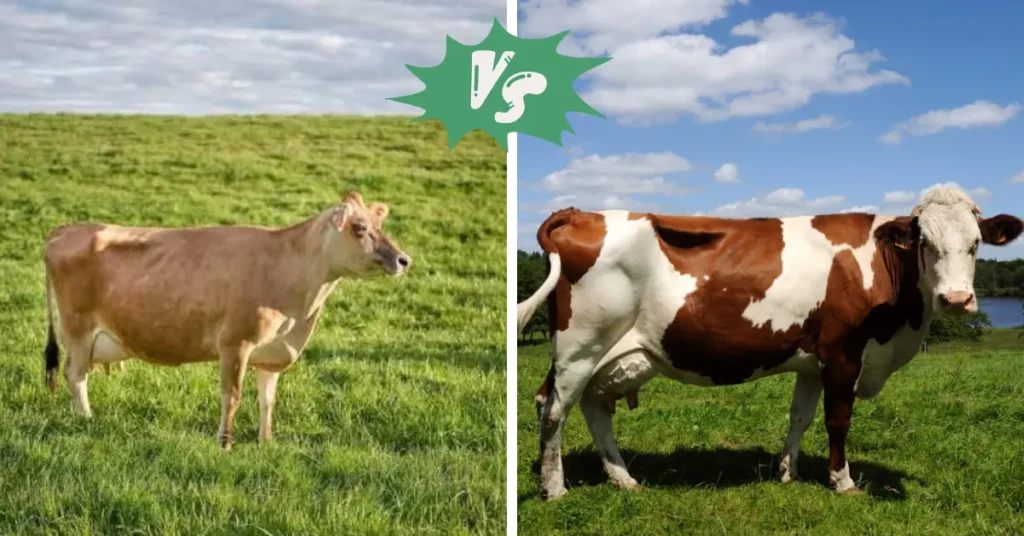
Jersey vs Guernsey Milk Butterfat Content
The biggest difference often appears in butterfat content.
Jersey milk is famous for having a high level of fat. Many Jersey herds produce milk with more than five percent fat. The exact number changes with genetics and feed. It also changes during different parts of the lactation cycle.
Guernsey milk also contains high butterfat. It is richer than milk from many large dairy breeds. Still the average fat level is often a little lower than Jersey milk.
This small difference can have a big effect on the farm.
More fat can mean more cream separation. It can also improve the yield of butter and ice cream. A family that keeps one Jersey may collect a thick layer of cream from the top of the milk.
Jersey milk also contains strong protein content. Milk protein matters because it helps form the cheese curd. A cheese maker may get more useful solids from a smaller amount of high component milk.
This is why Jersey milk works well for:
- Butter
- Cream
- Cheese
- Yogurt
- Ice cream
- Milkshakes
- Clotted cream
Guernsey milk has another special feature. It contains a visible level of beta-carotene. This natural plant pigment gives the milk a golden yellow shade.
The cow gets beta-carotene from forage. Her body allows more of the pigment to pass into the milk. This makes Guernsey milk stand out in glass bottles.
The golden color can support premium branding. Customers often connect the color with rich and natural milk. A farm shop can use this visual difference during direct farm sales.
Jersey milk can also look creamy or light yellow. Yet Guernsey milk usually has the stronger golden look.
Feed quality affects both breeds. Good fibre can support healthy butterfat levels. Sudden ration changes may reduce fat. Poor rumen health can also harm milk composition.
Season can change the result too. Fresh grass may affect milk color and fat. Stored forage may produce a different result. Heat stress can reduce feed intake and lower the amount of milk solids.
Farmers should test milk instead of depending only on breed averages. A strong Guernsey may produce richer milk than a weak Jersey. Genetics and management always matter.
For the highest average milk solids concentration the Jersey usually wins. For rich milk with a clear golden color the Guernsey offers something special.
Jersey vs Guernsey Cow Milk Production
Milk production is not only about litres. A cow can produce a large volume of thin milk. Another cow can produce less milk with more fat and protein. Both may create similar farm value. Modern Jersey cows and Guernsey cows can produce similar milk amounts under good care. In many recorded herds Jerseys show a small lead in total production. The difference is not always large.
A Jersey may produce less liquid milk than a Holstein. Yet her high component milk can earn more when the milk buyer pays for fat and protein. This payment system is called component pricing. It rewards useful solids instead of only rewarding litres.
A Guernsey can also produce a strong amount of rich milk. She often performs well in a pasture-based dairy. Her body size gives her more capacity than a Jersey while she remains smaller than many large dairy cows.
Actual milk yield depends on many things:
- Breed genetics
- Forage quality
- Energy intake
- Udder health
- Milking routines
- Cow age
- Lactation stage
- Heat stress
- Fertility
- Disease control
A cow cannot reach her production potential on weak feed. She also cannot maintain output when she lacks clean water. I often see farmers focus only on the breed name. They forget the family milk records. A well bred Jersey from a productive line may give far more milk than an average cow. The same rule applies to Guernsey.
The milk market should guide the decision.
A processor that pays mainly for volume may not give the Jersey enough reward for her rich milk. A creamery that pays for butterfat production and protein production may value her much more.
A Guernsey farm may earn extra money through bottled milk. The golden milk can become part of the brand story.
Small farms should also think about family use. A high producing cow may give more milk than one household can handle. Extra milk needs a plan. It can go into cheese or butter. It can also feed calves if local rules allow it.
For total milk volume the two breeds can be close. For milk value the Jersey often gains an edge through solids. For pasture systems the Guernsey remains a strong choice.
Jersey vs Guernsey Cow Size and Weight
A Jersey is one of the smaller common dairy breeds.
An adult Jersey cow often weighs between about 800 and 1200 pounds. That is around 363 to 544 kilograms.
A mature Guernsey cow often weighs about 1200 to 1300 pounds. That is around 544 to 590 kilograms.
This means the Guernsey usually has a larger frame. Body size affects the whole farm. A smaller cow uses less space in a barn. She may need less feed for daily body maintenance. She may also create less pressure on flooring. The Jersey fits well in compact facilities. This can help farmers with limited land or older barns.
Still a small cow needs proper space. A stall must allow her to lie down and stand up with ease. Tight housing can damage joints and reduce comfort. The Guernsey needs more room than a Jersey. Yet she still has a medium frame. Many farmers find her easier to house than a very large Holstein.
Body size also affects maintenance energy. Every cow uses energy before she makes milk. She needs energy to breathe and walk. She also needs energy to keep her body warm.
A smaller Jersey often uses less feed for this basic maintenance. This helps explain her strong feed efficiency.
The Guernsey may eat more total feed because she carries a larger body. Her bigger frame may also support a larger stomach capacity. This can help her use the pasture well.
Calf size matters too.
Jersey calves are usually small. Small calves can lose body heat fast during cold or wet weather. They need dry bedding and quick colostrum.
Guernsey calves are often larger. They are still manageable but may need more milk and space as they grow.
Transport also changes with size. A smaller Jersey may fit more easily into small livestock equipment. A Guernsey may need stronger gates and more room.
For a homestead with little space the Jersey often makes sense. For a farm that wants a larger dairy cow without choosing a heavy breed the Guernsey can fit better.
Jersey vs Guernsey Cow Temperament
Both breeds can show good dairy cow behavior. Jerseys often act alert and curious. They may watch people closely. Some cows learn routines very fast. This active nature can make a Jersey enjoyable to handle. It can also make her seem nervous if the handler moves too fast.
Most Jersey females have a docile temperament when people treat them well. Rough handling can change that. Shouting and chasing may create fear. Guernseys often have a gentle disposition. Many farmers describe them as calm and easy to move. This can help in the milking area and grazing lanes.
A calm cow saves time. She also reduces the chance of injury. Still, breeding does not control every personality. Individual temperament matters more than many people think.
One Jersey may stand quietly during milking. Another may kick when someone touches her udder. One Guernsey may follow a halter. Another may become upset when separated from the herd. Pain can also change behaviour. A cow with mastitis may kick during milking. A cow with a sore hoof may refuse to walk.
The best time to judge a cow is during her normal routine. Watch her enter the milking place. Notice how she reacts to touch. See how she behaves near other cattle.
Ask the seller important questions:
- Has she experienced hand milking?
- Does she accept machine milking?
- Does she walk on a halter?
- Does she kick?
- How does she act after calving?
- Is she calm around dogs?
- Does she respect personal space?
Bulls need far more caution.
A young bull calf may seem friendly. A mature bull can become dangerous. Jersey bulls have a strong reputation for difficult behaviour. No dairy bull should be treated like a pet. For a beginner the Guernsey may feel calmer. Jersey may feel more lively. Good breeding and low-stress handling can make either breed safe and pleasant.
Jersey vs Guernsey Cow Appearance
The two breeds look different when you know the main signs.
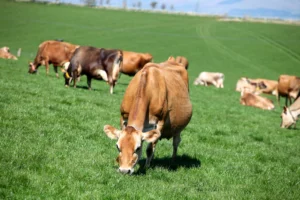
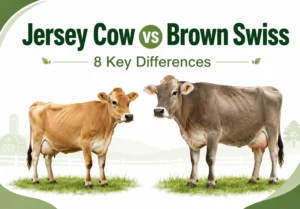
A Jersey usually has a mostly solid coat. Her color may range from light fawn to dark brown. Some Jerseys look almost black. Many Jerseys have dark eyes and a dark nose. They may also have black hooves and a dark tail switch.
The Jersey face often looks small and refined. Large eyes can give her a deer-like look. Her body looks compact but deep. Guernsey usually has a mix of fawn and white. The fawn may look reddish or golden brown. White areas often appear on the face and legs. They may also appear on the belly or side.
The Guernsey looks taller and longer than the Jersey. Her frame often appears stronger. Coat color makes breed identification easy. Yet farmers should not buy a cow only for beauty.
A working dairy cow needs a sound udder. The udder should attach well to the body. Teats should sit in a useful position. Bad teat placement can make hand milking hard. It can also cause problems with a milking machine.
Feet and legs matter too. A beautiful cow with weak feet may not stay productive for long.
Both breeds can grow horns. Some farmers use early disbudding. Others select polled genetics. Local animal welfare rules should guide the choice.
Milk appearance adds another difference. Jersey milk looks thick and creamy. Guernsey milk often shows a stronger golden color.
This difference may not matter to a large milk processor. It can matter a lot to a small farm that sells milk directly.
Jersey vs Guernsey Cow Feeding Needs
A cow needs more than grass to produce good milk. Both breeds can use pasture. Both still need a balanced diet. Jerseys have a strong reputation for turning feed into valuable milk solids. Their small body helps reduce daily maintenance needs. This does not mean a Jersey can live on poor forage. Rich milk needs strong nutrition.
A Jersey ration should provide enough:
- Energy
- Protein
- Effective fibre
- Minerals
- Clean water
Guernseys are known as strong grazers. Their medium body helps them travel across pastures. They can work well in a grass based system. Good grazing still needs management. Cows should not remain on short and weak pastures. The farmer must allow grass to regrow.
Pasture quality changes through the year. Spring grass may provide high protein. Mature summer grass may contain more fibre and less energy. A lactating cow may need extra feed when grass quality drops. This could include hay or silage. It may also include grain or a balanced concentrate. Farmers should look at body condition and milk output. A cow that loses too much weight may not receive enough energy.
Water is often forgotten. Milk contains a large amount of water. A cow cannot keep producing when the water trough is dirty or empty. Feed changes should happen slowly. The rumen microbes need time to adjust. Sudden grain changes can upset digestion.
For farms with little feed the Jersey may have an advantage because of her small size. For farms with strong grazing land the Guernsey can use pasture very well.
Jersey vs Guernsey Cow Health and Lifespan
Both breeds can live productive lives with proper care. Jerseys are often known for productive longevity. Many stay useful through several lactations. Guernseys also have a reputation for being durable. Their medium size may support good movement and grazing life. A long life does not happen by accident.
Common dairy health problems affect both breeds. These may include:
- Mastitis
- Lameness
- Fertility problems
- Ketosis
- Retained placenta
- Metabolic illness
Udder health needs daily attention. Clean bedding helps. Correct machine settings also reduce damage. Farmers should watch the somatic cell count. A high count may show udder infection. Feet also decide how long a cow stays in the herd. A cow in pain eats less. She may also produce less milk.
Dry walking areas can reduce hoof trouble. Regular hoof checks can catch problems early. The calving period brings extra risk. Mineral balance matters before and after birth. A farmer should use help from a veterinarian or dairy nutritionist.
Fertility has a direct effect on lifespan. A cow that cannot become pregnant may leave the herd even when she still gives milk. This is why biological lifespan and commercial herd life are not the same thing. A cow may live for many years. A commercial farm may remove her earlier because of low milk or health trouble.
Good records help farmers make better choices. Record mastitis cases and hoof issues. Also record calving dates and breeding attempts.
A healthy individual cow is more important than a famous breed name. A well managed Guernsey can outlive a poorly managed Jersey. A strong Jersey can remain productive for many years.
Which Cow Is Better for Dairy Farming?
The best breed depends on the farm.
Choose a Jersey cow when you want high butterfat and protein from a small body. Jersey milk is excellent for butter and cream. It also works well for cheese and yogurt.
A Jersey may suit:
- A small homestead
- Limited barn space
- High component milk sales
- Butter making
- Cheese making
- A farm with high feed costs
Choose a Guernsey cow when you want a medium-sized grazer with calm behaviour. Her golden milk can support direct sales.
A Guernsey may suit:
- A pasture-based dairy
- A farm shop
- Bottled milk sales
- Family milk production
- A farmer who values gentle cows
- A strong grazing system
Milk payment rules can change the answer. A farm paid for fat and protein may earn more from Jerseys. A farm selling branded golden milk may earn more from Guernseys. Local supply matters too. A healthy cow with good records is a better choice than a weak cow from the preferred breed.
Before buying check the cow’s:
- Milk records
- Butterfat tests
- Protein tests
- Udder shape
- Test placement
- Feet and legs
- Calving history
- Fertility records
- Mastitis history
- Milking temperament
The Jersey often wins for milk component value. The Guernsey often wins for pasture performance and golden milk.
Final Thought
The Jersey vs Guernsey cow choice should match your real farm needs.
A Jersey gives very rich milk from a small frame. She often needs less space. She can produce excellent butter and cheese. Guernsey gives rich golden milk. She has a larger body and a gentle nature. She can perform well on pastures.
Do not choose only by color or popularity. Look at feed costs and land. Study milk records and health history. Watch the cow during milking. The better cow is the one that stays healthy and calm. She should also produce the kind of milk your family or customers need.