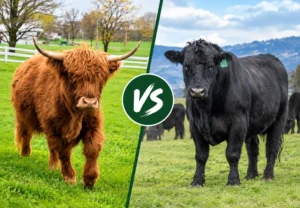
Many people ask Are Highland cows dangerous because these animals have long horns and a strong body. Their heavy coats can make them look calm and soft. Their horns can make them look wild. The truth sits somewhere in the middle.
A Highland cow is not normally an aggressive farm animal. Most are calm when people treat them with care. Still they are large horned cattle. A mature cow can hurt a person without planning to attack. One quick turn of the head can bring the horns very close. One frightened step can knock someone down.
I have learned that cattle safety is less about fear and more about respect. You should watch the animal before you move closer. You should notice its head position and its personal space. You should also think about calves, dog food and narrow gates. These small details often decide whether the meeting stays calm.
Why Do Highland Cows Have Large Horns?
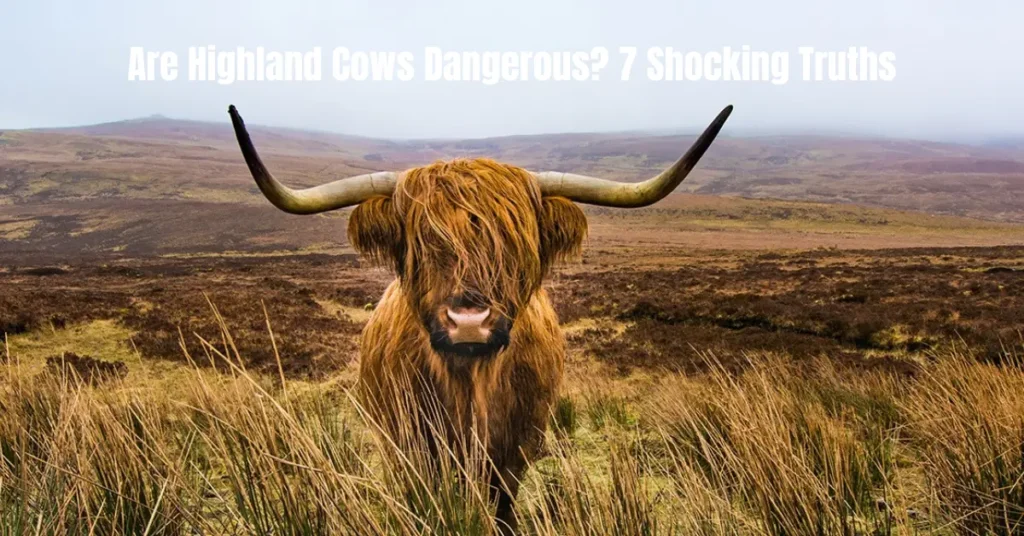
The large horns of Highland cattle are not only for appearance. They are a natural part of the Highland breed. Both male and female cattle can grow horns. A bull usually has thicker horns. A cow often has longer horns that curve upward.
These horns helped Highland cattle survive in the rough land of western Scotland. The animals lived in cold rain and snow. They had to find food in hard places. Their horns helped them move through brush and reach plants under light snow. They also used them for self-defence.
The horns also play a role in herd communication. Cattle do not always need to fight. A strong body position or a small head movement can tell another animal to step away. This is part of their social order.
Still the horns create real danger. A cow may swing its head to remove flies. It may turn toward a sound. It may rub against a feeder. None of these actions means the cow wants to attack. Yet the horn can still strike a person who stands too close.
This is why safe spacing matters. Never stand between the head of a Highland cow and a fence. Never hold the horns as if they are handles. Do not pull them or play with them. That can cause fear and a sudden reaction.
Good handling facilities also matter. Gates and feeders should give horned cattle enough room. A narrow opening can trap the horns. That may cause panic. The animal may pull back hard or push forward with force.
People often see the horns and think the animal must be violent. That is not fair. The horns are a breed characteristic. The real risk comes from the horns plus body weight plus poor handling.
Are Highland Cows Aggressive Toward Humans?
Most Highland cows are not naturally aggressive toward humans. They often have a calm temperament. Many owners describe them as quiet and easy to manage.
However every cow has its own nature. One may be curious. Another may be shy. A third may stay calm with its owner but feel nervous around visitors. Individual behaviour depends on age, health, past handling and genetics.
Cattle also have a flight zone. This is the space around the animal that makes it feel safe. When a person enters too deeply the cow may move away. If it cannot move away it may turn and defend itself. A cow can become dangerous when it feels trapped. This often happens in a narrow pen or beside a solid gate. The animal sees no clear escape route. Fear then turns into pushing or charging.
A Highland cow may also react when it has pain or illness. A calm cow can become sharp if someone touches a sore area. This is why handlers should notice changes in normal behaviour.
Food can also cause problems. Hand-fed cattle sometimes lose respect for personal space. A small calf pushing for food may look funny. The same habit becomes dangerous when the calf reaches adult size.
I have seen that the best cattle are not always the ones that come closest. A well-trained cow should stay calm and still respect the handler’s space. Friendly behaviour should never become pushing. The safest description is calm but powerful. Highland cattle are not looking for a fight. Yet they should never be treated like giant pets.
Are Highland Cows Safe Around Children?
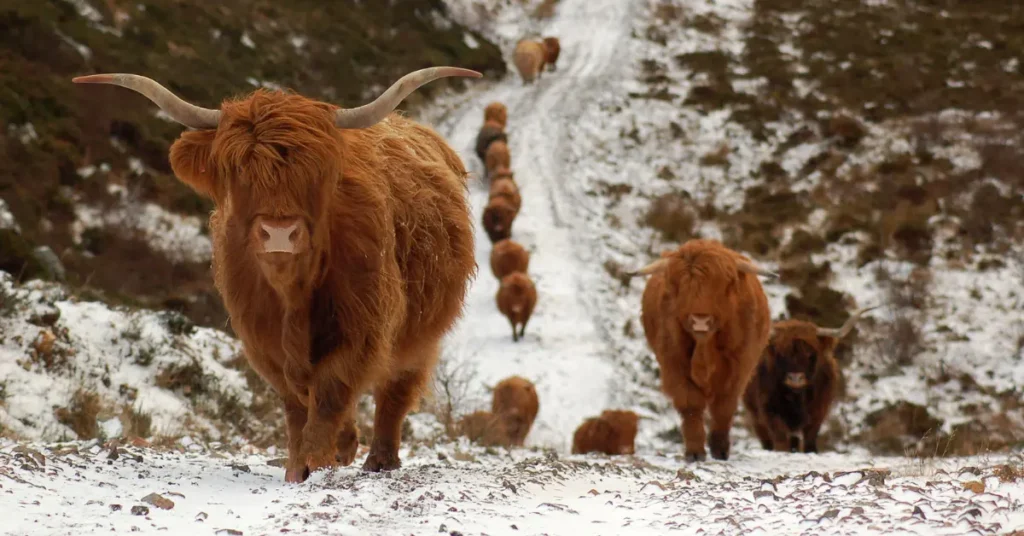
Highland cows can live on family farms. They can also be part of farm visits. Still children should never enter a cattle area alone. The long hair makes Highland cattle look soft. Their faces can look friendly. Children may think they are safe to hug or touch. That can create a serious risk.
A cow can hurt a child without showing aggression. It may step on a foot. It may turn its head. It may push toward a feed bucket. It may run after a loud sound. Children are smaller than adults. They also react more slowly. They may run or shout. They may approach from behind. This can surprise cattle and create a kicking risk.
The safest place for young children is behind a strong fence. They should not put their hands through the fence. They should not touch the horns or face. They should also avoid climbing on gates. Feeding needs control too. Hand feeding adult cattle can teach them to crowd people. It is safer to use a proper feed trough. An experienced adult should manage the feeding.
Children should also stay away from cows and calves. A mother cow may look calm. Yet she can react in one second if she thinks her calf is in danger. Maternal protection is one of the strongest reasons cattle become defensive.
A child should never work with a mature bull. Bulls can become more dangerous with age. A bull that was gentle as a calf may change when it reaches maturity.
Basic farm hygiene also matters. Children should wash their hands after touching fences or farm animals. They should not eat food inside the cattle area. Highland cows can give children a good farm experience. The key is adult supervision and clear rules.
Do Highland Cows Attack Other Animals?
Highland cows do not normally hunt or attack other animals. They are grazing herd animals. Most of their day goes into eating, resting and moving with the herd.
Still conflict can happen. Cattle have a social hierarchy. One animal may push another away from food or water. A new cow may face short periods of chasing while the herd adjusts. Bulls create the biggest risk. Two mature bulls may challenge each other. This is more likely when cows are nearby. Their strength and horns can cause serious injury.
A person should never stand between fighting bulls. The animals may damage fences, gates or equipment. They may not even notice the person in the middle. Cows can also act against dogs. A dog may look like a predator to cattle. This is especially true when calves are present. Barking or chasing can trigger a protective herd. People walking dogs near cattle should be very careful. A quiet dog can still attract attention. A running dog can make the herd follow or surround it.
Highland cattle may live with sheep, goats or horses. Yet owners should make introductions slowly. There should be enough food, water and space. Crowding can lead to horn injuries. Smaller animals also face accidental danger. A cow may step on them. It may swing its head near a feeder. It may push through a narrow gateway. Good animal observation helps. If one cow keeps chasing or cornering other animals it should be separated. Owners should not ignore repeated aggressive behaviour.
Highland Cow Temperament and Behavior
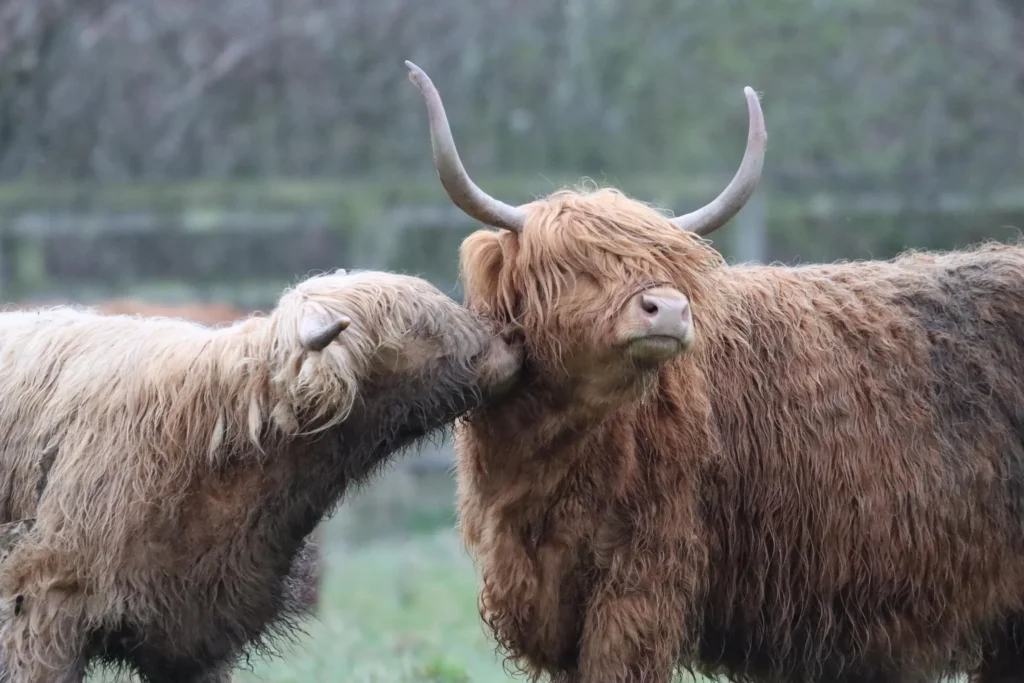
The normal Highland cow temperament is calm, alert and independent. These cattle are also hardy. They developed in a difficult climate. That gave them strong survival skills. They are herd animals. They usually feel safer when they can see other cattle. A single cow separated from the group may become restless. It may call loudly or search for a way out.
Highland cattle also learn from experience. Calm handling makes future work easier. Rough handling makes them nervous. Shouting and hitting may move cattle for a moment. Yet these methods often create long term fear. A frightened cow remembers bad places and bad handlers.
Good stockmen use low-stress handling. They work near the edge of the flight zone. They apply light pressure. Then they step back when the animal moves. The point of balance is often near the shoulder. Standing behind this point can encourage the cow to walk forward. Moving ahead of it can make the animal stop or turn.
Bottle-raised calves need special care. They may become too comfortable with humans. They may rub, push or head-butt during play. These actions look harmless when the calf is small. The same behaviour can become dangerous in a grown cow or bull. This is why young cattle should learn respectful behaviour early.
Temperament also matters in breeding. Calm cattle are easier to move. They are safer during transport. They are also easier to treat during veterinary care.
Owners should keep notes about nervous or aggressive animals. A repeated behaviour pattern is more important than one bad day.
How to Approach a Highland Cow Safely
Before you approach a Highland cow take a moment to watch it. Look for a calf. Look for a bull. Check the gate and the fence. Notice whether the animal is eating or resting. Approach from the side where the cow can see you. Do not come from directly behind. Cattle have a blind spot in that area.
Move slowly. Use a calm voice. Do not run or wave your arms. Loud sounds can make cattle nervous. Keep enough room around the horns. Do not stand beside the head in a tight place. A quick head turn can cause injury. Always plan an escape route. Know which gate you will use. Do not let the cow stand between you and the exit.
Never stand between a mother and her calf. Even a quiet cow may react fast. The calf should have space to move back to its mother. Food needs extra care. A bucket can bring several animals toward you at once. This creates crowding. Do not carry feed into a group unless you know the cattle well.
Never kneel or sit inside an area with adult cattle. Staying upright helps you move away faster. A solid barrier can protect you if the animal becomes upset. A strong gate or fence is better than a stick or bucket.
Visitors should stay outside unless the owner allows them in. Close photos are not worth the risk. Touching a calf can also trigger defensive behaviour. Bulls need much more caution. Never turn your back on a bull. Never trust one only because it was friendly before.
Warning Signs of an Angry Highland Cow
A Highland cow usually shows signs before it charges. These signs may be small at first.
- A fixed stare is one warning. The cow may stop chewing and keep its eyes on you. It may turn its body to face you.
- A lowered head is more serious. The horns may point toward the threat. The cow may also shake its head.
- Pawing or scraping the ground is another warning. Bulls often do this before moving forward.
- Snorting and loud calls can also show stress. The tail may become stiff or raised. The ears may change position.
- A cow may also block the path. It may step sideways each time you try to pass. This can be a clear warning to move away.
Not every head shake means anger. Flies can cause the same movement. This is why you should read the full body language. A cow that stares, lowers its head and steps forward is very different from a cow that shakes off flies while grazing. If you see warning signs do not shout. Do not hit the animal. Do not challenge it.
Move back in a calm way. Keep the animal in view. Head toward a gate or strong fence. Do not run through the herd. Running can cause more movement and panic. Use a solid barrier when possible. A cow with a calf needs extra space. A bull needs even more. A dog can also make the situation worse.
An animal that charges people again and again should be separated. A trained livestock handler should assess it. Repeated aggression should never be ignored.
Final Thought
So Are Highland cows dangerous? They can be. Yet most danger comes from their size horns and natural cattle behaviour rather than a wish to attack.
Highland cattle are often calm and manageable. They still need space and careful handling. Their large horns demand extra respect. Their herd instinct can change their behaviour. A mother may protect her calf. A bull may challenge a person or another bull.
The best safety rule is simple. Watch the animal. Stay out of tight spaces. Keep a clear exit. Never treat a Highland cow like a toy.
Respect keeps both people and cattle safe.