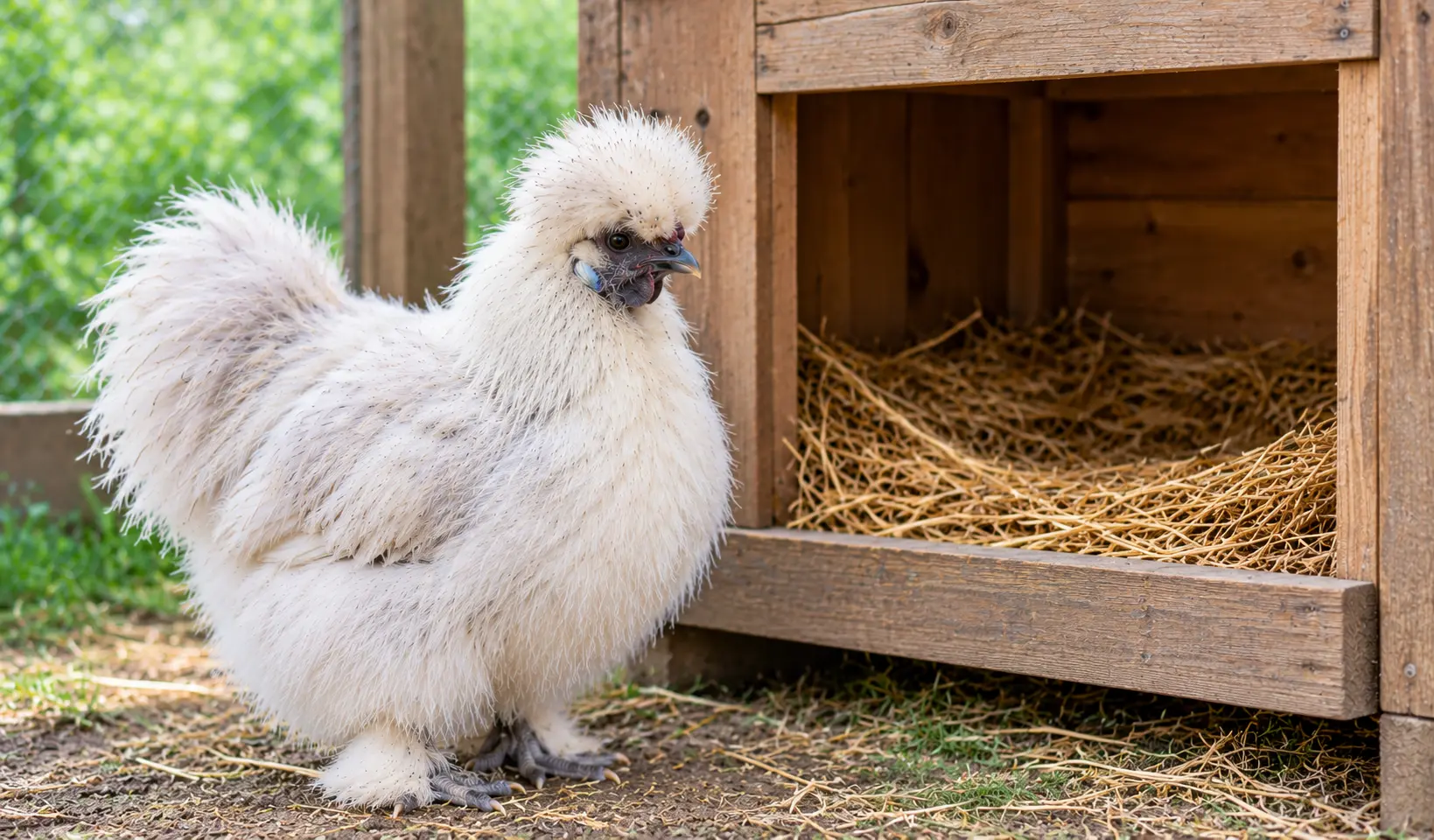

Silkie chickens are small and fluffy birds. They make good pets and can lay eggs too. But they do not lay as many eggs as some other chickens. If your Silkie hen has stopped laying eggs or has never laid one you may wonder why.
There are many reasons why a Silkie may not lay eggs. She may be too young or she may not get enough daylight. Poor food and stress can also affect egg laying. Some Silkies stop laying when they grow new feathers or sit on eggs to hatch chicks.
The good news is that many of these reasons are normal. You can learn a lot by checking your hen’s age and daily habits. Her food and living space can also help you find the cause.
Sometimes a hen stops laying because she is sick. Watch for signs such as weakness or loss of appetite. These signs may mean that she needs help.
This guide covers six reasons why your Silkie may not be laying eggs. You will also learn how to care for your hen and help her stay healthy.
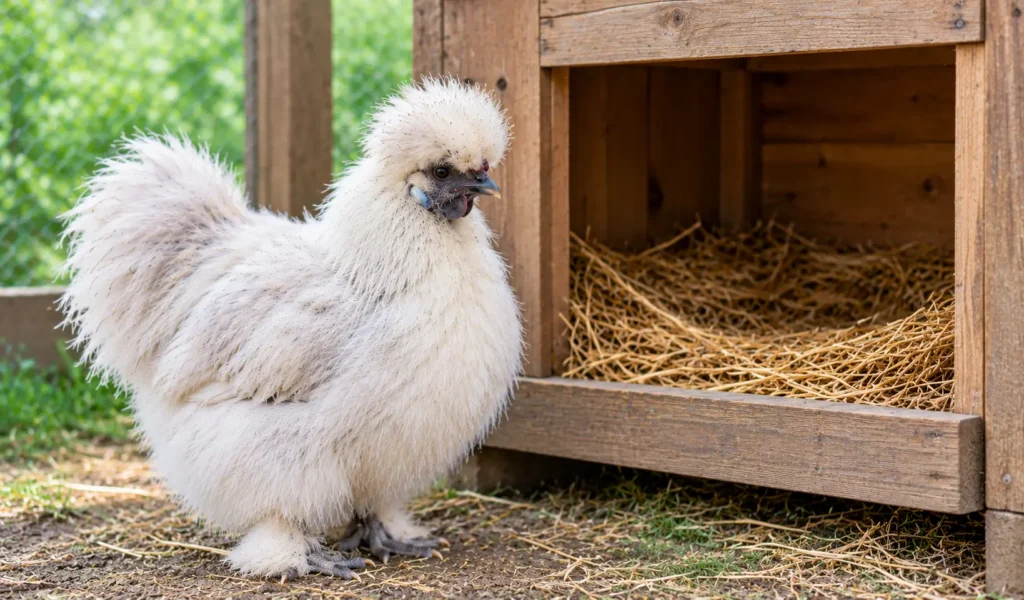
One common reason a Silkie chicken does not lay eggs is that she is too young. Silkies may take longer to grow than some other chicken breeds. Some hens start laying at 5 to 6 months old. Others may need 7 to 9 months. Every hen grows at her own speed.
A pullet is a young female chicken that is not fully grown yet. She may look like an adult but her body may not be ready to lay eggs.
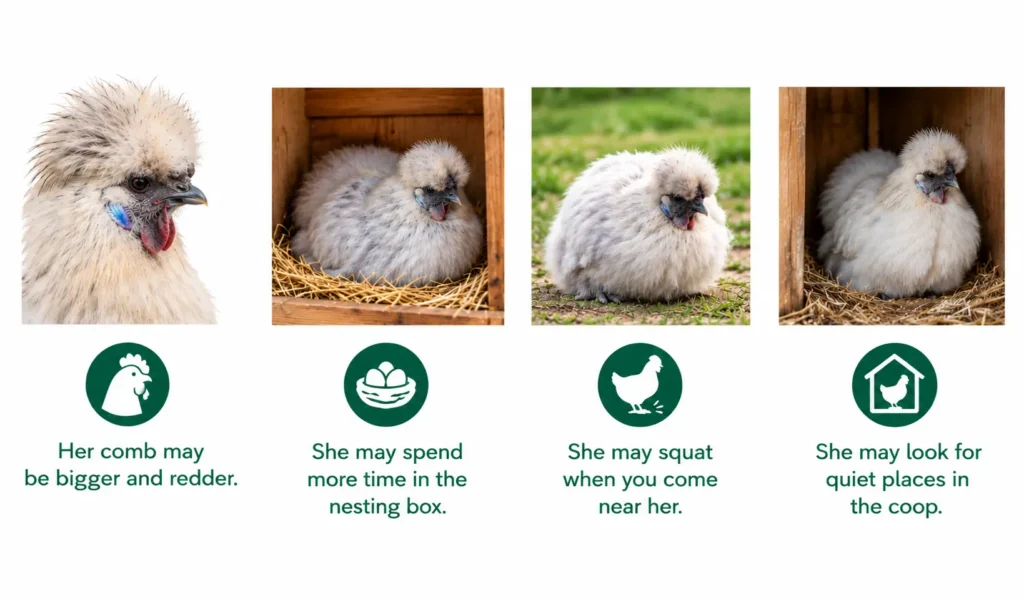
These signs may mean that your hen is getting ready to lay eggs. However they do not mean that she will lay an egg right away.
If your Silkie is only 4 or 5 months old give her more time. Feed her good quality poultry feed and keep her in a safe place. Do not try to make her lay eggs faster by giving extra food or supplements.
If your Silkie is older than 9 months and has never laid an egg check her food and living space. Make sure she is a female because young Silkies can be hard to tell apart from males. If she looks weak or does not grow well ask a poultry vet for help.
Silkies do not lay as many eggs as some other chicken breeds. A healthy Silkie may lay a few eggs each week. Her egg production can also change as she grows older.
The amount of daylight your Silkie gets can affect how many eggs she lays. Chickens need enough daylight for their bodies to produce eggs. When the days get shorter in fall and winter some hens lay fewer eggs or stop laying for a while.
If your Silkie laid eggs in spring and summer but stopped in winter there may be no need to worry. Her body may be reacting to the change in daylight.
Young Silkies that reach laying age in winter may also take longer to lay their first egg. They may start laying when the days get longer.
Keep your hen healthy by giving her good feed and a dry coop. Make sure she has clean water every day. In cold weather check that her water does not freeze. In hot weather give her shade and fresh water.
If you use artificial light to support egg laying make sure you use it carefully. Mature hens often need about 14 to 16 hours of total light each day. Use a timer to keep the light schedule steady. Give your hens enough dark hours to rest. Do not use extra light to force young hens to lay eggs before they are ready.
It is normal for some Silkies to stop laying for a while. Focus on keeping your hen healthy rather than expecting an egg every day.
Your Silkie needs good food to grow well and lay eggs. If she does not get enough nutrients her body may produce fewer eggs. Too much corn or kitchen scraps can fill her stomach but may not give her all the nutrients she needs.
Protein helps her grow and grow new feathers. Calcium helps make strong eggshells. Vitamins and minerals also keep her body healthy.
A laying hen needs complete feed made for egg-laying chickens. Young Silkies need feed that suits their age. Do not give layer feed too early because young birds need a different balance of nutrients.
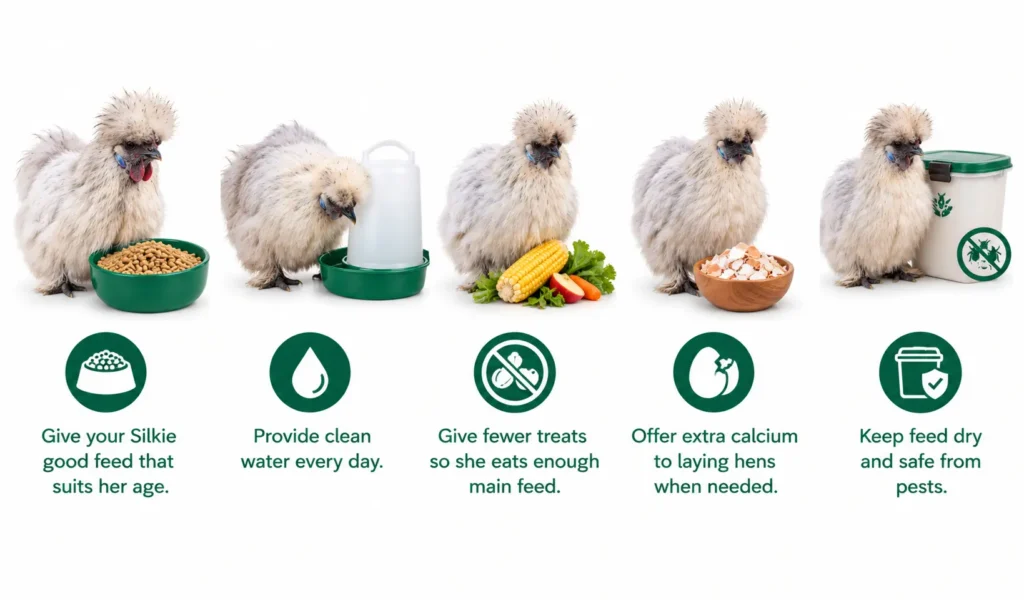
If your Silkie lays eggs with thin shells check her food and make sure she gets enough calcium. Low calcium can cause weak eggshells but it is not the only reason a hen stops laying.
Do not give too much calcium or random supplements. Too much of some nutrients can harm your hen. If she eats well but still loses weight or looks weak ask a poultry vet for help.
Good food will not make a young hen lay eggs before she is ready. It will help her grow well and support healthy egg production.
Stress can stop your Silkie from laying eggs even when she looks healthy. Chickens need a safe place to rest and lay eggs. When their home or daily routine changes they may feel scared and stop laying for some time.
Silkies are gentle chickens. Bigger birds may push them away from food and water. A bullied Silkie may hide more and eat less. This can affect her health and egg production.
Moving to a new coop can also cause stress. Adding new chickens or making loud noises near the coop may upset your hen.
Here are some simple ways to help your Silkie feel safe.
Place clean bedding in the nesting boxes so your hen has a comfortable place to lay eggs. Make sure other chickens do not stop her from using the boxes.
If you move your birds to a new coop give them time to settle in. Keep their daily routine steady and feed them at the same time each day.
Your Silkie may also be laying eggs in a hidden place. Check under bushes and in quiet corners of your yard before thinking she has stopped laying.
A calm home can help your hen feel safe and return to laying eggs. Also check her age and food because these can affect egg production too.
Molting and broodiness are two common reasons why a Silkie hen may stop laying eggs. Both are normal parts of a chicken’s life but they affect egg laying in different ways.
Molting happens when a chicken loses old feathers and grows new ones. During this time a hen uses more energy to grow her new feathers. She may lay fewer eggs or stop laying for a while. Molting often happens in fall but it can happen at other times too.
You may see loose feathers around the coop or new feathers growing on your hen’s body. Give her good feed and clean water. A quiet and safe place will also help her rest.
Do not pull out loose feathers. If your hen has sore skin or large bare spots check for mites or signs of bullying.
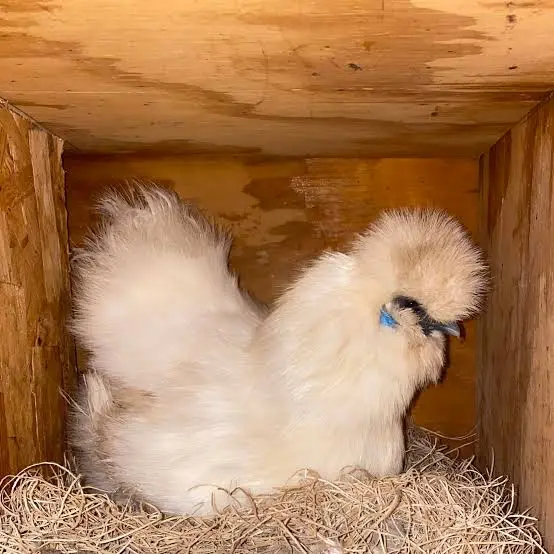
A broody hen wants to sit on eggs and hatch chicks. Silkies often show this behavior. A broody Silkie may spend most of the day in her nesting box even when there are no eggs under her. She may puff up her feathers or make loud sounds when you come near.
During this time her body focuses on sitting on the nest instead of laying more eggs. She may stop laying for several weeks.
If you want chicks give her a safe nest and proper care. If you do not want chicks collect the eggs each day and do not let her sit in an empty nest for too long. You may need to help her break this habit.
Make sure your hen still eats and drinks. She should also leave the nest to walk around. If she becomes weak or loses weight ask a poultry vet for help.
Sometimes a Silkie stops laying eggs because she is sick. Parasites and other health problems can make her weak and reduce egg production.
Watch your hen if she suddenly stops laying. A healthy hen should eat well and stay active. If she looks weak or stops eating then she may have a health problem.
Contact a poultry vet if your Silkie shows these signs:
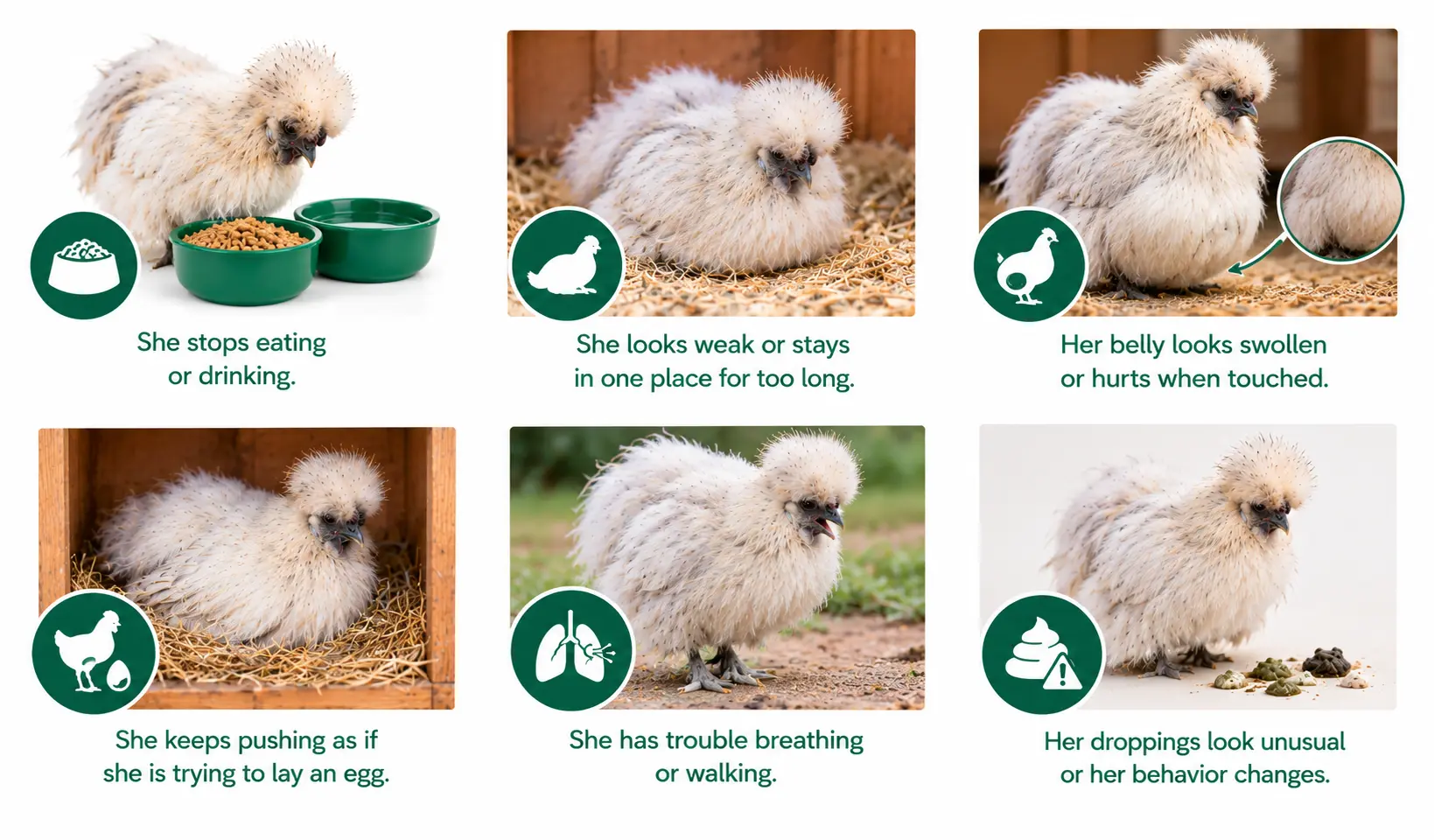
One serious problem is egg binding. It happens when an egg gets stuck inside the hen and she cannot lay it. This can make her weak and needs quick care from a vet.
Do not press her belly or try to pull the egg out yourself. Do not give medicine without advice from a vet.
Mites and lice can also make your hen weak and affect egg laying. Check her feathers and skin for these pests. Keep the coop clean and ask a vet for the right treatment if you find signs of parasites.
If several hens stop laying at the same time check their food and water. Also look for changes in their coop or daily routine. If they seem sick contact a poultry vet as soon as possible.
Your Silkie chicken may stop laying eggs because she is too young or the days are too short. Poor food and stress can also be the cause. Molting and sitting on eggs are other common reasons.
Check your hen’s age and behavior. Give her good food and clean water. Keep her coop safe and look for signs of illness.
Do not rush your hen. Every Silkie grows at her own speed. With good care and patience you can help her stay healthy and lay eggs when she is ready.