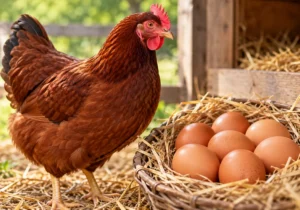
Rhode Island Reds have a clear personality once you spend some time with them. They stay busy. They are curious birds that like to explore the yard and keep an eye on everything going on around the coop. That makes them fun to raise but they are not always the type that wants to sit still in your lap.
A Rhode Island Red can be friendly without being cuddly. That difference matters a lot if you are picking chickens for a family flock. Many hens get comfortable around people once they get calm regular handling starting young. Some will eat right from your hand. Others would rather just follow you around without being touched at all.
Quick Overview
| Behavior | What You May See |
| Around people | Curious and comfortable once used to you |
| Handling | Often okay with it but depends on the bird |
| With treats | Comes running fast |
| Around kids | Hens usually do well with calm kids |
| With other chickens | Confident and sometimes bossy |
| Activity level | Busy and active most of the day |
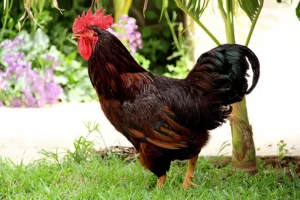
| Roosters | Can turn territorial as they grow |
| Beginner care | Generally easy and tough birds |
Temperament and Personality
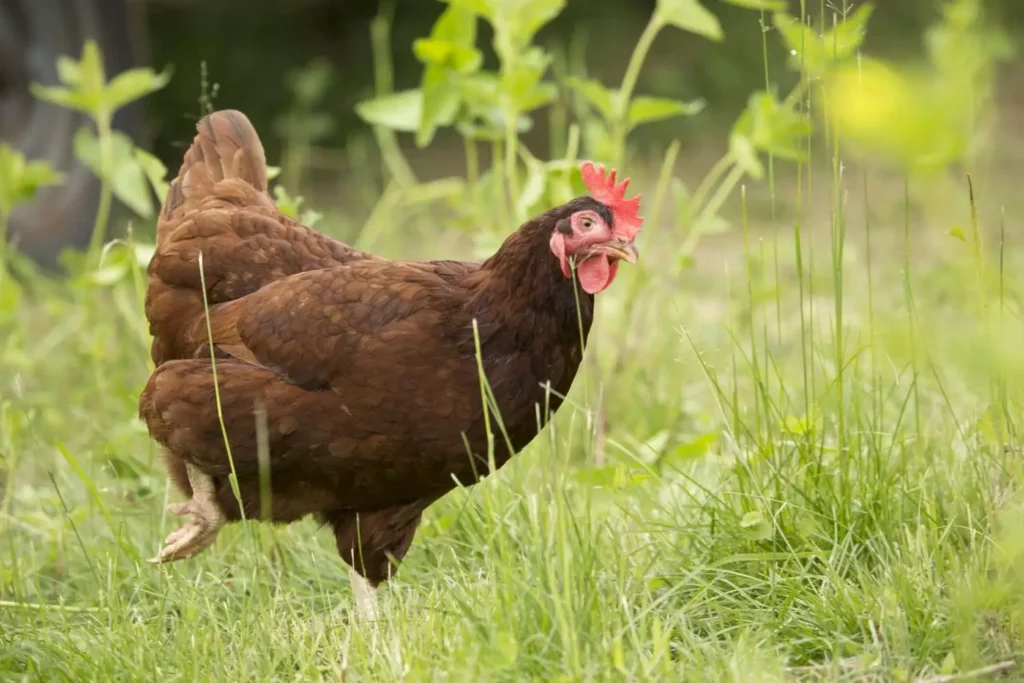
A typical Rhode Island Red is bold without being mean about it. These birds love to explore. They hunt for bugs. They watch everything happening around them and stay active for most of the day.
That confidence is why some people call them bossy. A Red hen might walk right up to another bird at the feeder instead of waiting her turn. In a mixed flock that often puts her near the top of the pecking order fast.
This does not mean every Red will push other birds around though. Each bird has its own personality. Some hens stay calm and easy to handle. Others stay more independent. Breed line and early handling and housing and flock size all shape how a bird actually behaves day to day.
Some breed guides call this bird calm and good natured. Other keepers point out the bossy side instead. Both can be true at once. A Red hen can stay calm around people and still act confident around other chickens.
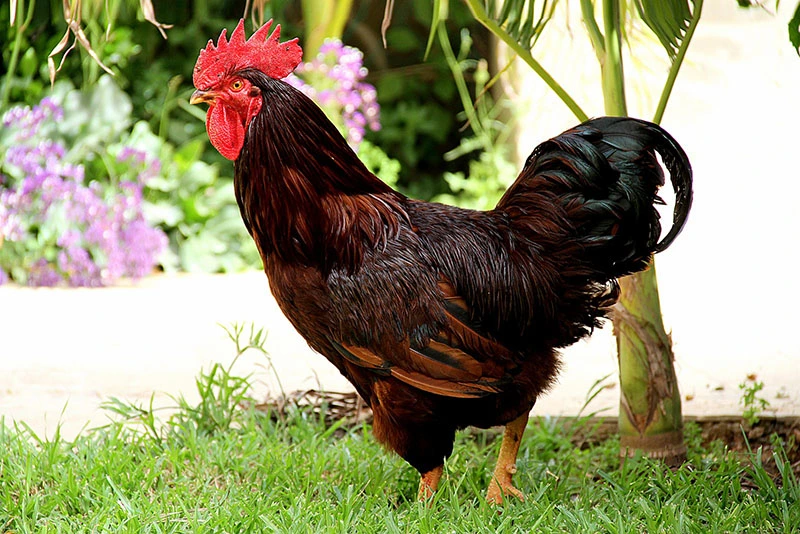
Roosters need more attention here. Some Red roosters get territorial once they mature. They may see someone walking into the coop as a threat to their flock. Not every rooster does this but it is worth knowing before adding one to a family setup.
Here is what a typical Rhode Island Red personality often looks like.
- Bold and alert most of the time
- Active and curious around the yard
- Independent but still sociable
- Comfortable exploring on her own
- Food motivated and quick to notice treats
- Confident around people once used to them
- Sometimes bossy with other chickens
- Easier to manage as a hen than as a rooster
So if you want a chicken that just sits around waiting for attention this breed might not fit that picture. If you like an active bird with a little attitude and plenty of energy a Rhode Island Red can be a great fit for your flock.
Are Rhode Reds Friendly With People
Yes, many Rhode Island Reds do become friendly with their owners over time. Think of friendly here as comfortable and approachable rather than automatically cuddly.
A young bird that sees people often is more likely to learn that human contact is normal. Calm handling helps a lot. So does sitting near the coop and talking in a relaxed voice and offering small treats by hand once in a while.
You may notice this most at feeding time. A hen that spends the afternoon scratching around the yard may suddenly show up right beside you the second she hears the feed bucket. After enough good interactions she may even start following you around even when you are not holding food at all.
That is a solid sign of trust. Still following you does not mean the bird wants to be picked up.
Some Rhode Island Reds will tolerate being held for a short time. Others get restless the second their feet leave the ground. Do not force it either way. A chicken can be friendly and still want all four feet firmly on the ground.
Here is a simple way to build trust with your flock.
- Approach slowly instead of chasing the bird around
- Offer a small treat from your open hand
- Sit near the flock for a few quiet minutes
- Talk calmly so the birds learn your voice over time
- Handle willing birds gently and set them down once they get uncomfortable
This works especially well with chicks. Regular gentle contact from a young age makes later handling much easier down the road. Keep in mind temperament still varies bird to bird so early handling helps a lot but will not turn every single chicken into a lap bird.
One good example of this is an owner walking into the run and getting followed by several hens hunting for mealworms. Those birds may not want to be petted at all. They still see the owner as someone safe and worth following around. That counts as a solid form of chicken and human bonding.
Good With Children
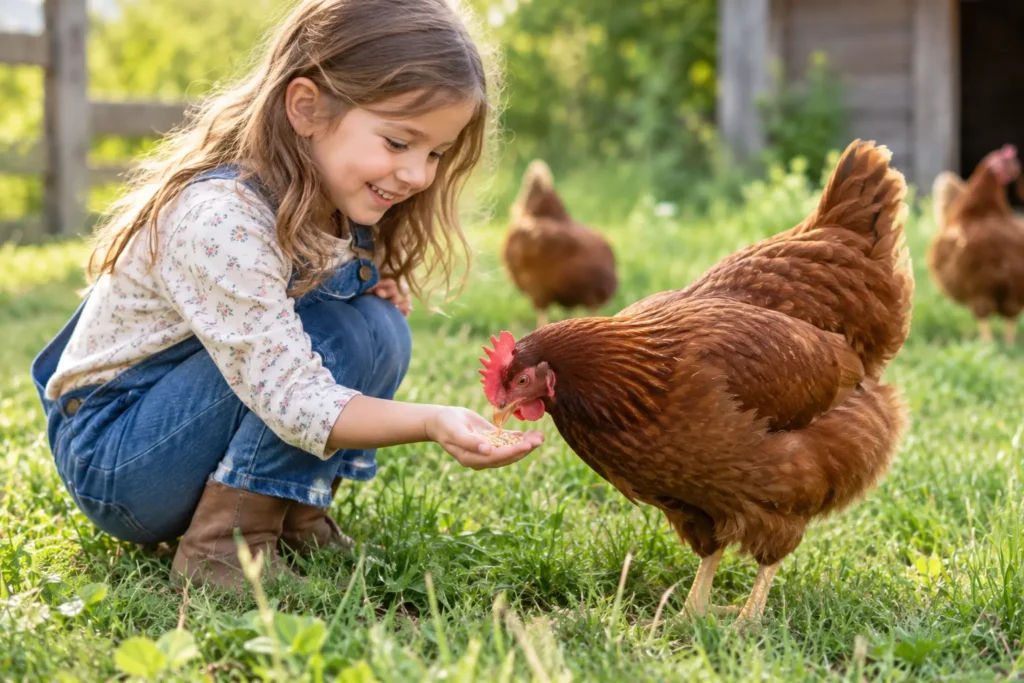
Rhode Island Red hens can do well around children when both the birds and the kids get handled the right way. Their confident personality can actually make them easier to watch than a nervous flighty chicken would be.
Kids still need to learn basic chicken behavior though. A hen may enjoy taking a treat from a small hand but dislike being chased around the run. She may stand calmly right next to a child but get uncomfortable fast if someone grabs her suddenly.
Young kids should learn to approach from the side or front and move slowly and give the bird room to walk away if she wants to. This keeps things calmer for everyone involved.
Giving kids simple jobs helps too. They can watch the hens eat or help refill approved feed with an adult nearby or collect eggs or just sit quietly while the chickens forage around the yard. These small tasks teach kids that chickens are living animals and not toys to grab.
Roosters are a different story entirely. Some Red roosters get territorial and protective once mature and may react very differently to a child than a calm hen would. Because of this families with young kids should be extra careful about keeping a rooster around. Aggressive roosters can genuinely create safety problems around children and visitors.
Watch for signs a bird wants space. This includes walking away or trying to escape repeatedly or standing in a defensive posture or pecking at a hand getting too close.
If a child wants to hold a Red an adult should always supervise. Support the bird’s body fully and keep the handling short. Never let a child chase a chicken around just to catch it.
For most family flocks calm hens stay the easier choice overall. They can still be active and full of personality without bringing the same worries a territorial rooster might create.
Do Get Along With Other Chickens
Rhode Island Reds can absolutely live with other chickens but their confident nature does deserve some planning ahead of time.
Every flock builds its own pecking order. Chickens decide who gets first access to food and water and perches and favorite spots in the run. A Red hen might be totally peaceful one minute and still push a quieter bird away from the feeder the very next minute.
This becomes more noticeable when the flock has very timid birds mixed in. A small or passive chicken may struggle if a more confident Red keeps blocking access to food or water constantly.
The answer here is not to avoid mixed flocks altogether though. Good setup fixes a lot of these problems on its own. Give the birds plenty of room to move around and set up more than one feeding area and make sure lower ranking birds always have somewhere to get away.
Overcrowding tends to be the real problem here rather than simply having a Red in the mix. When chickens cannot get away from each other normal pecking order behavior can turn into repeated bullying fast.
A solid mixed flock setup should include the following.
- Enough coop and run space for the whole flock size
- More than one food and water station around the area
- Several perches set at different heights
- Some hiding spots or visual breaks around the run
- Easy escape routes for lower ranking birds
- Regular checks for feather loss or wounds or birds being kept away from food
Matching personalities helps too. A confident Red often does better paired with other active birds that can hold their own rather than extremely timid ones. Some keepers find that mixing very docile breeds with assertive Reds takes more attention and management overall.
Do not assume one aggressive moment means the whole flock setup is failing. Some pecking and chasing stays totally normal while chickens sort out rank among themselves. The real problem starts when one bird gets repeatedly hurt or cannot eat or drink properly or has no way to escape the dominant bird at all.
Keep watching your flock closely. Chicken behavior tells you a lot about whether your setup is actually working the way it should.
Ways to Build Trust With Your Rhode Island Reds
You cannot fully change a chicken’s natural personality but you can absolutely make human interaction easier over time.
The best approach stays calm and consistent. A chicken learns from repeated experience just like most animals do. If every visit to the coop means getting chased or grabbed or carried around the bird has a solid reason to avoid people entirely. If your visits usually mean food and calm talking and fresh water and gentle handling the birds grow far less scared over time.
Treats help build that connection fast. Small amounts of mealworms or other safe treats can encourage a bird to come closer on her own. Do not overdo the treats though since the regular daily diet should stay the main source of nutrition for the flock.
Start with simple contact first. Sit near the flock instead of immediately trying to catch one bird. Let curious birds approach you on their own terms. Once a hen seems comfortable you can slowly offer your open hand.
If she walks away just let her go.
That small choice actually matters a lot. Forcing contact can make a chicken harder to handle later on down the road.
For chicks gentle handling can start early on. Hold them securely but briefly and keep your movements slow and return them safely to the brooder when done. As they grow keep offering short positive interactions rather than turning every single session into a long handling exercise.
Adult birds can still learn too. An older Red may never turn into a cuddly lap chicken but she can still learn to walk right up to you and eat from your hand and stay calm while you check her over.
A few habits make a real difference here.
- Use the same calm voice around the flock every time
- Approach from a predictable direction each visit
- Reward calm behavior with a small treat
- Avoid chasing chickens around the run at all
- Handle birds only when needed or when they seem comfortable with it
- Check the flock regularly so health issues do not quietly change behavior
- Give nervous birds time instead of forcing interaction on them
Remember friendliness comes in different levels too. One Red may happily sit right beside you but never enjoy being picked up at all. Another may let you hold her without any fuss whatsoever. Both birds count as healthy well socialized chickens either way.
Final Thought
Rhode Island Reds are usually best described as confident and active and approachable rather than extremely cuddly birds. Their hens can get very comfortable around people especially when they receive calm handling starting young.
Their stronger personality shows up more clearly around other chickens though. They often rank high in the pecking order and can act bossy with timid flock mates. Roosters deserve extra care since some can turn territorial as they mature.
For a backyard owner the biggest lesson stays simple. Do not judge a Rhode Island Red only by whether she likes being held. A bird that follows you around the yard and comes running for treats and stays calm when you enter the coop and trusts you enough to come close is already showing plenty of friendly behavior.