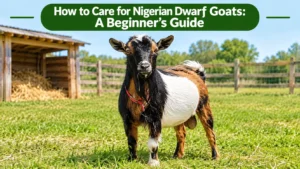
Nigerian Dwarf goats are small and friendly animals. They can be a good choice for a backyard farm or a small homestead. They are playful and known for giving rich milk. Their small size makes them easier to handle than many larger goats. But they still need good food and a safe place to live. They also need regular health care.
Good care starts before you bring your goats home. You need a strong fence and a dry shelter. You should also prepare a clean feeding area and find a vet who knows about goats. Nigerian Dwarf goats like to live with other goats. It is best to keep at least two together so they have company.
Daily care becomes easier when you follow a simple routine. Give your goats fresh hay and clean water every day. Check their hooves and watch for signs of illness. Keep their living area clean and give them a balanced diet. These steps can help your goats stay healthy and active.
This guide covers the basic care needs of Nigerian Dwarf goats. You will learn about their food and shelter. It also explains their space needs and grooming. You will also learn about common health problems and how to prevent them.
What Do Nigerian Dwarf Goats Eat? Feeding and Nutrition Guide
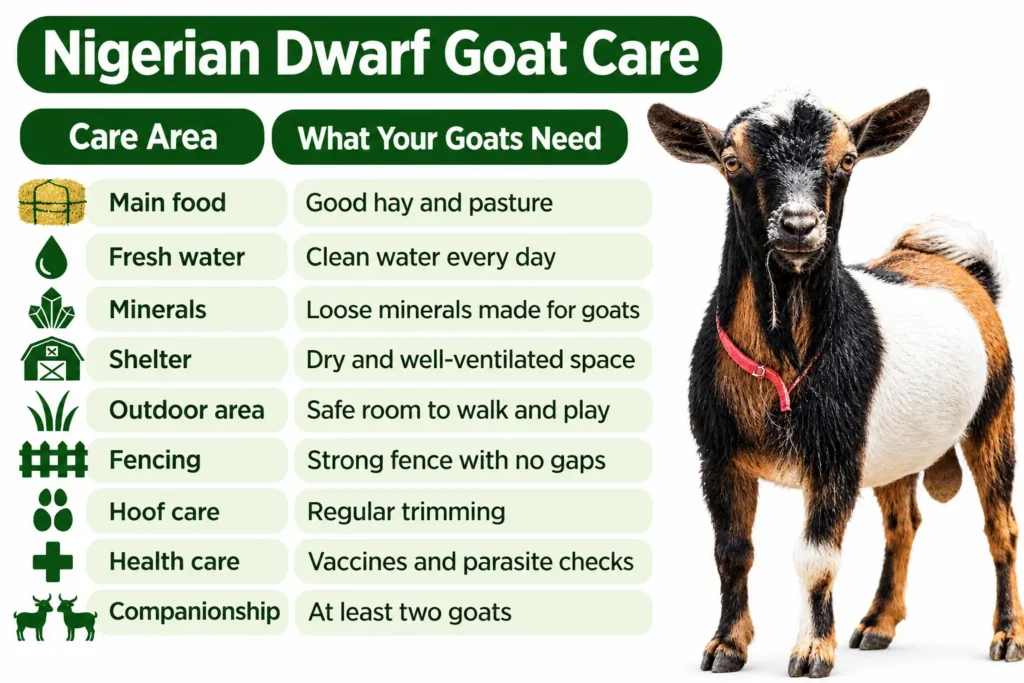
Good food is very important for Nigerian Dwarf goats. They need food with enough fiber and nutrients to grow well and stay healthy. Hay and grass should make up most of their diet. They also like to eat safe leaves and plants. Fresh water and proper minerals are important too.
Hay and Grass Should Be Their Main Food
Good grass hay is a healthy daily food for Nigerian Dwarf goats. Timothy hay and orchard grass are common choices. You can also let them eat grass in a safe pasture. Goats enjoy eating different plants and leaves as they walk around.
Alfalfa hay has more protein and calcium than most grass hay. It can be good for pregnant goats and nursing mothers. Growing kids may also need it. But adult goats do not always need a lot of alfalfa. Their food needs depend on their age and health.
Keep hay clean and dry. Use a raised feeder to keep goats from stepping on their food or mixing it with waste. Goats may not eat hay that is wet or dirty.
Give Grain and Minerals in the Right Amount
Grain can give extra energy to growing kids and goats that produce milk. But too much grain can make goats gain weight and cause stomach problems. Nigerian Dwarf goats are small so they usually do not need much grain.
Male goats need extra care with grain. Too much can increase the risk of urinary stones. A balanced goat feed and advice from a vet can help prevent this problem.
Goats also need loose minerals made for goats. These minerals provide nutrients like copper and selenium. Do not give them sheep minerals because these may not have enough copper. Ask your vet before giving extra minerals because each goat may have different needs.
Always Provide Fresh Water
Clean water should always be available. Goats may drink more water during hot weather or when they produce milk. Clean their water bowls often and remove any dirt or food.
Do not change their food too quickly. Add new hay or grass slowly so their stomachs can adjust. You should also check the pasture for harmful plants. Rhododendron and azalea are two plants that can be dangerous for goats.
How to Build a Proper Shelter for Nigerian Dwarf Goats
Nigerian Dwarf goats need a dry and safe place to rest. They do not need a costly barn. A simple shelter can protect them from rain and strong winds. It should also give them shade during hot weather.
A shelter with three closed sides can work well in many areas. Keep the open side away from strong winds and heavy rain. Make sure the roof does not leak and the floor stays dry. Wet and muddy areas can cause health problems for goats.
Each goat needs enough room to lie down and rest. A good starting point is about 15–20 square feet of indoor space per goat. Pregnant does and mothers with young kids may need extra room.
Keep Bedding Clean and Dry
Use clean straw or other safe bedding to make the resting area comfortable. Remove wet bedding and goat waste often. Add fresh bedding when the floor becomes dirty or damp.
Good airflow is also important. A closed shelter can trap moisture and bad smells. Add openings near the roof to let fresh air move inside. Make sure cold winds do not blow directly onto the goats.
Your shelter should have:
- A dry place to sleep.
- Fresh air without strong drafts.
- Shade from the hot sun.
- Protection from rain and cold winds.
- Safe flooring that is not slippery.
- Enough room for all your goats.
Keep food and water containers away from manure and dirty bedding. This helps keep the shelter clean and lowers the risk of illness.
How Much Space Do Nigerian Dwarf Goats Need?
Nigerian Dwarf goats are smaller than many dairy goats but they still need enough room to move around. They like to run and jump. A small pen with little space can make them bored and stressed.
Each goat needs about 15–20 square feet of indoor space and at least 200 square feet of outdoor space. These are general space guides. More room is always better when you have enough land. The number of goats and the ground they live on can also affect their space needs.
Build a Safe Outdoor Area
A fenced yard or pasture gives goats room to walk and play. Use a strong fence that keeps them from getting out. A fence about 4 feet high can work for many Nigerian Dwarf goats. Check it often because goats may find small gaps.
You can add safe platforms and climbing areas to make the space more fun. Goats enjoy jumping and standing on raised spots. Make sure everything is strong and has no sharp edges.
Check the pasture before letting your goats outside. Remove harmful plants and look for holes or loose wires. Keep the ground near food and resting areas as dry as possible. Too much mud can make goats dirty and cause hoof problems.
Goats also need company. They are social animals and should not live alone. Keep at least two friendly goats together so they can play and spend time with each other.
Nigerian Dwarf Goat Grooming and Hoof Care
Nigerian Dwarf goats do not need much grooming but they still need regular care. Brush their coats when they get dirty or start shedding. Check their skin and fur for bald spots or signs of irritation.
Hoof care is also very important. Goat hooves keep growing and can become too long without trimming. Long hooves can make walking hard. They can also collect dirt and lead to infections.
Most goats need hoof trimming every 4–8 weeks. This can change based on how fast their hooves grow and the type of ground they walk on. Goats that walk on hard ground may wear down their hooves naturally.
How to Check and Trim Hooves
Look at your goat’s hooves while it stands. Check for uneven growth or signs of pain when walking. If you are new to hoof trimming ask a vet or an experienced goat owner to show you how to do it.
Use clean and sharp hoof trimmers. Cut small parts at a time. Do not cut too deep because it can cause pain and bleeding. If a hoof is badly overgrown or infected ask a vet for help.
You should also check these body parts often:
- Ears for dirt or irritation.
- Eyes for discharge.
- Skin for cuts or sore spots.
- Coat for rough fur or hair loss.
- Legs for swelling or limping.
- Body weight to make sure your goat is not too thin or too heavy.
Regular checks can help you find health problems early and keep your goats healthy.
Common Nigerian Dwarf Goat Health Problems and Prevention
Nigerian Dwarf goats can have health problems like other goat breeds. Good food and a clean shelter can help keep them healthy. Regular health checks are also important.
Internal Parasites and Worms
Worms can live inside a goat and make it sick. Barber pole worms are a common problem. They can cause blood loss and weakness. A goat with worms may have pale eyelids and lose weight. Its coat may also look rough.
A FAMACHA check helps owners look for signs of anemia by checking the color inside the lower eyelid. Your vet may also test the goat’s manure to look for worms.
Do not give deworming medicine without proper advice. Your vet can help you choose the right treatment. Giving medicine too often can make worms harder to control.
Coccidia in Young Kids
Coccidia is a parasite that can cause diarrhea in young goats. It can make them weak and slow their growth. Dirty and wet areas can increase the risk of this problem.
Keep the bedding clean and dry. Wash water containers often and keep food away from manure. Ask your vet about ways to protect young goats from coccidia.
Hoof Problems and Digestive Issues
Long hooves can make walking painful for goats. Trim their hooves regularly and keep their living area clean. Watch for limping or swollen feet.
Eating too much grain or changing food too quickly can also cause stomach problems. Bloat is another serious problem. It can make a goat’s belly swell and cause pain. Contact a vet right away if you notice these signs.
Vaccines and Regular Vet Checks
Regular vet visits help protect Nigerian Dwarf goats from common diseases. Many goat owners use the CDT vaccine to protect against tetanus and enterotoxemia. Your vet can tell you when your goats need this vaccine and if they need any other shots.
Keep a record of each goat’s weight and health checks. Write down vaccine dates and any medicine you give. Call a vet if your goat stops eating has bad diarrhea has trouble breathing or cannot stand.
A Simple Daily and Weekly Care Routine
A daily routine makes goat care easier. It helps you keep your goats healthy and safe. You do not have to do every task each day. Some jobs only need attention once a week.
Daily Care
- Give your goats fresh hay and clean water.
- Make sure they are eating and walking normally.
- Clean food and water bowls.
- Check for signs of injury or illness.
- Keep their shelter clean and dry.
Weekly Care
- Check the fence for holes or damage.
- Look at their hooves and coat.
- Clean the bedding and remove waste.
- Check their weight and body condition.
- Look for harmful plants in the pasture.
Keep your vet’s phone number close by. You can also ask an experienced goat owner for help when you need advice.
Final Thought
Nigerian Dwarf goats need good food and a safe place to live. Give them fresh hay and clean water every day. They also need room to play and a strong fence to keep them safe.
Check their hooves and health often. Keep their bedding clean and give them the right food. It is also best to keep at least two goats because they need other goats around them.
With good care Nigerian Dwarf goats can live well on a small farm or homestead. Learn what they need and work with a goat vet to keep them healthy.