Highland Cow Pregnancy at a Glance
A Highland cow is usually pregnant for about 280 to 285 days. That is close to nine months and one week. However a due date is only an estimate. Healthy Highland cattle on the same farm have recorded pregnancies from about 270 to 292 days. Genetics and calf sex can move the date in either direction.
Most Highland cows carry one calf. The breed has a good reputation for small calves and natural calving. Still problems can happen. A first-calf heifer may have less pelvic room. A calf may also arrive in the wrong position. Longer pregnancies may produce heavier calves because the calf keeps gaining weight near the end.
A breeding date gives you the best starting point. Add about 283 days to that date. Then begin close checks at least two weeks before the expected calving day. Do not expect the cow to follow the calendar like a clock.
| Pregnancy point | Approximate time | What usually happens |
| Conception | Day 0 | The egg is fertilised after breeding |
| Early pregnancy | Months 1 to 3 | The embryo develops but the cow may look normal |
| Middle pregnancy | Months 4 to 6 | The fetus grows and the cow slowly gains weight |
| Late pregnancy | Months 7 to 8 | Nutrient needs rise and calf growth becomes faster |
| Final month | Month 9 | The udder and birth canal prepare for calving |
| Common Highland due period | 280 to 285 days | Many healthy cows calve in this range |
| Wider possible range | 270 to 292 days | Some normal pregnancies fall outside the average |
The cow’s normal behaviour matters as much as the date. A quiet cow that eats well and moves freely may simply need more time. A cow that looks sick or strains without progress needs help.

Average Highland Cow Gestation Period
The average Highland cow gestation period is a little over nine months. The American Highland Cattle Association breeder guide gives a usual range of about 280 to 285 days from breeding. General beef-cattle guidance often uses 283 days when estimating due dates.
Why the Due Date Can Change
A cow may calve several days before or after the estimated date. This does not always mean something is wrong.
The sire has an effect. Some bulls pass on genetics linked with shorter pregnancies. Other bulls regularly produce calves that stay in the uterus longer.
Calf sex can matter too. Bull calves often remain inside slightly longer than heifer calves. They may also have a higher birth weight. A heavier calf can increase the chance of a difficult birth.
The cow’s age creates another difference. A mature cow normally has more pelvic room than a young heifer. First-calf females face a higher risk of calving trouble even when the calf has a normal weight.
Why Breeding Records Matter
Write down every observed breeding date. Record the bull’s name too.
When you use artificial insemination the date is usually clear. Natural breeding can be harder to track because the bull may serve the cow when nobody is watching.
A due-date estimate helps you plan feed and pasture. It also tells you when to move the cow closer to the calving area.
Do not depend on memory. A simple notebook or phone record can prevent a surprise calf in a distant field.
Early Signs of Pregnancy in Highland Cattle
The first sign may be that the cow does not return to heat. Cattle normally cycle again when conception does not occur. However, missed heat is not perfect proof. A quiet heat can be easy to miss.
The cow may remain calm around the bull. Her appetite may stay normal. She usually does not develop a clearly pregnant shape during the first weeks.
A large belly is not an early pregnancy test. Highland cattle have deep bodies and thick hair. Rumen fill can make one side look large after a heavy meal.
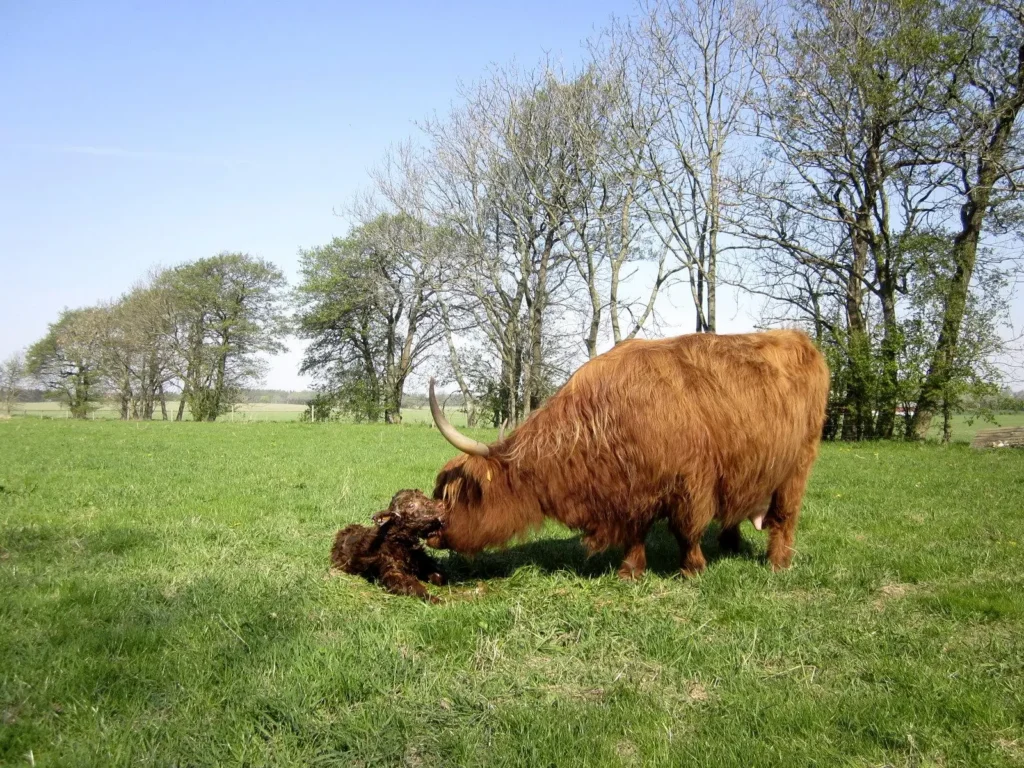
Signs You May Notice
- No clear return to heat after breeding
- A slow increase in body weight
- Gradual belly enlargement later in pregnancy
- Udder growth as calving gets closer
- Changes in behaviour near the final weeks
- Fetal movement during late pregnancy
- A veterinarian confirming a fetus or pregnancy structures
These signs can guide you. They cannot replace a proper pregnancy check.
The Best Ways to Confirm Pregnancy
A veterinarian can use rectal palpation or ultrasound. Blood-based pregnancy tests are another option on some farms.
Ultrasound can confirm many pregnancies at about 30 days after breeding. Rectal palpation is often done later. The timing depends on the veterinarian’s skill and the farm system.
Pregnancy checking helps more than curiosity. It finds open cows before the farmer spends months feeding them as if they were pregnant. It may also help estimate the calving period.
Do not attempt rectal palpation without training. Poor technique can injure the cow or the developing pregnancy.
Highland Cow Pregnancy Stages Month by Month
A Highland pregnancy changes slowly at first. Most visible growth happens later.
Month 1: Conception Begins
Fertilisation happens after successful breeding. The early embryo begins developing inside the reproductive tract.
The cow normally looks the same. She should receive routine care and a stable diet. Avoid needless stress and rough transport.
A lack of heat may suggest conception. It does not confirm it.
Month 2: Early Development
The embryo becomes more established. The uterus continues supporting pregnancy.
The cow may still show no outside signs. Sudden weight gain at this stage usually comes from feed or body condition rather than the fetus.
A planned ultrasound can begin confirming pregnancy around this period.
Month 3: Pregnancy Becomes Easier to Confirm
The developing calf continues forming. A skilled veterinarian can usually confirm pregnancy through suitable diagnostic methods.
Keep breeding records beside the pregnancy result. Knowing that the cow is pregnant is useful. Knowing roughly when she will calve is much better.
Month 4: Small Outside Changes May Start
A heifer may begin showing some udder development. The Highland breeder guide notes that heifers can show udder enlargement quite early. It should not be used alone to predict the calving date.
The cow may begin looking fuller through the abdomen. Her long coat can hide the change.

Month 5: Steady Middle Pregnancy
This is often a quiet stage. The cow should maintain healthy body condition.
Do not let her become very thin. Do not make her extremely fat either. Both conditions can create trouble later.
Continue normal parasite control and vaccination only under an established veterinary plan. Check product labels because not every treatment suits pregnant cattle.
Month 6: The Calf Takes More Space
The uterus and fetus become larger. The cow’s right side may look fuller because of the growing calf while the rumen takes up much of the left side.
You may notice movement later in pregnancy. Do not press hard on the belly trying to feel the calf.
This is a good time to inspect fences and the future calving area.
Month 7: Nutrient Needs Begin Rising
Late pregnancy begins. Calf growth becomes more demanding and the cow needs good forage.
Young heifers need extra attention because they are still growing their own bodies. They must support themselves and the calf at the same time.
A thin heifer cannot suddenly recover all lost condition during the final weeks.
Month 8: Prepare for Calving
The cow’s abdomen becomes more obvious. Her udder may start filling. The vulva may slowly enlarge.
Move her into a group that receives suitable late-pregnancy nutrition. Avoid stressful mixing with aggressive cattle.
Make sure the handling facility can safely restrain a horned Highland cow if help becomes necessary.
Month 9: Watch Closely
The udder fills more. The ligaments around the tailhead relax. The vulva becomes soft and swollen.
The cow may separate from the herd. She may look at her sides or repeatedly stand and lie down.
A due cow should stay where you can check her without chasing her.
Feeding a Pregnant Highland Cow Properly
Highland cattle can use rough forage well. That does not mean a pregnant cow can live on feed with little nutritional value. The cow needs protein and energy for body maintenance. She also needs nutrients for the placenta and calf.
Early and Middle Pregnancy
A mature cow in good condition can often maintain herself on sound pasture or stored forage during early pregnancy. The farmer should still check forage quality. Old hay may fill the rumen but provide little energy or protein.
Keep clean water available at all times. Water intake supports digestion and normal body function.
Late Pregnancy
Nutrient needs rise as calving approaches. A cow that enters the final months in poor condition may produce a weaker calf. She may also have less energy for labour and milk production.
Late-gestation nutrition must fit the cow’s size and forage. University of Nebraska guidance notes that protein and energy needs increase as the cow moves from late pregnancy into calving and lactation.
Do not underfeed a cow to force her to have a smaller calf. Highland breeding guidance warns against using protein restriction as a way to control birth weight. Poor nutrition can damage cow and calf performance.
Watch Body Condition
Feel along the ribs and spine when it is safe. Highland hair can make a thin cow look round.
A healthy cow should not have sharp bones under the coat. She also should not carry heavy fat around the tailhead.
Separate timid cows when stronger animals block them from hay. Enough feed on the ground does not help when one cow cannot reach it.
Minerals should match local forage and veterinary advice. Random mineral products may contain the wrong balance for the herd.
Signs a Highland Cow Is Close to Calving
Calving signs do not all appear at once. Some begin weeks early while others occur during the final hours.
Udder and Teat Changes
The udder becomes larger as milk and colostrum form. The teats may look full and tight.
Udder development is useful but not exact. Some heifers begin developing an udder months before birth. Other cows fill quickly near the end.
Relaxed Tailhead Ligaments
The muscles and ligaments around the tailhead soften. The area between the tail and pin bones may look sunken.
This change can become clear within one or two days of calving. Teats that appear fully filled or “strutted” can also suggest birth is close.
Behaviour Changes
A cow may walk away from the group. She may stop eating for a short time.
She may lift her tail and look at her belly. Repeated lying down and standing can show early labour.
Some Highland cows search for a hidden place. Fence them away from deep woods or areas where observation and assistance would be difficult.
The Water Bag
The appearance of the water bag marks active labour. Two front feet and the nose should normally follow.
The bottoms of the front hooves usually point downward. A different presentation may mean that the calf is backwards or badly positioned.
Common Pregnancy Problems in Highland Cattle
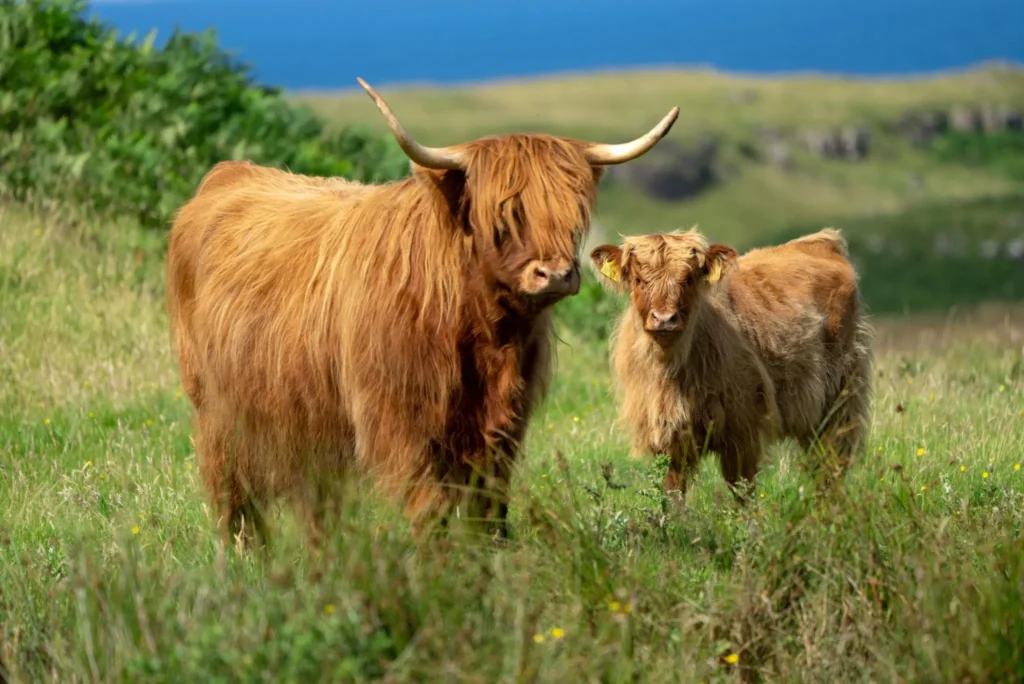
Highland cattle often calve without help. Their reputation for easy calving should never make the farmer careless.
Early Embryonic Loss
A pregnancy can end before the cow looks pregnant. She may return to heat later than expected. Causes can include infection and inflammation. Poor nutrition and genetic problems may also play a role.
A single early loss may be hard to explain. Repeated losses in several cows need veterinary investigation.
Abortion
Abortion means the calf is lost before normal full-term birth. Infectious disease is one possible cause. Toxins and severe nutritional problems may also be involved.
Treat every aborted fetus and placenta as a possible disease risk. Keep people and other animals away. Wear gloves and call the veterinarian.
Do not throw away the fetus or placenta before speaking with the vet. These tissues may be needed for testing.
Heat Stress
Pregnant Highlands have thick coats. Hot and humid weather can still stress them even though the breed handles difficult outdoor conditions well.
Heat stress can reduce feed intake and pregnancy performance. Severe late-pregnancy heat can also affect gestation and calf development.
Provide shade and plenty of water. Avoid moving heavily pregnant cattle during the hottest part of the day.
Twins
Twins are possible but less common than single calves. Twin pregnancies may raise the risk of difficult birth and weak calves.
The cow may also have trouble meeting both calves’ milk needs. Watch nursing and body condition after birth.
Dystocia
Dystocia means difficult calving. A large calf may not pass through the birth canal. The calf may also have a wrong leg or head position.
First-calf heifers carry a greater risk because they often have a smaller pelvic area. Bull calves can also create more trouble because they tend to be heavier. Call for help when the cow strains without progress. Waiting too long can kill the calf and injure the cow.
Prolonged Pregnancy
A few days past the estimated date may be normal. A pregnancy that continues far beyond the expected Highland range deserves veterinary attention.
Rare fetal or hormonal problems can cause extremely prolonged gestation. These cases may produce an oversized calf and severe dystocia.
How to Prepare for a Highland Cow Calving
Preparation makes a simple birth easier and a difficult birth safer.
- Record the breeding date. Estimate the due date by adding about 283 days.
- Check the cow’s body condition. Improve her ration before she becomes thin.
- Choose a clean calving field. Use dry ground with good footing and protection from bad weather.
- Keep the area easy to observe. Do not let the cow hide in thick woods or a distant corner.
- Prepare a strong assistance pen. It must safely hold a large horned cow without trapping her horns.
- Clean the equipment. Keep gloves and clean towels ready. Store any calving tools in a closed clean container.
- Save the veterinarian’s number. Do not wait until the cow is in trouble to find it.
- Check due cows several times daily. Observe from a distance so you do not disturb normal labour.
- Prepare for calf care. Have clean colostrum supplies and a safe feeding method ready in case the calf cannot nurse.
- Plan a warm dry recovery area. Highland calves have long hair that can stay wet. Mud and cold wind can quickly chill a newborn.
The Highland breeder guide recommends a visible calving pasture with firm footing and a separate place for assistance. It also warns that Highland hair becomes a problem for a newborn until the coat dries.
Know When to Help
Normal labour has three stages. Stage one includes restlessness and cervical dilation. Stage two begins with the water bag and active delivery. Stage three is the passing of the placenta.
Consider intervention when stage one continues for many hours without progress. Help may also be needed when the water bag is visible but the calf does not advance.
University guidance recommends checking a cow when she strains strongly for about 30 minutes without progress. A cow that stops after making progress also needs attention.
Do not pull a calf until you know its position. Pulling a badly positioned calf with force can injure both animals.
Care After Birth
The calf should begin breathing and attempt to rise. Clear obvious material from its nose and mouth.
The cow should lick the calf. This helps dry the coat and encourages circulation.
The calf needs colostrum as soon as possible. A difficult birth can leave it weak and slow to nurse. Veterinary guidance stresses early colostrum feeding after dystocia because weak calves face a greater risk of poor antibody transfer.
Watch the cow for continued heavy bleeding or weakness. The placenta normally passes later. Retained fetal membranes are commonly defined as membranes that remain for more than 24 hours after birth. Contact the veterinarian rather than pulling them out.
Final Thought
A Highland cow is usually pregnant for 280 to 285 days. Some healthy pregnancies may last from about 270 to 292 days.
The calendar gives you a target. The cow’s body gives you the real signs.
Watch her udder and vulva. Check the muscles around the tailhead. Notice when she leaves the herd or becomes restless.
Good feeding matters through the whole pregnancy. It becomes even more important during the final months. Do not underfeed the cow to produce a smaller calf.
Highlands often calve easily. Still every owner needs a clean calving area and safe restraint facilities. Keep equipment ready and know when to call a veterinarian.
Good records and calm observation turn calving from a surprise into a plan.