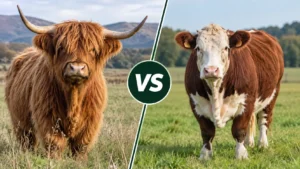
How much does a Highland cow weigh? A mature female usually weighs between 900 and 1,200 pounds. That equals about 408 to 544 kilograms. A mature Highland bull is much heavier. Most adult bulls weigh between 1,500 and 1,800 pounds. That equals about 680 to 816 kilograms.
These numbers are useful starting points. They are not strict limits. One Highland cow may stay near the lower end because she has a smaller frame. Another may weigh more because she has larger genetics and strong body condition.
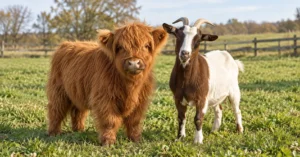
The Highland breed has a moderate frame. Its thick coat can make each animal look much bigger than it really is. Long winter hair adds visual size but very little actual body weight. This is why guessing by sight can be difficult.
I have seen pictures where a Highland cow looks almost as heavy as a large commercial beef cow. Once you look at the body under the coat you notice a different shape. Highlands are strong and deep. They are not normally as tall or heavy as many modern beef breeds.
Knowing the correct weight helps with feeding and medication. It also helps with trailer limits and pasture planning. A wrong guess can lead to an incorrect medicine dose or an overloaded trailer.
| Highland animal | Common live-weight range | Approximate weight in kilograms |
| Mature Highland cow | 900 to 1,200 pounds | 408 to 544 kilograms |
| Typical mature cow in breeding condition | Around 1,100 pounds | Around 500 kilograms |
| Mature Highland bull | 1,500 to 1,800 pounds | 680 to 816 kilograms |
| Typical mature bull in breeding condition | Around 1,800 pounds | Around 800 kilograms |
| Two-year-old sale bull average | About 1,316 pounds | About 597 kilograms |
| Three-year-old sale bull average | About 1,638 pounds | About 743 kilograms |
| Newborn Highland calf | Around 65 to 70 pounds | Around 29 to 32 kilograms |
The American Highland Cattle Association gives the main mature weight ranges. Oklahoma State University lists a mature cow near 1,100 pounds and a mature bull near 1,800 pounds in breeding condition. Recent Highland Cattle Society records showed an average of 597 kilograms for two-year-old sale bulls and 743 kilograms for three-year-old bulls.
Average Weight of an Adult Highland Cow
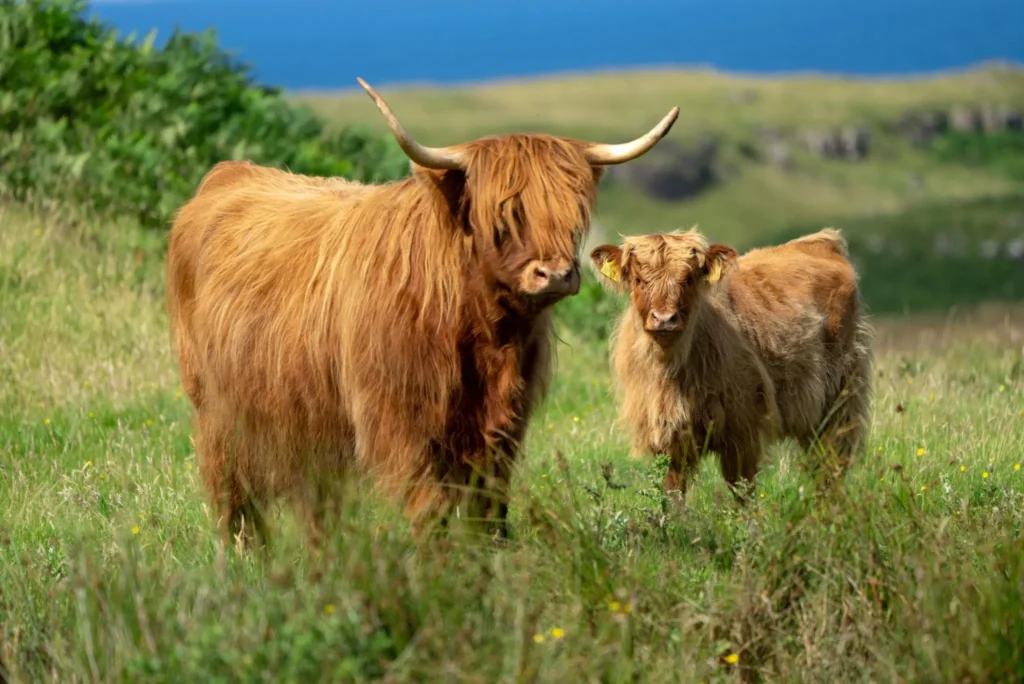
An adult Highland cow normally weighs 900 to 1,200 pounds. Many mature females sit near 1,000 or 1,100 pounds when they have healthy body condition.
The word “cow” should refer to an adult female that has produced a calf. A younger female is called a heifer. A heifer may look almost fully grown before she reaches her final mature weight.
Highland cows grow at a steady pace. They are not usually bred to become extremely large. Their strength comes from a wide chest and strong bone. They also have a deep body that helps them use rough forage.
A cow weighing 900 pounds is not automatically underweight. She may come from a smaller traditional bloodline. A cow weighing 1,200 pounds is not automatically overweight either. She may have a naturally larger frame.
Body condition gives more useful information than weight alone. A healthy cow should carry enough cover over her ribs and spine. She should not look sharp through the hips. She should also move freely without carrying excessive fat.
The coat makes body-condition checks harder. The long outer hair can hide the ribs and backbone. An owner should place a hand over the short ribs and spine when it is safe. Touch gives a better answer than eyesight during winter.
Pregnancy changes weight too. A cow near calving carries the calf and fetal fluids. Her total weight may rise even when her own body condition stays the same. A newborn calf and associated tissues can make a noticeable difference.
The digestive system also carries a large amount of forage and water. A cow weighed after eating and drinking may appear heavier than she did earlier in the day. This is why consistent weighing conditions provide better comparisons.
A working farm should record weight or estimated weight several times each year. Useful times include before breeding and before winter. Weaning time is helpful too. These records show whether the cow maintains herself on the available pasture.
The Highland’s moderate mature size can work well on small farms. A smaller body often needs less maintenance feed than a huge beef cow. The farm still needs enough land and winter forage. Moderate does not mean tiny.
How Much Does a Highland Bull Weigh?
A mature Highland bull normally weighs between 1,500 and 1,800 pounds. Some large bulls may move outside this range. Their weight depends on age and genetics. Feed conditions matter as well.
Oklahoma State University gives about 1,800 pounds or 800 kilograms as a normal mature bull weight in breeding condition. This matches the upper part of the range given by the American Highland Cattle Association.
A bull does not reach full weight at two years old. He may already look large and powerful. His body can continue adding depth and muscle as he matures.
The Highland Cattle Society has collected weights at its February show and sale. Its published figures showed an average of 597 kilograms for two-year-old bulls. The three-year-old average was 743 kilograms. These sale bulls were selected animals. The numbers still show how much growth can happen between the second and third years.
Male hormones support more muscle development. Bulls normally have heavier necks and shoulders than cows. Their bones are also stronger. The head and horns may appear thicker.
Weight does not tell the whole story when choosing a breeding bull. A very heavy bull can produce heavier calves. This may increase calving risk in small heifers. Farmers should study birth-weight and calving-ease records instead of choosing only by mature size. The Highland Cattle Society explains that heavier birth-weight potential can bring more growth but may also increase calving difficulty.
A breeding bull should carry muscle without becoming fat. Excess fat can reduce fitness and make movement harder. A working bull needs sound feet and legs because he may cover rough pasture during the breeding season.
Owners also need accurate bull weights for handling equipment. A cattle crush and trailer must safely hold the animal. A bull that weighs more than 1,500 pounds can damage weak gates very quickly.
People sometimes underestimate Highland bulls because their calm behavior looks friendly. A quiet bull still carries enormous power. Safe fencing and proper handling facilities remain necessary at every weight.
Highland Calf Birth Weight and Growth Rate
A newborn Highland calf commonly weighs around 65 to 70 pounds. That equals about 29 to 32 kilograms. Performance data from the American Highland Cattle Association also reported that most recorded births were unassisted.
This light birth weight is one reason Highland cows have a reputation for easier calving. A smaller calf usually passes through the birth canal more easily than a very heavy calf. Calf shape and the mother’s pelvic size still matter.
Birth weights can move above or below the average. Bull calves may be heavier than heifer calves. Older cows may produce larger calves than young females. The sire also affects birth weight. Cow nutrition during pregnancy plays a role too.
A very small calf is not always better. The calf needs enough size and strength to stand and nurse. Very low birth weight may point to poor fetal growth or health trouble. The best target is a vigorous calf that arrives without difficult assistance.
The final trimester is an important growth period. The pregnant cow needs enough protein and energy. She should not become very thin. She should not become extremely fat either. Balanced nutrition supports calf growth and natural calving.
Highland calves can grow well on their mother’s milk and pasture. The Highland Cattle Society says calves may gain around 0.8 to 1 kilogram per day without extra feed in suitable conditions. It also says a calf may reach about half its mother’s weight by one year of age.
A calf’s real growth rate depends on several things. Milk supply from the cow has a large effect. Pasture quality becomes more important as the calf grows. Parasites and disease can slow weight gain.
A calf born at 70 pounds and gaining about 1.76 pounds daily could reach roughly 500 pounds at around 244 days in one American Highland Cattle Association feeding example. That example is not a promise for every calf. It shows how steady daily gain can build a strong weaning weight.
Farmers should record birth and weaning weights when possible. The difference helps calculate average daily gain. This shows which cows raise strong calves and which sires produce efficient growth.
A fluffy coat can hide a calf that is losing condition. Regular hands-on checks help reveal the ribs and backbone. Growth records give an even clearer answer.
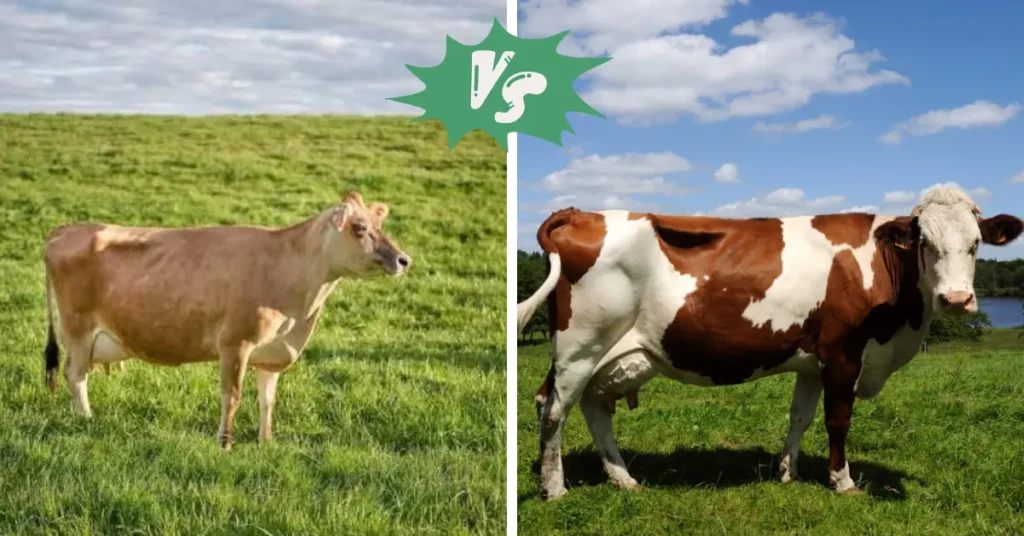
Female vs Male Highland Cattle Weight
Male Highland cattle become much heavier than females. A mature bull may weigh 300 to 900 pounds more than a mature cow. The exact gap changes between bloodlines and farms.
Cows need enough body capacity to carry calves and raise them. Bulls develop more muscle through the neck and front end. Their frame becomes stronger as they age.
A steer is a castrated male. Steers usually become heavier than cows but may not develop the same thick neck and front end as an intact bull. Oklahoma State University notes that Highland steers may finish near 1,000 pounds or 450 kilograms. Some producers finish them later on pasture rather than pushing rapid growth with heavy feeding.
Farmers should compare animals of the same age and sex. Comparing a two-year-old heifer with a five-year-old bull says very little about growth quality.
These are the main reasons males and females finish at different weights:
- Hormones: Testosterone supports greater muscle growth in intact bulls.
- Mature frame: Bulls normally develop a larger and heavier frame.
- Age: Mature animals weigh more than yearlings from the same bloodline.
- Purpose: Breeding females use energy for pregnancy and milk while growing males may direct more energy into muscle.
- Management: Bulls and steers may receive different feed from the cow herd.
- Genetics: Some family lines produce larger cattle than others.
- Castration: Steers grow differently from intact bulls and often carry fat differently.
The biggest animal is not always the best animal. A very large cow may need more feed through winter. A moderate cow that raises a heavy calf each year may be more useful.
The same idea applies to bulls. A balanced bull with strong feet and proven calving ease can offer more value than a giant animal with poor movement.
Mini Highland Cow Weight and Size
The words mini Highland cow appear often in online ads. Buyers should approach this label with care.
The Canadian Highland Cattle Society says it does not recognize a miniature Highland breed or official miniature version. It also notes that no official Highland breed society recognizes one.
This does not mean small Highland cattle never exist. Some registered animals naturally have smaller frames. Breeders may select smaller parents over several generations. Other cattle sold as minis may be crossbred with another small breed.
A young calf may also be advertised as a tiny Highland even though it has a lot of growing left to do. Every standard Highland starts small. There is no single trustworthy weight range for every animal called mini. One seller may use the term for a short purebred cow. Another may use it for a crossbred animal. A third may use it only because the calf looks cute.
Buyers should ask for adult measurements from both parents. Registration papers can confirm breed history. Genetic test results may also reveal certain dwarfism traits or crossbreeding. A healthy small-framed animal should remain balanced. Its legs should match its body. It should move freely and have enough body capacity for normal digestion and reproduction.
Extremely small sizes can create health concerns. A small cow bred to a larger bull may face difficult calving. Tiny body size should never matter more than sound structure and health.
A buyer who wants a manageable cow should consider a normal moderate Highland from honest bloodlines. Mature cows already average far less than many huge commercial beef cows. A healthy 900-pound Highland is still easier to manage than a much heavier breed. It is not a pet-sized animal.
Factors That Affect Highland Cow Body Weight
Breed averages help with planning. The individual animal’s weight depends on several connected factors.
Genetics create the basic frame. Large parents often produce larger offspring. Smaller traditional bloodlines may stay closer to the bottom of the breed range.
Age matters because cattle keep developing after their first birthday. A heifer may calve before she reaches complete mature weight. Bulls can continue filling out after two years.
Sex has a major effect. Bulls become heavier than cows. Steers develop differently from both.
Nutrition can change growth and body condition. Good forage allows cattle to reach their genetic potential. Poor pasture may limit gain. A lack of protein or energy can leave animals thin. Highlands are excellent foragers. They can use rough pastures and browse. This hardiness does not allow them to create weight from land with no useful nutrition.
Pregnancy raises a cow’s live weight. The calf and fetal fluids add weight before calving. Milk production after birth may cause body weight to fall when feed intake cannot meet demand.
Season changes the scale reading. A cow may gain condition during strong summer grazing. She may lose some weight during a cold winter. The thick winter coat can hide this change.
Health affects appetite and gain. Parasites may steal nutrients. Lameness can reduce grazing. Dental trouble can make rough forage difficult to chew.
Crossbreeding can also increase mature size. A Highland crossed with a larger beef breed may produce a heavier animal through larger genetics and hybrid vigor. The Highland Cattle Society notes that crossing can improve growth and finishing performance but may require higher inputs.
The goal should not be maximum weight at any cost. The correct target depends on the farm. A low-input pasture system may value smaller efficient cows. A beef-finishing operation may want faster growth and larger carcasses.
How to Estimate a Highland Cow’s Weight
A livestock scale gives the most reliable answer. The cow walks onto the platform and the scale records her live weight.
Not every small farm owns a cattle scale. A public weighbridge or veterinary facility may be another option. Trailer weights can also be compared before and after loading. That method includes room for error from fuel and equipment changes.
A cattle weight tape offers an easier estimate. The tape wraps around the heart girth behind the front legs. It converts body circumference into an estimated weight.
Penn State Extension says weight tapes can estimate animal weight within about 3% to 5% of actual body weight when used correctly. Accuracy depends on proper placement and steady tape tension.
Long Highland hair can interfere with the measurement. The tape should compress the coat so it sits close to the body. Do not pull so hard that it cuts into the animal.
A two-measurement formula can use heart girth and body length. Washington State University Extension gives this cattle formula:
Estimated weight in pounds = heart girth × heart girth × body length ÷ 300
The heart girth and body length must both be measured in inches.
Use these steps for a safer and more consistent estimate:
- Place the cow in a secure handling area with level ground.
- Let her stand in a normal square position.
- Run the measuring tape around the body just behind the front legs.
- Compress the long coat and record the heart girth in inches.
- Measure body length from the point of the shoulder to the rear point of the body.
- Multiply the heart girth by itself.
- Multiply that result by the body length.
- Divide the final number by 300 to estimate pounds.
- Repeat the measurement to catch simple mistakes.
- Use the same method each time when tracking growth.
The formula produces an estimate. Body shape can affect accuracy. A very fat animal and a heavily muscled bull may not match the formula perfectly.
The scale is the better choice when exact weight matters. Precise weight becomes important before giving certain medicines. It also matters when deciding whether a trailer stays below its safe load limit.
For normal growth tracking the same accurate method used again and again can be more useful than one rough visual guess. A tape may be slightly wrong in absolute terms. It can still show whether the cow has gained or lost weight over several months.
Final Thought
So how much does a Highland cow weigh? Most mature females weigh about 900 to 1,200 pounds. Mature bulls often weigh around 1,500 to 1,800 pounds.
A newborn calf starts near 65 to 70 pounds. Good calves can gain close to 0.8 to 1 kilogram each day in suitable conditions. Sex and age change the final number. Genetics and feed matter too. Pregnancy and body condition can move the scale reading.
Be careful with mini Highland claims. There is no officially recognized miniature Highland version under major Highland breed societies. Ask for registration and adult parent records before buying. Use a livestock scale when you need an exact number. A cattle weight tape or heart-girth formula can provide a useful estimate.
The best Highland is not always the heaviest one. A healthy animal should carry the right weight for its frame. It should move well and raise strong calves without needing more feed than the farm can provide.