If you are thinking about buying a Jersey cow then the first question is pretty simple. How much is a Jersey cow?
The answer can change a lot.
A young Jersey calf can cost much less than a trained milk cow. A bred heifer can cost more than a young heifer. A proven cow that gives good milk and has a calm nature can also bring a higher price.
In current U.S. listings from 2026 you can see Jersey cows around $2,000 to $4,500. Some smaller Jersey cattle are listed around $2,000 to $3,500. A young Jersey calf can be around $500 in some local listings. These are asking prices and not a fixed national price.
So you should not look at one price and think that every Jersey cow costs the same.
Age matters. Milk production matters. Health matters. Breeding matters too.
A Jersey cow can also cost more after you bring her home. Feed water housing health care and transport all become part of the real cost.
Let’s break it down in simple words.
Jersey Cow Price by Age and Type
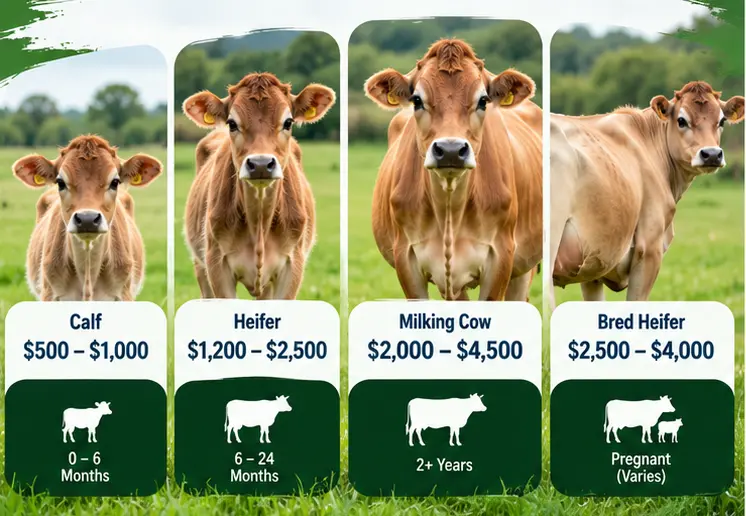
The age and type of Jersey cattle have a big effect on the price.
A very young calf is usually cheaper than an adult cow. But a calf also needs more daily care. You may need milk or milk replacer special calf feed clean bedding and close health checks.
An adult cow may cost more at the start but she can already be trained for milking. If she is healthy and already giving milk then you can start using her milk soon after purchase.
Recent U.S. listings show a wide range. One Jersey cow was listed at $2,000 while other cows were listed around $2,500 to $3,500. Some registered or special milk cows were listed for $4,500 or more.
That gives you a rough idea but don’t treat it like a price rule.
Jersey Calf
A young Jersey calf can be one of the cheaper ways to get into the breed.
One 2026 listing for a tiny female Jersey calf showed a price of $500. The calf was only two weeks old and needed bottle feeding.
That low price may look exciting but there is a catch.
A bottle calf needs regular feeding. You cannot just put her in a field and forget about her. She needs the right milk feeding clean water starter, good bedding and close attention.
Very young calves can also get sick quickly. A small problem can turn serious if you miss it.
Jersey Heifer
A heifer is a young female that has not yet had her first calf.
A Jersey heifer can cost more than a very young calf because you are buying an animal that has already grown for a while.
The price can rise when the heifer is close to breeding age or has good genetics.
A bred heifer can cost even more because she may soon have her first calf and begin producing milk.
Milking Jersey Cow
A mature cow that is already milking can bring a higher price.
That is easy to understand. You are not only buying the animal. You are also buying her milking ability and sometimes her training.
One recent listing had a four year old Jersey cow that was already being hand milked and was priced at $3,000. Another recent group of listings showed Jersey milk cows around $2,700 to $4,500.
A cow that calmly stands for milking can be worth more to a small farm than a cheaper cow that is hard to handle.
Purebred and Registered Jersey
Purebred cattle can also have a higher price.
This is especially true when the animal has good records. Strong family history health testing breeding value and proven milk production can all affect the price.
One current listing for purebred Jersey cows had an asking price of $3,000 each.
So when someone says “Jersey cow price” there is no single number that tells the whole story.
How Much Does a Jersey Calf Cost?
A Jersey calf can cost anywhere from a few hundred dollars to much more depending on age sex , breeding quality health and location.
For a simple local calf you may find prices around $500 to $1,000. Special calves can cost much more.
A current 2026 listing showed a tiny female Jersey calf for $500. Another current market listing showed bottle calves around $700.
Why Young Calves Can Be Cheaper
A calf has not reached its full value yet.
It is not producing milk. It has not been proven as a breeding cow. You also have to wait before becoming an adult.
That waiting time has value.
You will be paying for feed and care while the calf grows. So a $500 calf does not really mean your total cost will only be $500.
This is something new owners sometimes miss.
Feeding a Jersey Calf
A newborn calf needs colostrum soon after birth. Colostrum gives the calf important protection during its first hours. After that the feeding plan normally includes milk or milk replacer plus calf starter and clean water.
Fresh water is important even when the calf is drinking milk. Water helps the rumen develop and supports the calf as it begins eating solid feed.
You also need clean equipment.
Dirty bottles buckets and feeders can spread germs. That is why cleaning them after feeding is not just a nice extra job. It is part of keeping the calf healthy.
When Does a Jersey Calf Stop Drinking Milk?
There is no single day that works for every calf.
A calf should be ready for weaning when it is eating enough starter feed and growing well. Some extension guidance says calves should not be fully weaned before about six weeks and should already be eating around two to three pounds of starter each day.
Other feeding programs may wean earlier when the calf has a strong starter intake.
The important thing is not to rush it.
If the calf is sick or barely eating then weaning can add more stress. Keep an eye on appetite weight and general behavior.
What Factors Affect Jersey Cow Prices?
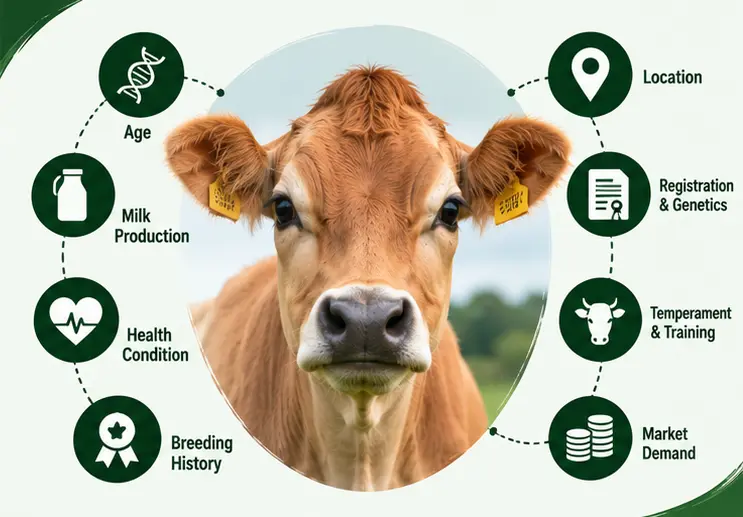
Two Jersey cows can look almost the same but have very different prices.
Why?
Because buyers are paying for more than color and body size.
Age
Age is one of the easiest price factors to understand.
A young calf is usually cheaper. A healthy young heifer costs more. A bred heifer can cost more again. A mature cow with good milk records may bring an even higher price.
But older does not always mean worse.
An older cow with a calm personality, good udder health and a strong milk record can still be valuable.
Milk Production
Milk production can have a big effect on value.
Jersey cattle are known as dairy cattle. They are smaller than some larger dairy breeds and they are known for milk with relatively high fat content. Jersey cattle also tend to use feed efficiently for their body size.
A cow that gives useful amounts of milk and has good milk quality may cost more than a cow with no production record. Don’t get too excited by a seller saying “high milk cow” though.
Ask for real records when possible.
Health
Health is super important.
A cheap cow with a serious health problem can become very expensive.
Before buying ask about:
- Vaccination history
- Recent health checks
- Pregnancy status
- Mastitis history
- Hoof problems
- Parasite treatment
- Previous calving history
- General body condition
If possible, have a vet check the animal before you buy.
Breeding History
A cow that has calved normally and produced healthy calves may be worth more. A bred cow can also cost more because the buyer is getting a future calf along with the cow’s current value.
But pregnancy should be confirmed properly. Don’t pay extra just because someone says a cow is bred.
Training and Temperament
A calm Jersey cow can be worth extra money for a family farm.
A cow that leads well on a halter and stands quietly during milking can save you a lot of trouble. One current listing for a Jersey cow priced at $3,000 described her as easy to milk and halter trained.
That kind of training has real value.
Jersey Cow Monthly Feeding and Care Costs
Buying the cow is only the beginning.
The monthly cost depends heavily on your pasture and local feed prices.
A cow that gets most of her food from good pasture may cost less to feed than a cow that depends heavily on purchased hay and grain.
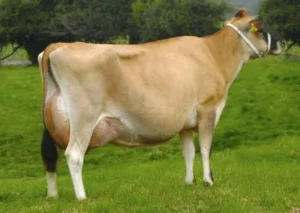
Jerseys are relatively small dairy cattle. Their smaller body size can help lower maintenance needs compared with larger dairy cows. They are also good grazers and are used in pasture based systems.
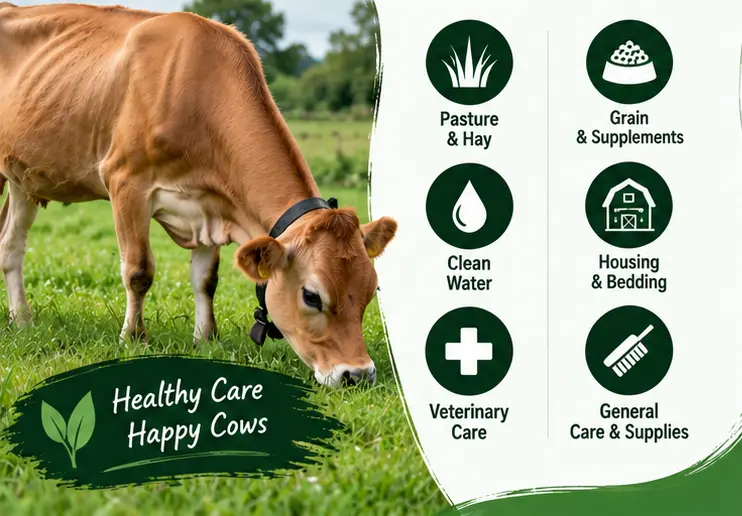
Feed Cost
Feed is usually one of the biggest regular costs.
A Jersey cow may eat pasture grass when good pasture is available. During winter or dry periods you may need hay. A milking cow may also need extra energy and protein depending on how much milk she produces.
You should not feed every cow the same amount.
A cow producing a lot of milk needs more nutrients than a dry cow. Her feed should match her body condition and milk production.
Jersey nutrition tables show that mature Jersey cows can have dry matter intake in the range of roughly 20 pounds or more per day depending on milk production and stage of lactation.
That does not mean you should simply feed a fixed amount every day. Feed quality matters too.
Water Cost
Clean water is another daily need.
A milking cow needs regular access to clean water. Dirty water can reduce drinking and may affect feed intake and health. Water cost may be small compared with feed but the supply system can cost money.
You may need:
- Water trough
- Pipes
- Tank
- Pump
- Cleaning supplies
These small costs can add up.
Bedding Cost
If your cow has a barn or covered resting area then bedding becomes another cost. Straw is common in many farm setups. Other bedding materials can also work.
The important thing is to keep the resting area clean and dry. Wet dirty bedding can create health problems and make the cow uncomfortable.
Health Care
Veterinary care should have a place in your budget.
You may need to pay for vaccinations, health checks parasite control hoof trimming, pregnancy checks and treatment when an animal becomes sick.
Some months may be cheap.
Then one unexpected health problem can suddenly make the bill much bigger. That is why keeping an emergency fund is a pretty good idea.
How Much Does It Cost to Raise a Jersey Cow?
Raising a Jersey cow from a calf to an adult takes time. The purchase price is only one part of the cost.
You need to pay for food, housing, water health care and daily work during the growing period.
A calf also needs special attention during the first weeks of life.
First Few Months
The early stage can be one of the most demanding periods.
The calf needs milk or milk replacer. It also needs starter feed and clean water. Good bedding matters too.
Research based calf guidance recommends giving high quality colostrum soon after birth and then providing clean starter feed and water as the calf grows.
Cold weather can increase the challenge. A young calf uses more energy to stay warm. Clean deep bedding can help protect the calf from cold ground.
Growing Into a Heifer
After weaning the heifer moves toward a more normal cattle diet. Good grass and hay can become the main part of the diet when suitable.
You still need to watch growth. Growing too slowly can be a problem. Growing too fast can also create issues.
The goal is steady healthy growth.
This is where good pastures can save money. If your land produces plenty of quality forage then your feed bill may be lower.
Housing and Fencing
You also need a safe place for the growing cow. Strong fencing matters even with a smaller Jersey.
A cow that escapes can get onto roads or neighboring land. That can turn a simple fence problem into a very serious problem. Your setup should also give the animal shade and protection from bad weather.
The Hidden Cost of Your Time
This one is easy to forget.
Your time has value too.
Feeding a calf twice a day. Cleaning buckets. Checking water. Cleaning bedding. Watching for illness. Moving animals between fields.
It all takes time.
If you have a family farm then this may not feel like a big cost. But if you are paying someone to do the work then labor becomes part of the budget.
Are Jersey Cows Worth the Cost?
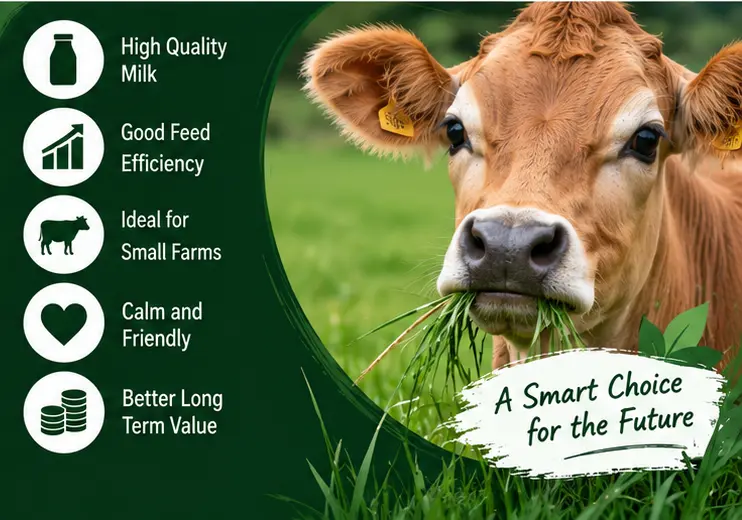
For many small farms and homesteads the answer can be yes.
But it depends on what you want.
Jersey cows are popular dairy animals because they are smaller than many larger dairy breeds and can produce milk with high levels of fat and protein. They also have a reputation for good grazing ability and heat tolerance.
That can make them attractive to people who want a family milk cow without keeping one of the biggest dairy breeds.
Why People Like Jersey Cows
There are several good reasons.
- They are relatively small dairy cows
- They can produce rich milk
- They are good grazers
- They can work well on smaller farms
- Many have calm useful personalities
- Their body size can mean lower maintenance needs than larger dairy breeds
The breed has also shown good productive ability. A large U.S. study found Jerseys had the longest productive herd life among the dairy breeds studied.
That does not mean every Jersey cow will live for the same number of years. Individual health and farm management still matter a lot.
When a Jersey Cow May Not Be Worth It
A Jersey may not be the right choice if you do not have enough land or cannot provide enough feed. It may also be a poor choice if you only want a very cheap animal and do not have money set aside for health care.
Cows need daily care.
There is no “buy it and forget it” option.
Even a friendly Jersey needs food, water , shelter health checks and attention.
What Should You Check Before Buying?
Before handing over your money take your time.
Look at the cow walking. Check her body condition. Look at her eyes and coat. Watch how she behaves around people.
If she is a milking cow, ask to see her milked if possible. Ask for production records if the seller has them. For a pregnant cow ask when she is due.
For a calf ask what she has been eating and whether she has received colostrum. If you are spending several thousand dollars then a vet check can be money well spent.
Final Thought
So how much is a Jersey cow?
For a general U.S. market guide in 2026 you can expect many ordinary Jersey cows to fall around $2,000 to $4,500. Young calves can sometimes be found for around $500 while special animals can cost much more. Current listings show prices changing based on age health , breeding milk production training and location.
But don’t let the purchase price fool you.
A $2,000 cow is not really a $2,000 animal once you add feed fencing, water bedding health care and transport.
On the other hand a healthy Jersey cow that gives useful milk and stays productive for years can be a pretty good investment for the right farm.
If you are buying your first Jersey then focus on health and temperament before chasing the lowest price. A calm healthy cow with a good history is usually a much better deal than a cheap cow that brings one problem after another.
The best Jersey cow is not always the cheapest one. It is the one that fits your land, your budget and what you actually want to do with her.