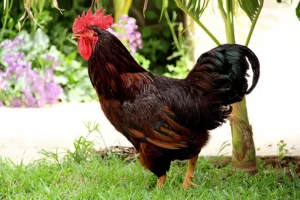
The Rhode Island Red Rooster is one of the best known chicken roosters in the United States. He is easy to notice because of his deep red feathers his bright red comb and his strong body. Some birds have a dark red color while others look more like rich mahogany. His tail feathers often have a black or greenish black shine.
This chicken breed has been around for a long time. Farmers developed the Rhode Island Red in Rhode Island and Massachusetts in the 1800s. They wanted a chicken that could give them eggs and meat and could also handle normal farm life. The breed became very popular because it was strong and could keep doing well even when food or housing was not perfect.
Today the Rhode Island Red is still a popular choice for backyard flocks. Hens are known for laying brown eggs while roosters are useful for breeding and can also stay alert around the flock. The rooster can be a great bird to have but he also has his own personality. Some are calm and easy to handle while others can be pretty bossy.
If you are thinking about keeping one this guide will help you understand his size, looks behavior care needs and the good things he can bring to a backyard flock.
What Is a Rhode Island Red Rooster?
A Rhode Island Red Rooster is the male chicken of the Rhode Island Red breed. The breed is an American chicken that was developed mainly in Rhode Island and Massachusetts. It was made as a dual purpose chicken which means people wanted it to be useful for both meat and egg production.
Of course a rooster does not lay eggs. His main job in a breeding flock is to fertilize the eggs from the hens. When a hen lays an unfertilized egg you can eat it but it will not grow into a chick. When a healthy rooster mates with the hens some of their eggs can become fertile and can be used for hatching.
The Rhode Island Red became famous because it was not a weak bird that needed perfect conditions. It was made to work on farms. The breed has a strong body and good ability to find food when allowed to range outside.
Where Did the Rhode Island Red Come From?
The story of the Rhode Island Red goes back to the farms of New England. The breed was developed during the 1800s from several types of chickens. Malay birds helped give the breed its deep color and strong body. Java chickens and other Asian birds also played a part. Brown Leghorns helped improve egg laying.
The breed was officially recognized in the early 1900s. The single comb type entered the American Poultry Association Standard of Perfection in 1904. The rose comb type followed soon after.
That history is pretty interesting because the Rhode Island Red was not made just to look nice. Farmers wanted a useful chicken. They wanted a bird that could lay plenty of eggs but still have enough body size to be useful for meat.
The breed later became the state bird of Rhode Island. That is a pretty big deal for a chicken.
Is the Rhode Island Red a Heritage Chicken?
There are different types of Rhode Island Reds today. Traditional old type birds are usually larger and darker. Modern production lines have often been selected more for egg production. Because of this they can be smaller and lighter in color.
The Livestock Conservancy says the old type Rhode Island Reds are of special interest because they keep more of the traditional features of the breed. The organization also notes that the Rhode Island Red left its priority conservation list in 2023.
So if you see two Rhode Island Red Roosters that look a little different do not let that throw you off. They can still belong to the same breed while coming from different breeding lines.
Rhode Island Red Rooster Size and Weight
The Rhode Island Red Rooster is a solid medium heavy chicken. He is not the biggest rooster you will ever see but he has a strong body and can look quite large when he stands tall.
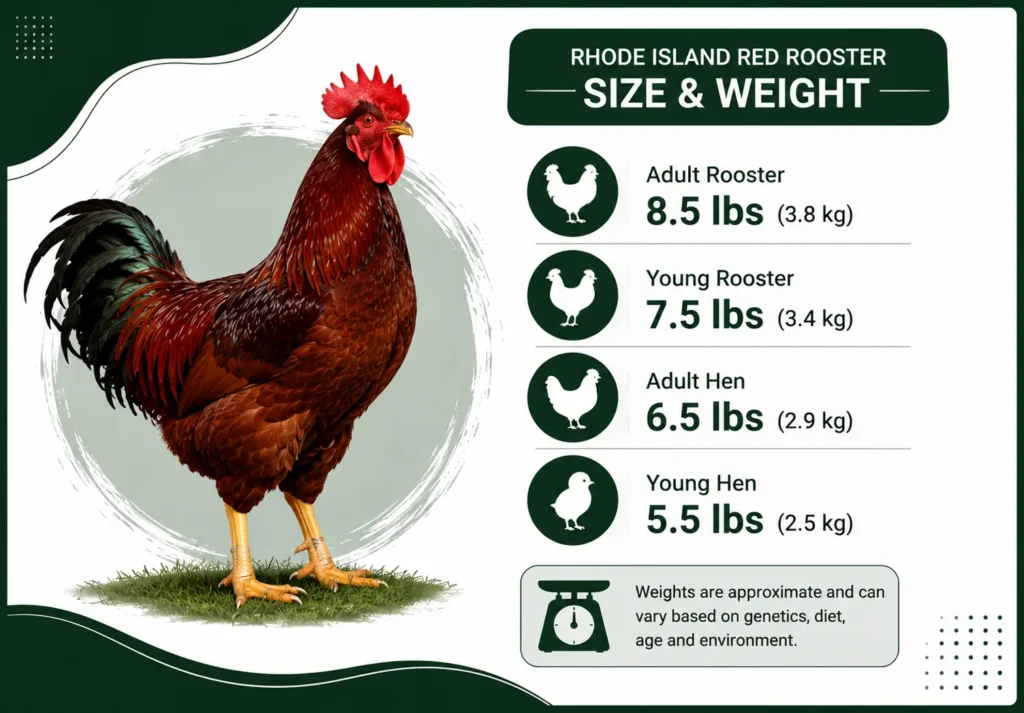
The American standard weight for an adult Rhode Island Red cock is about 8.5 pounds. A young male called a cockerel has a standard weight of about 7.5 pounds. The standard weight for a hen is about 6.5 pounds.
Some birds will weigh more or less than these numbers. That is normal. Age, diet health genetics and activity all affect body weight. The number on the scale is useful but it is not the only thing that matters.
A healthy rooster should have a good body shape, strong legs and normal movement. A very heavy bird that cannot walk well is not automatically healthier than a lighter active bird.
Rhode Island Red Rooster Weight Table
| Bird | Standard Weight |
| Adult rooster | 8.5 pounds |
| Young rooster | 7.5 pounds |
| Adult hen | 6.5 pounds |
| Young female | 5.5 pounds |
These standard weights come from poultry breed references based on American standards.
How Fast Does a Young Rooster Grow?
A young Rhode Island Red Rooster starts out as a small chick. He then grows feathers and gains body size as he gets older.
During the young stage you may notice his comb becoming larger. His legs can look thicker and his tail feathers start to become more noticeable. His voice also changes as he gets older.
A young rooster can seem awkward for a while. One day he may look like a normal little chicken and then a few weeks later he suddenly looks much more like a rooster.
Good feed helps him grow properly. Clean water is also super important. If the bird has poor food or becomes sick during growth his development can suffer.
Rhode Island Red Rooster Appearance and Colors
The appearance of the Rhode Island Red Rooster is one of his best features.
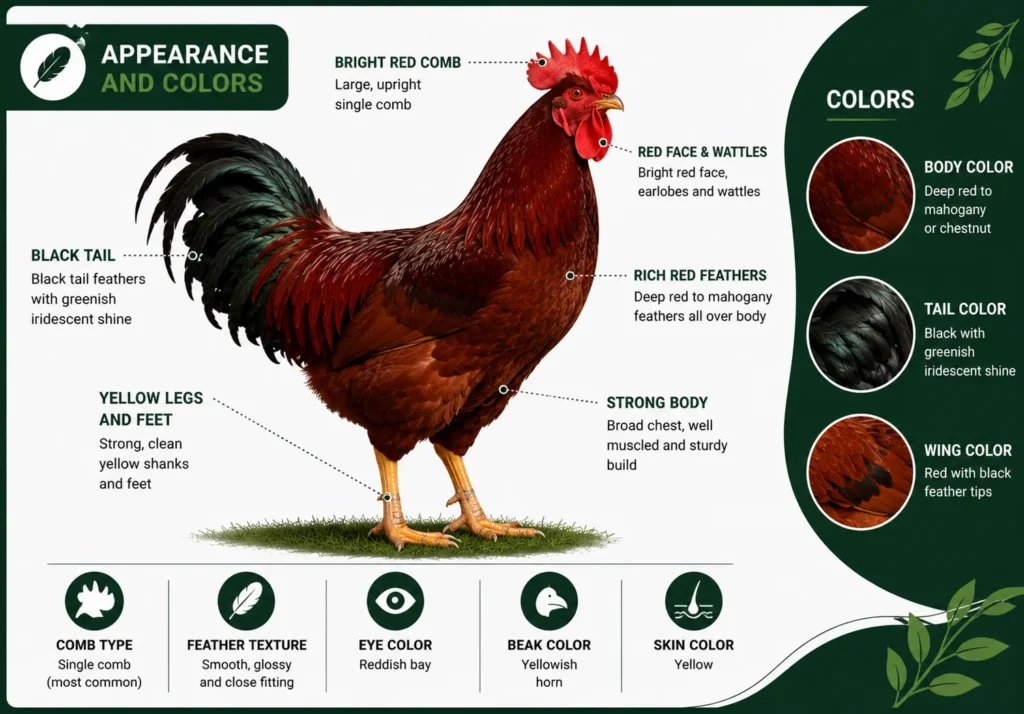
Traditional Rhode Island Red Roosters usually have rich dark red feathers. Some can be a deep mahogany color. Others may look more brownish red. The breed standard calls for a strong rich red color across much of the body.
The tail is different from the main body. The main tail feathers are black and some feathers can show a shiny greenish black look in good light.
The wings can also have black feathers mixed with red. This gives the rooster a sharp contrast that makes him easy to recognize.
Comb and Wattles
A mature rooster has a bright red comb and red wattles. The comb can be either single or rose depending on the variety.
The single comb is tall and easy to see. The rose comb is shorter and wider. Both types are accepted forms of the breed.
The comb is not just there for looks. It is also an exposed part of the bird so you should keep an eye on it in very cold weather. Large combs can be more likely to suffer from frostbite in freezing conditions.
Legs Feet and Beak
Rhode Island Red Roosters normally have yellow legs and yellow skin. Their shanks are not covered with feathers.
The beak has a reddish horn color. The eyes are usually a reddish bay color. These small details help separate the breed from other red chickens.
The legs should look strong and clean. If a rooster suddenly has trouble walking or keeps one foot off the ground it is worth checking him closely.
Does the Red Color Stay the Same?
Not always.
The deep red feathers can fade when the bird spends a lot of time in strong sunlight. Oklahoma State University notes that long exposure to the sun can fade the red color.
That does not mean the bird is unhealthy. It is simply one of the things that can happen to the feathers.
Older feathers can also look different from fresh new feathers. So do not expect every Rhode Island Red Rooster to have exactly the same shade of red.
Rhode Island Red Rooster Temperament and Behavior
Rhode Island Red Roosters are active birds. They like to walk around searching for food scratch the ground and keep an eye on what is happening around them.
Their behavior can be very different from one bird to another. Some are calm and easy to manage. Some are more confident and like to control the area around the flock.
This is where you need to watch the individual bird instead of only looking at the breed name.
A rooster may walk around while the hens are eating. He may call the hens when he finds food. He may also become alert when he sees a strange animal or person.
Do Rhode Island Red Roosters Protect Hens?
A rooster can show protective behavior around his hens. He may make warning calls when he notices danger. He may also stand between the flock and something he sees as a threat.
That can be useful for a backyard flock. But do not depend on a rooster as your only protection.
A fox hawk dog or other predator can still hurt chickens. A strong coop and safe fencing are much more important for real protection.
The rooster can act like an extra set of eyes. That is the better way to think about it.
Are Rhode Island Red Roosters Noisy?
Yes. Roosters crow.
The crow is part of normal rooster behavior. A Rhode Island Red Rooster may crow in the morning and may also crow during the day.
If you live close to neighbors this is something you should think about before getting one. A rooster can be useful but the noise may become a problem in a small residential area.
You cannot really train a rooster to stop being a rooster. Crowing is natural behavior.
Are Rhode Island Red Roosters Aggressive or Friendly?
This question does not have one simple answer.
Some Rhode Island Red Roosters are calm. Some are friendly enough that their owners can handle them without much trouble. Others can become aggressive.
Oklahoma State University says some Rhode Island Red males may be quite aggressive. The Livestock Conservancy also notes that some roosters can be aggressive at times.
That does not mean every rooster will attack people.
A rooster’s behavior can depend on his genetics his age his living conditions and his own personality. How people handle him can matter too.
Why Can a Rooster Become Aggressive?
A rooster may become more protective as he grows older. He may start seeing the yard or coop as his territory.
He may also react when someone gets close to his hens. During breeding time some males can become more difficult to manage.
Having several roosters together can also cause trouble. Males may fight over hens and space. A crowded flock can make the situation worse.
If you keep more than one rooster you need enough space and a flock setup that reduces fighting.
How Should You Handle a Difficult Rooster?
Stay calm.
Do not chase him around the yard just to scare him. That can make the situation worse. Move slowly and give the bird enough room.
If a rooster tries to attack your legs you should take the behavior seriously. Keep children away from an aggressive rooster because children may not know how to react safely.
You can work on calm handling but some birds remain aggressive even with good care. If a rooster becomes a real safety problem the flock owner has to make a sensible decision.
Being a Rhode Island Red does not automatically make a rooster friendly or aggressive. The individual bird matters a lot.
How to Care for a Rhode Island Red Rooster
Caring for a Rhode Island Red Rooster is not extremely hard. The basic needs are simple. He needs good food clean water, a dry place to sleep enough room and protection from predators.
A good daily routine can make chicken care much easier.
Give Him a Safe Coop
The coop should stay dry and should protect the birds from rain wind and predators.
Good airflow matters too. You want fresh air without strong cold air blowing directly over the sleeping birds.
A dirty wet coop is not a good home. Replace wet bedding and remove heavy manure buildup. Clean water containers regularly because chickens can make them dirty surprisingly fast.
Dry bedding also helps keep the bird’s feet cleaner.
Feed a Balanced Diet
A rooster needs proper poultry feed for his age. Young roosters need feed made for growing birds while adult birds need an adult diet.
Do not fill his whole diet with kitchen scraps.
Small amounts of suitable treats can be okay but balanced poultry feed should provide the main nutrition. Fresh water should always be available.
Good food helps support the rooster’s muscles bones, feathers and general health.
Give Him Room to Move
Rhode Island Reds are active birds and they enjoy scratching and looking for food.
A safe outdoor run gives the rooster a chance to walk around. If the area is secure he may also enjoy free ranging.
More space can make flock life easier because chickens have room to move away from each other. This is especially useful when you have a rooster with a strong personality.
Crowding can lead to stress and fighting so do not try to squeeze too many birds into a small area.
Keep an Eye on His Health
You do not need to be a chicken expert to notice changes.
Look at the rooster every day. See if he is eating drinking walking and acting normally.
Watch for things like:
- Loss of appetite
- Weakness
- Trouble walking
- Swollen body parts
- Breathing problems
- Sudden weight loss
- Dirty feathers around the vent
- Staying alone all the time
One strange moment does not always mean something serious. But a clear change that continues deserves attention.
If the rooster looks seriously sick or badly injured get help from a qualified poultry veterinarian.
Take Care in Hot and Cold Weather
Rhode Island Reds are known for being hardy and they can handle a range of conditions. Still they need protection from extreme weather.
In hot weather give plenty of clean water and shade. Good airflow is important too.
In cold weather keep the coop dry and reduce strong drafts. Pay special attention to a rooster with a large single comb because exposed comb tissue can be hurt by freezing temperatures.
You do not need to make the coop completely sealed. Chickens still need fresh air. The goal is a dry comfortable space with good ventilation.
Benefits of Keeping a Rhode Island Red Rooster in Backyard Flocks
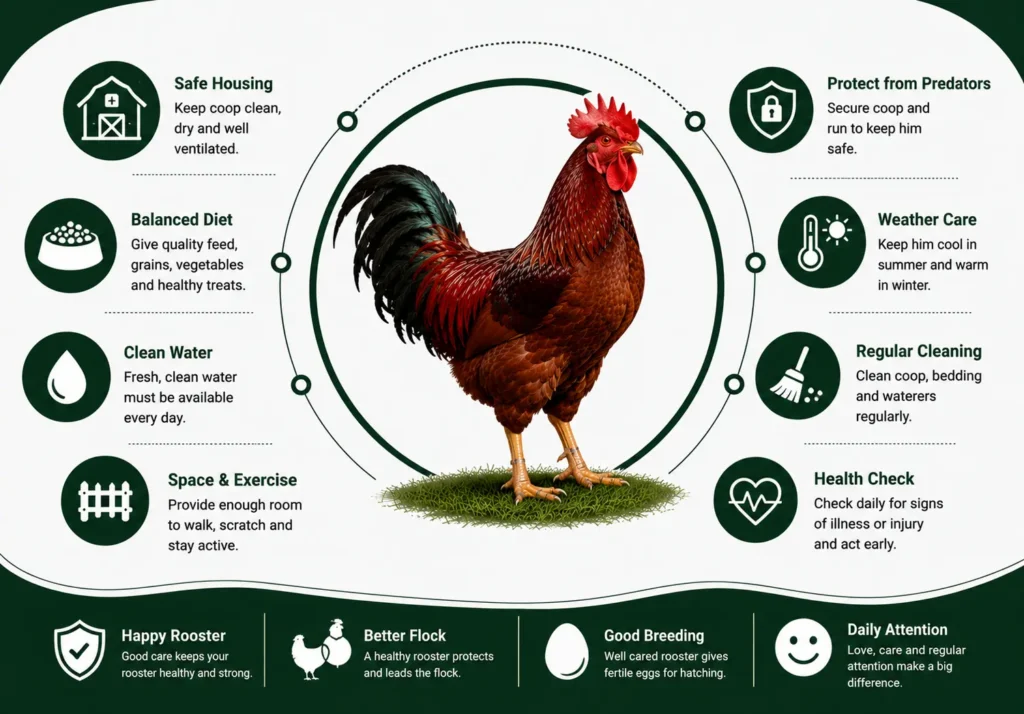
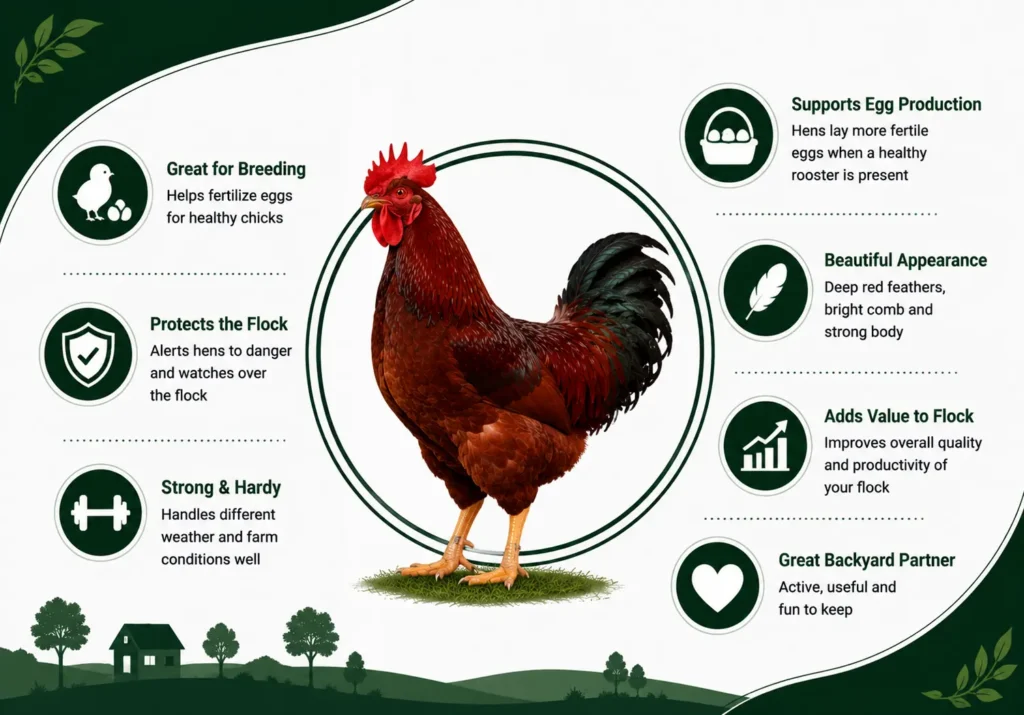
A Rhode Island Red Rooster can bring several useful things to a backyard flock.
The first big benefit is breeding. If you want to hatch your own Rhode Island Red chicks you need a rooster.
The second benefit is his natural alert behavior. He may watch the flock and give warning sounds when he sees something unusual.
The third benefit is the breed itself. Rhode Island Reds have a long history as useful farm chickens. They were developed to provide both meat and eggs and are known for their hardiness.
Good for Breeding
A healthy rooster can fertilize eggs from the hens.
This lets a backyard owner produce chicks without buying new chicks every time. The quality of the chicks depends on both parents so healthy breeding birds are important.
If you want chicks with strong Rhode Island Red traits you should choose healthy birds that fit the breed type.
Helpful Around the Flock
A rooster can keep an eye on the hens while they search for food.
He may call them when he finds something to eat. He may also give warning calls when he notices danger.
Not every rooster does this in exactly the same way but it is common rooster behavior.
Hardy and Active
Rhode Island Reds have a strong reputation for being hardy. Historical breed information says they can handle less than perfect diets and housing better than many other breeds.
That does not mean you should give them poor food or a dirty coop. It simply means the breed has a useful ability to deal with normal farm conditions.
Good care is still super important.
Beautiful Bird for the Backyard
The deep red feathers make the Rhode Island Red Rooster stand out.
When the sunlight hits the dark tail feathers you may see a greenish shine. The red comb and yellow legs add even more contrast.
If you enjoy having chickens that look good as well as serve a purpose this breed is a nice choice.
Good for People Who Want a Traditional Farm Chicken
Some backyard owners like chickens with a long farming history. The Rhode Island Red fits that idea very well.
It was developed as a working farm bird rather than only as an ornamental chicken. It has a strong connection to American poultry history and remains one of the most recognized chicken breeds.
Rhode Island Red Rooster and Hens in the Same Flock
A rooster normally lives with hens when the goal is breeding.
The exact number of hens for one rooster can vary. There is no single perfect number for every flock because space breed line age and rooster personality all matter.
What you really want to avoid is constant stress for the hens.
If a rooster mates too often with the same hen her feathers can become worn or her skin can get damaged. Give the flock enough room and watch the hens closely.
If one hen keeps getting pushed away or hurt the flock setup may need to change.
A rooster should be part of the flock not a constant source of trouble.
Rhode Island Red Rooster vs Young Cockerel
You may hear two different words when people talk about male chickens.
A cockerel is a young male chicken. A cock or rooster is an adult male.
The young bird starts developing male features as he grows. His comb becomes larger. His voice changes. His body becomes heavier and his tail feathers become more noticeable.
Eventually he reaches adult size and becomes a mature rooster.
This can happen at different speeds depending on genetics nutrition and the individual bird. So do not worry if two young males of the same age do not look exactly alike.
Can Rhode Island Red Roosters Be Good Pets?
Some can be easy to handle and may become comfortable around people.
But a rooster is still a rooster.
Even a calm bird can react suddenly if he feels threatened. It is better to respect his natural behavior rather than treating him like a small dog or cat.
Gentle handling from a young age can help a bird become used to people. Give him space and avoid rough treatment.
If you want a chicken mainly as a pet you should think about temperament when choosing the individual bird.
Do You Need a Rhode Island Red Rooster for Eggs?
No.
This is an important point for new chicken owners.
A hen can lay eggs without a rooster. Those eggs are simply not fertile and cannot hatch into chicks.
You need a rooster if you want to breed the hens and hatch chicks.
So if your only goal is eating fresh eggs a group of hens may be enough. If you want to raise your own chicks then a healthy rooster becomes useful.
That simple difference can save a beginner from adding a rooster when there is no real need for one.
Final Thought
The Rhode Island Red Rooster is a strong and useful chicken with a long history. His deep red feathers strong body yellow legs and bright red comb make him easy to recognize.
A standard adult rooster weighs about 8.5 pounds and the breed is known for being hardy and active. The breed was originally developed as a dual purpose chicken for meat and eggs and it remains a popular choice for backyard flocks.
His personality can be the biggest surprise. Some Rhode Island Red Roosters are calm while others can become territorial or aggressive. Do not assume every rooster will behave the same way.
Good care is pretty simple. Give him balanced food clean water dry bedding safe housing enough room and protection from predators. Keep a close eye on his health and behavior.
If you want to breed chickens and enjoy having a strong traditional farm bird around your flock the Rhode Island Red Rooster can be a very good choice. Just remember that he comes with natural rooster habits too. He will crow. He may protect his hens. He may test your patience once in a while.
That is part of keeping a rooster. Learn his behavior give him proper care and treat him with respect and you will have a much easier time raising him.