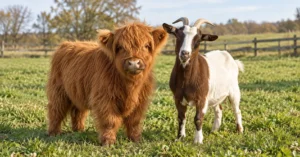
My cousin Sarah added a goat named Pickles to her Mini Highland herd last spring and honestly I thought it would be chaos. It wasn’t. Within a few days her Highland heifer Maple was basically babysitting that goat around the pasture like they’d known each other forever.
Turns out mini Highland cows live with goats safely more often than people expect once you know what actually matters. It’s not luck. It’s a handful of things done right from the start including breed choice bonding time seasonal care and a proper introduction process.
If you’ve been going back and forth on whether to combine these two animals on your own property this guide walks through 7 proven tips that actually make a difference. Real examples real numbers and stuff I’ve picked up talking to small farm owners who’ve done this successfully.
Quick Overview
| Factor | What You Should Know |
| Best goat match | Calmer breeds blend easiest with Highland temperament |
| Loneliness risk | Some Highlands need more than goat company |
| Seasonal shifts | Shelter needs change a lot between summer and winter |
| Intro timeline | About two to three weeks for a smooth settle in |
| Yearly cost | Modest savings compared to running separate herds |
| Baby safety | Calves and kids can bond but still need supervision |
| Warning signs | Watch for food guarding and isolation behavior |
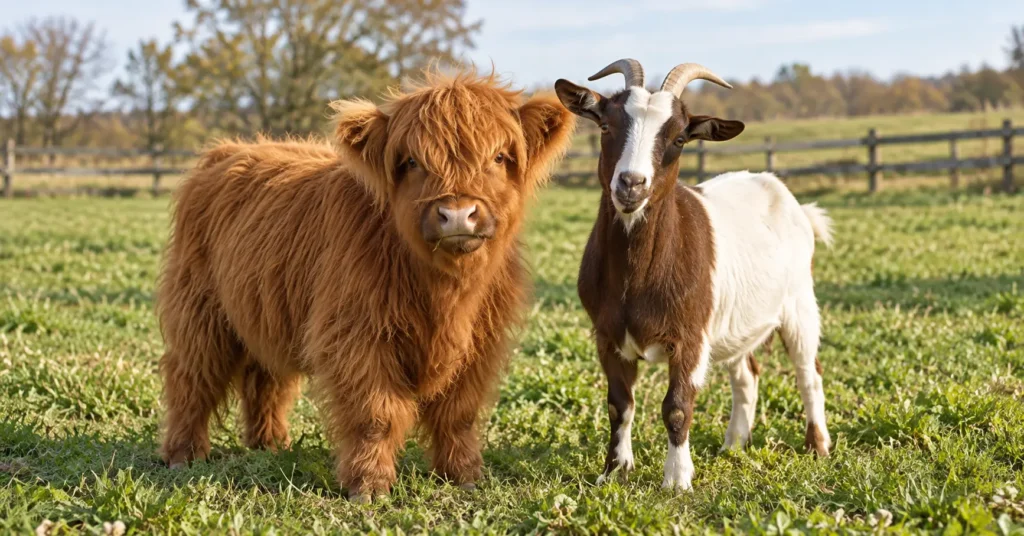
Best Goat Breeds to Pair With Mini Highland Cows
Not every goat brings the same energy into a pasture and that actually matters more than folks realize. Pygmy goats tend to stay calm and low key which fits well next to a laid back mini Highland. Nigerian dwarf goats are friendly and curious too though their small size means a clumsy cow could bump one by accident if space gets tight.
Boer goats run bigger and tend to get pushier around the feed trough. Nubian goats are vocal almost to a fault and they bond fast with whatever animal happens to be closest including a cow.
Here are two lists worth saving before picking your goats.
Calmer breeds that blend well with Highland temperament:
- Pygmy goats
- Nigerian dwarf goats
- Kinder goats
- Pygora goats
Breeds that need more space and monitoring around cattle:
- Boer goats
- Nubian goats
- Kiko goats
- Spanish goats
None of these are bad picks honestly. It just helps knowing what kind of energy you’re bringing into the field before day one.
Do Mini Highland Cows Get Lonely Without Other Cattle
This question comes up a lot and the real answer depends on the individual cow. Cattle are herd animals by nature and some Highlands genuinely struggle when they’re the only bovine around even with goats nearby.
A lone Highland can sometimes develop stress behaviors like pacing fence lines or excessive bellowing. Goats help fill some of that social gap but they communicate differently than another cow would. Based on my experience talking with small farm owners, if your Highland keeps staring toward neighboring cattle pastures or seems restless despite goat company it might be worth adding a second cow eventually.
Reading Your Cow’s Body Language
Watch for ears pinned back or a cow standing apart from the herd for long stretches. These small signals usually show up before bigger behavior issues do.
Seasonal Care Tips for Mixed Cow and Goat Herds
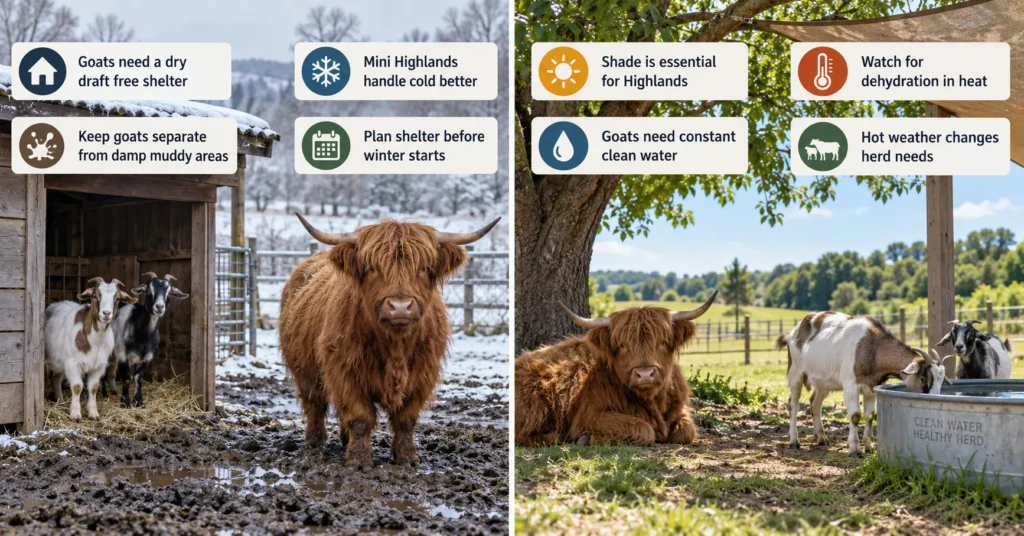
Weather changes everything about how these two species need to be housed. What works fine in July can turn into a real problem by January if shelter isn’t planned out ahead of time.
Winter and mud season hit goats harder than cows. Mini Highlands barely notice a chilly morning thanks to that thick double coat but goats hate dampness and cold wind chills them fast. Give goats a fully enclosed draft free shelter separate from wherever the cow naturally hangs out.
Summer heat flips the script a bit. Highlands actually struggle more in extreme heat than people expect given how thick their coat looks. Shade becomes essential. Goats handle heat okay but still need constant access to clean water since they dehydrate faster than most people assume.
How to Introduce a New Goat to an Established Herd
Rushing this step causes more problems than almost anything else new owners run into. A slow calm introduction nearly always leads to a better long term bond between the animals.
- Keep the new goat in a separate pen next to the main pasture for about a week so everyone can see and smell each other through the fence
- Watch body language during that period including ear position tail movement and whether the cow approaches curiously or ignores the fence completely
- Once things look calm allow supervised contact in a larger open space instead of a tight pen
- Set up multiple feeding stations right away so nobody feels cornered or forced to compete
- Keep supervising meal times for at least the first two weeks since that’s when most friction tends to happen
Quarantine matters here too. New goats should get checked by a vet and dewormed properly before joining an established herd to avoid spreading illness or parasites.
Cost of Raising Mini Highland Cows and Goats Together
People often assume combining species automatically saves money and in some ways it does but not across the board. Shared pasture space and shared fencing infrastructure cut costs compared to running two totally separate setups.
Feed costs mostly stay separate though since goats and cattle need different mineral formulas and sometimes different hay depending on your region. Vet costs can swing either way. Combined herds sometimes need more frequent parasite monitoring since the species share grazing ground but a solid rotational grazing plan can actually lower parasite load compared to single species pastures.
Shelter costs tend to creep up slightly for mixed herds since goats typically need their own fully enclosed structure separate from the cow’s housing. Most small farm owners I’ve talked to report saving around fifteen to twenty percent compared to running two totally separate operations mostly through shared land and fencing rather than shared feed.
Can Baby Goats Be Safe Around Mini Highland Calves
Kids and calves can absolutely grow up together safely and some of the sweetest barnyard friendships start exactly this way. Mini Highland calves tend to be gentle and curious rather than aggressive which helps a lot early on.
Still size difference matters even between two young animals. A calf playfully bucking around could accidentally bump a much smaller kid without meaning any harm at all. Supervised introductions matter just as much for babies as they do for grown animals.
A few safety tips worth following:
- Supervise early interactions closely during the first several weeks
- Provide small goat sized escape routes like low pallets or hideaways kids can reach but calves can’t follow into
- Keep feeding separate even for babies since nutritional needs differ early on
- Watch for overly rough play and separate temporarily if things get too wild
Signs Your Mini Highland Cow and Goats Aren’t Getting Along
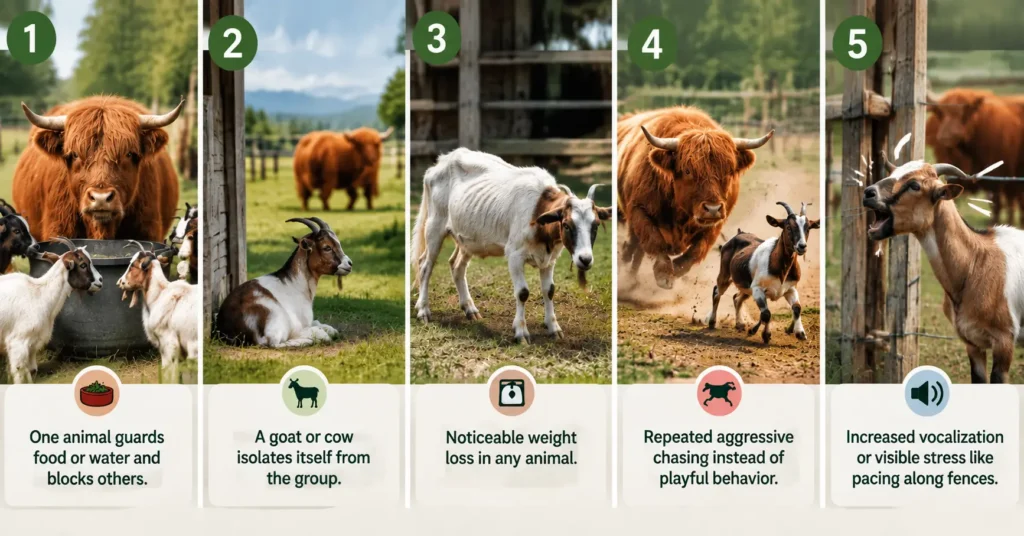
Most mixed herds settle into a peaceful routine but it still helps knowing the warning signs of real tension. Occasional headbutting or a goat getting playfully chased off usually isn’t a big deal.
Watch for these red flags instead:
- One animal consistently guarding food or water and blocking others from getting to it
- A goat or cow isolating itself away from the group for long stretches
- Noticeable weight loss in any animal which could point to getting bullied away from feed
- Repeated aggressive chasing rather than the occasional playful nudge
- Increased vocalization or visible stress like pacing along fence lines
If you spot any of these patterns separating feeding areas or giving animals more physical space usually resolves things fairly quickly.
Image here A mini Highland calf standing calmly next to a young goat kid in a grassy pasture Alt text mini highland calf and goat kid growing up together
Image here A group of mixed goat breeds grazing near a shaggy mini Highland cow Alt text different goat breeds paired with mini highland cow in pasture
Image here A farmer checking a shared shelter setup for goats and mini Highland cattle during winter Alt text winter shelter setup for mini highland cows and goats
Final Thoughts
Raising mini Highland cows and goats together really can turn into something special once you understand what each animal actually needs. It’s not about forcing them into the same routine. It’s about giving them enough overlap to bond and enough space to stay healthy and comfortable.
If you’re still on the fence about trying this setup yourself go in with patience instead of expecting perfection right away. The bonds that form between these animals tend to surprise you in the best way once everybody settles in.
FAQS
Can any goat breed live with a mini Highland cow?
Most goat breeds can live alongside mini Highland cows without major issues though calmer breeds like pygmy or Nigerian dwarf tend to adjust faster. Larger or more food driven breeds like Boer goats may need closer monitoring around shared feeding stations especially early on. Personality still matters more than breed in a lot of cases.
Do mini Highland cows need another cow for company?
Not always but some genuinely do benefit from having another bovine around. Goats can fill part of that social need but cattle communicate differently than goats do. If your Highland seems restless or stressed despite goat companionship adding a second cow is often worth considering down the road.
How long does it take to introduce a new goat safely?
A full introduction usually takes around two to three weeks including a separate quarantine period followed by supervised contact. Rushing this process is one of the most common mistakes new owners make. Slow steady introductions almost always lead to calmer long term relationships between the animals involved.
Is it more expensive to raise goats and mini Highland cows together?
It’s often slightly cheaper overall thanks to shared pasture and fencing costs though feed and mineral expenses usually stay separate. Vet costs can vary depending on parasite management. Most small farm owners report modest savings mainly through shared land use rather than shared feed or shelter expenses.
How do I know if my goats and cow aren’t getting along?
Watch for consistent food guarding isolation weight loss or repeated aggressive chasing rather than occasional playful nudging. These signs usually point to real tension rather than normal herd dynamics. Separating feeding areas or increasing available space typically resolves minor conflicts fairly quickly once noticed.