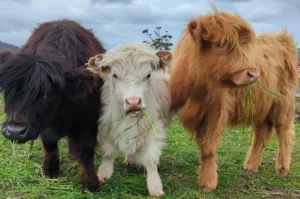
Highland cattle are easy to recognize. They have a thick coat and a strong body. Their long horns give them a bold look that most people remember.
Those horns are a natural part of the breed. A Highland bull usually has thick horns that grow outward from the head. A Highland cow often has longer horns that rise sooner and form a wider curve. Horn size alone does not mean that the animal has a health problem.
Still Highland cow horns can cause problems on farms. They can hurt people and other animals. They can become trapped in fences. They may make feeding and transport harder. They also create extra risk during hoof care and veterinary treatment.
Most Highland cattle are calm when people handle them well. Yet calm does not mean harmless. A cow may move her head while eating or turn toward a noise. The horn can hit someone even when the cow did not plan to attack.
Farm design makes a huge difference. Equipment made for hornless cattle may not suit a mature Highland cow. A narrow feeder can trap her horns. A small trailer can press against her head. A poor handling race can turn a basic health check into a dangerous job.
| Horn-related problem | Common cause | Practical response |
| Injury to people | Sudden head movement or defensive behavior | Keep a safe distance and use proper restraint |
| Injury to cattle | Crowding near feed or water | Add more feeding space and separate bullies |
| Trapped horns | Openings fit the head but not the horns | Replace unsafe mesh and narrow feeders |
| Feeding trouble | Horns take up extra space | Use wide access points and several feed areas |
| Transport difficulty | Limited trailer width and headroom | Use a larger horn-safe trailer |
| Veterinary risk | Standard head gates trap the horns | Use a suitable cattle crush and trained staff |
| Painful horn damage | Breaks cracks or inward growth | Call a veterinarian quickly |
Can Highland Cow Horns Injure People?
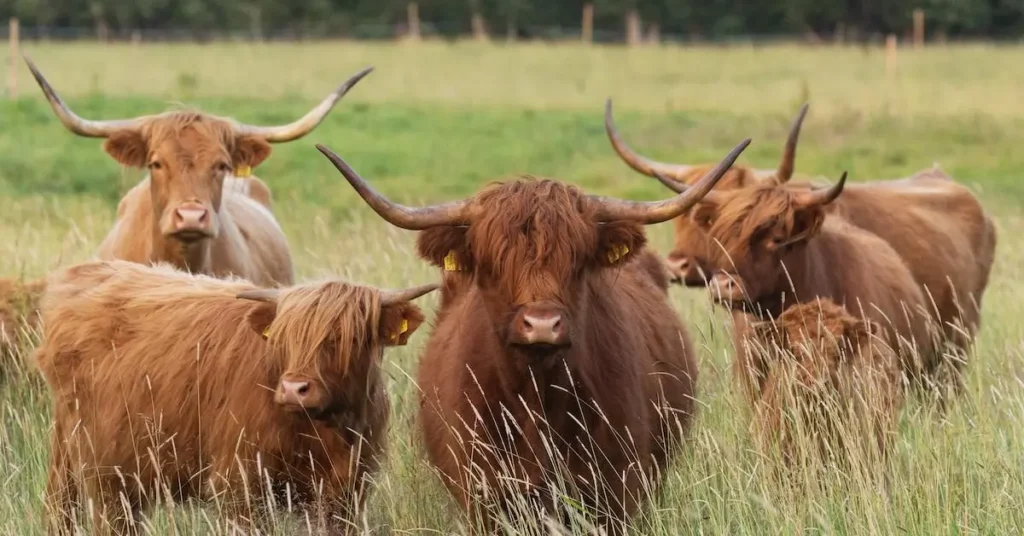
Yes. Highland cow horns can injure people. The injury may happen during an attack. It may also happen by accident.
A cow often uses her head to look around and protect her personal space. She may turn quickly when she hears a sound. She may shake her head because of flies. She may also lift her head after eating.
A person standing beside the cow’s face can be hit before there is time to move.
The risk becomes much greater in small spaces. A worker may stand between the cow and a wall. The cow takes one step sideways. The horn then presses the worker against the solid surface.
Official farm safety guidance warns that cattle handling can cause injuries through crushing and kicking as well as butting and goring. It also says veterinary jobs and work on poorly restrained cattle create extra danger.
Horn wounds can be deep. Serious cattle incidents have caused damage to major blood vessels and cuts that reached the bone. These cases are not proof that every Highland cow is aggressive. They show how much damage a horn can cause when a large animal moves with force.
Some situations carry more risk than others:
- A cow has recently given birth and is guarding her calf
- A bull feels challenged or trapped
- Several cattle crowd inside a race
- A person hand-feeds an animal with poor boundaries
- Children enter a cattle enclosure
- A worker treats an animal without proper restraint
- Nervous cattle rush through a narrow gate
- A person stands directly beside the horns
A newly calved cow deserves special care. She may have been gentle before calving. Her behavior can change when she feels that her calf is in danger. Cows with young calves are known to be more protective and less predictable.
Children should not enter handling areas. A friendly cow can still injure a child with one normal head movement. Farm safety guidance makes it clear that animals do not need to attack before they become dangerous.
A safe handler should always watch the cow’s head. The person should know where the nearest exit is. No one should allow the animal to trap them against a wall or gate.
Do Highland Cow Horns Hurt Other Cattle?
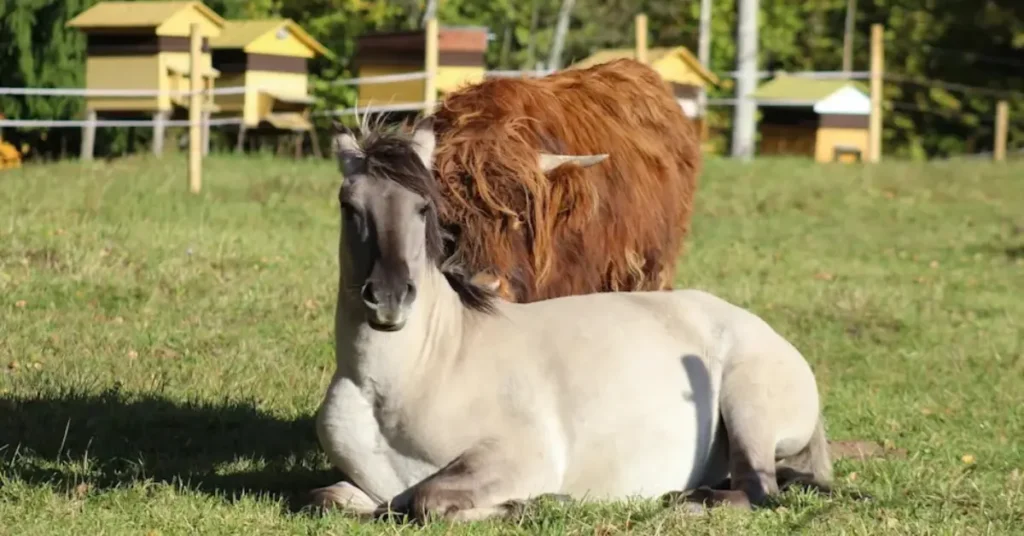
Highland horns can hurt other cattle. Some injuries happen during fights. Many happen during normal herd movement. Cattle form a social order. A strong cow may move another animal away from hay or water. She can do this by turning her head or stepping into the other cow’s space.
With a hornless cow this movement may cause a push. With a Highland cow the same movement can cause a cut or puncture. Crowded feed areas create a common problem. Two animals reach toward the same hay. One cow lifts her head. A horn catches the other animal on the shoulder or neck.
The wound may look small at first. Hair can hide the damage. Dirt may enter the cut and create an infection later.
Eye injuries are more serious. A horn tip may scratch the eyelid or damage the eye itself. An injured cow may keep its eye closed. She may show heavy tearing or swelling. These signs need fast veterinary attention.
Young animals face extra risk. A mature Highland cow is much stronger than a calf. She may push the calf without trying to hurt it. The calf may not have enough weight or space to move away.
Problems can also begin when the farmer mixes unfamiliar groups. Cattle may challenge one another while they build a new social order. Welfare guidance advises avoiding unnecessary mixing where animals have horns because the risk of injury can rise.
A stable herd often lives peacefully. Trouble is more likely when:
The field is too small. The animals have only one feeder. Water access is narrow. New cattle arrive suddenly. A dominant animal keeps chasing weaker cows.
Farmers should check cattle after group changes. Look for missing hair and fresh scratches. Watch whether every animal can reach the feeder. A cow that repeatedly hooks or chases others may need separation. Extra space will not fix every aggressive animal.
Why Highland Cow Horns Get Trapped in Fences
A Highland cow often puts her head through a fence to reach grass. Her face may pass through easily because it is much narrower than her horn span.
The problem starts when she tries to pull back.
Her curved horns catch behind the wire or bar. The cow may tilt her head and try again. When that fails she can panic.
A frightened cow pulls with great force. She may twist her neck or break the fence. A horn may crack near the base. Other cattle may also crowd around her and make the situation worse.
Wire mesh can be especially risky when the spaces are large enough for the head but too small for the horns to return through. Loose wire loops create another trap.
Old hay feeders can cause the same problem. A feeder may have worked when the cow was young. The horns grow wider as she matures. One day she can put her head in but cannot take it out.
Farmers should watch for early warning signs. A cow may turn her head sideways every time she uses a feeder. Scrape marks may appear on the horn. Metal bars may begin bending.
These signs show that the equipment no longer fits the animal.
A safe opening should let the cow enter and withdraw without a sharp turn. Feeders made for hornless dairy cattle may not provide this space.
Never walk straight toward a trapped cow. She may swing her head as soon as she becomes free. Keep people back and remove other cattle where possible.
It may be safer to take apart the feeder or cut the fence than to force the horn through. A broken or bleeding horn requires veterinary attention because deeper horn structures contain sensitive tissue and blood vessels.
Good prevention is simple. Remove loose wire. Check openings as young cattle grow. Use wide feeders that were designed for horned animals.
Feeding Problems Caused by Large Highland Horns
Large Highland horns can cause feeding problems even when they never become trapped.
A cow needs room to lower her head and raise it again. Narrow feeder openings may press against the horns. The animal may start eating from an awkward angle.
Some cows learn to turn their heads sideways. This may help for a short time. It is not a good long-term setup. The horn can rub against metal every day. The cow may also struggle to pull away when another animal pushes her.
Horns take up more space than the cow’s body. One Highland cow may control two feeding positions because nearby animals stay away from her horn tips. This creates uneven feed intake. The dominant cow eats enough. Shy cows wait behind her and lose weight.
The feeder may still contain hay. The farmer may think the group has plenty of food. The real shortage is not hay. It is safe access.
Several feeding areas can solve part of this problem. Open hay piles may work where mud and waste can be controlled. Wide troughs can also help.
Water needs similar planning. A small trough placed in a corner may allow one horned cow to block the whole drinking area. Adding a second trough gives weaker animals another choice.
Farmers should ask a few practical questions when checking a feed area.
Can every animal eat without touching another cow’s horns? Can the cow lift her head without hitting a bar? Can she back away easily? Are quieter animals losing body condition?
Highland cattle may also use their horns to move hay or scratch themselves. Weak feeder bars can bend and create sharp edges.
A cheap old feeder can become expensive when a cow stops eating or breaks a horn. Equipment should match the breed and the mature horn size.
Transporting Highland Cattle With Long Horns
Transporting Highland cattle requires careful planning. A trailer that fits hornless cattle may be too narrow for a Highland cow. The doorway must allow the full horn span to pass through. The trailer also needs enough headroom. A low roof can strike the horn when the cow raises her head.
Loading often becomes difficult when the horn touches the doorway. The cow may stop and back away. Pushing or hitting her usually makes the fear worse.
The loading route should look open. The floor should offer good grip. Sharp turns near the trailer should be avoided.
Before moving Highland cattle use this safety check:
- Measure the widest horn span of the largest animal.
- Check the trailer doorway and inside width.
- Make sure the roof offers enough headroom.
- Remove loose ropes and sharp hooks.
- Use a dry non-slip floor.
- Separate hostile animals.
- Avoid crowding horned and hornless cattle together.
- Use strong partitions that cannot trap horns.
- Load cattle calmly without shouting.
- Prepare the unloading area before opening the door.
Cattle need enough space to balance during the journey. Too little room leads to horn contact and crushing. Too much open space can allow animals to fall harder when the vehicle turns.
Partitions must fit the animals. A gap that catches a horn can cause panic while the trailer is moving.
Horned and hornless cattle may also need separation. The hornless animals have no similar protection during pushing or balance changes. Cattle welfare guidance supports extra care when horned animals are mixed or transported together.
Unloading can be just as dangerous as loading. A frightened cow may leave quickly. People should stand away from the door and outside the animal’s path.
How Horns Affect Handling and Veterinary Care
Routine cattle care becomes much harder when the handling system does not fit the horns.
A standard head gate may close around the neck. Yet it may leave no safe path for the horns. The cow may refuse to enter because she remembers getting trapped.
She may also twist her head during restraint. This can hurt her neck or break a horn.
Poor facilities delay vaccinations and pregnancy checks. They make eye treatment and wound care more dangerous. Hoof trimming may also become difficult because the whole cow must stay controlled. Official safety guidance says every farm that works with cattle should have a proper handling system. HSE research links a large share of cattle-handling injuries to inadequate facilities.
A Highland-friendly handling system needs several features.
The race should let the cow move forward with her head in a natural position. It should not be wide enough for her to turn around. The crush should control the animal’s body. The head area must provide enough room for the horns. A quick-release option is useful if a horn becomes trapped.
The floor must provide a strong grip. A slipping cow may fall onto a worker or injure her legs.
Veterinary work near the head creates extra danger. The vet may need to examine an eye or treat an ear. Pain can cause a sudden head movement. Sedation may help in some cases. It does not replace safe physical restraint. A sedated cow can still move or fall.
Owners should tell the veterinarian that the animal has wide horns before the appointment. This allows the vet to bring suitable equipment and enough trained help.
Highland cattle are generally considered docile and often respond well to halter training. Early calm training can make movement easier. It does not make close medical work risk-free.
Never depend on several people pulling ropes around an unrestrained cow. Never tie the animal by the horns during a painful job. Professional facilities protect the workers and the animals.
When Highland Cow Horns Need Professional Trimming
Most Highland cattle do not need routine horn trimming. Long horns are normal for the breed. A wide healthy horn may stay on the cow for her whole life. Trimming should not happen only because the owner finds the horns inconvenient.
Professional treatment becomes necessary when the horn harms the cow or creates a serious risk that farm changes cannot solve. A veterinarian should examine a horn that turns toward the eye. The same applies when a horn presses against the cheek or enters the skin.
Cracks and breaks can expose living tissue. Heavy bleeding or discharge may signal a deeper injury. Swelling and a bad smell can point to infection. A veterinarian may recommend limited horn tipping. This removes part of the sharp end. It leaves most of the natural horn in place.
The cutting point matters. An established cattle horn is not simply dead material from base to tip. Cutting too deeply can reach blood vessels and nerves. It may also expose deeper structures.
Adult horn removal is much more serious than trimming a hoof. It can cause pain and heavy bleeding. Veterinary guidance considers local anesthetic and anti-inflammatory pain medicine standard care during dehorning procedures.
Disbudding takes place when a calf is young and before the mature horn becomes established. Welfare guidance generally considers early disbudding less stressful than later dehorning when horn prevention is necessary. This does not mean owners should cut mature Highland horns at home.
Professional assessment is needed when a horn:
Grows into the skin. Threatens the eye. Blocks vision. Breaks near the base. Bleeds heavily. Produces discharge. Develops a bad smell. Changes direction after an injury. Stops the cow from eating. Or cannot be managed with safer facilities.
The veterinarian may decide that trimming is not needed. A new gate or feeder may solve the problem with less pain and risk. Owners should never use a household saw or grinder. The outside of the horn does not clearly show where sensitive tissue begins.
After any horn procedure the cow needs pain relief and daily checks. Watch for swelling and bleeding. Check whether she continues eating. Repeated head shaking can show discomfort.
Keep flies and dirt away from the wound. Call the veterinarian if the cow becomes dull or develops a fever.
Final Thought
Highland cow horns can cause injuries and management problems. They may hurt people or other cattle. They can become trapped in fences and feeders. They also make transport and veterinary treatment harder.
That does not mean the horns are bad.
Highland cattle have carried their sweeping horns for generations. Many horn problems begin because modern farm equipment does not match the animal. Use wide gates and strong fences. Provide enough feeding space. Choose transport with proper width and headroom. Build a handling system that can control horned cattle safely.
Professional trimming should remain the last choice. It makes sense when a horn harms the cow or creates a danger that better management cannot remove. Healthy Highland horns usually need space and regular inspection. In many cases good farm design works better than cutting them.