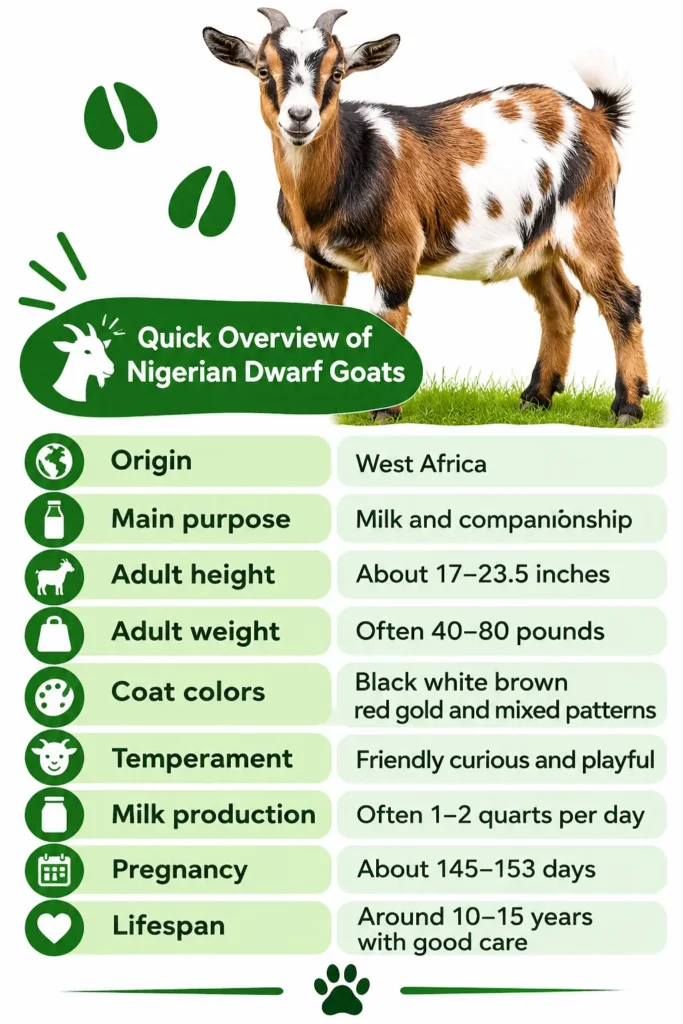
Nigerian Dwarf goats are small dairy goats with a friendly nature and rich milk. They are a good choice for small farms and family homes because they need less space than larger dairy goats. Even though they are small they can give enough milk for home use. Their milk has a high butterfat level which makes it great for cheese and other dairy foods.
These goats come from West Africa. They first became popular in the United States as zoo animals. Later people started raising them as pets and dairy goats. Today they are kept for milk and breeding and as friendly farm animals. They also come in many colors and love to play.
Their small size does not mean they need little care. They need a safe shelter and good food and clean water every day. They also need other goats to stay happy because they like being around their own kind. Good food and regular health checks can help them stay healthy.
This guide explains their size and behavior and covers feeding and milk production and breeding and daily care. It will help beginners learn what these goats need before bringing them home.
Nigerian Dwarf Goat History and Breed Origin
The Nigerian Dwarf goat comes from West Africa. Small African goats came to the United States between the 1930s and 1950s. At first people kept them in zoos. Their small size and calm nature made them easy to handle and care for.
Later people started raising them as pets and farm animals. Breeders also found that these goats could produce rich milk. They worked to develop goats with good milk production and a strong body. This helped the Nigerian Dwarf become a popular dairy goat in America.
Today people raise Nigerian Dwarf goats for many reasons:
- Fresh milk for home use.
- Making cheese and other dairy foods.
- Keeping as friendly farm pets.
- Goat shows and breeding.
- Small farm dairy projects.
Nigerian Dwarf goats are different from Pygmy goats. They have a slimmer body and a shape that looks more like a dairy goat. Pygmy goats have a wider and heavier body. Both breeds are small but they have different body shapes and uses.
Nigerian Dwarf Goat Size Weight and Appearance
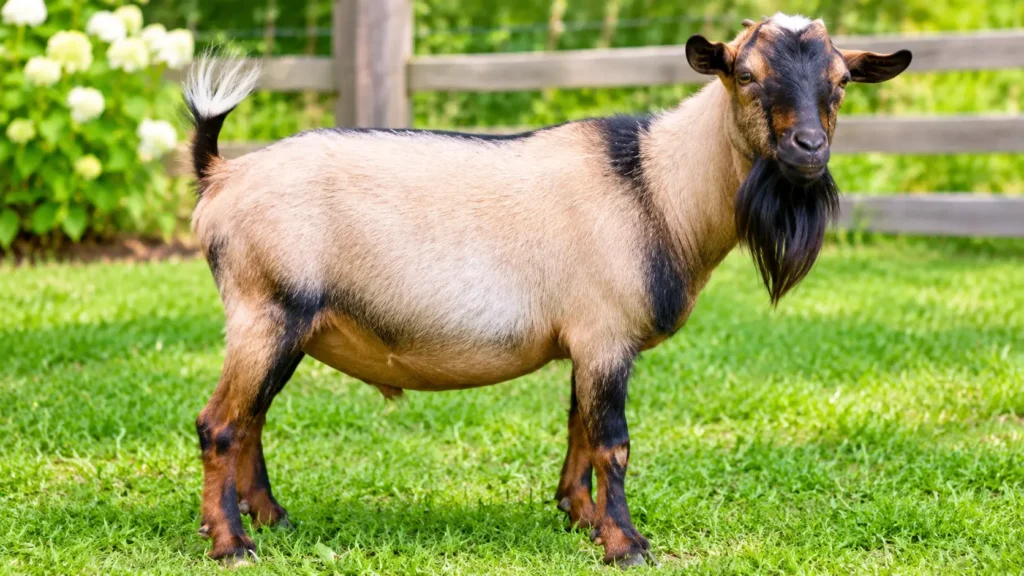
Nigerian Dwarf goats are one of the smallest dairy goat breeds. Their small bodies make them easier to handle than larger goats. They are still strong and active animals. They enjoy climbing and playing.
Adult female goats usually stand about 17 to 22 inches tall at the shoulder. Male goats are often about 19 to 23.5 inches tall. Their weight depends on their family line and health. Most adult Nigerian Dwarf goats weigh about 40 to 80 pounds.
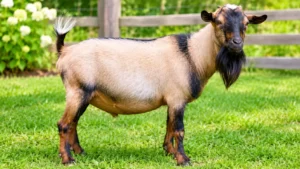
These goats have a straight nose and upright ears. Their coat can be short or medium in length. They come in many colors such as black and brown and gold and white. Some have spots or mixed colors. They may have horns or may be born without them.
Nigerian Dwarf Goat Growth and Weight Chart
This chart shows the general weight of Nigerian Dwarf goats at different ages. Some goats may grow faster or slower based on their genes and diet and health.
| Age | General Weight Range |
| Newborn | 2–5 pounds |
| 1 month | 8–15 pounds |
| 3 months | 15–30 pounds |
| 6 months | 25–45 pounds |
| 9 months | 35–55 pounds |
| Adult female | 40–75 pounds |
| Adult male | 50–80 pounds |
Use these numbers as a general guide. Every goat grows at its own pace. A healthy goat should have a good body shape and should not look too thin or too heavy.
Nigerian Dwarf Goat Temperament and Behavior
Nigerian Dwarf goats are friendly and curious animals. They enjoy being around people and often come close when they see someone with food. They are playful and like to climb on safe places and explore their area.
Their gentle nature makes them a good choice for families and new goat owners. Children can help with simple farm tasks when an adult is nearby. However goats can be strong and young children should not handle them alone.
These goats also need friends. A goat that lives alone may feel lonely and become noisy or stressed. It is best to keep at least two goats together. They can also live with other goat breeds if they have enough space and food.
Male goats may be harder to handle during the breeding season. They can have a strong smell and may become pushy. Keep them in a safe area and handle them with care.
What Do Nigerian Dwarf Goats Eat?
A good diet keeps Nigerian Dwarf goats healthy and helps them maintain a healthy weight. Their main food should be hay and pasture. They also need fresh water and special minerals for goats.
Grass hay gives goats the fiber they need every day. Alfalfa hay has more protein and calcium. It can be a good choice for milking and growing kids. The right amount of hay depends on the goat’s age and weight and health.
Daily Feeding Needs
An adult Nigerian Dwarf goat may eat about 2 to 3 pounds of hay each day. This amount can change based on its size and how much grass it eats. Milking may need more food to support milk production.
Not every goat needs grain. A milking doe may need some grain to get extra energy. An adult goat that is not pregnant or producing milk may stay healthy on hay and pasture without extra grain.
Give your goats these foods and supplies:
- Good quality grass hay every day.
- Safe pasture and fresh plants to browse.
- Special goat minerals in a separate feeder.
- Fresh clean water at all times.
- Extra feed for growing kids and milking does when needed.
Pregnant do need good food during the last part of pregnancy. Young kids need the right feed as they grow. Bucks should not eat too much grain because it can make them gain too much weight.
Never feed your goats moldy hay or spoiled food. Avoid giving them too much grain at once. Make diet changes slowly. Keep poisonous plants away from their grazing area. Choose food based on each goat’s age and health and daily needs.
Nigerian Dwarf Goat Milk Production
Nigerian Dwarf goats give less milk than many larger dairy goats. But their milk is rich and creamy. It has a high butterfat level which makes it great for drinking and making cheese and yogurt.
A good milking dog can give about 1 to 2 quarts of milk each day. Some may give more. The amount of milk depends on her genes and age and diet and health.
Their milk often has about 6 to 10 percent butterfat. This is higher than the butterfat in milk from many other dairy goats. The rich milk gives homemade cheese a creamy feel and a full taste.
How Long Do Nigerian Dwarf Goats Produce Milk?
A doe starts giving milk after she has kids. Many Nigerian Dwarfs can produce milk for several months. Some can stay in milk for up to 10 months with good care and regular milking. Milk production may go down as time passes.
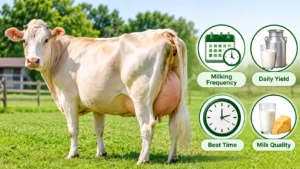
Most owners milk their does once or twice a day. Try to follow the same milking times each day. Clean the udder before milking and use clean equipment. After milking, place the milk in a clean covered container and keep it in the refrigerator.
Do not use milk that smells bad or looks unusual. Check the doe for signs of illness if her udder becomes swollen or painful. Contact a vet if you notice any health problems.
Nigerian Dwarf Goat Housing and Space Requirements
A good shelter keeps goats safe from rain and strong winds and hot weather. Nigerian Dwarf goats are small but they still need enough space to move around and rest. Keep their sleeping area clean and dry.
A covered shelter should have:
- A dry floor with clean bedding.
- Fresh air without strong drafts.
- Protection from rain and strong winds.
- Enough space for all goats to lie down.
- A clean area for food and water.
Each goat should have about 15 to 20 square feet of indoor space. They also need an outdoor yard or pasture where they can walk and play. Give them more space if you keep several goats together.
Use strong fencing around the yard. A fence about 4 feet high can work for many goats. Make sure there are no gaps where they can escape. Check the gates and fence corners often. Goats are curious and may try to climb or push through weak fencing.
Nigerian Dwarf Goat Breeding and Pregnancy
Nigerian Dwarf goats can breed at different times of the year. This gives farm owners more choice when planning births. But a doe should not be bred only because she has reached a certain age.
Some dogs may be ready for breeding at around 7 to 8 months old. They must be healthy and have enough body weight. Others may need more time to grow. A doe should be strong and fully grown enough to carry kids safely.
Pregnancy usually lasts about 145 to 153 days. Twins are common but some do may have triplets or even four kids. Give the doe good food and fresh water during pregnancy. Keep her at a healthy weight and do not let her become too thin or too heavy.
As the birth gets closer the doe may become restless and look for a quiet place. Her udder may also become larger. She may spend more time away from the other goats. Prepare a clean and dry place for her to give birth. Call a vet if she seems weak or has trouble during labor.
Nigerian Dwarf Goat Kids Care
Newborn kids need care right after birth. Make sure each kid can breathe and stand. Help it find its mother’s udder so it can drink milk. The first milk is called colostrum. It helps protect the baby goat from illness.
A kid should drink colostrum soon after birth. Make sure it drinks well and stays warm. If the mother does not feed her kid or does not have enough milk you may need to bottle-feed it.
As kids grow they start eating hay and other solid food. Give them clean water and fresh feed every day. Most kids are ready to stop drinking their mother’s milk at around 8 to 12 weeks. The right time depends on their growth and health.
Keep young male and female goats apart before they become old enough to breed. Nigerian Dwarf goats can start breeding at a young age. Ask a vet about vaccines and worm control to keep your kids healthy.
Nigerian Dwarf Goat Cost and Ownership Expenses
The price of a Nigerian Dwarf goat depends on its age and sex and family line. A pet goat may cost less than a goat raised for milk or shows. A trained milk goat may cost more because of its good milk record and background.
Buying a goat is not your only expense. You also need money for:
- Hay and other feed.
- Goat minerals and fresh water.
- A safe shelter and strong fencing.
- Feeders and water buckets.
- Hoof trimming and grooming tools.
- Vet visits and medicine.
- Breeding supplies and baby goat care.
The total cost depends on where you live and how many goats you keep. Make a monthly budget before buying your goats. Save some extra money for health problems and sudden vet bills.
Is a Nigerian Dwarf Goat Right for Your Farm?
A Nigerian Dwarf goat can be a great choice for a small farm or family home. It is small and easy to handle compared to many larger dairy goats. It can also give rich milk for your family without needing a large farm.
But these goats still need daily care. They need a safe shelter and strong fences and regular health checks. You should also keep at least two goats because they need other goats around them.
Before buying your first goats check these things:
- Make sure goats are allowed where you live.
- Check that you have enough space for at least two goats.
- Choose goats that look healthy and live in a clean place.
- Ask about their age and health history.
- Check the milk record if you want a dairy doe.
- Make sure you have enough money for food and vet care.
Starting with two healthy goats is a good choice for beginners. Learn how to care for them before adding more goats to your farm.
Final Thought
Nigerian Dwarf goats are small and friendly. They can give your family rich milk and bring fun to your farm. Their small size makes them a good choice for people who do not have much space.
They still need good food and fresh water and a safe place to live. Keep them with other goats and check their health every day. Learn about their needs before you start breeding or milking them.
With proper care Nigerian Dwarf goats can be a happy and useful part of your farm.