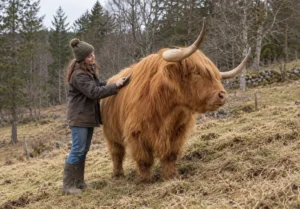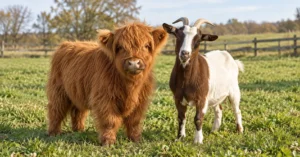
A friend of mine runs a small Highland herd and she has one cow named Pheigi who basically thinks she’s a dog. Pheigi will stand there all day getting brushed if you let her. Gets so excited seeing people she actually tries to jump up like she wants a lap to sit on. Which is terrifying when you remember this is a full grown cow with horns.
That’s basically my answer to the question everyone asks. Yes you can absolutely brush a Highland cow. Most of them genuinely love it too. But there’s more to this than just grabbing any old brush and going at it randomly.
This guide covers what actually works. Tools that hold up. Timing that matters. And a few lessons learned the hard way from people who’ve been doing this for years.
Quick Overview
| Factor | What You Should Know |
| Can you brush them | Yes most Highlands enjoy it once trained |
| Best tool | Stiff bristle or curry brush works well |
| Shedding season | Heaviest in warm weather months |
| Frequency | Weekly works for most coats |
| Safety concern | Horns and sudden movements need respect |
| Bonding value | Builds real trust between cow and handler |
| Skin benefit | Removes loose hair and prevents matting |
Can You Brush a Highland Cow Grooming Basics Explained
Short answer: yes. The longer answer depends a lot on the individual cow and how much time you’ve put into building trust first. Some Highlands take to brushing almost instantly. Others need weeks of slow calm exposure before they’ll stand still for it.
Farms that let visitors brush their cattle exist all over the place now. There’s a herd near Loch Awe in Argyll with roots going back to the 1800s where guided tours let people meet the cows up close and actually brush their coats themselves. Visitors describe it as something close to therapy. Bonding with an animal that clearly enjoys the attention back.
That two way trust is really the whole point. A Highland cow that trusts you will often lean into the brush almost like a big dog would. One that doesn’t know you well might just walk off or get nervous. Building that relationship takes patience but it pays off fast once the cow figures out brushing feels good.
Why Do Highland Cows Need Brushing Coat Care Benefits
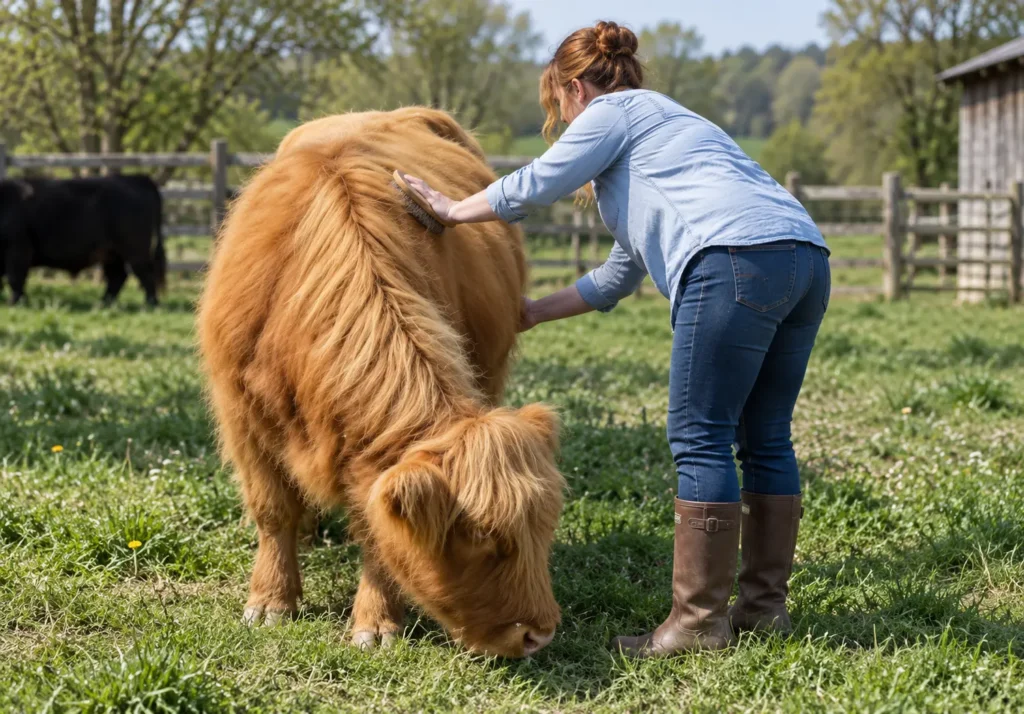
Before getting into why here are two lists worth saving since coat care on this breed involves more than people expect.
Reasons Brushing Actually Helps This Breed
- Removes loose dead hair before it mats into tangles
- Distributes natural oils through that thick double coat
- Gives you a chance to check for skin issues or parasites
- Builds trust and calm familiarity between cow and handler
- Helps manage shedding during warmer months
Signs Your Highland Could Use More Grooming
- Visible clumps or mats forming in the coat
- Excessive rubbing against fences posts or trees
- Patches where hair looks dull or thinning
- Buildup of dirt or debris stuck deep in the coat
That double coat this breed carries is thick. Really thick. Long coarse hair on the outside with a soft wooly layer underneath. Without regular brushing all that hair can mat up fast especially around the neck and shoulders where cows tend to rub against fences and posts anyway.
Brushing also gives owners a good excuse to actually put hands on their cattle regularly. That matters more than people think. A cow you handle often stays easier to manage during vet visits or when something actually needs attention. One you never touch gets spooked by the smallest thing.
Best Brushes and Tools for Highland Cow Grooming
Not every brush works for this coat. Something meant for a horse or a dog usually isn’t stiff enough to get through all that hair without just gliding over the top uselessly.
A stiff bristle brush or a curry comb built for cattle tends to work best. Some owners swear by rubber curry brushes for loosening dead hair before switching to a stiffer bristle brush to finish the job. Metal shedding blades work too during peak shedding season though you have to be gentle since skin underneath all that fur is more sensitive than the coat suggests.
One Highland owner I know of had to get creative with actual rubbing stations built for her herd. Her cows kept destroying a homemade timber rubbing post, rubbing on it so hard they pushed the whole thing sideways and nearly tipped a trailer over with it. She ended up having a welder add chains that allowed some movement but could still be locked down to stop total destruction. Farm life apparently means constantly rebuilding whatever the cows decide to lean on.
That story says a lot honestly. These animals like to rub. A lot. So whatever tool or station you’re using needs to handle serious pressure without falling apart the first week.
How Often Should You Brush a Highland Cow Routine Guide
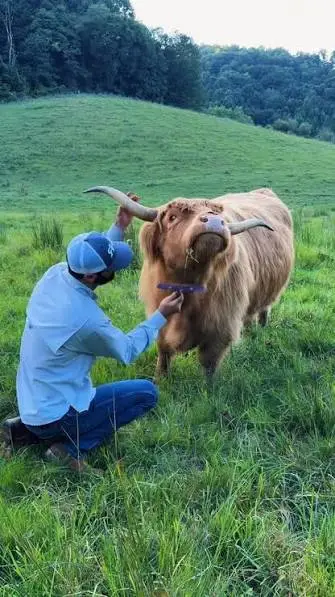
Weekly brushing works well for most Highlands under normal conditions. During shedding season though that schedule often needs to bump up to two or three times a week just to keep loose hair from building up into mats.
Winter coats get thick and dense. Once warm weather rolls around these cows start molting hard, dropping huge amounts of fur in a fairly short window. One owner described being amazed at just how much wool comes off her herd once a few warm days hit in a row.
A consistent routine matters more than doing one massive grooming session occasionally. Short regular sessions keep the coat manageable and keep the cow comfortable with the process instead of turning it into some big ordeal every few months.
Building a Simple Weekly Habit
Pick a day and stick to it. Even fifteen minutes of brushing once a week adds up fast over a full year and the cow starts expecting and honestly looking forward to it.
Highland Cow Shedding Season and Hair Maintenance
Shedding season deserves its own real conversation because it’s honestly a bigger deal than most new owners expect. All that thick winter coat has to go somewhere once temperatures rise, and the amount of loose fur these cows produce during a heavy shed is genuinely surprising.
Here’s the part that catches people off guard though. You can’t just leave all that shed hair lying around the pasture. Cattle will eat loose fur if it’s sitting on the ground, and unlike some animals cows physically cannot vomit. If enough hair builds up in their stomach a vet sometimes has to surgically remove it or the cow can actually die from the blockage.
That means regular brushing during the shedding season isn’t just about keeping the coat looking nice. It’s genuinely a safety issue. Removing loose hair through brushing instead of letting it fall and accumulate in the pasture protects your cattle from a real and serious health risk.
Some owners end up with bags and bags of collected Highland wool after a heavy shedding season with honestly no clear plan for what to do with it all. Turns out that wool is usable too. It just needs heavy washing first since it carries a lot of natural lanolin. Once properly cleaned it can be carded and spun, even woven into things like mats by anyone with the right skills and patience for it.
How to Safely Brush a Highland Cow Without Stress
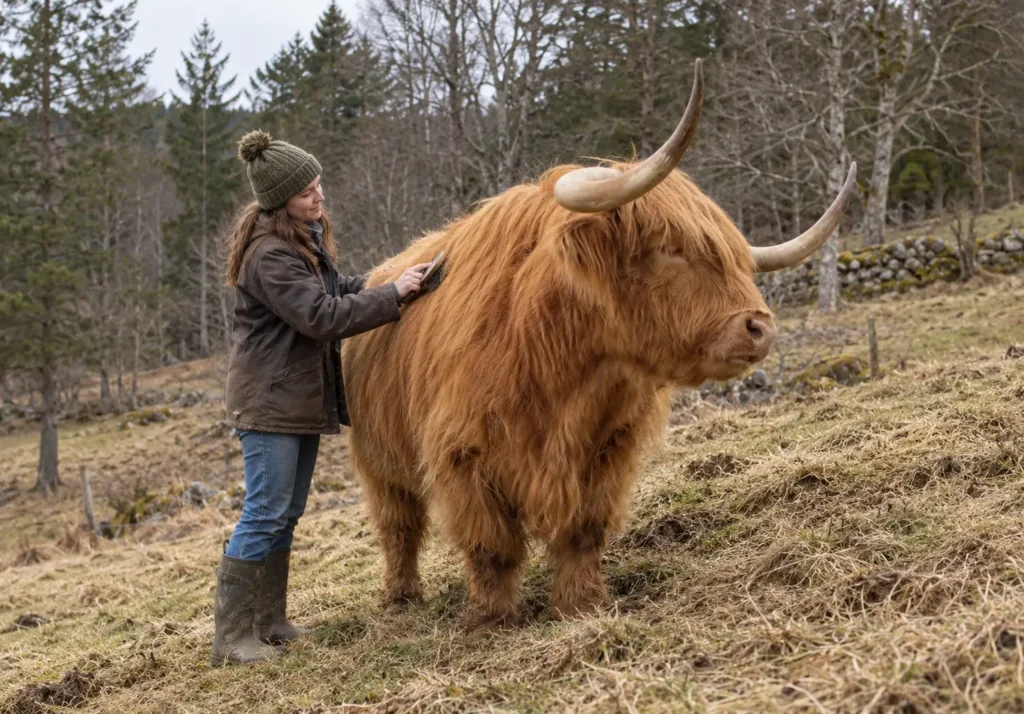
Safety matters here more than with most livestock simply because of those horns. Even a calm gentle Highland can accidentally catch you with a head turn if you’re standing in the wrong spot at the wrong moment.
A few practical safety habits worth following.
Approach from the side rather than straight on toward the horns
Move slowly and talk calmly so the cow always knows where you are
Start brushing on the shoulder or neck before working toward more sensitive areas
Watch body language closely including ears and tail for early signs of discomfort
Never corner a cow in a tight space during brushing sessions
Building trust gradually makes the whole process safer for everyone involved. A cow that’s used to being handled calmly rarely reacts badly to brushing once it understands what’s happening. Rushing that trust building process though tends to backfire fast, especially with cattle that haven’t been handled much before.
Based on general best practices among Highland owners, letting the cow approach you first rather than chasing them down with a brush tends to build confidence much faster on both sides.
Highland Cow Coat Care Tips for Healthy Hair and Skin
Beyond basic brushing there’s a bit more that goes into keeping this coat genuinely healthy year round. Checking skin underneath the fur regularly helps catch issues early before they turn into something bigger.
A few extra coat care tips worth building into your routine.
- Check for ticks or parasites hiding deep in the thick coat
- Look for any skin redness or irritation while brushing
- Keep rubbing posts or stations sturdy since cows use them constantly
- Avoid bathing too often since it can strip natural oils from the coat
That last point matters more than people expect. This breed’s coat is naturally weatherproof thanks to those oils, so excessive washing can actually work against the very insulation that makes Highlands so hardy in rough weather to begin with.
Most of the time simple consistent brushing covers ninety percent of what a healthy Highland coat needs. The rest comes down to good nutrition and regular observation, catching small issues before they become bigger problems down the road.
Final Thoughts
Brushing a Highland cow really can become one of the most rewarding parts of raising this breed. Between the bonding it builds and the genuine health benefits for the coat, it’s honestly time well spent for anyone lucky enough to have one of these shaggy gentle giants in their care.
If you’re just getting started, go slow and let trust build naturally. Most Highland owners will tell you the same thing. Once your cow figures out brushing feels good, you’ll have a hard time getting them to leave you alone.
FAQS
Can you actually brush a Highland cow safely?
Yes most Highland cows can be brushed safely once they trust their handler. Approaching from the side rather than head on and moving slowly helps avoid any accidental contact with their horns. Many Highlands genuinely enjoy the attention and will stand calmly for brushing sessions once they’re used to regular gentle handling from their owner.
How often should a Highland cow be brushed?
Weekly brushing works well for most Highland cattle under normal conditions throughout the year. During shedding season this often needs to increase to two or three times weekly to keep loose hair from matting or building up in the pasture where cattle could accidentally ingest it.
What happens if a Highland cow eats too much shed hair?
Since cattle cannot vomit swallowed hair can build up in their stomach and cause a serious blockage. In severe cases a vet may need to surgically remove the mass or the cow could die from the obstruction. This is exactly why regular brushing during shedding season matters for genuine safety reasons.
What is the best brush for a Highland cow coat?
A stiff bristle brush or a curry comb designed for cattle tends to work best on this breed’s thick double coat. Rubber curry brushes help loosen dead hair first before switching to something stiffer to finish. Metal shedding blades can help too during peak shedding season if used gently.
Do Highland cows actually enjoy being brushed?
Many Highland cows genuinely seem to enjoy brushing once they trust their handler and understand the process. Some cows will lean into the brush or stand patiently for extended sessions much like a large dog would. Building that trust takes time and gentle consistent handling but it usually pays off fully.