Highland cattle grow at a slower pace than many modern beef breeds. Their long coat and strong body can make a young heifer look mature before her reproductive system and body frame are fully ready.
A Highland heifer may enter puberty and begin heat cycles during her first year. That does not always mean breeding should start right away. Farmers need to look at her age, weight, body condition, strength, pelvis size, health, and rate of growth.
A good breeding plan protects the young heifer while also helping the farm produce healthy calves. Breeding too early can lead to calving difficulty. Waiting far too long can raise farm costs and reduce lifetime calf production.
The goal is not to breed at the earliest possible time. The goal is to breed when the heifer has enough size and physical maturity to carry a developing calf and give birth safely.
Quick Highland Cattle Breeding Guide
| Breeding topic | General guideline | Important point |
|---|---|---|
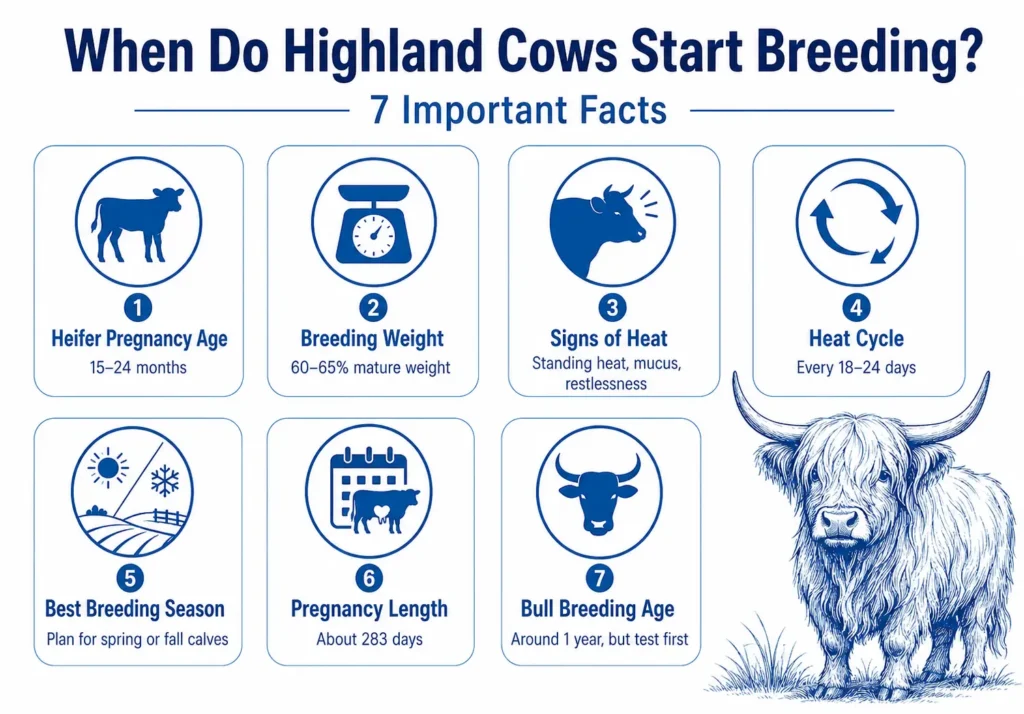
| First heat in a heifer | Often begins before full maturity | First heat does not always mean she is ready to breed |
| Common breeding age | Often around 15 to 24 months | Size and body condition matter more than age alone |
| Target breeding weight | Commonly around 60% to 65% of expected mature weight | Smaller Highland bloodlines may have lower target weights |
| Heat cycle length | About every 18 to 24 days | The average cycle is close to 21 days |
| Best breeding time | Near the middle or end of standing heat | Careful heat detection improves timing |
| Pregnancy length | Around 283 days on average | A normal pregnancy may be several days shorter or longer |
| Young bull fertility | Some bulls become fertile near one year old | A breeding soundness exam is still needed |
| First calving goal | Often around two to three years of age | Highland heifers may mature later than some beef breeds |
Best Weight for Breeding a Highland Heifer
Body weight gives farmers one of the clearest signs that a Highland heifer may be ready for breeding. Age still matters, but weight often tells more about her real animal development.
Highland cattle do not all reach the same mature weight. One cattle bloodline may produce small fully grown cows. Another family line may produce wider and heavier females.
Because of this difference, there is no single breeding weight that fits every Highland heifer.
A common target is about 60 percent to 65 percent of the expected adult size. The farmer should compare the young heifer with fully grown cows from the same herd genetics.
For example, suppose the mother’s mature weight is close to 1,000 pounds. A breeding target may fall between 600 pounds and 650 pounds.
If mature cows in the same family reach about 1,200 pounds, the target may be closer to 720 pounds or 780 pounds.
These numbers work as guides. They should not replace a close check of body condition, pelvic growth, health, and overall body structure.
Check the Real Weight
It is hard to guess the current weight of a Highland heifer by sight. The long Highland coat and thick hair can hide ribs and make the body frame look larger.
A livestock scale gives the best answer. A cattle weight tape can also provide a useful estimate when a scale is not available.
Keep growth records from weaning until breeding time. A single weight tells you where the heifer is today. Several measurements show whether she is growing at a healthy and steady rate.
A heifer that gains weight too slowly may have a parasite load, poor nutrition, low-quality hay, or another health problem. Signs may include a rough coat, loose manure, weak muscles, or low energy.
A cattle veterinarian can check for disease or parasites. A livestock nutritionist can test the forage and build a better feeding plan.
Body Condition Matters Too
A target weight does not always mean the heifer is ready.
An overweight heifer may carry too much fat around the brisket and tail head. She may look heavy without having the best pelvic growth or muscle strength.
A thin heifer may show sharp ribs and poor energy reserves. Her heat cycles may become weak or stop. Her pregnancy rate may also fall.
The best breeding heifer should look healthy and balanced. She needs enough fat to support pregnancy but should not be overfed.
Pasture and hay should provide the main part of her diet. She also needs clean water and cattle minerals suited to the local area.
Grain feeding can help when forage lacks enough energy or protein. It should not be used to force fast fat gain. Healthy development matters more than reaching a number quickly.
What Age Can a Highland Heifer Get Pregnant?
A Highland heifer can get pregnant after puberty begins and her reproductive organs start working. Puberty may happen during the first year, but the exact timing changes from one animal to another.
Genetics, season, body weight, nutrition, and health all affect when heat cycles begin.
Some young heifers may show their first heat before 12 months of age. Others may not cycle until later because of slow maturity or poor growth.
A heifer that shows heat can become pregnant. Still, pregnancy at a young age may place heavy pressure on her bones, muscles, pelvis, and energy needs.
Common Breeding Ages
Many Highland breeders begin breeding well-developed heifers between 18 months and 24 months of age.
Some heifers may be ready near 15 months when they have strong body growth and enough weight. Slower-growing animals may need to wait until 20 months or longer.
Age alone should never control the decision.
A 20-month-old Highland heifer with weak growth may be less ready than a healthy 18-month-old animal from a smaller family line.
The farmer should study her whole body rather than count only the months.
Puberty Is Not Full Maturity
Puberty means the heifer can release an egg and become pregnant. It does not mean she has reached full physical maturity.
Her reproductive tract may work before her body size is large enough for safe calving.
The pelvis continues growing as the heifer develops. A small pelvis can raise the chance of a difficult birth. This is a serious concern when the calf is large or comes in the wrong position.
A cattle veterinarian can check the reproductive tract and may perform a pelvic measurement when needed.
Pelvic measurement does not promise an easy birth. It gives one more piece of information that can help with breeding decisions.
Risks of Breeding Too Early
Early breeding can slow body growth because the heifer must use nutrition for herself and the first pregnancy at the same time.
She needs energy for her own muscles and bones. She also needs energy for the developing calf.
If the feeding plan falls short, she may become thin and weak. She may also face calving difficulty or produce less milk after birth.
A hard first birth can damage the reproductive system and lower future fertility.
For this reason, safe calving should matter more than producing the first calf as quickly as possible.
Problems With Waiting Too Long
Waiting can be useful when the animal needs more time. Still, very late breeding can raise farm costs.
The heifer keeps eating pasture, hay, minerals, and stored feed without producing a calf.
Late breeding can also reduce lifetime calf production. A female that starts calving at a much older age may produce fewer calves during her working life.
The best plan finds the middle point. Give the heifer time to grow but do not delay when she is healthy, strong, and ready.
Signs a Highland Cow Is Ready to Breed
A Highland cow or heifer normally shows heat behavior when she is ready to mate. This period is called estrus.
Standing heat is the clearest sign. The female stands still and allows another animal to mount her.
The Highland coat can hide some physical changes. Farmers should spend time watching behavior rather than looking only at the body.
Common Heat Behavior
A cow in heat may become restless and walk more than usual. She may call often, sniff other cattle, or lick them.
Some females begin mounting cattle before they stand to be mounted themselves. Others show quiet heat and give only weak signs.
A raised tail is common. Clear mucus may come from the vulva. The vulva may also look slightly swollen.
Rubbed tail hair and dirt around the tail head can show that other cattle mounted her.
Feed interest may fall for a short time. The cow may leave the pasture group and focus more on bull activity.
Watch at the Right Time
Heat detection works best when cattle are checked more than once a day.
Early morning and evening checks often help because cows may move more during cooler weather.
Pasture observation should happen away from feeding time. When cattle gather around hay or grain, normal heat behavior may be harder to see.
A farmer should watch quietly for at least several minutes. Walking into the herd too quickly may stop mounting activity.
Useful Heat Detection Tools
Tail chalk and breeding patches can help find females that have been mounted. The marks become rubbed or damaged when cattle stand for mounting.
Activity collars and electronic tags may show increased walking and behavior changes.
A teaser bull can also help with heat detection. This bull can show interest in females without causing pregnancy after the correct veterinary procedure.
These tools support herd observation. They do not replace it.
Physical Readiness Beyond Heat
A female showing standing heat is reproductively active. She may still be too small to breed.
Check her healthy weight, body condition, sound feet, sound legs, and normal movement.
She should not have a serious disease or show signs of weak reproductive development.
The goal is not only mating readiness. The goal is enough size for safe calving.
How Often Do Highland Cows Come Into Heat?
A healthy nonpregnant Highland cow usually has a heat cycle every 18 days to 24 days.
The average estrous cycle lasts close to 21 days.
If the cow does not become pregnant, the cycle begins again. Farmers can use these dates to predict the next breeding period.
How Long Does Heat Last?
Standing heat often lasts for several hours. The length can vary between cows.
Some females show clear signs for most of the day. Others may stand for only a short time.
Quiet heat can be easy to miss. This often happens when the cow shows little mounting activity or when no one watches during the right hours.
Muddy ground, icy ground, and crowded pens may also reduce movement. Cattle may avoid mounting because they fear slipping.
Extreme heat can lower the activity level. Cows often stand quietly in shade instead of showing strong heat signs.
Ovulation and Breeding Timing
Ovulation happens after standing heat begins. During ovulation, the ovary releases an egg.
Healthy sperm need to be present in the reproductive tract around the time of egg release.
When using artificial insemination, many farmers follow the morning-evening rule.
A cow first seen in standing heat during the morning may be bred in the evening. A cow first seen in standing heat during the evening may be bred the next morning.
Timed insemination uses a hormone program and fixed breeding timing. A veterinarian or trained breeding technician should manage this method.
With natural breeding, a fertile bull normally detects heat and mates at the correct time.
Reasons a Cow May Miss Heat
A cow may not show heat because she is already pregnant. She may also have missed heat that no one noticed.
Poor nutrition and low weight can stop normal cycles. A mineral imbalance may also affect reproductive health.
Other causes include parasites, stress, disease, uterine infection, retained placenta, ovarian problems, and difficult calving.
A first-calf heifer may need more time for post-calving recovery. She is nursing a calf while her own body may still be growing.
Call for a veterinary examination when a cow fails to cycle or has poor herd fertility.
Best Time of Year to Breed Highland Cattle
The best breeding season depends on the weather, pasture growth, stored forage, farm labor, and calving facilities.
Highland cattle can breed at any time of year. The farmer should choose a season that gives newborn calves the safest start.
A pregnancy lasts about nine months and ten days. Count backward from the planned calving season to choose the breeding dates.
Breeding for Spring Calving
Spring calving is common on farms with cold winters.
The improved weather helps lower the risk of severe cold stress. Pasture growth also provides fresh feed for nursing cows.
Spring can still bring cold rain and strong wind. Newborn calves need dry shelter and protection from mud.
For spring calving, summer breeding often works best.
Breeding for Fall Calving
Fall calving may fit farms with mild winter weather and very hot summers.
Cows can breed during cooler months and calve after the worst heat has passed.
The main challenge is winter hay. A cow producing milk needs enough energy and protein during the cold season.
Stored forage quality becomes very important.
Winter Calving
Adult Highland cattle handle cold weather well because of their thick coat. Newborn calves do not have the same protection.
A wet calf can lose body heat very quickly. Freezing temperature, wind, and snow can lead to dangerous cold stress.
Winter calving requires dry bedding, wind protection, a clean shelter, and an emergency warming area.
Farm labor must also be available for night checks and difficult births.
Summer Calving
Summer calving avoids snow and freezing weather. It can still create serious problems.
High heat and humid weather can cause heat stress. Highland cattle carry a heavy coat, so they need shade, cool water, and good airflow.
Flies may bother the cow and calf. Poor summer pasture can also reduce milk production.
Controlled Breeding Season
A controlled breeding season often works better than leaving the bull with the cows all year.
A 45-day or 60-day season covers about two heat cycles or three heat cycles.
This produces a more even calf group. Vaccination planning, feeding, weaning, and marketing become easier.
Remove the bull after the planned period. Pregnancy checking can then show which cows conceived.
A short season also helps the farmer find females with reproductive problems.
How Long Is a Highland Cow Pregnant?
A Highland cow pregnancy lasts close to 283 days on average.
This equals about nine months and ten days. Some pregnancies end a little earlier or later.
Cow age, calf sex, breed genetics, sire genetics, weather, and nutrition can affect the gestation period.
A bull calf may sometimes arrive later than a heifer calf. A first-calf heifer may also have a slightly different pregnancy length than a mature cow.
Record the Breeding Date
The breeding date helps estimate the calving date.
Artificial insemination gives an exact service date. Natural service can be harder to track because a bull may mate with the same cow more than once.
A calving calculator gives an estimated due date. It should not be treated as an exact promise.
A pregnancy examination can confirm conception. A veterinarian may use ultrasound or rectal examination.
Early ultrasound may also help estimate the stage of pregnancy.
Signs of Late Pregnancy
The udder begins filling as calving gets closer.
The vulva may look longer or more swollen. Softened ligaments around the tail head can create a loose look near the hips.
Clear mucus may appear. The cow may carry her tail in a raised position.
Some cows leave the herd and search for a quiet calving area. Restlessness is common. The cow may keep lying down and standing up.
These signs help with planning but do not give the exact calving hour.
Normal Calf Position
During normal labor, two front feet appear first. The calf nose should follow between the legs.
The bottom of both front feet normally points toward the ground.
A water bag may appear before the feet.
Watch without disturbing the cow when labor continues normally. Too much noise can slow progress.
Signs of a Difficult Birth
Call for veterinary help when the cow shows hard straining but makes no progress.
Only one front foot may appear. The calf nose may come without both feet.
A backward calf may show the back feet first. A tail-first presentation is also dangerous.
Heavy bleeding, a weak cow, stopped labor, or an unusual calf position need quick action.
Do not begin pulling assistance without understanding the position. Incorrect pulling can cause cow injury and calf injury.
When Can a Highland Bull Start Breeding?
A Highland bull may reach bull puberty near one year old. At this stage he may begin producing usable semen.
That does not mean every yearling bull can handle a large cow group.
Breeding readiness depends on age, semen quality, physical condition, movement, and mating ability.
Breeding Soundness Examination
A breeding soundness examination should happen before the breeding season.
The veterinarian checks the reproductive organs, testicles, penis, sheath, and scrotal size.
Semen is studied for sperm movement and sperm shape.
A bull may look strong but still have poor fertility. Fever, injury, frostbite, heat stress, or disease can lower semen quality.
A bull that passed last year can fail this year. Test him before each season.
How Many Cows Can a Young Bull Breed?
A common guide matches the cow number to the bull age in months.
A 15-month-old bull may handle about 15 females during a controlled season.
This is only a rough guide. Pasture size, terrain, hot weather, and breeding season length can change the workload.
A mature bull with proven fertility may handle a larger group.
Do not push a young bull too hard. A heavy breeding workload can lead to weight loss and poor service completion.
Check the Whole Bull
A bull needs working feet and good hoof shape. He must travel across pasture and reach cows in heat.
Check the legs and joints for pain or weakness. Eyesight matters because the bull needs to see movement and find females.
Healthy body condition is also important. An overweight bull may have trouble mounting. A thin bull may lack stamina.
Watch for female interest and normal mounting. A bull may have good semen but poor mating ability.
Bull Safety
A small or young Highland bull can still be dangerous.
Use strong fencing and safe handling equipment. Keep an escape route when working near him.
Bottle-fed bulls may lose their natural fear of people. This can lead to dangerous behavior as they mature.
Do not treat a breeding bull like a pet.
Unfamiliar bulls may begin bull fighting when placed together. Introduce them carefully on open ground when possible.
Final Thought
Highland cows start breeding when age, body weight, health, and reproductive readiness come together.
A heifer may enter puberty during her first year, but early heat does not always mean safe breeding. Many Highland heifers are bred between 18 months and 24 months. Some well-developed animals may be ready in about 15 months.
A useful breeding weight is around 60 percent to 65 percent of expected mature weight. The farmer should also check body condition, pelvic growth, feet, legs, and overall strength.
Healthy cows usually return to heat every 18 days to 24 days. Standing heat gives the clearest breeding sign.
Pregnancy lasts close to 283 days. A planned breeding season helps match calving with safe weather, good forage, and enough farm labor.
Young Highland bulls may become fertile near one year old. A breeding soundness examination should confirm that they can work before they join the cow group.
The safest plan does not rush young cattle. It gives them enough time and nutrition to grow into strong breeding animals.