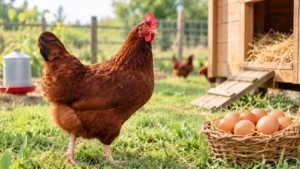
Rhode Island Reds are tough and friendly birds that lay lots of brown eggs. They also grow big and strong and they love to move around all day. A coop that looks fine on paper can feel tiny once these birds move in. Picture 6 hens all trying to reach one feeder and one nest box at the same time. That is how problems start.
Building the right coop from day one saves you money and stress. You do not need fancy tools or a huge budget. You need a clear plan for space and fresh air and safety. This guide shows you how much room your flock needs and how to set up the inside and the outside. You will also learn how to avoid crowding and how to arrange the coop so cleaning stays easy.
Rhode Island Reds are a large breed. Hens weigh around 6.5 pounds and roosters can reach 8.5 pounds. Because of that size they need more room than small breeds like bantams. Plan for the flock you will have in a year and not only the flock you have today. A coop that is slightly too big is a small problem. A coop that is too small is a problem every single day.
Quick Peek at Your Rhode Island Red Coop Plan
| Planning Point | Easy Rule to Follow |
| Indoor space per hen | 4 to 5 square feet |
| Run space per bird | 10 square feet or more |
| Roost space per bird | 10 to 12 inches |
| Nest boxes | 1 box for every 4 to 5 hens |
| Nest box size | 12 by 12 by 12 inches |
| Airflow | High vents above the roosts |
| Predator mesh | Hardware cloth and not chicken wire |
| Best spot | Dry and slightly raised with sun and shade |
Picking the Right Size for Your Reds
Size comes first because every other choice depends on it. Standard hens need about 4 square feet each inside the coop when they get daily time outdoors. Bantams need only about 2 square feet while giant breeds can need up to 8. Rhode Island Reds are large standard birds so aim for 4 to 5 square feet per hen. Roosters need extra room. Birds that stay inside most of the day need at least 10 square feet each.
So how many Rhode Island Reds fit in one coop? Do the math with the floor space. A coop that measures 4 feet by 6 feet gives you 24 square feet. That is enough for about 5 or 6 hens. A coop that measures 4 feet by 8 feet gives you 32 square feet and fits about 7 or 8 hens. Always count the floor and not the walls.
Small flocks can still use a bigger coop. Extra space gives you room to add a few birds later. Large flocks need more thought. Instead of one giant building you can build two smaller coops. Two coops also make it easier to separate birds if one gets sick or too bossy.
Feeders and waterers need space too. Do not forget them when you measure. Hang them or set them on blocks so birds cannot kick bedding into them. Keep them away from the roosts so droppings stay out of the food and water.
Simple Space Rules
- Standard hens need at least 4 square feet inside
- Roosters need extra room
- Birds with little outdoor time need up to 10 square feet each
- Each bird needs 10 square feet in the run
Coop Size by Flock
- 4 hens need about 16 to 20 square feet
- 6 hens need about 24 to 30 square feet
- 10 hens need about 40 to 50 square feet
- 20 hens need about 80 to 100 square feet
Inside the Coop: Roosts and Nests and Fresh Air
The inside of the coop should feel like a bedroom. It needs a safe place to sleep and a quiet place to lay eggs and plenty of clean air. Plan each area before you build so nothing ends up crowded.
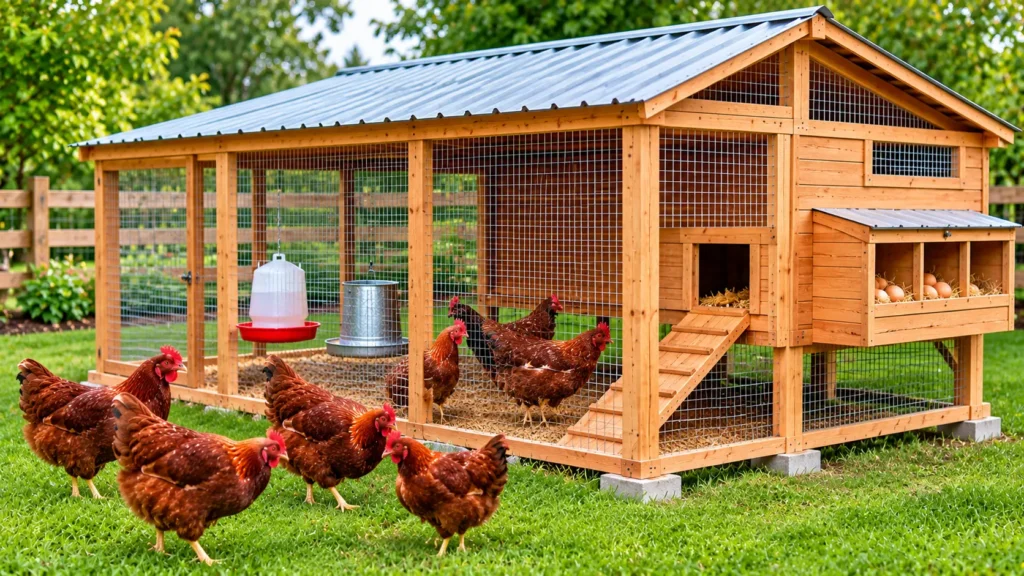
Start with roosts. Chickens love to sleep off the ground. Give each Rhode Island Red about 10 to 12 inches of roost space. Use a wide board with the flat side up so birds can rest their feet flat and keep their toes warm. Place the roost 2 to 4 feet off the floor and keep it away from the walls so birds have room to settle. A droppings board under the roost makes cleaning fast.
Next come nest boxes. One box for every 4 or 5 hens works well. Each box should measure about 12 inches wide and deep and tall. Mount the boxes lower than the roosts. Chickens sleep in the highest spot they can find and you do not want eggs covered in droppings. Choose a dim and quiet corner so hens feel safe.
Headroom matters too. Build the coop tall enough that you can reach every corner while standing or at least kneeling with ease. A coop you cannot reach into will not stay clean.
Ventilation may be the most important feature of all. Good airflow protects your birds from breathing problems and heat. Put vents high on the walls near the roof and above the roost. Air then moves out without blowing on sleeping birds.
Easy Airflow Tips
- Place 2 vents high on opposite walls for a gentle cross breeze.
- Cover every vent with hardware cloth so predators cannot reach in.
- Keep vents open all year since high vents do not create a draft.
- Check the bedding often because damp bedding means you need more airflow.
Outdoor Run and Free Range Setup
Rhode Island Reds love to scratch and forage and explore. A good outdoor space keeps them busy and healthy. Plan at least 10 square feet in the run for each bird and add more if your yard allows. A flock of 6 needs about 60 square feet. Bigger runs mean fewer fights and less boredom.
A safe fenced run starts with strong mesh. Chicken wire keeps chickens in but it does not stop a determined raccoon. Use hardware cloth on the lower walls and around any openings. Digging animals are a real threat so bury the mesh about a foot deep or lay it flat around the outside edge as an apron. Add a roof or a mesh cover to block hawks and keep rain and snow off the ground.
Free range time is great for these active birds. Let your flock out during the day when you can watch them and close them in before dark. Give them things to do in the run too. Add a dust bath spot and a few logs for perching and a shady corner where they can cool off.
Know Your Predators
- Raccoons open simple latches so use locks or clips
- Hawks attack from above so cover the run
- Foxes and dogs dig so bury the mesh
- Snakes and rats squeeze through small gaps so seal every hole
Lock the coop door every night. Most predator attacks happen after dark.
How to Prevent Overcrowding in a Chicken Coop
Rhode Island Reds are strong and sometimes bossy. In a crowded coop they can bully weaker hens. Overcrowding is easier to prevent than to fix so learn the warning signs early.
Signs of an Overcrowded Coop
- Wet and smelly bedding
- Feather pecking and bald spots
- Dirty eggs
- Fighting over food or nest boxes
- Fewer eggs than normal
Limited space causes stress and stress leads to sickness. Damp litter builds up fast and creates ammonia fumes that hurt the lungs. Birds that fight over food may go hungry. Weak hens may stop laying or lose weight.
Give your flock enough feeders and waterers. Add a second feeding station so one bossy hen cannot guard everything. Place stations far apart so every bird can eat without a fight. Keep fresh water in more than one spot especially in hot weather.
Chicks grow fast so plan for adult size. A small brooder looks roomy at first but those fluffy babies will soon weigh 6 pounds or more. Count your birds often and compare the number to your floor space. Do not add new birds unless you have room. If you end up with extra roosters or too many hens find them a new home or build more space before the problems begin.
Best Coop Layout and Features for Rhode Island Red Chickens
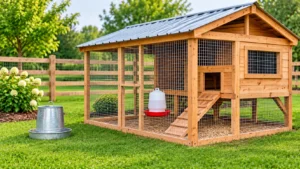
A good layout makes daily chores quick and easy. Start with the location. Choose a dry spot that sits slightly higher than the ground around it. Water should drain away from the coop and not pool underneath. The coop needs morning sun but it also needs shade in the afternoon. Keep it away from low areas that flood.
Doors matter more than most beginners think. Add a small pop door for the birds and a full size door for you. You should be able to reach every corner with a rake and a shovel. Add a second small door or hatch for collecting eggs without stepping inside. Use strong hinges and latches that close tight.
Bedding and drainage keep the floor healthy. Pine shavings or straw work well. Add a layer of gravel under the coop to improve drainage. A raised floor keeps moisture away and stops rodents from nesting underneath. Spread fresh bedding often and remove wet spots right away.
Weather protection is next. A roof that slopes and overhangs sheds rain and keeps walls dry. Add shade cloth over the run in summer and block cold wind in winter. Do not seal the top of the coop though. High vents must stay open all year.
Simple Build Order
- Pick a dry and slightly raised spot.
- Build a level base and frame the floor.
- Raise the walls and add the roof.
- Cut in the vents and cover them with hardware cloth.
- Add doors and latches that predators cannot open.
- Install the roosts and nest boxes then add bedding.
Keep the design simple. A plain rectangle with a slanted roof is easy to build and easy to keep dry. Simple coops are also easier to clean and repair.
Final Thought
A great coop for Rhode Island Reds comes down to space and airflow and safety. Give each hen at least 4 square feet inside and 10 square feet outside. Add enough roost and nest space and keep the vents high and open. Use strong mesh and solid latches to keep predators away. Build in easy access so cleaning never becomes a chore you dread. When you plan for the flock you will grow into your birds will stay calm and healthy and lay plenty of eggs for years.