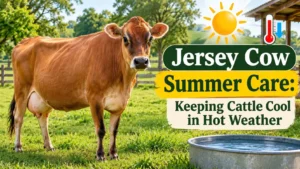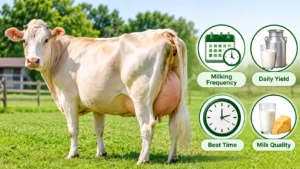
Summer can be hard on Jersey cows when the weather gets hot and humid. These cows produce rich milk and need enough food and water to stay healthy. But hot weather can make them eat less and drink more. It can also lower their milk production and make them feel tired.
A cow that feels too hot may breathe faster and spend more time standing. She may eat less and avoid walking during the hottest hours. These can be early signs of heat stress.
Keeping Jersey cows cool does not have to be difficult. Give them plenty of shade and fresh water. Make sure they have good airflow and a healthy diet. Pregnant cows and milking cows need extra care during hot weather because heat can affect their health and milk production.
This guide explains how to care for Jersey cows in summer. You will learn how to keep them cool and provide good food and water. It also covers simple daily steps to help your cows stay healthy during hot weather.
Quick Overview
| Care Area | What to Do |
| Heat stress | Watch for fast breathing and heavy drooling |
| Shade | Provide trees or a covered resting area |
| Drinking water | Keep clean and cool water available all day |
| Cooling | Use fans and suitable sprinklers |
| Feeding | Offer fresh feed during cooler hours |
| Grazing | Let cows graze early in the morning or later in the evening |
| Shelter | Keep barns clean and well ventilated |
| Health checks | Monitor appetite and milk production daily |
How Hot Weather Affects Jersey Cows
Jersey cows are smaller than many other dairy cows. They can handle warm weather better than some larger breeds. But they can still suffer from heat stress. Very hot weather and high humidity can make them feel uncomfortable.
Cows cool their bodies by breathing and sweating. But these methods do not work as well when the air is too hot or humid. Their body temperature can rise and make it harder for them to stay cool.
How Heat Affects Milk Production
A Jersey cow needs enough food and water to produce milk. During hot weather she may eat less because her body uses energy to stay cool. When she eats less she may not get enough nutrients to maintain her usual milk production.
Heat stress can cause:
- Less milk production.
- Poor appetite.
- More water intake.
- Changes in normal behavior.
- Breeding problems.
- A higher risk of health issues.
Hot weather can also make it harder for cows to become pregnant. They may show fewer signs of heat and have trouble breeding during summer.
Signs of Heat Stress in Jersey Cows
Watch your cows closely during hot weather. Finding the signs early can help you protect them before the problem gets worse.
Common signs include:
- Fast or heavy breathing.
- Breathing with an open mouth during extreme heat.
- Heavy drooling.
- Eating less food.
- Drinking more water.
- Standing for a long time instead of lying down.
- Staying near water or shade.
- Producing less milk.
High humidity makes it harder for cows to release body heat. During a heatwave check your cows more often and give them extra ways to stay cool.
Providing Shade and Shelter for Jersey Cows
Shade is one of the best ways to protect Jersey cows from the hot sun. Cows that stay in direct sunlight for many hours can become too hot. A shaded place gives them a cool spot to rest and stay away from strong sunlight.
Trees can provide natural shade in pastures. Choose a place where all your cows have enough room to rest. Do not keep too many cows in one small shaded area because crowding can make them uncomfortable.
How to Create a Good Shaded Area
If your pasture does not have enough trees then you can build a simple shelter. A strong roof can protect your cows from direct sunlight and give them a comfortable place to rest.
Keep these points in mind:
- Build a high roof that allows fresh air to move through.
- Use strong materials that can handle wind and rain.
- Make sure there is enough shade for all your cows.
- Keep the ground dry and clean.
- Place fresh drinking water near the shaded area.
- Leave enough space for cows to move in and out.
A shelter should not trap hot air inside. Open sides help fresh air move through the area. If your cows stay in a barn then keep the doors and windows open when it is safe to do so.
Check the shaded area during the hottest part of the day. A place that gives shade in the morning may not provide enough cover in the afternoon. Trees and covered shelters can both help keep your Jersey cows cool during summer.
Fresh Water and Cooling Methods for Jersey Cows
Water is very important for Jersey cows during summer. They drink more water when the weather gets hot. Milking cows also need extra water because their bodies use a lot of it to make milk.
A mature milking cow may drink about 20 gallons of water each day. She may need even more during very hot weather. The amount also depends on her size and milk production. Always make sure your cows have enough water to drink.
Keep Drinking Water Clean and Available
Check water troughs several times a day. Remove dirt and leftover feed from them. Refill empty troughs and make sure every cow can reach the water.
Follow these simple tips:
- Place water troughs near shaded areas.
- Clean the troughs often.
- Make sure the water supply works properly.
- Give all cows enough space to drink.
- Keep the water clean and fresh.
Never let water troughs stay empty during hot weather. Cows that do not drink enough water can become dehydrated and produce less milk.
Use Fans and Sprinklers to Cool Cows
Fans help move warm air around the barn. Place them near resting and feeding areas so cows can get fresh air. Clean the fans often and make sure they work well.
Sprinklers can also help cool Jersey cows. They wet the cow’s skin and help remove body heat as the water dries. Use sprinklers that wet the cows without making the resting area too muddy.
A good cooling setup can include:
- Fans to move warm air.
- Sprinklers near feeding or resting areas.
- Open barn sides for fresh air.
- Dry bedding for a clean resting place.
Misters spray very small drops of water. They may not work as well in humid weather. Larger water drops can wet the cow’s skin better. Good airflow also helps keep cows cool.
Summer Feeding and Nutrition for Jersey Cows
Hot weather can change how much a Jersey cow eats. Some cows eat less during the hottest part of the day. This can lower milk production because the cow gets less energy and fewer nutrients from food.
A good summer diet should include fresh feed and all the nutrients a cow needs. Do not change her food all at once. Give her time to get used to any changes.
Offer Feed During Cooler Hours
Early morning and late evening are good times to feed cows during summer. They may eat better when the weather is cooler.
Follow these simple tips:
- Give your cows fresh and clean feed.
- Keep feed in a shaded place.
- Remove old or moldy feed.
- Provide food that supports milk production.
- Keep fresh water near the feeding area.
- Provide minerals and salt as advised by a livestock expert.
Keep Feed Fresh
Hot weather can make feed spoil quickly. Wet feed may grow mold or develop a bad smell if left out for too long. Do not give spoiled feed to your cows because it can cause stomach problems.
Clean the feeding area often. Store hay in a dry place away from rain and moisture. Check silage and mixed feed before giving them to your cows.
Give Your Cow a Balanced Diet
A Jersey cow needs energy and protein to stay healthy and produce milk. She also needs fiber and important minerals and vitamins. Her food needs depend on her size and milk production. Pregnant cows and cows that produce more milk may need extra nutrients.
Do not give extra grain or supplements without checking her full diet. Too much grain can cause stomach problems. Ask a livestock expert to help you choose the right feed for your cows.
Managing Jersey Cows During Extreme Summer Heat
Daily care becomes more important during hot weather. A cow may feel fine in the morning but struggle when the afternoon gets hotter.
Try to do farm work during the cooler hours. Do not move cows around too much during the hottest part of the day. Also avoid keeping too many cows in one crowded area.
Choose the Best Time for Grazing
Early morning and late evening are good times for grazing in summer. The weather is cooler and cows can eat more comfortably.
During very hot weather:
- Avoid taking cows for long walks at midday.
- Let them rest in the shade.
- Give them shorter grazing times if they look too hot.
- Make sure they have fresh water after grazing.
- Watch for fast breathing and tiredness.
Never force a cow to walk when she is too hot. Let her rest and cool down before moving her.
Keep Barns Cool and Comfortable
A barn can become very hot when fresh air cannot move through it. Open doors and windows when it is safe to let air flow inside. Keep the floor clean and remove wet bedding and manure.
Fans can help move warm air out of the barn. Make sure the air reaches the areas where cows rest. Check the fans often to make sure they are working well.
Give Extra Care to Pregnant and Milking Cows
Pregnant and milking cows need more attention during summer. Heat stress can make them eat less and produce less milk. It can also affect their ability to become pregnant.
Check these cows often. Make sure they have enough shade and fresh water. Keep their feeding routine steady and avoid moving them during the hottest hours.
If a cow has trouble breathing or becomes too weak to stand then call a veterinarian right away. Serious heat stress needs quick treatment. Shade alone may not be enough when a cow is already very sick.
Daily Summer Care Checklist for Jersey Cows
A simple daily routine can help you find problems early. You do not need special tools to check if your cows are doing well. Just watch them closely and check their health every day.
Follow this summer checklist:
- Make sure every cow has clean drinking water.
- Provide enough shade for all cows.
- Watch for fast breathing and heavy drooling.
- Check if your cows are eating well.
- Remove old or spoiled feed.
- Make sure fans and sprinklers are working.
- Keep resting areas clean and dry.
- Check for any drop in milk production.
- Give extra care to pregnant and sick cows.
- Call a vet if a cow shows serious signs of heat stress.
Keep a daily record of feed intake and milk production. This will help you notice changes early. If a cow suddenly eats less or gives less milk then check her health and take action.
Final Thought
Jersey cow summer care is all about keeping your cows cool and safe. Hot weather can make them eat less and produce less milk. It can also affect their health and breeding.
Give your cows enough shade and fresh water every day. Use fans and sprinklers when needed. Offer fresh food during cooler hours. Keep the barn clean and allow fresh air to move through it.
Check your cows daily for signs of heat stress. Give extra care to pregnant cows and cows that produce milk. If a cow becomes weak or has trouble breathing then call a vet. Good daily care can help your Jersey cows stay healthy during summer.