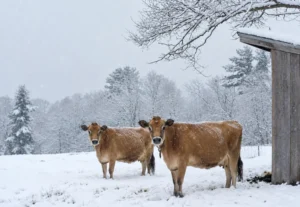
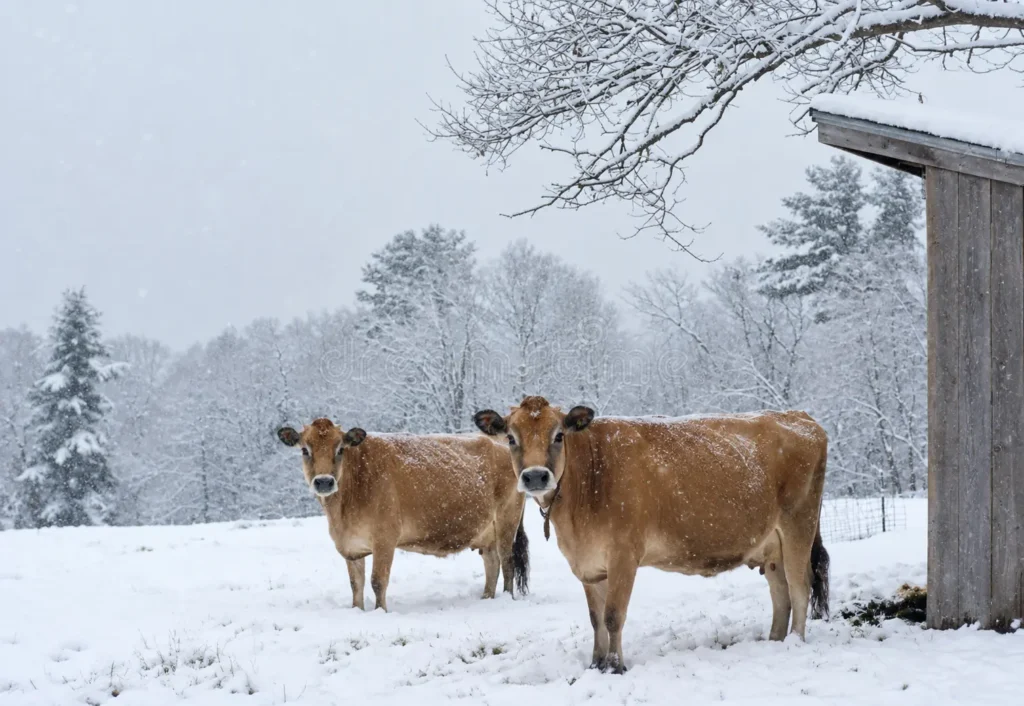
Winter can bring several challenges for Jersey cows. Cold winds and wet ground can make them uncomfortable. Hay may become the main source of food when fresh grass is limited. Water can freeze overnight and muddy bedding can make it harder for cows to stay clean and warm. These changes matter even more for Jersey cows that are producing milk because they need enough food and water to support their bodies and milk production.
Good winter care does not always mean keeping a cow inside a heated barn. Cows can handle cool weather when they have a healthy body condition and a thick coat. The most important things are to provide enough nutritious feed, a dry place to rest, clean water, and regular health checks. Shelter from strong winds is also important during severe weather.
Whether you keep one Jersey cow on a small farm or manage a larger dairy herd, a simple winter routine can help prevent common problems. Preparing before the cold weather arrives also makes daily care easier. This guide explains what Jersey cows need during winter, how to protect their health, and how to support steady milk production when temperatures drop.
Quick Overview of Jersey Cow Winter Care
| Winter care need | What to do |
| Feed | Provide good-quality hay and a balanced diet |
| Shelter | Block strong winds and keep the resting area dry |
| Bedding | Use clean straw or another suitable bedding material |
| Water | Provide fresh water that does not freeze |
| Health | Watch for weight loss, coughing, lameness, or unusual behavior |
| Milk production | Keep feeding and milking routines steady |
| Calves | Give young calves extra protection from drafts and wet bedding |
| Daily checks | Check feed, water, shelter, and the cow’s condition every day |
Winter Feeding Needs of Jersey Cows
Jersey cows need enough food to stay warm and maintain their normal body condition during winter. When temperatures fall, their bodies use more energy to maintain a steady internal temperature. A cow may need more feed during a cold spell, especially if she lives outdoors or has a wet coat. A cow that is also producing milk has extra nutritional needs because she uses energy to make milk.
Provide Good-Quality Hay and Forage
When pasture grass stops growing or becomes covered with snow, hay becomes an important part of a Jersey cow’s diet. Choose clean hay that smells fresh and has no visible mold. Poor-quality hay may not provide enough energy or protein, so the cow may lose weight even when she eats a large amount.
Store hay in a dry place and protect it from rain and snow. Wet or moldy feed can harm cattle, so remove spoiled feed from the feeding area. It is also helpful to keep extra hay in storage in case bad weather makes it difficult to bring supplies to the farm.
Adjust Feed to the Cow’s Needs
Not every Jersey cow needs the same amount of food. A growing heifer, a pregnant cow, and a cow producing milk have different needs. The quality of the hay, the cow’s size, her body condition, and the severity of the weather also affect how much she should eat.
A balanced winter feeding plan may include:
- Good-quality hay or other suitable forage.
- A suitable dairy feed when extra energy or protein is needed.
- The correct minerals and vitamins based on the full diet.
- Enough feeding space so weaker cows can eat without being pushed away.
Do not add large amounts of grain without checking the cow’s nutritional needs. Too much grain can upset digestion. A livestock veterinarian or cattle nutritionist can help adjust the diet, especially for a Jersey cow that is losing weight or producing a lot of milk.
How to Provide Warm and Dry Shelter for Jersey Cows
Jersey cows grow a winter coat that helps protect them from cold weather. However, cold rain, strong winds, mud, and wet bedding can reduce this protection. A cow that stays dry and has a place to escape harsh weather is usually better able to handle winter conditions.
Keep the Barn Dry and Well Ventilated
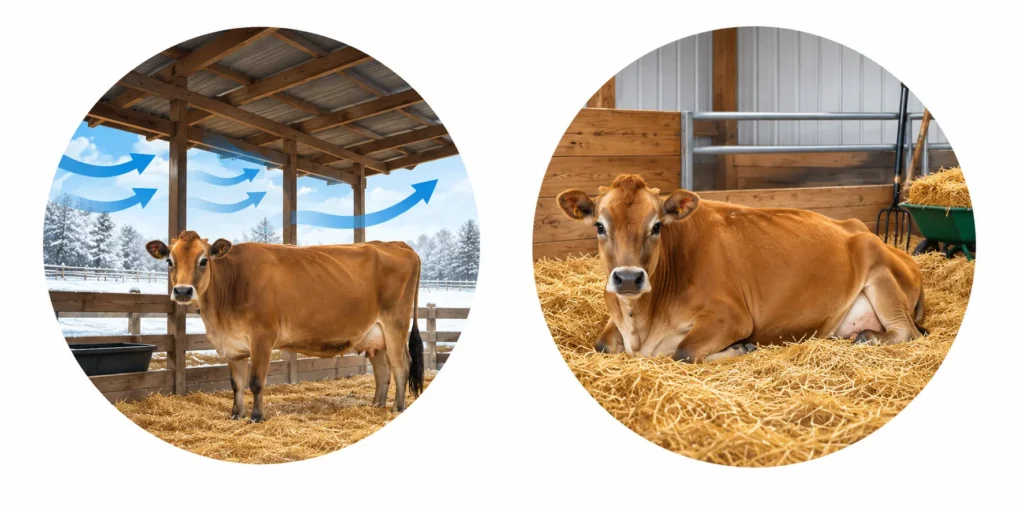
A barn or shed should protect cows from strong winds and heavy rain while allowing fresh air to move through the building. Closing every opening may trap moisture and stale air inside. Too much moisture can make bedding wet and increase the chance of breathing problems.
Place the resting area away from direct drafts. Check the roof for leaks and make sure rainwater drains away from the entrance. If you keep cows in a field, a sturdy shelter or a natural windbreak made from trees or shrubs can help protect them.
The shelter does not need to be overly warm. Clean air, dry bedding, and protection from wind are often more useful than a tightly closed building with poor ventilation.
Use Clean Bedding
Jersey cows need a comfortable place to lie down and rest. Straw is one common bedding choice, but other suitable materials may work when they stay dry and clean. Replace wet or heavily soiled bedding regularly, and keep the resting area free from deep mud.
Dry bedding is especially important for dairy cows because their udders and teats need to stay clean. Dirty bedding can make udder cleaning harder and may increase the risk of udder infections.
Check the shelter every day. If bedding feels damp or has a strong smell, remove the dirty material and add fresh bedding. Good drainage around the barn also helps prevent water from collecting where cows walk or sleep.
Keeping Jersey Cows Hydrated in Cold Weather
Water is just as important in winter as it is in summer. Jersey cows need water to digest feed, support normal body functions, and produce milk. A dairy cow producing milk may drink a large amount each day, so a frozen water trough can quickly become a serious problem. One government cattle-care guide notes that a lactating dairy cow may drink up to about 120 liters of water per day, although actual needs vary with the cow, feed, weather, and milk output.
Stop Water from Freezing
Check water containers every morning and again later in the day. During freezing weather, water can turn to ice even when the trough was clear a few hours earlier. A safe heated waterer can help keep water available, but it must be installed and checked according to its instructions.
If you use ordinary troughs or buckets, remove ice and refill them with clean water as needed. Keep water containers stable so cows cannot easily tip them over. Also check that the area around the water source does not become slippery or muddy.
Encourage Regular Drinking
Some cows may drink less when water is very cold or difficult to reach. This can reduce feed intake and may affect milk production. Make sure the cow can reach the water easily and that the container is clean.
Remember these basic rules:
- Provide clean water every day.
- Do not rely on snow as the only water source for a milk-producing Jersey cow.
- Check water heaters and pipes regularly.
- Keep manure and feed out of the drinking area.
A cow that drinks less than usual, eats poorly, or produces noticeably less milk may need closer attention. Check the water supply first, but contact a veterinarian if the change continues or other signs of illness appear.
Common Winter Health Problems in Jersey Cows
Winter weather can make existing health problems harder to manage. Jersey cows still need regular checks even when they spend most of their time inside a barn. Look at how each cow walks, eats, rests, and behaves. Small changes may be early signs that something is wrong.
Cold Stress and Weight Loss
Cows can become stressed by cold when wind, wet hair, and low temperatures increase the amount of energy they need. Signs may include standing with their backs toward the wind, lowering their heads, or gathering closely with other cattle. A cow may first eat more to meet her energy needs, but feed intake can fall if the stress continues.
Keep the cow dry and provide shelter from strong winds. Check her body condition by looking at whether her ribs, hips, and backbone are becoming more visible. A Jersey cow that is losing weight may need a better diet or a health check.
Hoof and Leg Problems
Wet ground, ice, and deep mud can make walking uncomfortable and increase the risk of slipping. Clean and maintain pathways around the barn, feed area, and water source. Remove manure and improve drainage where water collects.
Watch for limping, swelling, or a cow that avoids putting weight on one leg. Do not force her to walk long distances if she appears to be in pain. Ask a veterinarian to examine persistent or severe lameness.
Udder Health and Breathing Problems
Damp bedding and dirty resting areas can leave the udder and teats exposed to more dirt and germs. Keep the bedding clean and follow a proper milking hygiene routine. Check the udder for unusual swelling, heat, pain, or changes in milk.
Poor ventilation can also allow moisture and harmful gases to build up inside a barn. Keep fresh air moving without exposing cows to direct cold drafts. Contact a veterinarian if a cow has trouble breathing, a persistent cough, fever, severe weakness, or a sudden drop in milk production.
Tips for Maintaining Milk Production During Winter
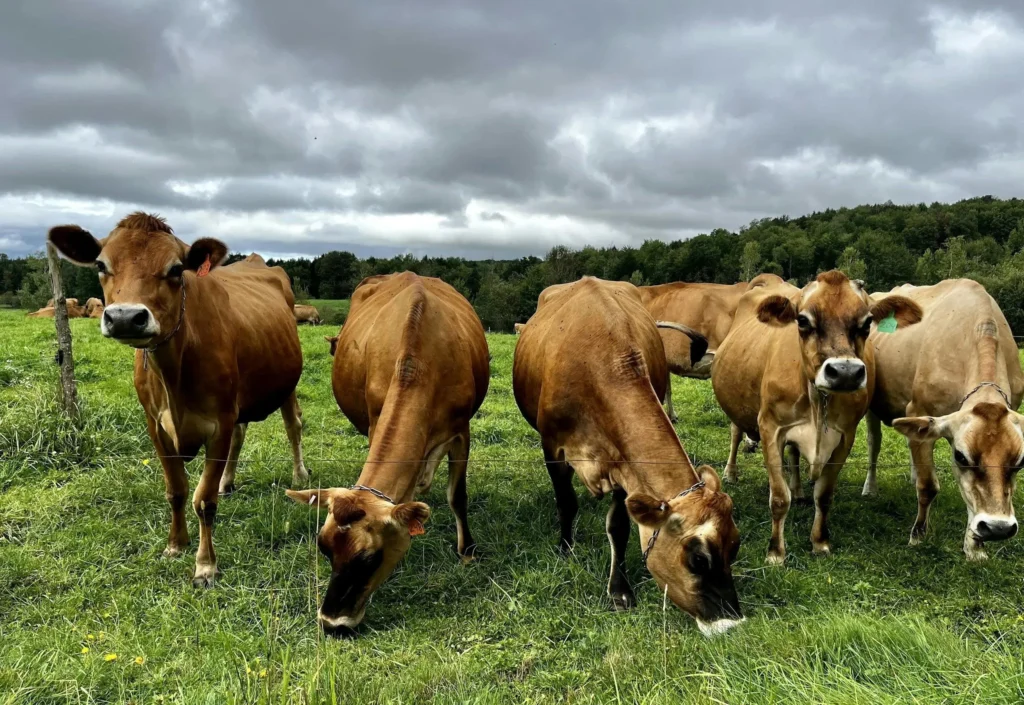
Milk production may change during winter, especially when fresh pasture is no longer available. A Jersey cow may produce less milk if she eats less, drinks too little, becomes stressed, or does not receive enough energy and protein. A seasonal change in milk output does not always mean that the cow is sick, but a sudden or large drop deserves attention.
Keep Feeding and Milking Routines Steady
Cows often do better when their daily routine stays consistent. Give feed at regular times and keep the milking schedule as steady as possible. Sudden changes in feed or management can affect appetite and milk production.
A balanced diet should provide enough energy, protein, fiber, minerals, and vitamins for the cow’s stage of production. If you need to change the feed, make the change gradually and seek advice when you are unsure about the right amounts.
Support Milk Production with Water and Comfort
Milk contains a high amount of water, so a cow cannot maintain good milk output if she does not drink enough. Keep her water clean and unfrozen. Make sure she has a dry place to rest and enough room to reach feed without being bullied by other cattle.
Use these practical steps to support milk production:
- Record daily milk output so you can notice unusual changes.
- Check feed intake and water consumption.
- Keep the udder clean before milking.
- Watch for signs of illness or udder infection.
- Avoid sudden changes to the diet or daily schedule.
A comfortable cow with enough feed and water is in a better position to maintain milk production. However, feeding more grain is not always the answer. The complete diet and the cow’s health should be checked before making major changes.
Give Extra Care to Pregnant Cows and Newborn Calves
Pregnant Jersey cows and newborn calves need close attention during winter. A cow approaching calving should have access to good feed, clean water, and a dry place where she can rest. Keep her area clean so the calf is born in a suitable environment.
Newborn calves are more sensitive to cold than healthy adult cattle. They can lose body heat quickly when they are wet or exposed to cold drafts. Prepare a sheltered pen with deep, dry bedding before the expected birth. The area should have enough ventilation to keep the air fresh without allowing cold wind to blow directly over the calf.
After birth, make sure the calf dries off and receives colostrum, which is the first milk produced by the mother. Colostrum provides important nutrients and antibodies that help protect the calf from disease. If the calf is weak, cannot stand, or does not nurse, contact a veterinarian promptly.
Keep an eye on the mother as well. Check that she is eating, drinking, and recovering normally after calving. Any unusual weakness, heavy bleeding, or signs of severe pain require veterinary attention.
Final Thought
Jersey cow winter care mainly comes down to good feeding, dry shelter, clean water, and regular health checks. Cold weather may increase a cow’s energy needs, while frozen water and wet bedding can create extra problems. By preparing early and checking your cow every day, you can help her stay comfortable and healthy throughout winter. Pay special attention to milk-producing cows, pregnant cows, and newborn calves because they may need extra care. A steady routine and quick action when something seems wrong can make winter easier for both the cow and the farmer.