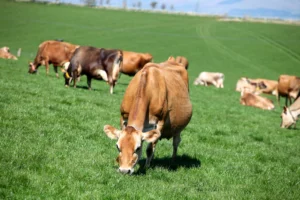
The characteristics of a Jersey cow go far beyond a small body and a brown coat. Most people first notice the large dark eyes. They may also notice the black nose and gentle face. Yet the real value of this breed appears in traits that are not always easy to see.
A Jersey cow can handle warm weather better than many larger dairy breeds. She often reaches maturity at a younger age. She uses feed with strong efficiency. Her milk contains high levels of butterfat and protein. She can also remain productive through several lactations.
The breed first developed on the Island of Jersey in the Channel Islands. Farmers selected the cattle for rich milk and practical dairy performance. Over time Jersey cattle spread across the United States and Canada. They also became popular in Europe and warm parts of Asia and Africa.
I have found that new farmers often judge a cow by daily milk volume alone. That can hide the true value of Jersey. She may not fill a tank as fast as a large Holstein. Still she can produce more valuable solids from a smaller body.
These nine traits explain why Jersey cattle work well on commercial farms and small homesteads.
How Jersey Cows Handle Hot Weather
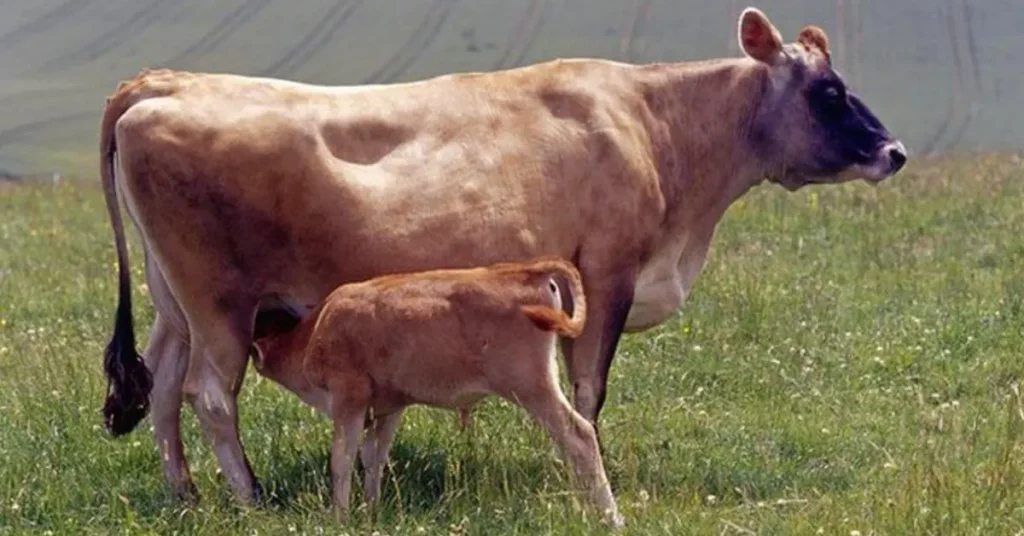
Jersey cattle have a strong reputation for heat tolerance. Their smaller body helps them manage hot weather better than many heavy dairy cows.
A large cow creates more metabolic heat during digestion and milk production. She also has more body mass to cool. A Jersey carries less weight. This can make it easier for her body to release heat.
The smaller frame does not make the cow heatproof. A Jersey can still suffer from heat stress during hot and humid weather. Humidity creates a major problem. Sweat and moisture do not evaporate as easily when the air already contains a lot of water. The cow then struggles to cool herself.
Farmers often use the temperature-humidity index to measure this pressure. The index combines air temperature and humidity. A higher number means the animal faces more thermal stress.
Early signs of heat stress may include:
- Rapid breathing
- Less grazing
- More standing
- Greater water intake
- Drooling
- Lower feed intake
- Reduced milk yield
- Crowding near shade
- Standing close to a water trough
The first sign may look very small. A cow may simply stop grazing during the hottest hours. She may stand quietly under a tree. Her sides may also move faster as she breathes. A high-producing Jersey may need more cooling than a dry cow. Milk production creates extra body heat. Late pregnancy can also increase stress. Good summer management should include plenty of clean water. One small trough may not be enough for a large group. Dominant cows can block weaker animals.
Farmers should use multiple water points when possible. The water should stay fresh and cool. Mud and algae should not build up around the trough. Shade also matters. Trees can help. A roof or shade cloth may work better when natural shade is limited.
Every cow should fit under the shade without crowding. A small shaded area may cause animals to push and stand too close. Fans improve air movement in barns. Sprinklers can also help when they wet the cow and allow the water to evaporate. The system needs good ventilation. Wet cows in a closed barn may feel even more humid.
Milking time matters too. It is better to move cows during the cool morning or evening. Long waits in a hot holding yard can reduce milk production and increase stress. Jersey cows often perform well in tropical regions and subtropical regions. Still farmers must watch the actual animal. Breed reputation should never replace daily observation.
Why Jersey Cows Have Dark Skin Pigmentation
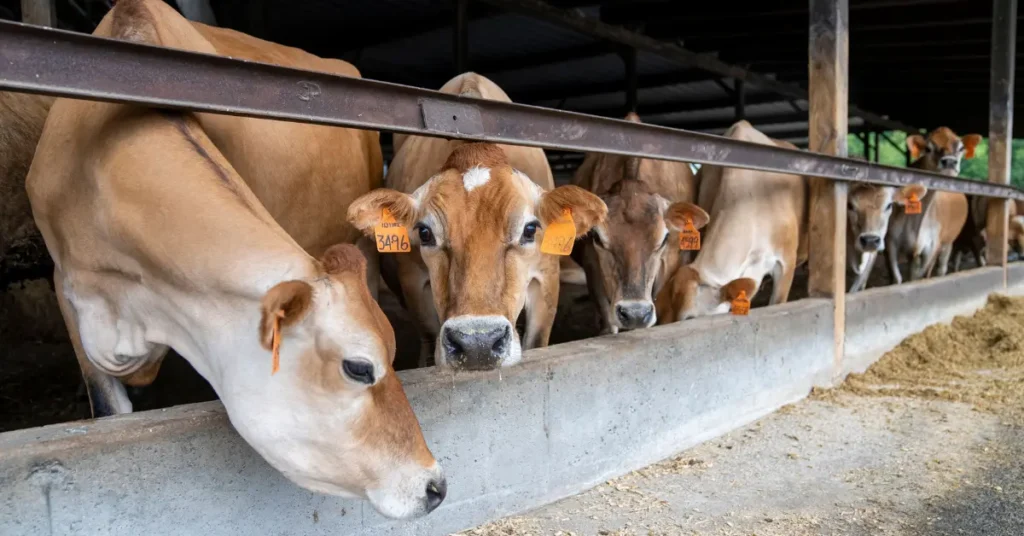
Many Jersey cows have a light fawn coat. Some appear dark brown. A few look almost black.
Under the coat the skin is often much darker. This is easy to see around the nose and eyes. The hooves and tail switch may also look black. This dark color comes from melanin. Melanin is a natural pigment in skin and hair.
The pigment gives the Jersey her well-known dark muzzle and deep facial color. It also plays a useful role in sun protection. Dark skin can help protect the body from ultraviolet radiation. Sunlight can damage skin over time. Pigmented skin usually handles this exposure better than pale skin.
The skin around the eyes is especially important. Dark eyelids may give extra protection to sensitive areas. This does not mean the cow can stand in strong sunlight all day without shade.
A dark coat can absorb radiant heat. The animal may become warmer when direct sunlight falls on the body for many hours. Dark pigmentation protects the skin but it does not cool the cow.
Jersey cattle still need:
- Shade trees
- Roof shelter
- Fresh water
- Air movement
- Rest during hot afternoons
Farmers should also watch for photosensitization. This condition makes the skin very sensitive to sunlight. Certain toxic plants can cause it. Liver problems may cause it too. A cow with photosensitization may show red or painful skin. The skin may peel. The animal may avoid sunlight and become restless.
Dark skin lowers some risks but does not remove every risk. The black nose and large dark eyes also help with breed identification. These features create the classic Jersey look. Many people call the face deer-like. The head is often fine and small. The dark eyes stand out against the lighter coat. The pigmentation looks attractive but it also serves a practical purpose.
Why Jersey Cows Mature Earlier Than Other Breeds
Jersey heifers often reach reproductive maturity earlier than larger dairy breeds. Their smaller mature body explains part of this trait. A Jersey does not need to reach the same body weight as a Holstein before puberty. Some Jersey heifers may reach puberty near 180 kilograms. A larger Holstein-Friesian heifer may reach puberty at a much heavier weight.
Early maturity can reduce the non-productive period before the first lactation. The farmer may begin receiving milk sooner. Still a heifer should not be bred only because she shows her first heat.
The farmer must look at:
- Body weight
- Height
- Body condition
- Daily growth
- Skeletal development
- Heat cycles
- Breeding records
A young Jersey may cycle before her body is ready to carry a calf safely.
The goal should not be the earliest possible breeding. The goal should be timely breeding at the correct body size. A weak or undersized heifer may struggle after calving. She must continue growing while she also produces milk. This places heavy pressure on her nutrition.
Good heifer development starts at birth. The calf needs enough colostrum. She also needs clean milk or a milk replacer. A balanced starter feed supports early rumen growth. After weaning the heifer needs enough protein and energy for steady development.
Too little feed slows puberty. Too much energy may make the heifer overfat. Both problems can reduce future performance. Farmers should weigh young animals instead of guessing their size by eye.
A thick winter coat can hide poor body condition. A tall heifer may also look ready even when she lacks enough body weight. Jersey cattle often have strong fertility traits. Good fertility can shorten the time between calvings. It can also reduce breeding costs. Early maturity becomes valuable only when nutrition and health support it.
Jersey Cow Feed Conversion Efficiency
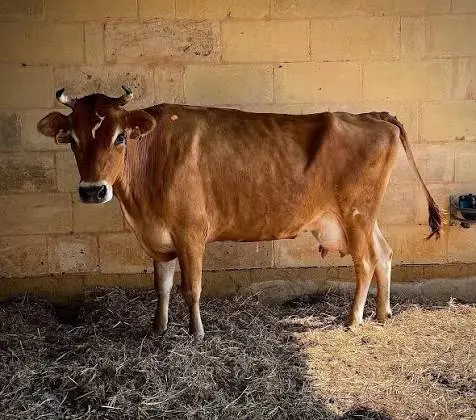
A Jersey cow has excellent feed conversion efficiency.
This does not mean she can make rich milk from poor hay. It means she can turn a reasonable amount of good feed into valuable milk components.
Every cow uses energy for basic life. She needs energy to breathe and walk. She also needs energy to maintain body temperature and body tissues. These needs are called maintenance requirements.
A smaller cow usually has lower maintenance needs than a larger cow. The Jersey can direct more feed energy toward milk production. This can lower the daily feed cost per cow.
Some farm comparisons report 13% to 18% feed-expense savings in certain systems. The exact saving depends on feed prices and milk output. It also depends on forage quality and herd management. A Jersey may produce fewer litres than a Holstein. Yet the Jersey milk contains more fat and protein.
Farmers should therefore measure energy-corrected milk or kilograms of milk solids. Looking only at litres may give the wrong picture.
A good Jersey ration should provide:
- Digestible forage
- Effective fibre
- Enough energy
- Balanced protein
- Correct minerals
- Unlimited clean water
Low-quality hay can fill the rumen without giving enough energy. Too much grain can damage rumen health.
Sudden ration changes may also reduce intake. The rumen microbes need time to adjust. Body condition gives useful information. A thin cow may not receive enough energy. A fat cow may receive more feed than she can use.
The best system balances production and health. I have seen people call Jerseys cheap to feed. That statement can be misleading. They may eat less total feed because they are small. Yet high-producing cows still need high-quality nutrition. The Jersey advantage comes from using feed wisely. It does not come from feeding poor material.
Why Jersey Milk Has More Valuable Solids
Jersey milk is famous for valuable milk solids. Most milk is water. The solid parts include fat and protein. They also include lactose and minerals. A litre of Jersey milk often contains more useful solids than a litre from many high-volume dairy breeds.
Breed averages may reach around 5.45% butterfat and 3.88% protein. The actual result changes from cow to cow. Butterfat gives the milk a rich taste and creamy texture. It also increases cream yield.
Protein helps during cheese production. Casein proteins form the cheese curd.
This makes Jersey milk useful for:
- Butter
- Cheese
- Yogurt
- Ice cream
- Milkshakes
- Clotted cream
- Premium bottled milk
A processor may pay farmers through component pricing. This means the price depends on fat and protein instead of only milk volume.
Jersey cows can perform very well in this system. A smaller amount of milk may produce a good amount of butter or cheese. This raises the value of each litre. The milk may also have a creamy or pale yellow color. Carotenoid pigments from pasture can affect the shade.
Fresh grass often makes the color easier to see. Milk composition changes throughout the year. It may also change during the lactation.
A cow with rumen acidosis may produce lower milk fat. A cow under heat stress may eat less. Her milk volume and component yield may fall. Farmers should test milk instead of depending only on breed averages.
For a family farm the rich milk can create a new problem. One cow may provide more cream than the family can use. The extra cream needs a plan. It can become butter or ice cream. It can also become cultured dairy food.
Jersey Cow Calving Ease and Smaller Calves
Jersey cows usually give birth to smaller calves than large dairy breeds.
A Jersey calf may weigh around 60 pounds at birth. Many fall within a range of about 42 to 72 pounds. A smaller calf usually passes through the birth canal more easily. This gives the breed a strong reputation for calving ease. Farmers may use Jersey genetics in crossbreeding when they want to lower the risk of a difficult birth. Still no breed can guarantee a safe calving.
Dystocia may happen when:
- The calf lies in the wrong position
- The cow has a narrow pelvis
- Twins are present
- Labour becomes weak
- The calf is too large
- The heifer is undersized
- Help arrives too late
A clean and quiet maternity area gives the cow privacy. The farmer should observe without disturbing her every few minutes.
After birth the calf needs fast care. Small calves lose heat quickly because of their surface-area-to-body-mass ratio. Cold wind and wet bedding can create danger. The calf should become dry and warm. It should also receive high-quality colostrum as soon as possible. Colostrum provides antibodies. These antibodies protect the newborn during early life.
The farmer should check:
- Breathing
- Body temperature
- Navel health
- Standing ability
- Nursing
- Colostrum intake
A small calf may look easy to manage. Yet it can become weak very quickly in cold weather. Jersey calving ease helps the cow. Careful newborn management helps the calf.
How Long Jersey Cows Stay Productive
Jersey cows often have strong productive longevity. This means they may stay useful in the herd through several lactations. A long working life can improve farm profit. Every replacement heifer costs money before she gives milk. A cow that completes more lactations spreads her rearing cost over more years.
Traits that support a long productive life include:
- Strong feet
- Sound legs
- A well-attached udder
- Good fertility
- Easy calving
- Correct nutrition
- Low disease pressure
- Comfortable housing
The Jersey’s smaller frame may reduce some pressure on the feet and flooring. This does not make her immune to lameness. Wet concrete and poor hoof trimming can still cause serious problems. Long walking distances may also damage weak feet. Udder quality matters as the cow ages. A weak udder may hang too low. This can create injuries and milking trouble.
Breeders should consider udder attachment and teat placement. Milk yield alone should not control the breeding decision. Fertility also decides how long a cow remains in the herd. A healthy cow may leave early if she cannot become pregnant. Commercial herd life is different from biological lifespan. A cow may live many years. Yet a farm may remove her because of mastitis or infertility.
The goal should be healthy years. Keeping a cow alive while she suffers does not show good management. Daily comfort and health records help farmers protect lifetime performance.
Jersey Cow Mothering and Calf Protection
Jersey cows often show clear maternal behaviour after birth. The cow may lick the calf and call to it. She may stand close and allow the calf to nurse. Licking helps dry the newborn. It can also support movement and breathing.
This early contact builds the cow-calf bond. Not every cow acts in the same way. An experienced cow may begin caring for her calf right away. A first-calf heifer may seem nervous or confused.
A difficult birth may also delay normal mothering behaviour. Hormones and temperament affect the response. Housing conditions matter too. The farmer should provide a quiet space. Loud noise and too many people may disturb the cow. Good mothering also includes calf protection.
A gentle Jersey may become defensive after calving. She may stand between the handler and her calf. She may lower her head. She may also move forward when someone reaches toward the newborn. Farmers should keep an escape route. They should use safe gates and handling facilities.
Never assume that a calm cow will stay calm after birth. The farmer must still check the calf. A calf may appear to nurse but fail to drink enough colostrum.
Watch the udder and the calf’s belly. Check whether the calf becomes active. Some dairy farms separate calves soon after birth. Other farms use full or partial cow-calf contact systems.
Each system needs careful management. A strong mothering instinct can support calf survival. It can also create a safety risk when the cow becomes too protective.
Why Jersey Cows Perform Well on Limited Land
Jersey cattle often work well on limited land because of their small mature body. Their compact frame reduces some housing and feed needs. More Jersey cows may fit into a well-designed facility than large dairy cows.
This does not mean farmers should crowd them. Each cow still needs enough space to lie down and rise naturally. She also needs easy feed and water access. A small cow may eat less total dry matter intake than a heavy cow. This can lower pasture demand. Still milk production requires plenty of nutrition. A Jersey cannot live on a tiny bare field simply because she is small.
Rotational grazing can help a small farm use land better. The farmer divides the pasture into paddocks. The herd grazes one section while the others rest. This allows grass to recover. It also helps protect soil and reduce overgrazing. Water should stay easy to reach in every paddock.
A sacrifice area may protect the main pasture during wet weather. Cows can stay in the dry lot while soft ground recovers. Jersey cows also place less total weight on the ground than many larger cows. Wet soil can still suffer damage near gates and water troughs. A small homestead may keep one Jersey as a family cow. One animal may produce enough rich milk for drinking and butter making.
The family should plan for extra milk. Even a small Jersey can produce more than a household uses each day. The real land-saving advantage comes from high production of milk solids from a small body.
Final Thought
The most useful characteristics of a Jersey cow are not always the traits people notice first.
Her dark eyes and fawn coat make her attractive. Yet her deeper value comes from heat tolerance and early maturity. It also comes from feed efficiency and rich milk. Jersey cows can produce high levels of butterfat and protein from a small frame. They often have easier births and smaller calves. Many also stay productive through several lactations. They can show strong mothering behaviour. They may also become protective after calving.
A Jersey performs well on limited land only when the farmer manages the land carefully. She still needs good forage and clean water. She also needs shade and comfortable housing. The Jersey may be small. Her dairy value is not.
The tone or keyword density can be adjusted for a more casual blog style or a stricter SEO format.