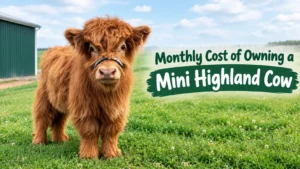
Mini cows can be a really fun choice for a small farm or homestead. They take up less room than full size cattle and many of them have calm personalities. Two types that get a lot of attention are the Mini Highland Cow and the Mini Hereford.
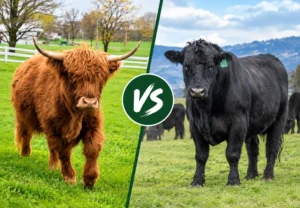
They may both be small but they are not the same animal. The Mini Highland has that famous long shaggy hair and big horns. The Mini Hereford has the classic red body and white face that many people know right away.
There are also differences that you may not notice from a picture. Their grazing habits can be different. Their growth can be different. Their health needs and breeding traits can also vary.
So which one is easier to keep?
That really depends on your farm and what you want from your cow. A person looking for a fluffy family pet may like one choice more. Someone who wants a small beef animal may lean toward the other.
Let’s break down the seven big differences in a simple way.
| Feature | Mini Highland Cow | Mini Hereford |
| Grazing | Good at rough grazing | Good pasture grazer |
| Growth | Usually slower growing | Often stronger beef type growth |
| Lifespan | Known for long productive lives | Known for good longevity |
| Health | Hardy but still needs regular care | Generally hardy with normal cattle care |
| Coat | Long thick coat | Short smooth coat |
| Breeding | Known for good mothering and calving | Known for fertility and easy calving |
| Horns | Usually has large curved horns | Can be horned or polled |
| Handling | Calm and curious | Calm and easy to handle |
| Weather | Excellent in cold weather | Adaptable to many climates |
| Maintenance | More coat care | Usually easier coat care |
| Best For | Pets rough pasture and small farms | Small farms beef use and homesteads |
Mini Highland vs Mini Hereford: Grazing and Pasture Needs
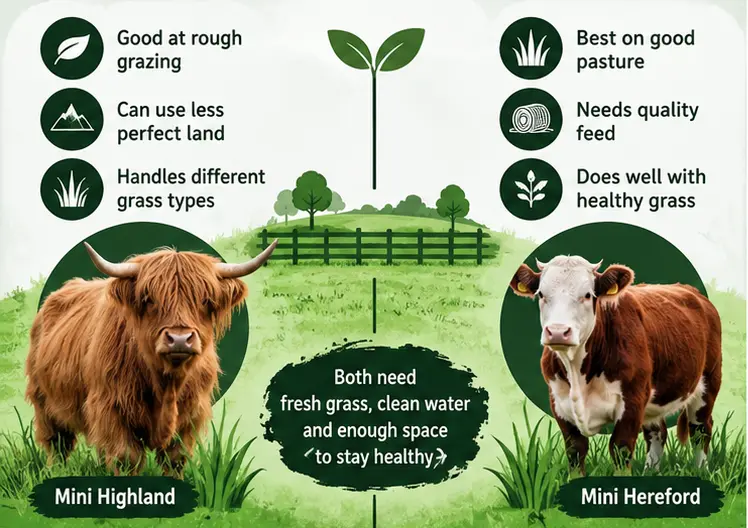
Both cows enjoy grass. That sounds simple but pasture quality can make a big difference in how much work you need to do.
Highland cattle are well known for being good foragers. They can eat a wide range of plants and can make use of rough land that may not be perfect for other cattle. Their history in the Scottish Highlands helped shape this trait. They were raised in places with hills rough grass rain and cold weather.
Mini Highland Cows can therefore be a nice match for a farm where the pasture is not rich and smooth everywhere. They may browse bushes and other plants along with normal grass. This does not mean they can live on poor food alone. They still need enough nutrition to stay healthy.
Mini Herefords are also good grass eaters. Hereford cattle have a long history as beef animals and are known for using forage well. They can perform on pasture and can adapt to different farming systems.
The big point is simple. Neither cow should be expected to survive on a tiny patch of grass.
How Much Pasture Do They Need?
There is no single pasture number that works for every farm. Soil quality rainfall grass type season and herd size all change the answer.
A small field with thick healthy grass can support cattle better than a much larger field with poor dry grass.
You also need to think about the season. During a dry summer your grass may stop growing well. During winter the pasture may not give enough food either. This is when hay becomes important.
A good pasture should give your cow room to walk and graze. It should also have clean water and a safe fence.
Keep an eye on the grass instead of only watching the cow. If the pasture starts looking short and worn out then the animal may need extra hay or another grazing area.
Which Cow Is Better at Rough Grazing?
The Mini Highland usually has the advantage here.
Highland cattle are excellent foragers and can use rough vegetation. They have also been used for conservation grazing because they can eat plants that some other cattle may ignore.
Mini Herefords are still very good pasture animals. They just have more of a beef farm background where good forage and steady growth are important.
If your land has rough grass and some brush the Mini Highland may fit better. If you have a good grass pasture the Mini Hereford can do very well too.
Mini Highland vs Mini Hereford: Lifespan and Growth Rate
Growth is another area where these cows can be different.
Mini cattle do not all grow at exactly the same speed. Their final size depends on genetics nutrition health and the breeding program behind them.
This is especially important with miniature cattle because the word mini does not always mean the same thing from one breeder to another. You should check the adult size of the parents and ask about the animal’s expected mature size.
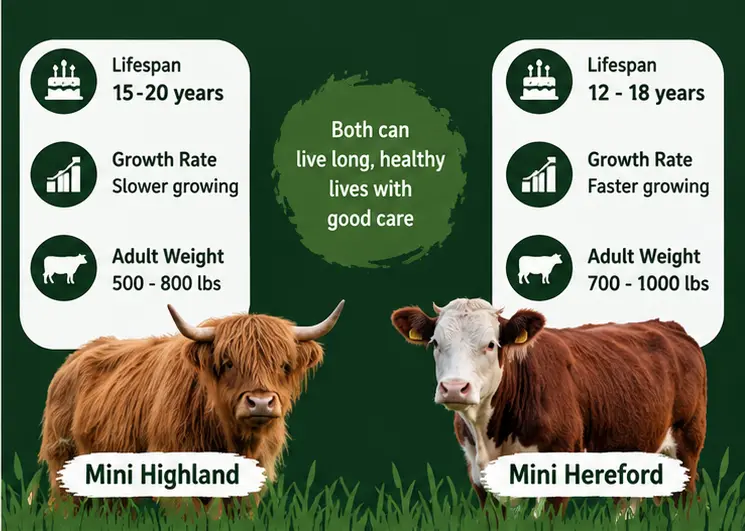
Highland cattle are known for long productive lives. Some Highland cows continue having calves well into their later years when they stay healthy.
Herefords are also known for longevity and fertility. Their breed history includes good fertility and long useful lives.
Growth Is Not a Race
It can be tempting to think that the fastest growing calf is always the best one.
Not really.
A calf needs steady growth. Good bones strong legs, a healthy body and proper nutrition matter more than simply gaining weight as fast as possible.
Mini Herefords may develop a strong beef type body as they grow. Mini Highlands can look slower or smaller but their thick coat can make them appear larger than their real body size.
Don’t judge a young cow only by how fluffy or heavy it looks.
Ask about its parents. Check its health records if available. Look at its legs, body shape and general condition.
How Long Can They Live?
A healthy cow can live for many years with proper food health care and good management.
Highlands have a strong reputation for longevity. Highland breed information notes that cows may remain productive into their late teens and sometimes beyond.
Herefords are also valued for long productive lives. Their fertility and calving ability are major reasons they have stayed useful on farms for generations.
So there is not a simple winner here. Both can give an owner many years of companionship and farm use when cared for properly.
Mini Highland vs Mini Hereford: Health and Common Problems
No cow breed is completely free from health problems.
Good food, clean water, proper fencing, regular checks and basic veterinary care are super important. Mini cows still need the same basic care as other cattle.
A small cow may look like a pet but it still has hooves, a digestive system, teeth and other parts that need regular attention.
Health Checks You Should Not Ignore
A simple daily check can tell you a lot.
Look at the cow when you feed it. Is it walking normally? Is it eating? Does it seem alert? Is it standing away from the group for no clear reason?
These little checks can help you notice a problem early.
Important things to watch include:
- Hoof condition
- Body weight
- Appetite
- Coat and skin
- Eyes and nose
- Parasites
- Breathing
- Signs of injury
- Water intake
- General behavior
If something suddenly looks wrong do not wait too long to get professional help.
Hooves Need Attention Too
Cows walk a lot. Their hooves carry all that weight every day.
Some cattle wear their hooves naturally when they walk on rough ground. Others may need trimming depending on their land and hoof growth.
Wet muddy areas can also cause trouble. A clean dry resting place helps.
Mini Highland Cows may spend time on rough land but that does not mean their hooves are automatically perfect.
Mini Herefords need the same basic attention.
Parasites and General Care
Parasites can become a problem for grazing cattle. The risk depends on your local weather pasture and management.
A good health plan should come from a local animal health professional who understands cattle in your area.
Don’t guess when medicine is involved. The right treatment and amount depend on the animal and the problem.
Mini Highland vs Mini Hereford: Calving and Breeding Differences
Breeding is a big part of cattle ownership.
If you only want a pet then you may never breed your cow. But if you want calves then you need to understand the mother’s health breeding age and calving needs.
Highland cows are known for good maternal traits and calving ease. Breed information reports a strong record of unassisted calving and good mothering ability.
Hereford cows are also known for fertility easy calving and strong mothering ability. These traits have been important parts of the breed for many years.
Calving Needs
Even when a breed is known for easy calving you should never assume every birth will be easy.
A pregnant cow needs good food clean water and a safe place to give birth.
As calving gets close keep a closer eye on her. Know the signs of labor and have a plan for getting help if something goes wrong.
A newborn calf needs to get colostrum soon after birth. Colostrum gives the calf important protection during those first hours.
The mother should also have enough water, food and a quiet place to recover.
Breeding Size Matters
This is especially important with miniature cattle.
Do not choose a breeding pair just because both animals look small and cute. Their actual genetics body size and health matter.
Ask about the parents and previous calves if the information is available.
A small female should not be bred with a male that could create an overly large calf for her body size. Breeding choices should always focus on safe calving and healthy calves.
That part is super important.
Mini Highland vs Mini Hereford: Fencing and Handling Needs
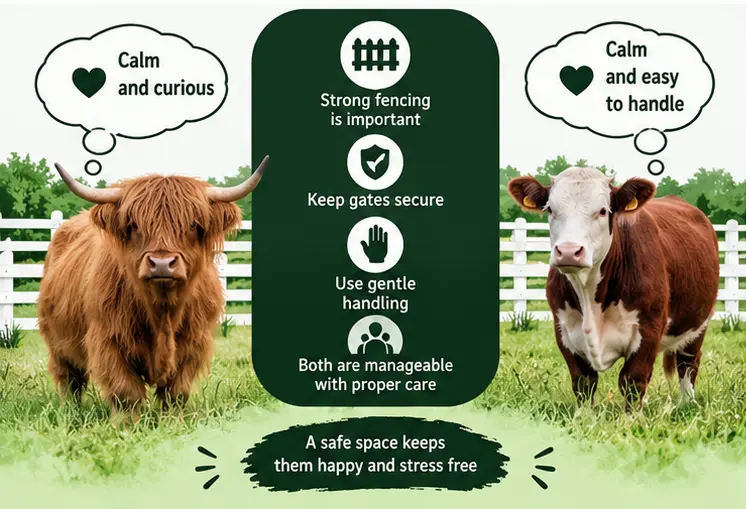
A good fence is one of the first things you should have before bringing cattle home.
Mini cows are smaller than regular cattle but they can still push lean against or test a fence. A weak fence can become a big headache.
Mini Highland Cows also have large horns. Their horns are beautiful but you need to plan your gates feeding areas and walking paths around them.
Highland breed information describes the breed as calm and generally easy to handle while also noting their long horns.
Herefords are also known for calm behavior and easy handling. Good temperament has been an important trait in the breed for generations.
Handling a Mini Highland
A Mini Highland Cow may be calm but you should never assume horns make an animal harmless.
Teach the cow to accept people around it. Regular gentle handling can make feeding hoof checks and moving the animal much easier.
A halter can also help with training and handling when used correctly.
Never let children climb on a cow or play around its head and horns.
Handling a Mini Hereford
Mini Herefords can also become very easy to handle when they receive regular calm contact.
A young cow that learns early that humans bring food and do not cause fear will often become easier to manage.
Still keep your distance from any animal that looks nervous angry or protective.
A mother with a newborn calf deserves extra space. Even a normally quiet cow can become protective when she thinks her calf is in danger.
Mini Highland vs Mini Hereford: Noise and Daily Behavior
Cows are not silent animals.
They make sounds to communicate with other cattle and with people. You may hear them calling when they want food or when they are separated from another animal.
The amount of noise depends more on the individual cow and its situation than simply its breed.
Daily Behavior
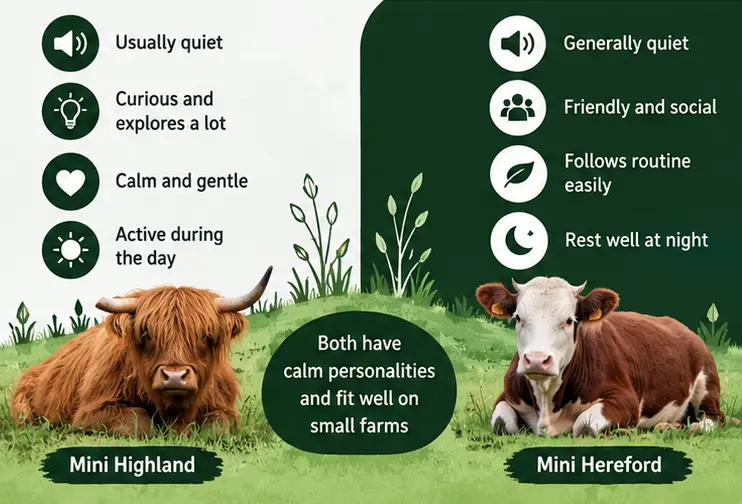
Mini Highland Cows can be curious animals. They may walk over to inspect a person or something new in their field.
They also spend a lot of time grazing resting and chewing their food.
Highland cattle are described as calm and docile but they can also have a stubborn side.
Mini Herefords are also generally calm. Their docile temperament has been one of their useful traits for farm work.
Do They Make Good Neighbors?
This can depend on your setup.
A well fed cow with enough space clean water and company will usually have fewer reasons to complain.
A cow may become noisy when it wants food or when it gets separated from other cattle.
If you live close to neighbors keep this in mind.
Cows also need companionship. Keeping a single cow completely alone may create stress because cattle are social animals.
A calm group in a suitable pasture is usually much better than one lonely animal standing by itself.
Mini Highland vs Mini Hereford: Which Cow Is Easier to Maintain?
This is probably the question most new owners want answered.
The truth is that both can be manageable. But they have different strengths.
The Mini Highland has a big advantage when it comes to cold weather and rough grazing. Its thick double coat helps protect it from cold wind rain and snow. Highland cattle are also known for hardiness and good forage use.
The Mini Hereford has a shorter coat and a strong practical body. It is known for good forage use calm behavior fertility and adaptability.
Mini Highland Maintenance
The Highland coat is beautiful but it can take more attention.
Long hair can collect mud, dirt and plant material. You should check the coat and skin from time to time.
The thick coat is a huge benefit in cold weather but it can become a challenge during very hot weather.
Highland cattle can live in warm places but shade water and airflow become very important.
Mini Hereford Maintenance
The Mini Hereford has a much shorter coat.
That means grooming is usually simpler.
You still need to check the skin brush the animal when needed and watch for insects or other problems.
Herefords have also shown strong adaptability in both cold and warm environments. Their smooth coat can be helpful in warmer areas.
Which One Needs Less Daily Work?
There is no perfect answer.
If your farm has cold weather rough pasture and you want a hardy grazing animal then a Mini Highland can be a pretty good choice.
If your farm has good grass and you want a practical small beef type animal with a shorter coat then a Mini Hereford may make more sense.
The easiest cow is usually the one that fits your farm.
Don’t choose a breed just because it looks great online. Think about your land your weather your budget and how much time you can spend caring for the animal.
Mini Highland vs Mini Hereford: What Should You Choose?
Now we can put everything together.
The Mini Highland stands out with its long coat curved horns and strong ability to handle rough conditions. It can be a great choice for someone who likes a unique looking cow and has land where good grazing is available.
The Mini Hereford has a more classic cattle look. Its red body and white face make it easy to recognize. It also has a strong background as a beef animal and is known for calm behavior good fertility and useful forage skills.
Think about what matters most to you.
If you want a fluffy cow that can handle cold weather well the Mini Highland may win.
If you want a short coated cow with a traditional beef type body the Mini Hereford may be the better match.
If you’re mostly looking for a family pet then personality and handling should be near the top of your list.
And if you want calves or beef then breeding history body structure and health become even more important.
There is no magic winner.
Your farm decides a lot of the answer.
Final Thought
Mini Highland and Mini Hereford cows can both be great choices for the right owner.
The Mini Highland is hard to miss. Its long hair and horns give it a look that almost feels too cute to be real. But it is more than just a pretty face. It is a hardy animal that can use rough pasture and handle cold conditions very well.
The Mini Hereford is a little different. It has that classic red and white look and a strong farm background. Its calm nature good forage use fertility and useful body make it a solid choice for a small farm.
If you are choosing between them don’t rush.
Look at your pasture first. Think about your local weather. Check how much space you have. Then think about whether you want a pet a grazing animal a breeding cow or a small beef animal.
The cutest cow may catch your eye first but the best cow is the one that fits your farm.