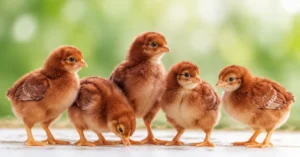
My first Rhode Island Red showed up in a cardboard box from a hatchery order that got a little out of hand. I meant to order four chicks. I walked out with six. The guy on the phone told me Reds were the toughest birds he sold. He was right.
That hen outlasted two other breeds in my flock. She kept laying through a brutal winter that had my other hens hiding in the coop refusing to do much of anything. She never acted spoiled either. Never picky about food or housing like some of the fancier breeds I’ve kept over the years.
If you’re thinking about bringing home a Rhode Island Red hen this guide covers what actually matters. Not just textbook facts either. Real stuff pulled from research and years of keeping this breed myself.
Quick Overview
| Factor | What You Should Know |
| Origin | Rhode Island and Massachusetts in the 1890s |
| Egg production | 250 to 300 brown eggs yearly |
| Laying age | Around 18 to 22 weeks |
| Lifespan | 5 to 8 years with proper care |
| Temperament | Hardy and generally calm |
| Comb type | Single comb most common rose comb exists |
| Egg shell color | Brown |
| Best for | Backyard flocks and dual purpose use |
What Is a Rhode Island Red Hen
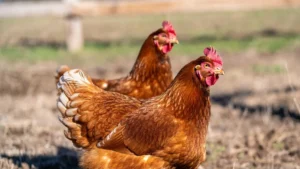
This breed came out of the New England states back in the early 1890s. Breeders crossed Malay bloodlines with black red Java birds. That’s where the deep red color came from. Also where the rose comb trait originated. The Malay blood gave these birds their strong build too. People started calling them bricks because of that rectangular shape. Honestly once you see one you get it immediately.
Recognition came fast once breeders settled on what this bird was supposed to look like. The American Poultry Association recognized the single comb version in 1904. The rose comb followed two years later in 1906. Across the pond a breeder named Sidney Risdon brought eggs to Somerset in 1903. That’s how this breed reached the UK. It entered the British Poultry Standards in 1909.
Originally this bird did double duty. Meat and eggs both. These days most Reds lean hard toward egg production instead. In the UK and parts of Europe they’re a favorite for hybrid layer crosses since the eggs come out large and that classic light brown color. North America tends to want white eggs more often. So hybrid layers over here usually trace back to Leghorn lines instead of Reds.
Rhode Island Red Hen Appearance and Identifying Features
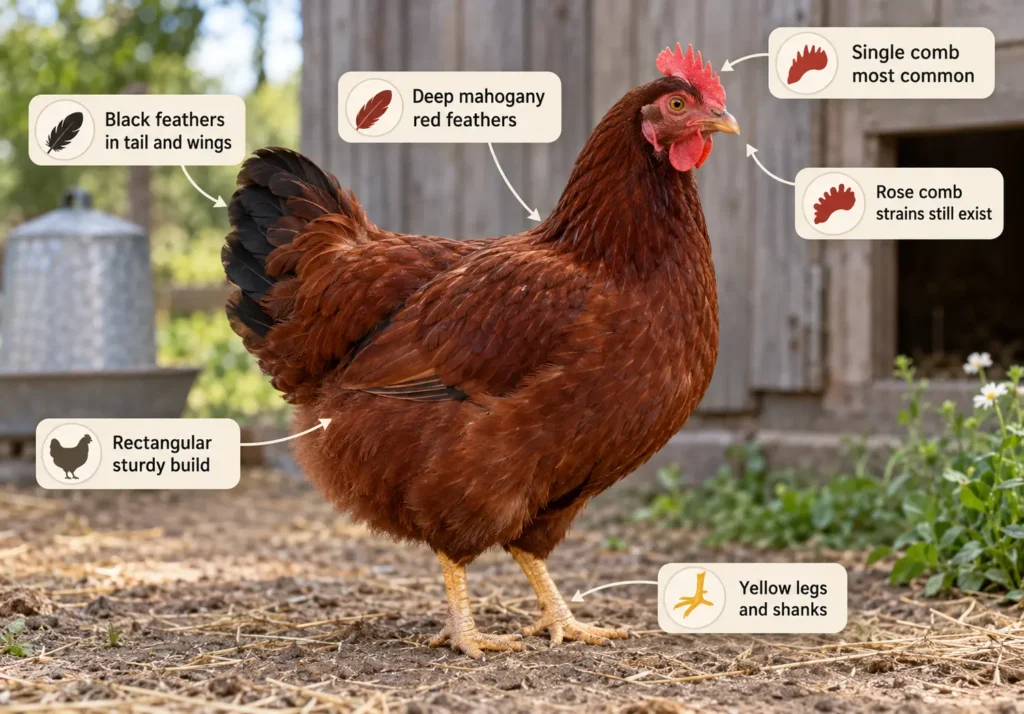
Before getting into what this bird looks like here are two lists worth saving. This breed has a handful of traits that make it easy to spot even from across the yard.
Physical Traits That Define This Breed
- Deep mahogany red feathers covering most of the body
- A rectangular sturdy build that looks nothing like a show bird
- Yellow legs and shanks
- Black feathers mixed into the tail and wings
- Single comb most common though rose comb strains still exist
Differences Between Roosters and Hens
Roosters run bigger and show brighter more dramatic coloring
Hens stay smaller with a more even consistent shade
Males can turn aggressive especially in cramped quarters
Females get built for steady laying rather than looking pretty
This isn’t a bird raised for beauty pageants. It looks exactly like what it was bred to do. Work. That blocky rectangular body says durability not elegance and honestly that’s part of why I like the breed so much. No fuss. Just function.
One thing worth knowing. That deep red coloring fades after enough sun exposure. Matters a lot if you’re showing your birds. Doesn’t matter one bit if you’re just collecting eggs every morning. Skin runs yellow across the whole breed too which helps if you’re trying to tell birds apart at a swap meet or hatchery pickup.
Rhode Island Red Hen Egg Production and Laying Age
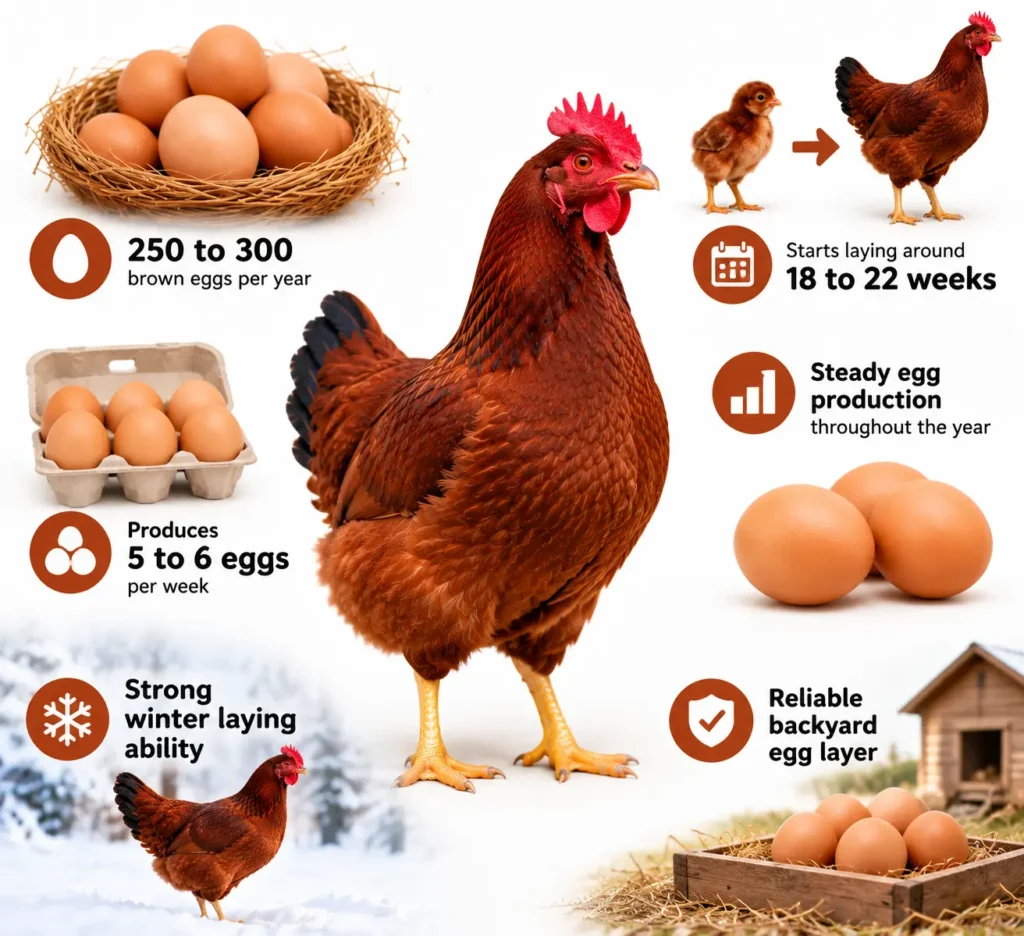
Here’s where this bird really shines. Most Rhode Island Red hens lay somewhere between 250 and 300 brown eggs a year. That puts them near the top among dual purpose breeds. Some of the older traditional lines land closer to 200 while modern production strains push that number higher.
Laying usually kicks in around 18 to 22 weeks old assuming decent diet enough light and proper calcium. My own hens hit that window almost exactly on schedule every single time. Once they’re mature you can expect about five to six eggs a week from a healthy bird.
What really impresses me isn’t the raw number though. It’s how steady the output stays. A lot of high production hybrids spike hard for a season then crash completely. Reds just keep going. Even through winter months when half my other breeds practically stop laying altogether.
Why Steady Beats Flashy
A hen giving you fewer eggs but doing it consistently all year usually beats one that dumps a ton of eggs for three months then goes quiet. Add it all up over twelve months and the steady layer often wins. That’s exactly why small flock owners keep coming back to this breed generation after generation.
Rhode Island Red Hen Personality and Daily Behavior
These hens run calm most of the time. Easy to tame. They blend into a mixed flock without much drama which honestly makes my life easier as the one feeding everybody every morning. Roosters though. Different story entirely. Some male Reds get genuinely aggressive especially when space is tight.
If you’re keeping more than one rooster give them room. A lot of room. Free ranging helps cut down on fights significantly. Most of the aggression I’ve seen traces straight back to overcrowding rather than the bird just being mean by nature.
Broodiness shows up in a lot of Reds though breeders have worked to reduce it in the top egg laying strains. A broody hen stops laying and just sits on a clutch instead. Some owners love this if they want to hatch chicks naturally. Others find it annoying if steady eggs are the whole point of keeping chickens.
Day to day these birds settle into routine fast. They figure out the pecking order early and mostly stick to it without constant squabbling. Compared to some flightier breeds I’ve raised managing a flock of Reds feels almost boring in the best possible way.
Rhode Island Red Hen Feeding Requirements and Diet
Nothing complicated here. A solid layer feed with good protein and calcium covers most of what these birds need especially once they hit laying age and require that extra calcium boost for strong shells.
Water needs to stay available constantly. Skip on hydration and egg production drops fast. Grit helps too particularly if your hens spend time free ranging and picking up bugs seeds and whatever else catches their eye in the yard.
A few feeding habits worth building into your routine.
Switch to proper layer feed once hens approach eighteen weeks old
Offer oyster shell separately as an extra calcium source
Go easy on treats and scratch grain since too much dilutes real nutrition
Keep feed stored dry to avoid mold which can wreck a whole flock fast
This breed tolerates marginal diets better than most chickens. Still produces eggs even under less than ideal conditions. I wouldn’t push that limit on purpose though. A well fed hen just performs better across the board and stays healthier longer than one barely scraping by.
Rhode Island Red Hen Care Routine for Healthy Growth
Daily care stays simple thanks to how hardy this breed naturally runs. A secure coop, good airflow clean bedding and protection from predators covers the basics any flock needs regardless of breed.
Reds handle both cold snaps and summer heat better than a lot of delicate ornamental breeds. Part of why they’ve stuck around so long in backyards across wildly different climates. That said giving your birds the best setup possible still matters even with a tough breed like this one. Just because they can survive rough conditions doesn’t mean they should have to.
I noticed this first hand during a particularly nasty winter a few years back. My Reds handled the cold noticeably better than a batch of fancier breeds I kept at the same time. They still appreciated a draft free coop and some extra bedding on the coldest nights though. Toughness only goes so far.
Routine basics worth sticking to.
Clean the coop regularly so waste and bacteria don’t build up
Give hens roosting space since they naturally prefer sleeping elevated
Check nesting boxes daily to collect eggs before they break
Watch closely for stress or illness during sudden weather shifts
Rhode Island Red Hen Health Issues and Lifespan Guide
Most Rhode Island Red hens live somewhere between five and eight years with decent care. Right around average for backyard chicken breeds generally. Genetics diet and living conditions all factor into how long an individual bird actually sticks around comfortably.
Health problems here don’t differ much from standard chicken issues. Mites and lice can show up if coop hygiene slips even a little. Damp poorly ventilated housing invites respiratory trouble too. Regular cleaning and dry bedding prevent most of this before it ever becomes a real problem.
Egg bound hens pop up occasionally in heavy laying breeds like this one. Happens when an egg gets stuck mid process. Watch for lethargy or straining without actually producing an egg. Catching it early makes a huge difference before things turn serious enough to need a vet.
Overall this breed tends to stay tougher and more resilient than flashier show birds. That old Malay bloodline still running through their genetics after all these generations clearly did its job.
Final Thoughts
Rhode Island Red hens earn their reputation the honest way. Steady eggs. Calm temperament. The ability to shrug off conditions that would send other breeds into a tailspin. It makes total sense why this breed has stuck around for over a century now.
If you’re on the fence about adding a few to your flock just know you’re getting a genuinely low maintenance bird that gives back way more than it asks for. Most keepers who raise Reds end up sticking with them for years. After my own time with this breed I completely understand why.
FAQS
How many eggs does a Rhode Island Red hen lay per year?
A Rhode Island Red hen typically lays somewhere between 250 to 300 brown eggs annually making it one of the most productive dual purpose breeds you can raise. Laying usually starts around 18 to 22 weeks old given proper diet and lighting. Many hens keep producing steadily through colder months when other breeds often slow way down.
Are Rhode Island Red hens good for beginners?
Yes this breed works great for beginners thanks to a hardy nature and calm temperament. They tolerate marginal diets and imperfect housing better than a lot of other chickens while still laying consistently. Their easygoing personality also makes them simple to manage in a mixed backyard flock without constant drama or stress.
How long do Rhode Island Red hens typically live?
Most Rhode Island Red hens live somewhere between five to eight years given proper care nutrition and a safe living environment. Genetics and overall conditions both play a role in how long an individual hen actually lives comfortably. Routine coop maintenance and quality feed help a hen reach the upper end of that range.
Do Rhode Island Red roosters get aggressive?
Some male Rhode Island Reds can show real aggression particularly in crowded conditions with multiple roosters fighting for space. Giving roosters plenty of room in a free range setting usually cuts this behavior down significantly. Hens on the other hand tend to stay quite placid and are generally easy to tame and handle daily.
What do Rhode Island Red hens need to stay healthy?
These hens need a quality layer feed with solid protein and calcium fresh water available at all times and a clean well ventilated coop. Regular cleaning helps prevent parasites and respiratory issues from taking hold over time. Watching for signs of illness or stress especially during sudden weather changes catches problems early before they turn serious.