A small island off the coast of France helped shape one of the best known for dairy cattle breeds in the world. The story starts with a limited piece of land good pasture, careful breeding, and farmers who paid close attention to the kind of milk their cows produced.
The breed became closely tied to milk quality and butterfat production. Over many generations, farmers selected animals that could turn grass and other forage into useful milk solids. The island’s rules also kept outside cattle away for a very long period, which helped create a fairly closed breeding population.
From there, the cattle moved far beyond their island home. Jersey cattle reached the United States in the 1850s and Canada in 1868. They later spread through many dairy regions, including parts of Europe, Africa, Australia, New Zealand, and South America.
What makes the story fun to follow is that the breed did not become widely known because of one single event. Its history grew slowly through farming, trade, breeding records, milk markets, and changing ideas about dairy production.
Quick Overview of Jersey Cow History
| Fact | What it means |
| Home island | Jersey in the British Channel Islands |
| Location | English Channel near the coast of France |
| Known as a separate breed | Around 1700 |
| Known in England | By 1771 |
| U.S. arrival | 1850s |
| Canada arrival | 1868 |
| Herd book history | Jersey records began in 1866 |
| Import restrictions | Kept outside cattle away for more than 200 years |
| Genetic imports reopened | 2008 |
| Main dairy strength | Milk with high butterfat and milk solids |
How Jersey Cows Reached America
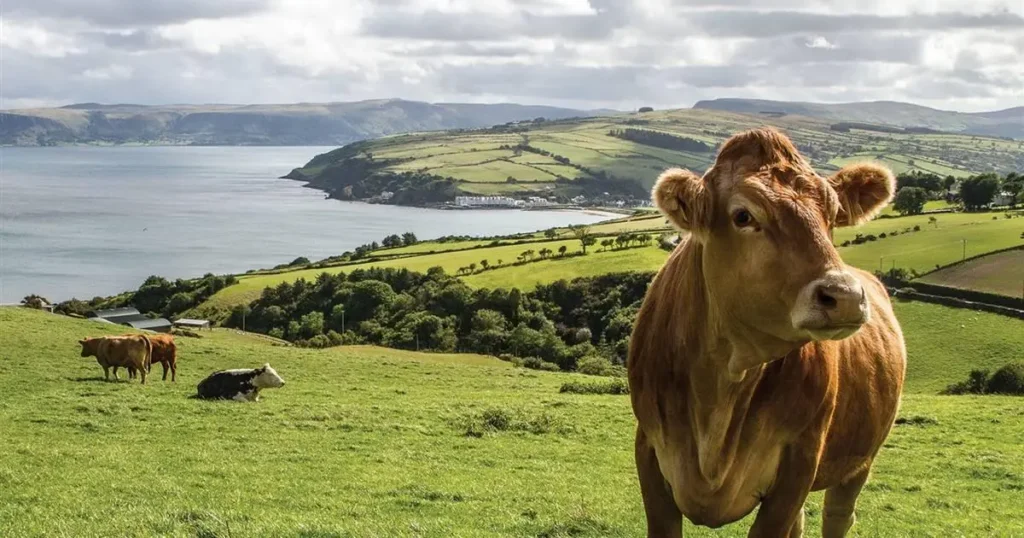
The move across the Atlantic changed the story from a small island breed into an international dairy breed. Jersey cattle were brought to the United States during the 1850s, where farmers began developing herds suited to the American dairy market.
By 1868, American breeders had organized a formal breed association and created systems for keeping track of animals and pedigrees. That kind of record keeping mattered because breeders were not simply buying cows for the next milking season. They were building bloodlines that could be followed from one generation to the next.
There was also a difference between some American Jerseys and the cattle that remained on the island. The American type became larger and was selected heavily for milk production. The island type stayed more closely connected to the traditional population that had developed under the island’s closed breeding system.
The American market gave the breed a much bigger stage. Jersey cattle could fit into different dairy operations and climates, and their milk had qualities that made them useful where farmers were paid for butterfat and other milk components.
A simple way to understand the American expansion is this:
- Jersey cattle arrived from the island.
- American breeders began keeping organized pedigrees.
- Farmers selected animals for useful dairy traits.
- The breed developed into an important American dairy population.
The exact path of every early animal is not always easy to trace. Historical cattle records from the 19th century were not as detailed as modern databases. Still, the larger pattern is clear: American breeders helped turn Jersey cattle into a major dairy population outside their original home.
Jersey Cattle on the Isle of Jersey
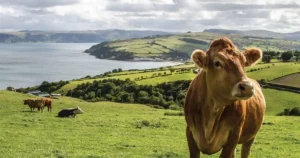
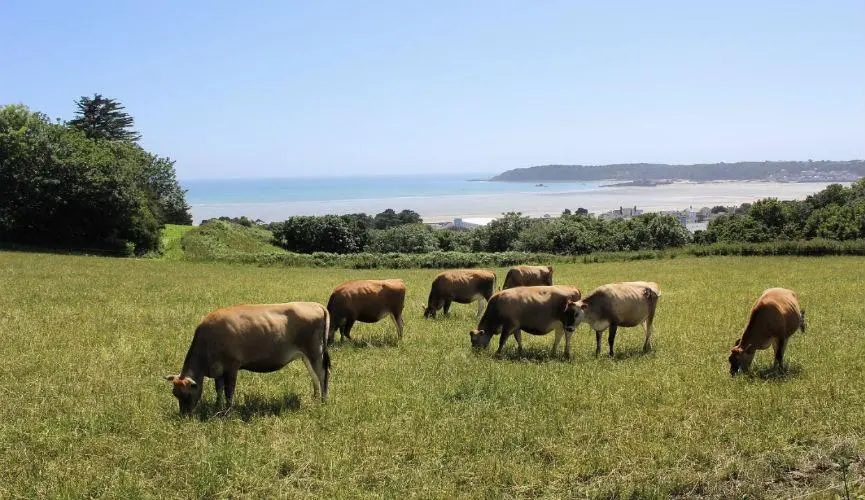
The island itself explains a lot about the breed. Jersey is a small British Channel Island in the English Channel, close to the coast of Normandy in France. It covers roughly 45 square miles. Farming had to make good use of limited land, so cattle suited to local pasture became especially valuable.
Historical sources describe the breed as having roots connected with cattle from the nearby Norman mainland. The exact early genetic history is less certain, though. Some breed histories also discuss possible older influences from other regions. These ideas should be treated as theories rather than settled facts.
The breed was already known in England by 1771. At that time, island cattle were sometimes called Alderney cattle before the name Jersey became the normal name for the breed. They had earned a reputation for useful milk and butterfat production.
Then came one of the biggest turning points in the breed’s history.
The island introduced restrictions on outside cattle. Research records livestock import restrictions beginning as early as 1763, followed by stronger rules in later years. By 1789, the island prohibited imports of foreign cattle as part of efforts to protect the population. The result was a long period of isolation that helped shape the breed’s genetic identity.
That isolation lasted for more than 200 years. Modern genetic research describes the island population as remaining closed until 2008.
There is an interesting business side to this story too. Jersey cattle could not easily come into the island, but cattle from the island could be sold elsewhere. Exports became an important source of income. Between 1873 and 1879 alone, historical research records 7,330 Jersey cattle shipped to places including England, America, Australia, France, and New Zealand.
Why Was the Island So Protective of the Breed?
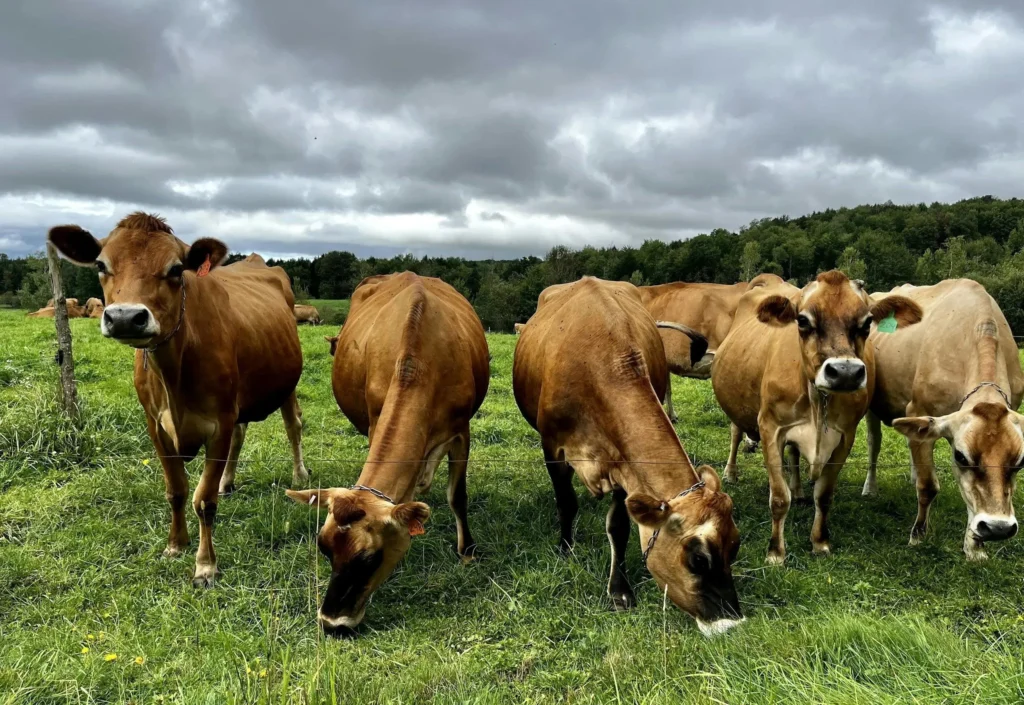
The restrictions were not only about creating a certain look. Breed purity, cattle prices, animal health, and the island’s cattle trade all played a role.
According to historical breed accounts, the lack of importation helped prevent outside cattle from changing the local population. It also allowed island breeders to keep selecting animals within the existing population.
This created a useful combination:
- A small island population
- Long-term selective breeding
- Strong control over outside cattle
- Careful recording of pedigree animals
- A growing reputation for milk and butterfat
The island also developed formal breeding organizations. The Royal Jersey Agricultural and Horticultural Society was formed in 1833. The Jersey Herd Book followed in 1866, giving breeders a formal way to record pedigrees and registered animals.
That record keeping became a big part of the breed’s identity.
Why Farmers Chose Jersey Cows
A cow does not become useful to farmers just because she has an interesting history. She has to work well in a real dairy system.
That is where the Jersey breed found its place.
The cattle developed in an environment where forage mattered. Historical descriptions of island farming point to rations based mainly on grasses and legumes. Farmers needed cows that could turn available feed into milk and milk solids efficiently. Over generations, selection placed strong emphasis on butterfat and the overall value of the milk.
Modern research also supports the idea that Jersey cattle can be efficient at converting feed into milk components. One review found that Jersey cows can produce more milk or milk solids per unit of dry matter intake under some production conditions. Feed efficiency can matter a lot when feed costs are a major part of a dairy farm’s budget.
This does not mean every Jersey cow will perform the same way. Feed quality, management, genetics, climate, and the farm system all affect results.
Still, several traits helped farmers keep an interest in the breed:
- High butterfat and milk solids
- Good grazing ability
- Adaptation to different climates
- Relatively small body size
- Efficient use of feed in suitable systems
- Strong value in milk markets that pay for components
The breed’s smaller size also matters. A smaller cow generally has lower maintenance needs than a much larger animal, although actual farm efficiency depends on many factors. Research has found that Jersey cattle can make good use of limited feed resources under certain grazing conditions.
A Cow Built Around the Milk Check
Think about a dairy farmer standing at the end of the month with a milk statement. The number of gallons matters, but so do the components inside that milk.
That is one reason Jerseys attracted attention.
Their milk is known for its relatively high butterfat and milk solids. On farms where payment systems reward those components, that trait can have real economic value. Canadian breed history shows how changes in milk pricing helped renew interest in Jerseys during the 1980s.
The lesson is pretty simple: farmers select cattle for the system they actually operate.
A breed that fits one market may not fit another one as well. Jersey cattle survived those changes because breeders continued adjusting production goals instead of treating the breed as something frozen in the past.
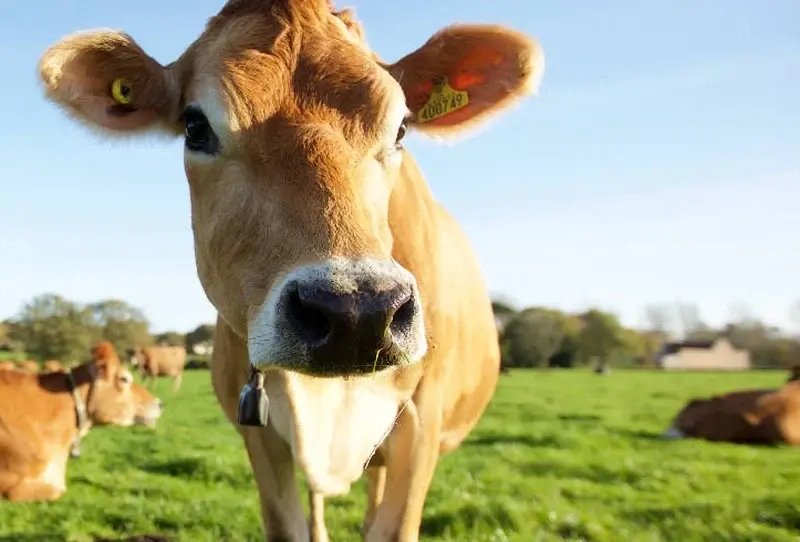
Jersey Cows Through the Years
History did not move in a straight line. There were periods when Jersey cattle expanded quickly, times when interest dropped, and later periods when farmers again saw value in the breed.
One major step came with formal breeding records. The Jersey Herd Book was established in 1866, while the first volume of the English Herd Book of Jersey Cattle appeared in 1879. These records helped preserve pedigrees and connect modern cattle with earlier foundation herds.
The breed also became deeply connected with British dairy history. Early herds included Audley End, Osberton, Brighstone, and Windsor. The Windsor herd was associated with Queen Elizabeth II, who became patron of the society in 1954. Earlier royal patronage had begun with Queen Victoria in 1895.
By this point, Jersey cattle were no longer just an island farming story.
They were part of a wider international dairy network.
The American and Canadian Chapters
Canada received its first Jersey cattle in 1868 in Quebec. For a time, registry services for Canadian Jersey owners came through the American organization. A Canadian association was established in 1901 and began its own herd book in 1905.
Canada later saw the same kind of ups and downs that affected Jersey populations elsewhere.
During the late 1950s and early 1960s, specialized markets for All-Jersey milk created a strong burst of interest. When milk pooling became more common in the 1960s, those specialized markets became less important, and Jersey activity declined.
Some breeders stayed with the cattle through that quieter period.
That decision mattered.
During the 1980s, greater attention to productivity and component-based milk pricing helped bring new demand. Production records and stronger sale prices followed as interest recovered.
The pattern is worth remembering:
Growth → market change → decline → renewed selection → recovery.
That cycle is common in agriculture. A breed has to make sense not only biologically but also financially.
Jersey Cattle Spread Around the World
The island population remained important as a source of breeding stock, while other countries developed their own Jersey populations.
The breed eventually became established across a wide range of places. Historical and modern sources report Jersey populations in North America, South America, Europe, Africa, Australia, and New Zealand.
Countries and regions connected with Jersey breeding include:
- United States
- Canada
- New Zealand
- Australia
- Denmark
- South Africa
- Brazil
- Argentina
- Mexico
- Colombia
- Japan
- France
That spread shows how adaptable the breed became. It was no longer tied to one island pasture.
Jersey Cows in Modern Dairy Farms
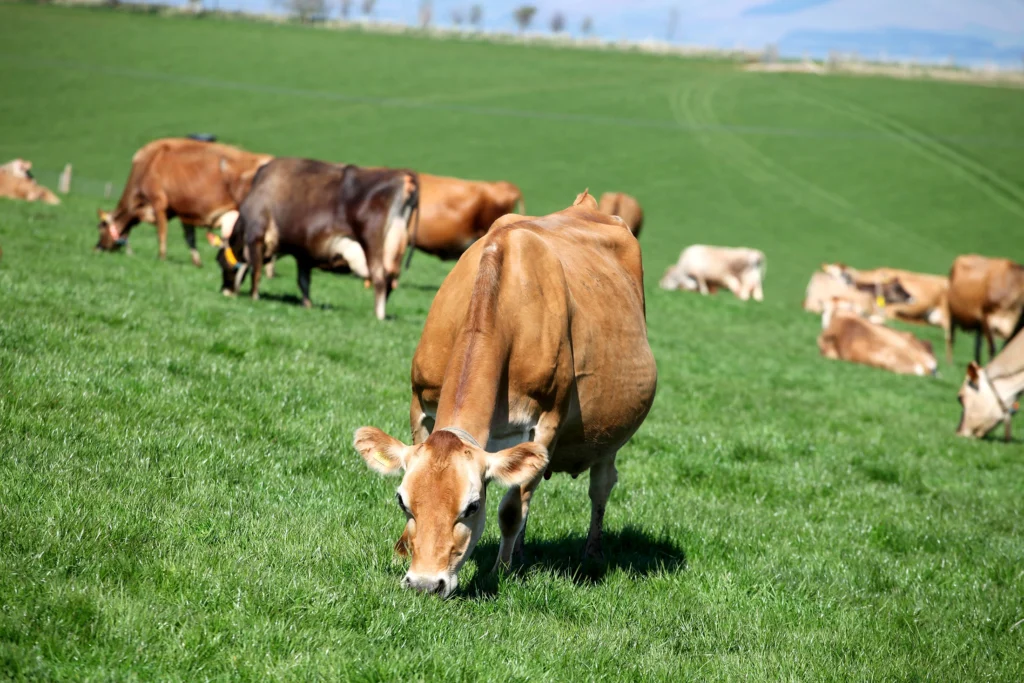
Modern Jersey farming looks very different from the small island farms of the past. One source notes that around 60 years ago more than 1,000 properties on Jersey kept at least a couple of cows. Today, fewer than 30 functioning farms remain on the island, although some are large and modern.
The island population also faced a major change in 2008. After more than 200 years of restrictions, the rules on genetic imports were changed, allowing semen imports. Research describes this as the end of a 219-year period of genetic isolation.
That change was not just a small technical adjustment.
Island breeders had to think about productivity, genetic diversity, and how their cattle compared with Jersey populations outside the island. Research has noted that international Jersey populations had developed different production levels during the long period of separation.
What the Breed Offers Today
Modern dairy farmers can use Jerseys in different production systems. Some are kept in pasture-based operations, while others are part of more intensive dairy farms.
Their value still comes down to practical farm results.
A farmer looking at the breed today may care about:
- Milk components such as butterfat and protein.
- Feed conversion and the cost of producing those components.
- Fertility and reproductive performance.
- How well cattle handle the local climate.
- The market price paid for milk components.
- The genetic quality available for herd improvement.
Research on Jersey cattle also points to their ability to perform in a range of environments. The breed has been studied in more than 30 African countries, with research covering milk production, fertility, survival, feed efficiency, and adaptation to different production systems.
Heat tolerance is another part of the story. Some breed histories suggest that African ancestry may have contributed to the breed’s ability to handle heat and humidity, but that remains a theory rather than a proven single explanation for the trait.
That distinction matters. Good cattle history separates what records show from what breeders believe may have happened.
What Makes Jersey History So Different?
The unusual part is not simply that Jersey cattle are old. Plenty of livestock breeds have long histories.
The bigger story is the combination of island isolation, selective breeding, export demand, milk quality, and changing dairy markets.
For more than two centuries, the island population had very little outside genetic influence. At the same time, Jersey cattle were being exported around the world. So the breed developed along two paths.
The island population remained relatively closed.
International populations kept changing.
That created different types and breeding goals while keeping the same basic Jersey identity.
Modern genetic research has compared island Jersey cattle with populations from other regions and found clear differences created during that long separation.
It is a good example of how geography can shape livestock.
A small island can act almost like a natural breeding enclosure. Farmers make the choices, but the boundaries of the island limit what can enter the population.
A History Written in Herd Books and Milk Records
There is another side of this story that can be easy to miss.
The Jersey breed was not preserved by appearance alone. Pedigree records became increasingly important. The 1866 Jersey Herd Book helped create a formal record of registered cattle, while later herd books in Britain and North America gave breeders more tools to track ancestry.
That changed breeding from a mostly local practice into something much more organized.
A farmer could look at a cow and judge her appearance and production. A breeder could also look at her parents, grandparents, offspring, and wider family line.
Over time, that information helped guide breeding decisions.
It also explains why words such as pedigree, herd book, registration, breeding stock, and genetic selection appear so often in Jersey history. They are not just fancy terms. They describe the system that helped turn a local cattle population into an organized breed.
The story continued into the modern age with embryo collection, embryo transfer, genetic testing, performance records, and international breeding programs. The tools changed, but the basic goal stayed familiar: choose useful cattle and pass their useful traits to the next generation.
Final Thought
The history of the Jersey cow starts on a small island, but it does not stay there. The breed moved from local farms into international dairy herds because farmers found practical value in its milk, butterfat, grazing ability, and feed use.
Its long period of isolation also makes the breed unusual. Few dairy breeds have such a clear connection between an island, strict import rules, organized herd books, and worldwide export.
Today, Jersey cattle continue to fit into many different dairy systems. The tools are more modern, the farms are larger in many places, and breeding decisions rely on far more data. The basic idea, though, has not changed much: keep selecting cattle that work well for the farm and the milk market.