Is a Highland Cow the Same as a Yak?
No. A Highland cow is not the same animal as a yak. A Highland cow belongs to the Highland cattle breed. It is a domestic cattle breed from Scotland. A yak is a separate bovine animal from the Himalayan region and the Tibetan Plateau.
People often mix them up because both are hairy animals with strong animals bodies and horns. Both can live in cold places. Both are also grazing animals. But they come from different environments and have different uses.
A Highland cow is usually raised for beef and grazing. Many farmers also keep them for breeding and small farms because they have strong heritage livestock value. The Highland Cattle Society also connects them with one of the oldest registered cattle breeds and one of Britain’s distinctive cattle breeds.
A yak belongs more to high mountains and pastoral life in Central Asia and the Himalayas. Domestic yaks are useful for milk and meat and wool and transport. They also support mountain farming and yak herders in hard mountain livelihoods.
So the simple answer is clear. Both animals are bovines but a Highland cow is not a yak.
Highland Cow vs Yak Differences
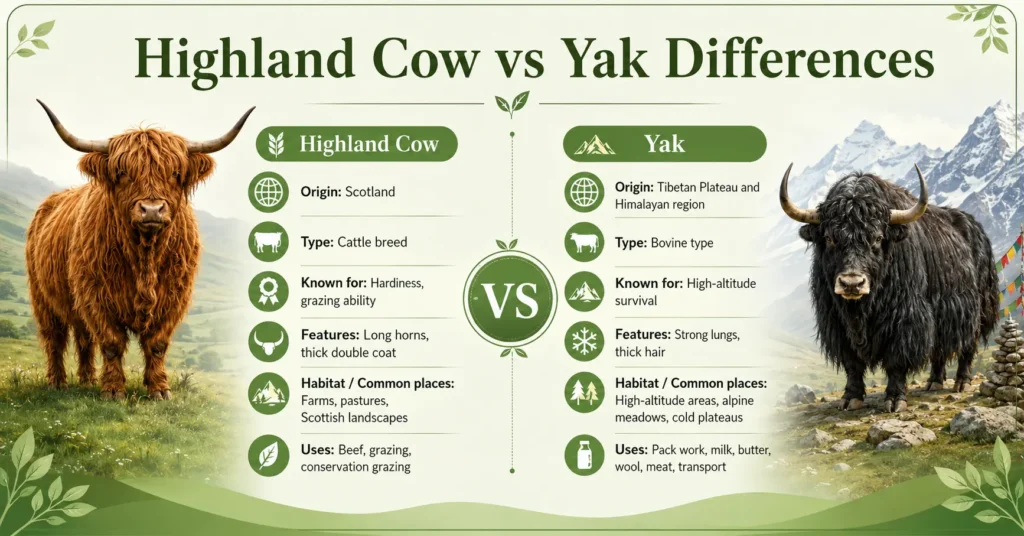
The biggest difference between a Highland cow and a yak is their origin and purpose. Highland cattle came from Scotland. Yaks came from high mountain regions such as the Tibetan Plateau and the Himalayan area.
A Highland cow is a cattle breed. A yak is another bovine type. Highland cattle are known for beef and hardiness and grazing ability. They also have long horns and a thick double coat.
Yaks are built for high-altitude survival. They have strong lungs and thick hair. People use them for pack work and milk and butter and wool and meat. They also help with transport in mountain areas.
Their coats also show the difference. Highland cattle have a long shaggy outer coat and a soft undercoat. This helps them in cold weather and wet weather and windy weather. The American Highland Cattle Association describes them as hardy cattle and self-sufficient cattle and long-lived cattle and good foragers.
Yaks also have long hair but their body is made for cold highlands and thin air. They live in places like alpine meadow and alpine steppe and desert steppe habitats. They may also move for seasonal grazing.
You usually see Highland cows on farms and pastures and Scottish landscapes. They are also used on conservation grazing sites and small homesteads. Yaks are more linked with mountain herding and high-altitude villages and pack routes and cold plateaus.
What Is a Highland Cow?
A Highland cow is the female of Highland cattle. Many people also use this name for the full Scottish breed. This breed has long horns and a wide face and a heavy fringe and a thick shaggy coat.
Highland cattle came from the Scottish Highlands and western coastal areas. These places have harsh weather with wet weather and cold weather and windy weather. Through natural selection these animals became strong enough for rugged conditions and remote Scottish conditions.
Highland cattle are often calm cattle when they are handled properly. Farmers value them for hardiness and efficient grazing and strong mothering ability. They are also known for beef production.
Their warm coat helps them stay comfortable without needing too much body fat. This is why Highland beef is often known as lean beef.
In size they are medium cattle. Mature cows are usually around 900 to 1200 pounds. Bulls are often around 1500 to 1800 pounds depending on forage conditions.
Important words for this breed include Scottish Highland cattle and Bos taurus and double coat and beef cattle and hardy breed and rough pasture and grazing and cow and bull and calf.
What Is a Yak?
A yak is a long-haired bovine from the Tibetan Plateau and the Himalayas and other cold mountain regions. A domestic yak is often called Bos grunniens. A wild yak is also known as a silent or mute ox.
Yaks are made for cold climates and high altitude. They have thick hair and strong bodies and broad hooves. Their body has special high-altitude adaptations that help them live where the air is thin.
Wild yaks can live at 3200 to 5400 meters. Their average elevation can be around 4500 meters. They have large lungs and high red blood cell counts and higher hemoglobin concentration than many other bovids.
In mountain life people use yaks for milk and butter and meat and wool and hide. Their dung fuel can also be useful in cold places. They can help with carrying loads where roads are hard.
In many Himalayan communities yaks are not only farm animals. They support local identity and economy and survival in cold highland areas. They are also linked with alpine meadow and alpine steppe and pack animal work for mountain herders.
Highland Cow and Yak Appearance Comparison
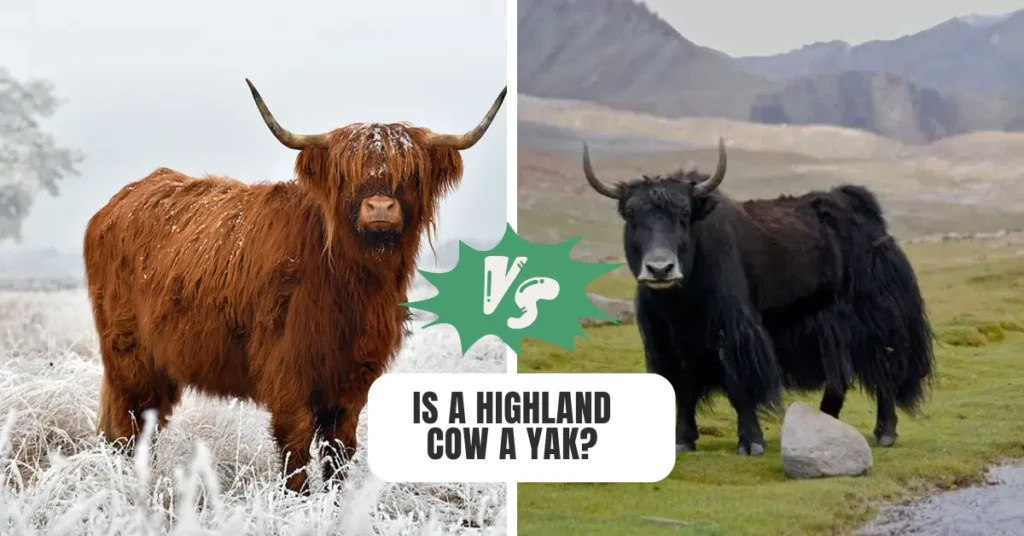
Highland cows and yaks both have a rugged look but their body shape is different. This appearance comparison helps you tell them apart quickly.
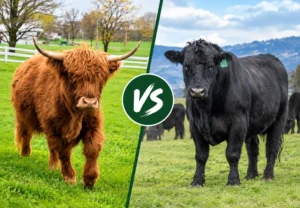
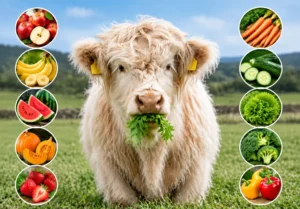
A Highland cow has a long shaggy coat and sometimes the hair over eyes gives it a soft fluffy look. It has long horns and wide horns. Cow horns often sweep outward and sweep upward. Bull horns can look like heavier horns and stronger horns.
Highland cattle can have many colors. You may see a red coat or reddish-brown coat. Some also have a black coat or yellow coat or dun coat or silver coat or brindle coat or white coat. These colors depend on genetics and breed lines.
The breed also has a broad head and bushy forelock and bright eyes. The horn shape is one of the main features people notice.
A yak often has a darker yak look with a heavier front body and a more mountain-built body. Many yaks have a blackish-brown coat or other dark coats. Domestic yak colors can vary but many still look darker than Highland cattle.
Yaks often have long belly hair and side hair that looks like skirt-like hair. Their bushy tail can look more like a horse tail than a normal cattle tail.
A Highland cow looks like a shaggy farm cow from cold wet Scotland. A yak looks like a high-altitude mountain bovine built for thin air and cold wind and rough upland terrain.
Highland Cow vs Yak Size and Weight
The size comparison between Highland cattle and a yak depends on age and sex and whether the yak is wild or domestic. Both are strong cattle type animals but they are not the same size in every case.
Highland cattle are medium-sized cattle. A mature Highland cow is often around 900 to 1200 pounds. Mature bulls are often around 1500 to 1800 pounds. Their weight can change with forage and condition.
Some Canadian Highland cattle information gives a similar range. Bulls can reach around 1800 pounds and cows may be around 1100 pounds in breeding condition.
Yaks can vary more. A domestic yak is often smaller than a wild yak. Domestic yak males may range from 350 to 580 kg. Domestic yak females may range from 225 to 255 kg.
Wild yak males can be much larger and may reach around 1000 kg. Wild yak females may be around 300 kg. So some yaks have similar weight to cattle but larger wild yak males can be much heavier.
The final weight depends on sex and age and wild status and domestic status and nutrition and environment. Highland cattle are stocky cattle and broad cattle. Yaks are stronger for altitude body work and mountain travel and cold plateau life.
Highland Cow vs Yak Habitat and Origin
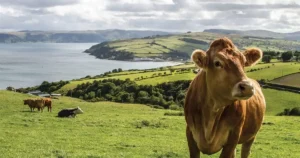
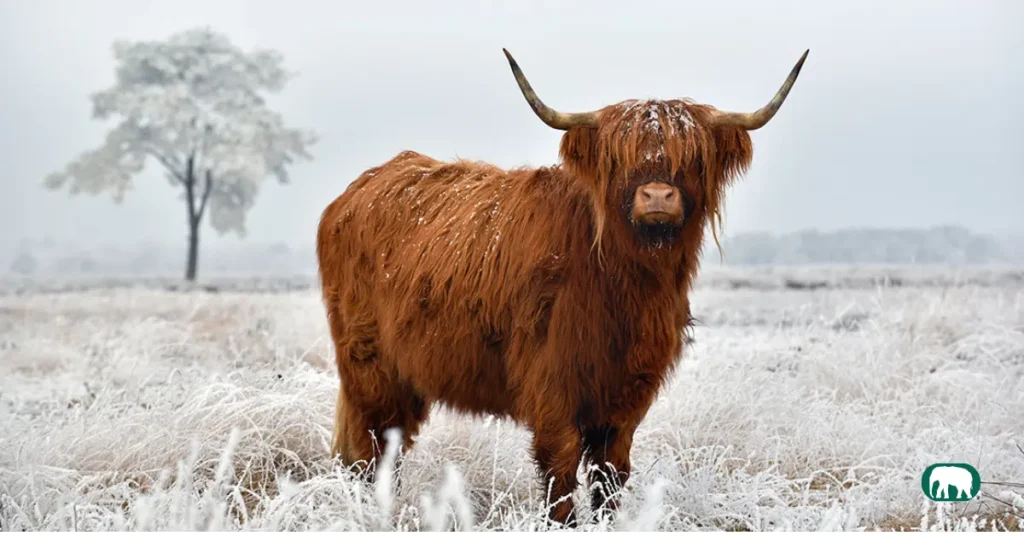
Highland cattle come from Scotland. Their home is the Scottish Highlands and western coastal islands. This land has rough grazing and cold rain and wind and moors and hills and hard weather.
Highland cattle became popular because they could live where softer cattle breeds often struggled. Their original home was a rugged home and remote home with a harsh origin.
Yaks come from high mountain regions of Asia. Wild yak are linked with the Tibetan Plateau. Domestic yaks are kept in Himalayan highlands and Central Asian highlands.
Yak habitat includes alpine meadow and alpine steppe and desert steppe. Some herds use large grassland areas and follow seasonal movement.
The origin difference is important. Highland cows were shaped by cold wet windy land and sea-level grazing and upland Scottish grazing. Yaks were shaped by very high altitude and cold dry air and mountain grasslands and thin oxygen and harsh plateau conditions.
A Highland cow is a Scottish farm animal and pasture animal. A yak is a mountain animal and plateau animal.
Can Highland Cows and Yaks Live in the Same Climate?
Highland cows and yaks can both handle cold weather but they have different climate adaptations. They may survive in some of the same cold areas but they do not need the exact same conditions.
Highland cows do well in cool conditions and wet conditions and windy conditions. They can handle rough pasture and cold winters. Their coat gives rain protection and wind protection. Their hardy nature makes them useful on northern farms and conservation grazing land.
Yaks do best in cold high-altitude environments. They are made for thin air and mountain terrain. They prefer colder plateau temperatures and can have warm weather problems in hot areas. In some cold regions both animals may live well if management is good. But yaks often need cooler conditions and can face heat suffering when the weather gets too warm.
A Highland cow can handle many temperate farm climates and cold farm climates. But it is not built for extreme high-altitude life like a yak. If a farmer wants to raise one of these animals then climate matters. Highland cattle fit cool farms and rough grazing land and wet pasture and windy pasture. Yaks fit high cold dry environments and mountain-like environments.
Good farmer choices should include weather and elevation and pasture and shelter and heat stress and fencing and handling and grazing needs and veterinary care.
Final Thoughts
A Highland cow is not a yak. They may look similar because both are shaggy animals with long horns and strong bodies. But they come from different places and live in different ways. Highland cattle come from Scotland and they are known for hardiness, grazing ability and beef value. A yak comes from Asian mountain regions and it is known for high-altitude life thick hair cold tolerance milk meat wool and transport. The simple way to remember it is this. A Highland cow belongs to cold farm pastures while a yak belongs to high mountains and cold plateaus.