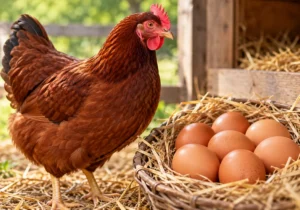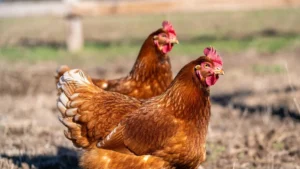
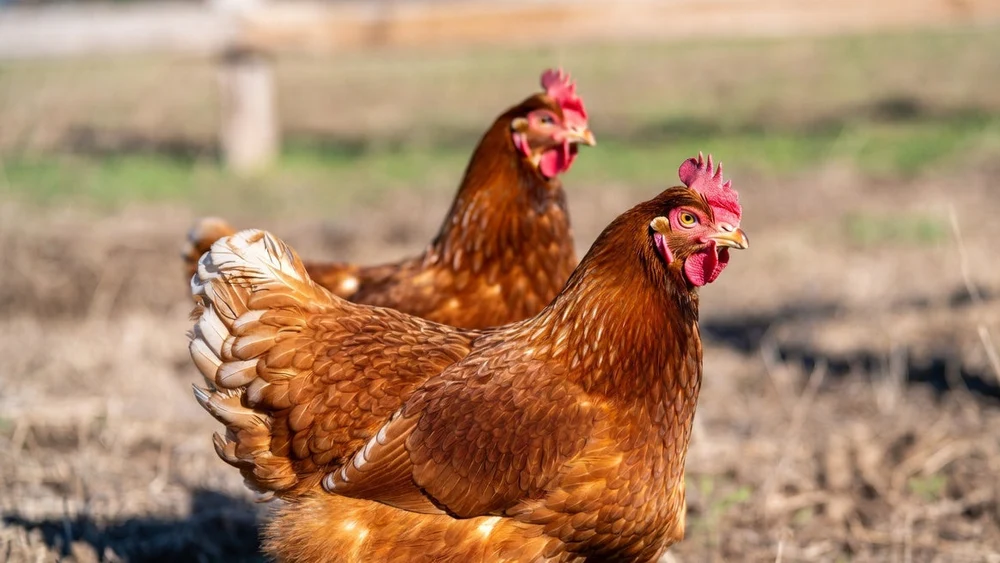
A backyard flock can look pretty quiet in the morning until the hens start moving around. One bird heads for the feeder. Another scratches through the bedding. Then you notice the deep red hen walking around like she owns the place. That is often the personality people notice first with this breed.
The Rhode Island Red has a long history as an American farm chicken. It was developed in Rhode Island and Massachusetts as a useful bird that could provide both eggs and meat. Over time some strains were selected more heavily for egg production. Today you can find both traditional birds and production-focused strains with somewhat different traits.
For a backyard owner the breed offers several useful qualities. It is hardy and usually productive. The hens lay brown eggs and can handle a range of climates when they have proper housing and care. They are also active birds that often enjoy ranging and scratching for food.
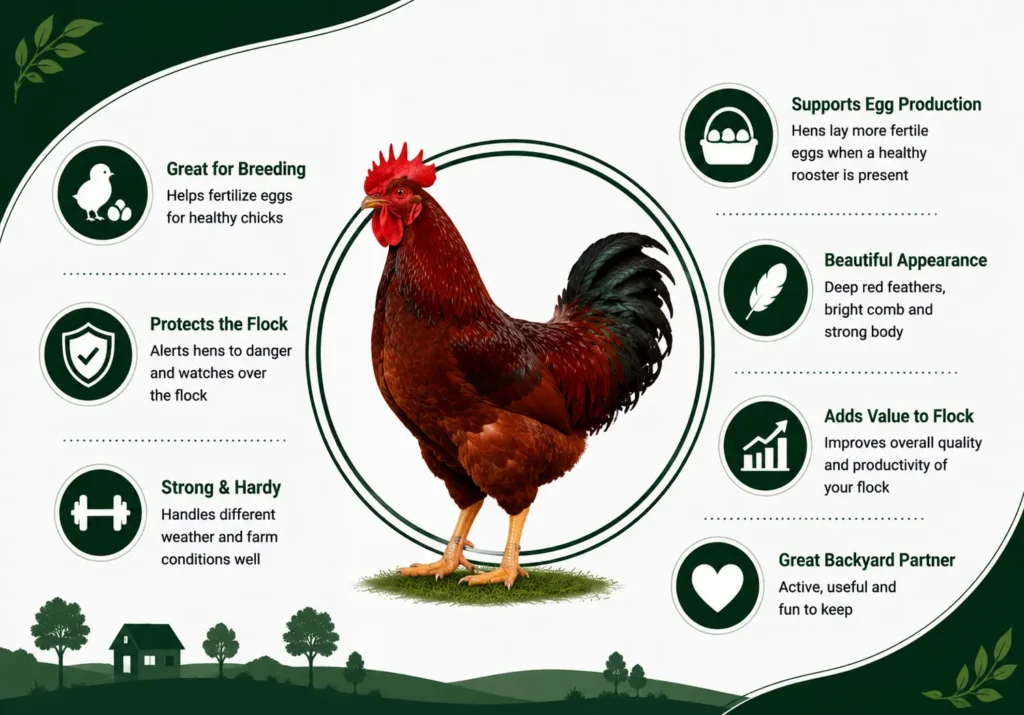
There is one thing new owners should keep in mind. A Rhode Island Red rooster may be more assertive or aggressive than the hens. The hens are generally easier to manage but they can still be confident birds in a mixed flock.
So if you are thinking about keeping this breed the real question is not just how many eggs it lays. You also need to understand its body type behavior, feeding needs housing and the difference between heritage and modern production strains.
Quick Rhode Island Red Hen Overview
| Feature | Quick answer |
| Origin | Rhode Island and Massachusetts |
| Main uses | Eggs and meat |
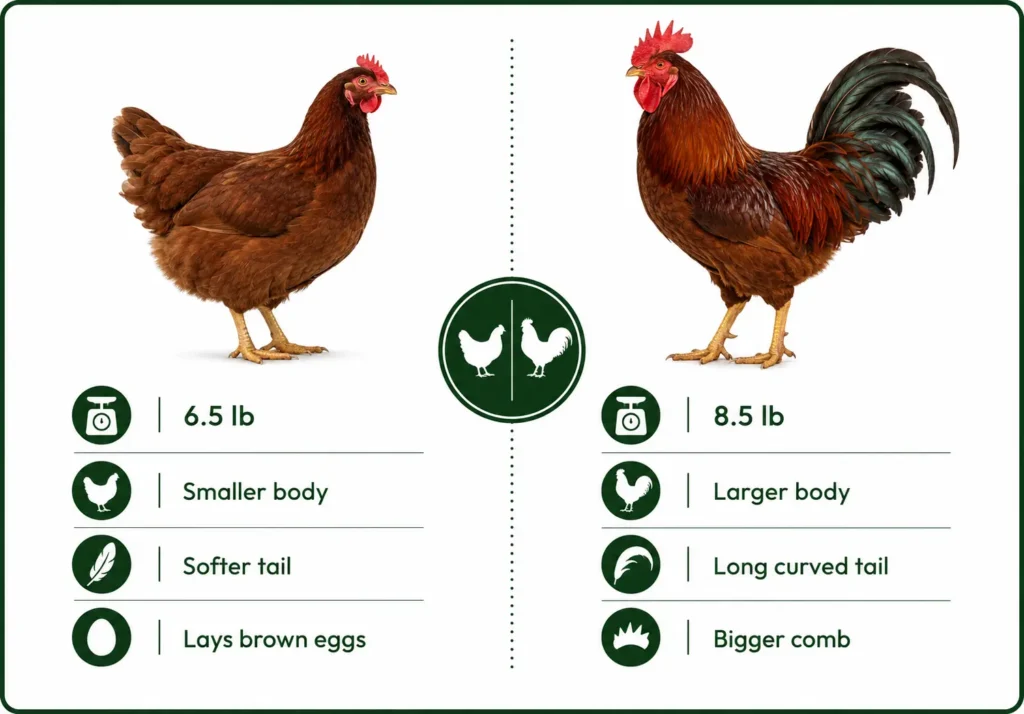
| Hen weight | About 6.5 pounds |
| Rooster weight | About 8.5 pounds |
| Egg color | Brown |
| Egg size | Large |
| Typical laying range | About 200–300 eggs yearly |
| Comb types | Single comb and rose comb |
| Color | Deep red to rich mahogany shades |
| Temperament | Usually calm hens with some assertive roosters |
The standard breed weights are around 6.5 pounds for hens and 8.5 pounds for roosters. The Livestock Conservancy also lists large brown eggs and describes the breed as hardy with good ranging ability.
Rhode Island Red Hen Appearance and Breed Characteristics
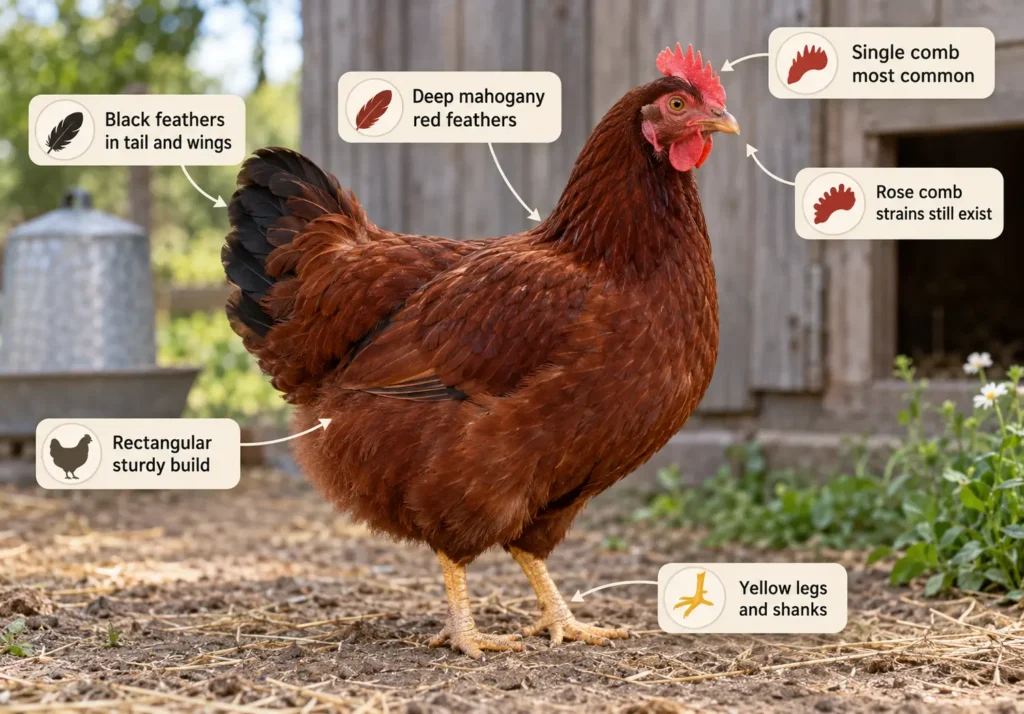
A mature Rhode Island Red hen has a strong rectangular body rather than the small rounded shape you might see in some lighter chicken breeds. Her feathers usually range from rich red to deep mahogany. The color can look especially dark and glossy when the feathers are in good condition.
The breed has yellow legs and feet. The eyes are reddish to reddish-bay and the beak can have a reddish horn color. Black feathers in the main tail and parts of the wings are also normal. These details help give the bird its classic look.
Standard weights are useful when choosing breeding birds or checking whether a mature chicken roughly fits the breed type. A standard hen weighs about 6.5 pounds while a rooster weighs about 8.5 pounds. Cockerels are around 7.5 pounds and pullets around 5.5 pounds.
There are 2 recognized comb varieties:
- Single comb
- Rose comb
The single-comb variety entered the American Poultry Association Standard of Perfection in 1904. The rose-comb variety followed in 1906.
Temperament can vary between individual birds and strains. Hens are often peaceful and manageable. Some roosters can become territorial or aggressive. That matters even more if you have children or keep several males together.
One practical observation for a backyard flock is that these birds are not usually shy wallflowers. They tend to be active and confident. Give them enough room to move and they have plenty to keep themselves busy with.
How Many Eggs Does a Rhode Island Red Hen Lay?
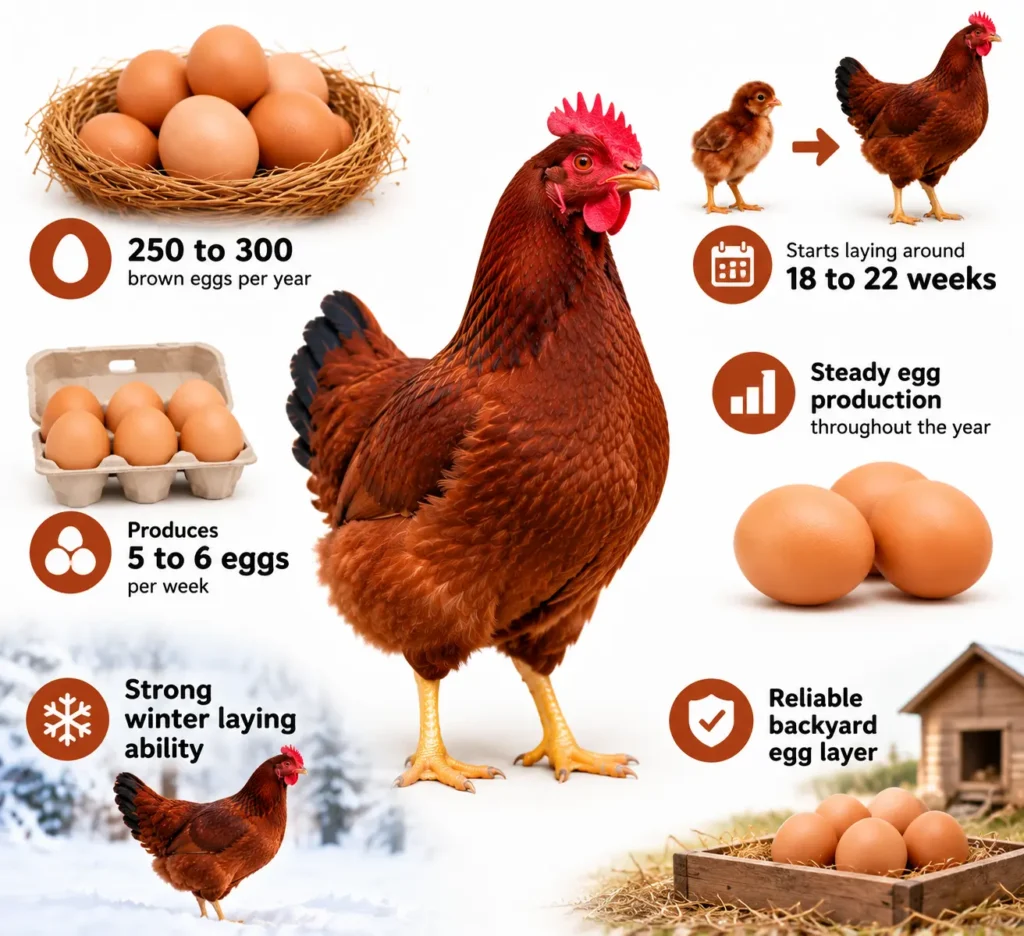
Rhode Island Red hens are known for strong egg production. Traditional birds can produce around 200 to 300 brown eggs per year and some production strains may produce more under good management. The Livestock Conservancy notes that the breed can begin laying as early as about 6 months of age.
The number you actually get from your own hen will depend on several things. A young healthy pullet with good feed and proper lighting can start laying sooner than an underfed or stressed bird.
Egg production is affected by:
- Age
- Diet
- Protein intake
- Calcium supply
- Day length
- General health
- Stress
- Weather
- Genetics
A common backyard target is around 5 eggs per week from a productive hen during a strong laying period. That does not mean she will produce exactly 5 eggs every week of the year.
Production also changes with age. Young hens often have their strongest laying period earlier in life. Later the number of eggs can decline. Molting can also temporarily reduce or stop egg production while the bird replaces its feathers.
The eggs themselves are generally large and brown. The exact shade can range from lighter brown to deeper brown depending on the individual hen and strain.
Modern production strains can differ from traditional Rhode Island Reds. Since the 1940s breeders have selected some lines more heavily for efficient egg production. The Livestock Conservancy notes that these birds became smaller lighter in color and less broody compared with older types.
That difference is worth remembering when someone gives you a single number for annual egg production. Breed name alone does not tell the whole story.
Complete Rhode Island Red Hen Care Guide for Backyard Chicken Owners
A Rhode Island Red does not need a fancy chicken house. It needs a safe dry place with enough room to sleep, move eat and lay eggs.
For a backyard flock the coop should protect the birds from rain strong wind extreme heat and predators. Good ventilation matters too. The goal is fresh air without creating a cold draft directly across the birds while they sleep.
A useful starting point is around 3 to 4 square feet of indoor floor space per adult hen with more room helpful when birds spend long periods inside. Outdoor runs need additional space because active chickens can become crowded quickly.
Keep the floor dry with clean bedding. Remove wet or heavily soiled areas instead of letting moisture build up. Clean nest boxes regularly so eggs stay cleaner and the birds have a comfortable place to lay.
A simple daily routine can include:
- Check fresh water in the morning.
- Provide the correct feed.
- Look over the flock for unusual behavior.
- Collect eggs.
- Check that doors and fencing are secure.
- Look at the bedding and remove wet spots.
- Make sure predators cannot reach the birds.
The right setup also depends on your part of the United States. A flock in Minnesota has different winter challenges from one in Texas. Cold-weather housing needs protection from wind while hot-weather housing needs shade and strong airflow.
Rhode Island Reds are hardy birds but that does not mean they should live in poor conditions. Their ability to handle less-than-ideal situations is one of the breed’s historic strengths. It should never be used as an excuse for weak housing or poor care.
Rhode Island Red Hen Feeding and Nutrition Requirements
Good egg production starts with good nutrition. A hen cannot keep producing strong eggs if she does not receive enough energy protein minerals and water.
Chicks need a chick starter feed designed for their stage of growth. As they mature they move to a pullet or grower ration. Once they begin laying they need a suitable layer feed with the nutrients required for egg production.
Calcium deserves special attention in laying hens. The shell contains a large amount of calcium so hens need a steady dietary supply. Weak or thin shells can be a sign that something in the feeding program needs attention.
Fresh water is just as important as feed. A hen can go through a surprising amount of water during hot weather. Keep drinkers clean and check them often.
A basic feeding plan looks like this:
- Chicks: chick starter
- Growing birds: appropriate grower or pullet feed
- Laying hens: layer feed
- Occasional treats: small amounts rather than a replacement for balanced feed
- Fresh water: available throughout the day
You can offer treats such as leafy vegetables or small amounts of suitable grains but do not let treats take over the diet. A chicken that fills up on extras may eat less of the balanced feed it actually needs.
Rhode Island Reds are good foragers too. The breed has historically been valued for its range and its ability to find food.
Still, free-ranging does not replace a proper feeding program. Backyard birds need dependable nutrition even when they spend part of the day scratching through grass and soil.
Rhode Island Red vs Other Popular Chicken Breeds in the USA
Rhode Island Reds sit in an interesting spot among American backyard breeds. They were created as dual-purpose birds so farmers wanted useful egg production along with a body suitable for meat.
Today that balance can look different depending on the strain. Heritage Rhode Island Reds are generally larger and darker and may show more broodiness. Modern production-focused lines have often been selected more strongly for laying ability.
Leghorns are known for high egg production and white eggs. Rhode Island Reds usually produce brown eggs and have a heavier body. Plymouth Rocks are another familiar dual-purpose type with a larger body and different feather patterns.
The comparison is easier when you focus on what you actually want from your flock.
| Trait | Rhode Island Red | Leghorn | Plymouth Rock |
| Main use | Eggs and meat | Mainly eggs | Eggs and meat |
| Egg color | Brown | White | Brown |
| Body type | Medium-heavy | Lighter | Medium-heavy |
| Foraging | Good | Good | Good |
| General hardiness | High | Good | High |
| Rooster behavior | Can be assertive | Can vary | Usually manageable |
The Rhode Island Red has also played a role in modern hybrid production. Its strong laying traits have made it useful in breeding programs.
That does not mean one breed works best for every backyard. Your climate flock size housing and goals matter.
How Long Do Rhode Island Red Hens Live?
A well-cared-for backyard hen can live for several years. However the length of life and the number of eggs produced are not the same thing.
A hen may continue living after her peak laying years have passed. Egg production usually becomes less consistent as a bird gets older. Good nutrition clean housing protection from predators and attention to health can all affect how long she remains active.
The breed’s hardiness is one reason it has worked well for small farms. University breed information describes Rhode Island Reds as relatively hardy and capable of continuing to produce under conditions that may challenge some other breeds.
Still, a hardy chicken is not an indestructible chicken.
Watch older hens for changes in appetite weight movement breathing and egg production. A bird that suddenly acts very differently deserves attention.
Raising Rhode Island Red Chicks: First 8 Weeks Care Guide
The first 8 weeks are mostly about steady growth and getting the basics right. Chicks need warmth clean water suitable feed and a dry brooder.
During the first days the brooder should provide a warm area where chicks can move toward or away from the heat source. Their behavior tells you a lot. If they crowd directly under the heat they may be cold. If they avoid the warm area and pants they may be too hot.
Keep the brooder clean. Wet bedding can quickly become a problem because chicks spend so much time close to the floor.
Feed chicks with an appropriate starter ration rather than adult layer feed. Young birds have different nutritional needs and too much calcium from layer feed is not appropriate for growing chicks.
The early weeks also give you a chance to watch how individual chicks behave. Some will be bold and curious. Others hang back. That difference can become more obvious as they grow.
By the time they move toward the pullet stage they should have good feather coverage and enough space to walk scratch and rest without crowding.
A simple first-8-weeks checklist includes:
- Safe brooder
- Suitable chick starter
- Clean drinking water
- Dry bedding
- Good ventilation
- Protection from drafts and predators
- Enough room as the chicks grow
- Regular observation
Do not judge the finished bird too early. A young Rhode Island Red chick has a lot of growing to do before its adult body shape and feather color become obvious.
Final Thought
The Rhode Island Red hen brings together several traits that have kept this breed popular for generations. She has a strong body brown eggs, good laying ability and a reputation for hardiness.
Her care is not complicated but she still needs the basics done well. Give her clean water balanced feed dry bedding safe housing enough space and protection from predators.
Remember that not every Rhode Island Red is the same. Heritage birds and modern production strains can differ in body size laying ability color and broodiness.
For a backyard owner that is useful information. Instead of choosing a chicken only because of its name ask what type of Rhode Island Red you are actually getting and what you want the flock to do. That small detail can make a big difference in what you experience after those first chicks grow into full-sized hens.