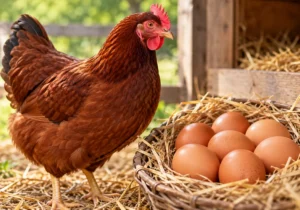
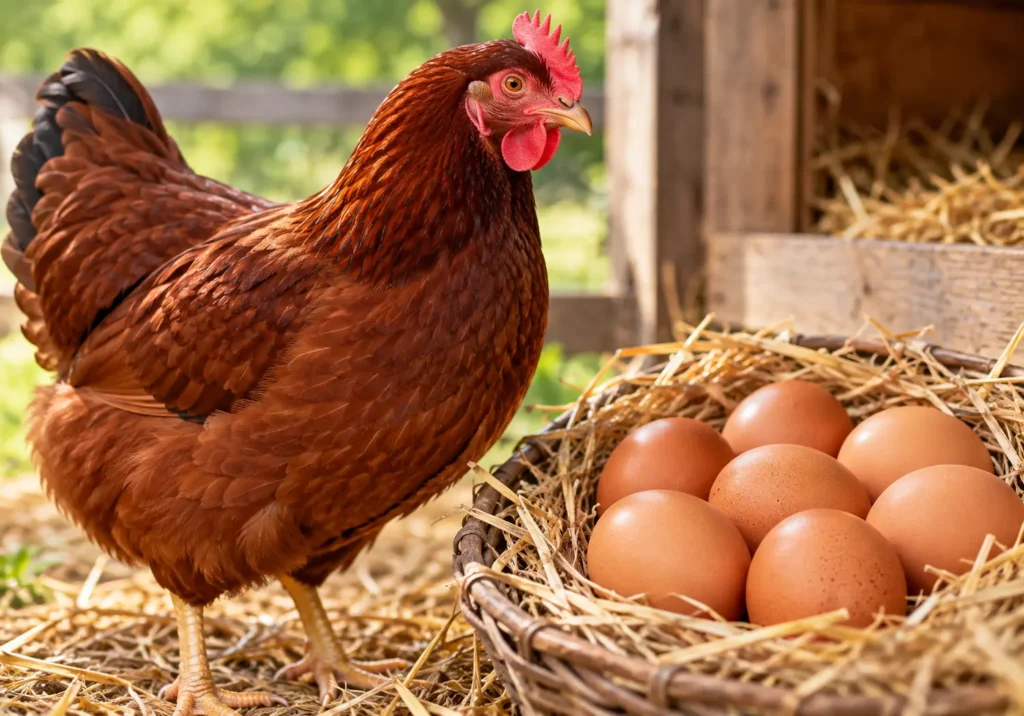
Rhode Island Reds lay brown eggs. The shells are usually light to medium brown, but some hens lay eggs with a darker shade. If you keep several hens together, you may notice that their eggs do not all look alike. That is normal.
These chickens were developed in Rhode Island and nearby Massachusetts during the late 1800s. Farmers wanted a bird that could lay plenty of eggs and still provide meat for the table. They crossed birds with different traits, including Malay and Leghorn chickens, to build a hardy, useful breed. The single-comb Rhode Island Red joined the American Poultry Association’s Standard of Perfection in 1904. The rose-comb variety was recognized later.
Today, Rhode Island Reds remain a common choice for backyard flocks. A hen may lay around 200–300 brown eggs per year, depending on her strain, age, diet, and living conditions. Some modern birds have been bred mainly for egg production, while traditional heritage birds may lay at a different rate.
Egg color is only one part of choosing a chicken. Egg size, laying rate, winter care, and temperament matter too. Once you know what a healthy Rhode Island Red usually produces, it becomes easier to set fair expectations for your flock.
What Size Eggs Do Rhode Island Reds Lay?
Most mature Rhode Island Red hens lay large brown eggs. A young pullet usually starts with smaller eggs, then lays bigger ones as her body matures. Her first eggs may look a little odd in size or shape. That is common when a hen is just getting started.
The breed is listed as a large brown-egg layer by The Livestock Conservancy. Still, not every hen will produce eggs of exactly the same size. Genetics, age, feed, and health all play a part. Some hens lay extra-large eggs now and then, but large is the more useful expectation for a mature bird.
You do not need to chase bigger eggs with extra treats or supplements. Give pullets feed made for their stage of growth, then switch to a suitable layer ration when they begin laying. Keep fresh water available and avoid letting treats replace their main feed.
If you find a soft shell or a cracked egg once in a while, keep an eye on the flock. If it happens often, review the diet and check whether the hens have a steady source of calcium. Ongoing shell problems can also be linked to stress or health issues, so ask a poultry vet if they continue.
Rhode Island Red Egg Facts at a Glance
| What you want to know | Typical result |
| Egg color | Brown |
| Usual shell shade | Light to medium brown |
| Egg size | Large when mature |
| Eggs per year | About 200–300 under good conditions |
| Eggs per week | Often 5–6 during strong laying periods |
| Age at first egg | Around 18–22 weeks for many pullets |
| Winter laying | Often slows as days get shorter |
| Best laying years | Usually the first few years |
| Main needs | Balanced feed, clean water, safe housing, and enough daylight |
These are estimates, not a promise that every Rhode Island Red will follow the same schedule. Traditional birds and modern laying strains can perform differently.
How Many Eggs Do Rhode Island Reds Lay Per Week?
A healthy Rhode Island Red may lay 5–6 eggs per week during a strong laying period. She will not necessarily lay one every day. Egg production follows a natural cycle, and hens sometimes take a day off.
Say you have four hens and each lays five eggs in a week. That gives you about 20 eggs, which is plenty for many households. Your actual count may be lower during winter, molting, or as the hens get older.
Rhode Island Reds became popular partly because they can produce eggs while also serving as meat birds. They are hardy and often do well in backyard settings where they have room to move and forage. The breed was built for practical farm use, not just for looks.
A hen’s egg count can change from week to week. A short pause is not always a problem. But if production drops sharply and stays low, check the basics first:
- Is the feed fresh and suitable for laying hens?
- Do all birds have easy access to clean water?
- Are nest boxes clean and quiet?
- Have the hens been stressed by crowding, heat, cold, or changes in the flock?
Avoid filling them up with treats when egg numbers fall. Too much scratch grain or table food can throw off a balanced diet. If the drop comes with weight loss, low energy, or other signs of illness, seek advice from a poultry veterinarian.
When Do Rhode Island Reds Start Laying Eggs?
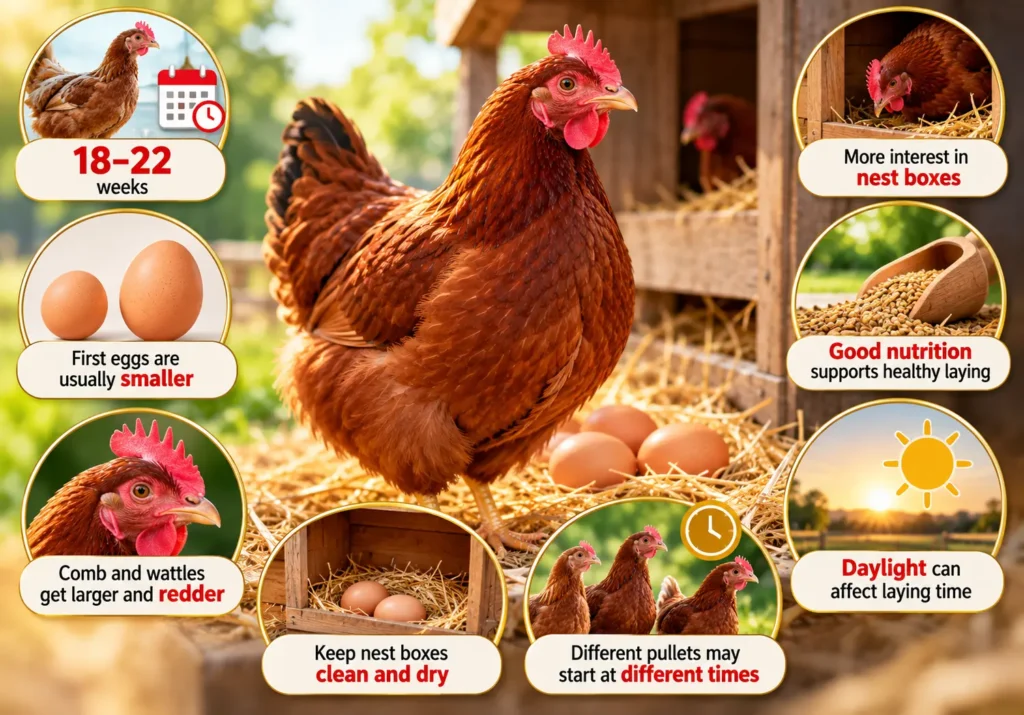
Many Rhode Island Red pullets lay their first eggs at around 18–22 weeks of age. Some start earlier, while others take longer. Their first eggs are often smaller than the ones they will lay later, so do not expect a full-size egg straight away.
A pullet’s age is only part of the picture. Her genes, nutrition, health, and daylight can all affect when she starts. You may notice her comb and wattles getting larger and redder, or see her checking out the nest boxes more often. These can be signs that laying is getting close, but they cannot tell you the exact day.
Get the coop ready before the first egg appears. Keep nest boxes dry and easy to reach. Make sure the birds have enough room to eat, drink, perch, and move around without constant competition.
Feed matters at this stage too. Growing pullets need a suitable grower feed, while laying hens need a ration designed for egg production. Follow the feed maker’s guidance on when to switch. Adding calcium without checking the bird’s needs is not a shortcut to earlier laying.
It is also normal for hens of the same age to start at different times. If one pullet lays before her flockmates, give the others time rather than assuming something is wrong. Watch their general health and body condition instead of judging them by the first egg alone.
Do Rhode Island Reds Lay Eggs in Winter?
Yes. Rhode Island Reds can lay during winter, but their egg count often falls when daylight hours get shorter. Their cold hardiness helps them handle chilly weather, yet it does not make them immune to seasonal changes in laying.
Some hens continue laying at a useful rate. Others slow down or pause until the days get longer. Age, health, nutrition, and the bird’s strain all affect the pattern.
Your first job in winter is to keep the flock healthy and comfortable. The coop should stay dry, with good airflow and no strong drafts blowing directly onto the birds while they roost. Check water often so it stays clean and does not freeze. Continue feeding a complete layer ration, and do not let treats take over their diet.
Some keepers use artificial light to support winter egg production. A steady lighting schedule can help, but more light is not always better. If you decide to add light, use a timer and provide a regular dark period for rest. A poultry extension service can help you plan a suitable schedule for your flock.
A drop in winter egg numbers does not automatically mean the hens are sick. Still, pay attention if they stop laying suddenly and also seem weak, lose weight, eat less, or show unusual behavior. Seasonal changes can explain less production, but they should not be used to explain away every health problem.
Why Do Rhode Island Red Egg Colors Vary?
Rhode Island Reds lay brown eggs, but the shade can differ between hens. One may lay a light brown egg while another produces a deeper color. The main reason is the amount of pigment added to the shell as the egg forms.
A hen’s eggs may also change shade as she gets older. Shell color can become lighter over time, though the pattern varies between birds. Stress and health problems may affect egg quality too, but one pale egg by itself is not a reliable sign of illness.
It helps to separate shell color from other parts of the egg. A darker shell does not automatically mean better nutrition or richer flavor. Yolk color is more affected by the pigments in the hen’s feed. Hens that eat plants or feed ingredients rich in yellow and orange pigments may produce darker yolks.
If the shell shade changes, look at the whole flock before worrying. Check whether the hens are eating well and laying eggs with normal shells. Repeated soft shells, cracks, or a sudden change in production are more useful warning signs than a small shift in brown color.
Rhode Island Red Egg Color vs. Other Chicken Breeds
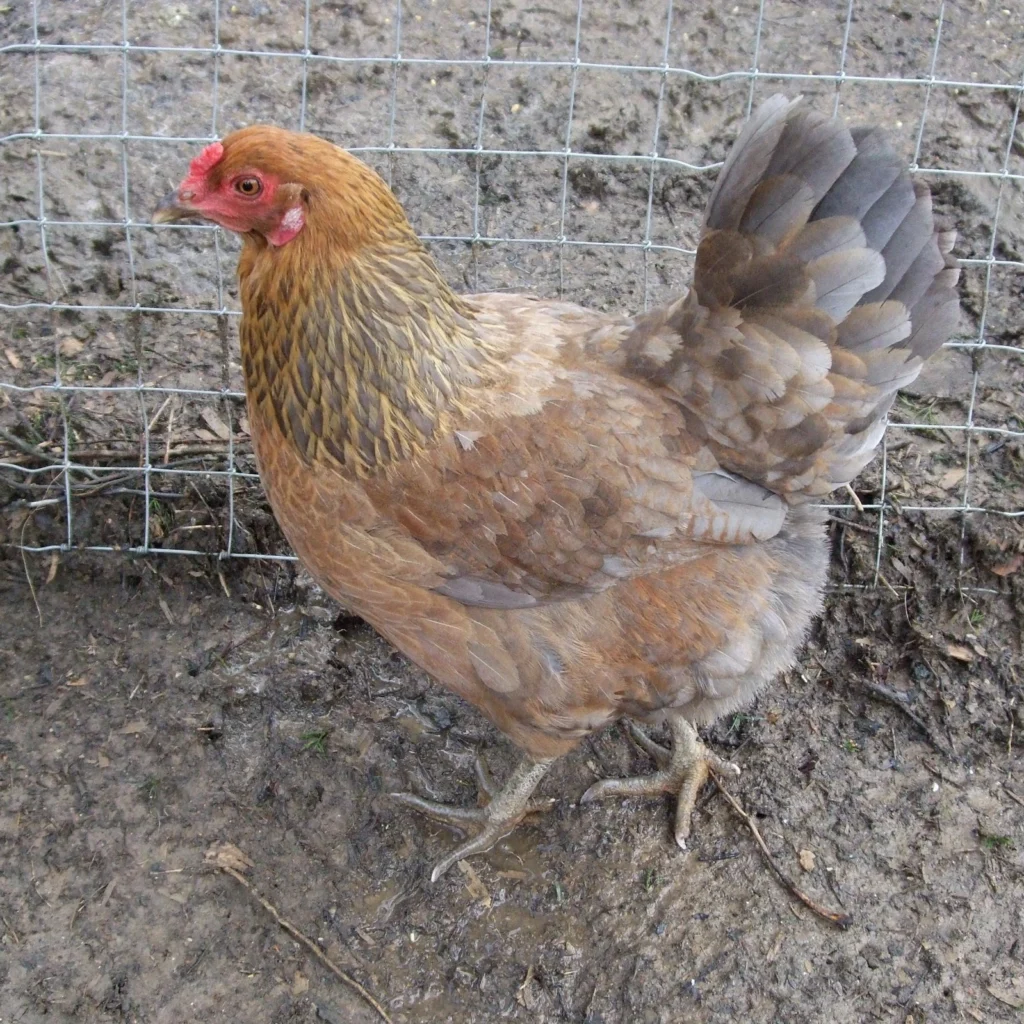
Rhode Island Reds are known for brown eggs, but other chicken breeds lay a range of colors. If you want a basket with white, chocolate-brown, blue, or green shells, you need to choose breeds with those traits. A chicken’s feather color does not tell you what color eggs she will lay.
| Chicken breed | Usual egg color | What to know |
| Rhode Island Red | Brown | Hardy dual-purpose bird known for steady laying |
| Leghorn | White | Known for strong egg production |
| Orpington | Light brown | Often kept in backyard flocks for its calmer nature |
| Marans | Dark brown to chocolate brown | Known for very dark shells |
| Welsummer | Brown, sometimes speckled | Eggs may have darker speckles |
| Australorp | Brown | Popular for egg production |
| Ameraucana | Blue | Lays blue-shelled eggs |
| Easter Egger | Often blue or green, but may vary | Shell color depends on the bird’s genetic background |
| Red Star or Red Sex Link | Brown | Hybrid chickens bred for strong egg production |
Often blue or green
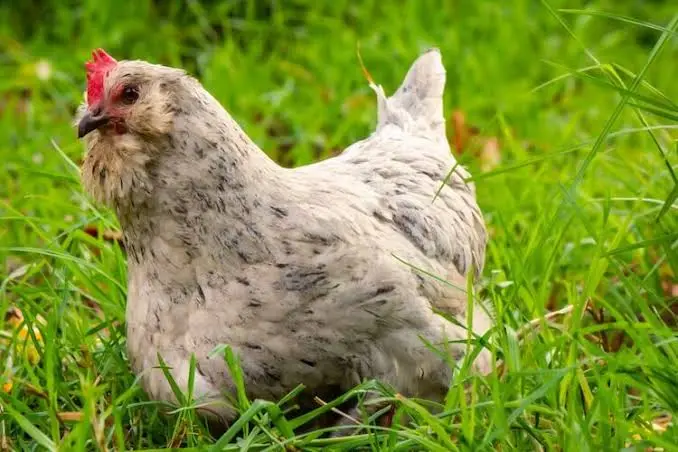
Blue
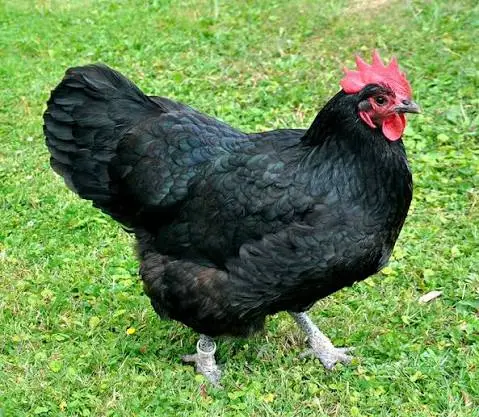
Brown
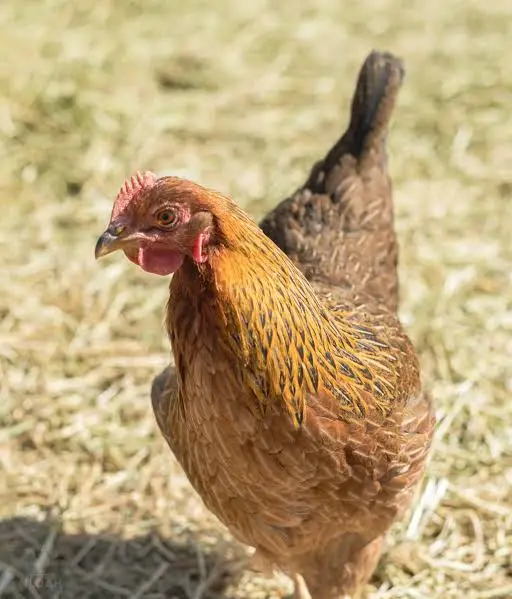
Brown, sometimes speckled
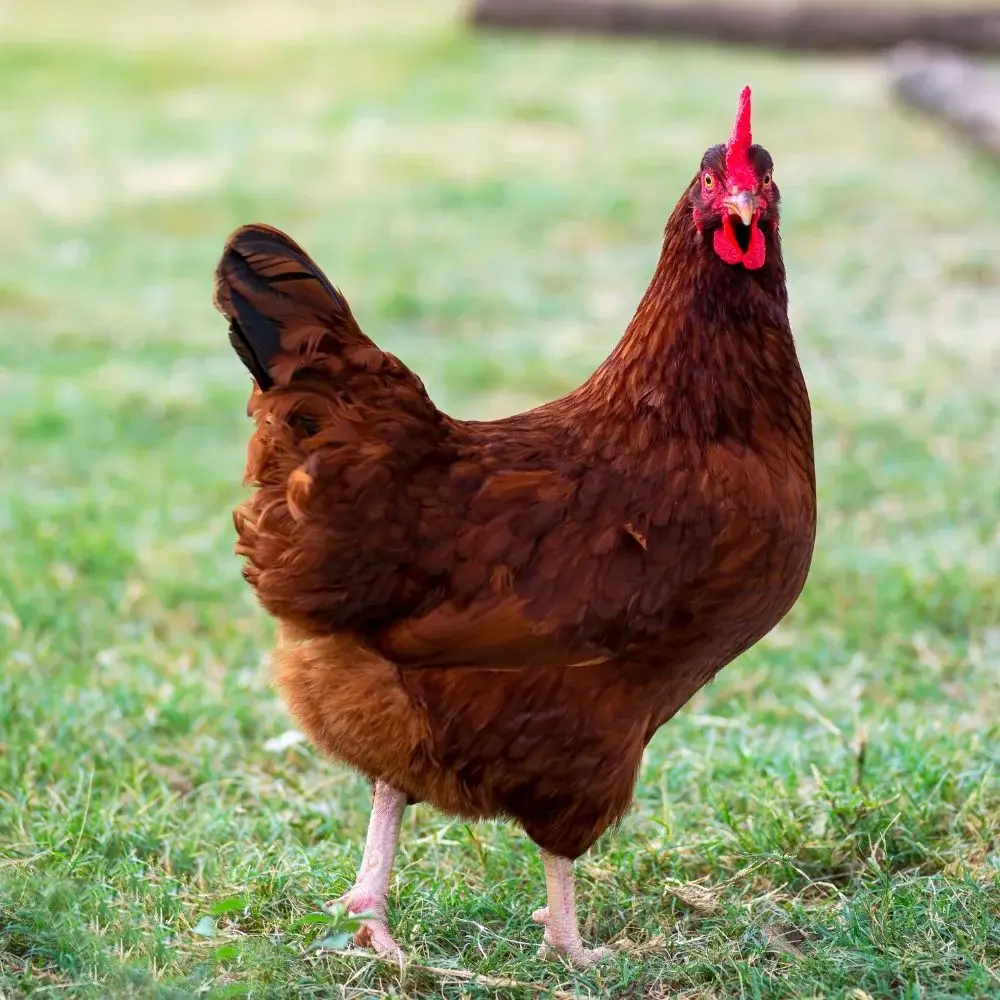
Brown
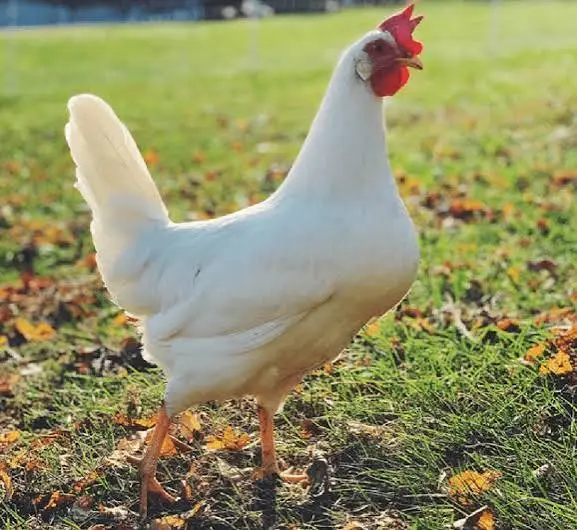
White
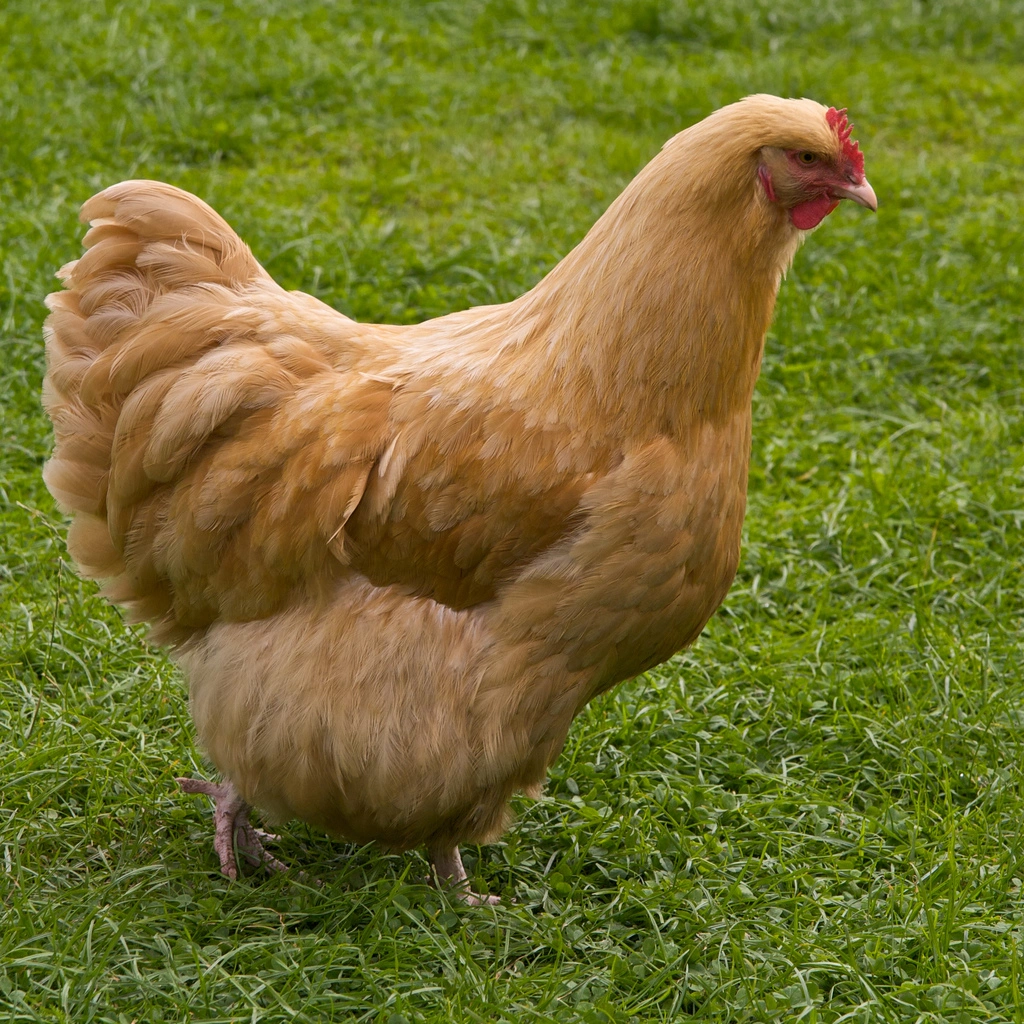
Light brown
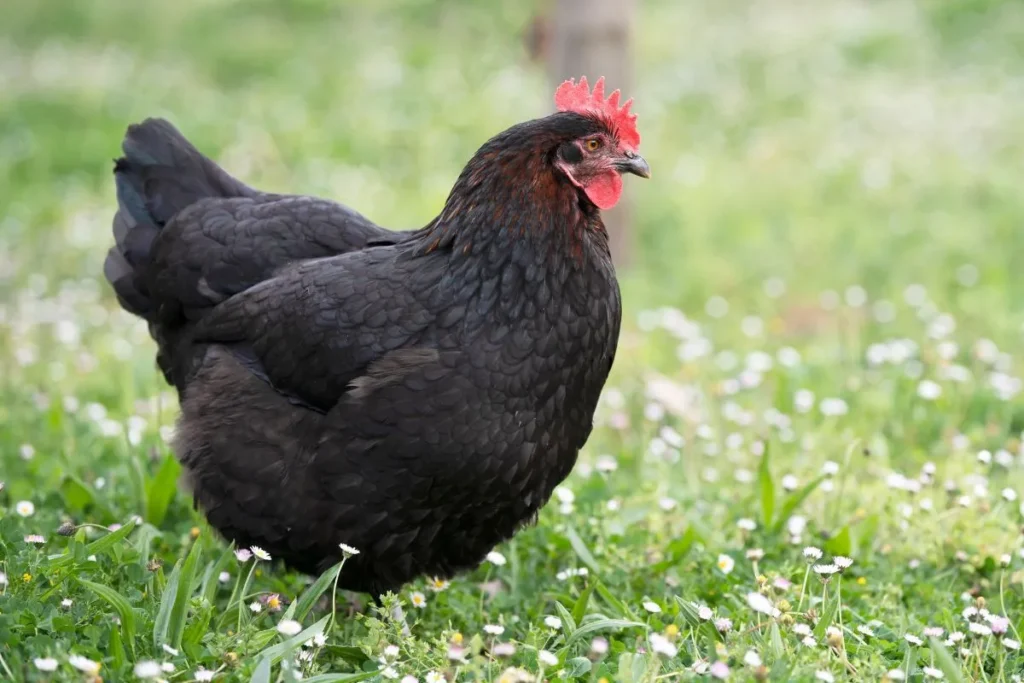
Dark brown to chocolate brown
These are general patterns. Individual birds and strains can vary, and laying rates depend on more than breed alone. The Livestock Conservancy lists Rhode Island Reds as large brown egg layers, while poultry breed guides describe Leghorns as white egg layers.
If you want a dependable supply of brown eggs, Rhode Island Reds are worth considering. If you prefer very dark shells, Marans may suit your plans. Leghorns are a common choice for white eggs, while blue-egg breeds add a different color to the basket.
Egg color should not be the only thing you consider. Think about your available space, local weather, the birds’ temperament, and how many eggs your household uses. A flock that fits your daily routine is much easier to manage than one chosen only for its appearance.
Final Thought
Rhode Island Reds lay brown eggs, usually in light to medium shades, and mature hens often produce large eggs. A hen may lay around 200–300 eggs in a year under good conditions, but her age, diet, daylight, and health all affect that number.
Do not worry if every egg in the basket looks a little different. Watch your hens’ normal laying pattern, keep their feed and water in good shape, and pay attention to lasting changes in shell quality or egg production. That will tell you far more about your flock than shell color alone.