Jersey cow milk is easy to notice because it looks richer than normal milk. It often has a light golden shade. It also feels thick and smooth in the mouth. These qualities come from the naturally high level of butterfat and milk solids found in the milk.
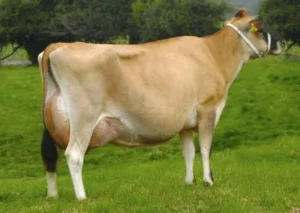
The milk comes from the Jersey cattle breed. These cows first became famous on the Island of Jersey in the English Channel. Jersey cows are smaller than many common dairy cows. Yet their milk contains a high concentration of protein and fat.
A Jersey cow normally gives less total milk than a large Holstein cow. However the milk often contains more useful dairy components in every litre. This is why farmers and food makers value it for cheese and butter and yogurt and ice cream.
In my review of dairy nutrition data I noticed one important point. Jersey milk should not be judged only by how many litres a cow produces. Its real value appears when we look at the amount of casein and calcium and butterfat and other total solids inside those litres.
The exact nutrition can change from one farm to another. The cow’s feed and genetics and age and health and stage of lactation all affect the milk. Processing also matters. Some companies remove part of the cream before selling the milk. For this reason the label on the bottle gives the most accurate information for the product you are drinking.
Jersey Cow Milk Nutrition Facts
Natural Jersey cow milk contains water and fat and protein and milk sugar. It also supplies several vitamins and minerals. The main difference is that these nutrients are often more concentrated than they are in ordinary cow’s milk.
Research and dairy extension data commonly place Jersey milk near 4.9 percent milkfat and around 3.8 percent protein. Holstein milk often averages closer to 3.7 percent fat and about 3.1 percent protein. These numbers can rise or fall depending on the herd and season.
One cup of standard whole milk usually provides about 150 calories and 8 grams of fat and 8 grams of protein. It also contains about 12 grams of carbohydrates. Most of those carbohydrates come from lactose. Whole milk also supplies calcium and phosphorus and potassium and vitamin B12 and riboflavin.
A cup of natural full-fat Jersey milk may provide around 180 to 210 calories. It may contain about 9 to 10 grams of protein and around 11 to 13 grams of fat. These are useful working ranges rather than fixed numbers. A processor may lower the fat level before the milk reaches the shop.
The higher energy value does not make Jersey milk bad. It simply means that it is more concentrated. A person who needs more calories may see this as a benefit. A person trying to reduce calorie intake may choose a smaller serving.
Jersey milk protein includes both casein and whey. Casein forms most of the solid curd during cheese making. Whey stays mainly in the liquid part. Both supply essential amino acids that the body cannot make on its own.
The milk also supplies calcium and phosphorus. These minerals support bones and teeth. Calcium also helps with normal muscle movement and nerve signals. Phosphorus supports bones and energy use inside the body.
Vitamin B12 helps the body make healthy red blood cells. It also supports the nervous system. Riboflavin helps the body release energy from food. The exact amount of vitamin A and vitamin D may depend on the cow’s feed and the local rules for milk fortification.
Supports Strong Bones and Teeth
One of the best known benefits of Jersey cow milk is its calcium content. The body stores most of its calcium in bones and teeth. A regular supply of calcium helps the body build bone tissue during childhood. It also helps adults maintain their bone structure.
Jersey milk may contain more calcium than milk from some other dairy breeds. One comparison found higher levels of total calcium and soluble calcium and other calcium forms in Jersey milk than in Holstein-Friesian milk.
This does not mean that milk alone can protect a person from every bone problem. Strong bones also need enough vitamin D and physical activity and protein. Age and hormones and family history also play a part.
Still Jersey milk can make it easier to add calcium and protein to a daily meal. A child may drink it with breakfast. An adult may add it to porridge. An older person may use it in soup or a smoothie when eating solid food feels difficult.
The phosphorus in milk works with calcium. Both minerals help form the hard structure of bones and teeth. This partnership is one reason dairy foods often appear in healthy eating plans.
Fortified Jersey milk may also supply vitamin D. Vitamin D helps the body absorb calcium from food. Consumers should check the package because not every country fortifies milk in the same way.
Provides High Quality Protein

The protein in Jersey cow milk is called complete protein. This means it supplies all nine essential amino acids. The body uses these amino acids to build and repair tissue.
Protein supports muscles and skin and enzymes and many hormones. It also helps the immune system make important protective compounds.
Jersey cows often produce milk with a higher protein percentage than Holstein cows. Research comparing the two breeds has found higher fat and protein levels in Jersey milk during parts of lactation.
This extra concentration can be useful for active people. It can also help growing children and older adults and people trying to gain body weight. A glass of milk does not replace a full balanced meal. Yet it can add useful protein without requiring much cooking.
For example a person can blend Jersey milk with a banana and oats. This creates an easy drink with carbohydrates and protein and fat. Another person may pour it over cereal. Someone else may use it in a thick yogurt bowl.
The main milk protein is casein. It digests more slowly than many other proteins. The other group is whey protein. Whey digests more quickly. This natural combination makes milk a useful food at breakfast or after normal physical activity.
People with a cow’s-milk protein allergy must avoid Jersey milk. It still contains casein and whey. Changing from Holstein milk to Jersey milk does not remove these proteins.
Gives More Energy and Helps You Feel Full
Natural full-fat Jersey milk contains more calories than low-fat milk. Most of the extra energy comes from its higher butterfat content.
This can help people who struggle to eat enough food. A growing teenager may need more energy. A physically active worker may need a filling drink. A person who wants healthy weight gain may use rich milk in shakes and porridge.
Fat and protein can also make a drink feel more satisfying. A glass of creamy milk may keep a person full for longer than a sweet drink that contains little protein.
The benefit depends on portion size. A large glass of full-fat Jersey milk can add many calories. This may support weight gain. It may not suit someone who already eats many high-calorie foods.
I find that the best practical approach is to treat Jersey milk as real food rather than as a light drink. Its thick texture and high nutrient level make one normal serving enough for many people.
It works well with breakfast. It can also be used as a small evening drink. Adding sugar is often unnecessary because plain milk already contains natural lactose.
People who need to limit saturated fat should check the label and speak with a qualified health professional when needed. They may choose standardized Jersey milk with less fat.
Jersey Milk Has Rich Butterfat

Butterfat gives Jersey milk its famous creamy feel. Dairy extension values often place Jersey milkfat near 4.9 percent. Some herds may produce milk above 5 percent. The exact result depends on genetics and feed and season and cow health.
Standard whole milk in shops often contains around 3.25 percent fat. A company may take natural Jersey milk and reduce its cream to reach a standard level. Therefore a bottle with a Jersey picture does not always contain the full natural fat level.
Look for words such as full-cream Jersey milk and cream-top Jersey milk and non-homogenized Jersey milk. These terms often show that more natural cream remains in the product.
Non-homogenized milk may develop a cream layer at the top. This is normal. It does not mean the milk has spoiled. Gently shake the closed bottle if you want to mix the cream back into the milk.
The higher butterfat gives several practical benefits. It improves mouthfeel. It carries flavour well. It makes hot chocolate taste smooth. It gives custard a richer body. It can also improve homemade butter and ice cream.
Butterfat also increases calories and saturated fat. This is why balance matters. A person can enjoy the taste without drinking very large servings.
Jersey Cow Milk Protein and Calcium Improve Dairy Quality
The high level of casein and calcium does more than support human nutrition. It also changes how the milk behaves in the kitchen and dairy factory.
Casein gathers into curds during cheese making. Milk with more casein can form more solid curd from the same volume. Calcium helps the curd develop a useful structure.
Studies comparing Jersey and Holstein milk have reported higher protein and calcium levels in Jersey milk. Research on dairy products has also found higher calcium and phosphorus in fermented milk and cheese made from Jersey milk.
This is why Jersey milk often performs well in paneer and cottage cheese and mozzarella and Gouda cheese. A home cook may notice that the curd feels firm and rich.
The same milk solids can improve yogurt. The yogurt may feel thicker even without a large amount of milk powder. Heating the milk before adding the culture can improve the texture further.
This higher concentration can also reduce waste in some recipes. A person may get more finished paneer from one litre of rich Jersey milk than from one litre of thinner milk. The exact yield still depends on heat and acid and drainage.
For food makers this can mean better product value. For consumers it means a more satisfying taste and texture.
Jersey Cow Milk vs Holstein Milk
| Feature | Jersey Milk | Holstein Milk |
|---|---|---|
| Butterfat | Higher | Lower |
| Protein | Higher | Lower |
| Milk Volume | Lower | Higher |
| Creaminess | Richer | Lighter |
| Cheese Yield | Better | Lower |
| Butter Production | Excellent | Moderate |
| Color | Golden | Whiter |
Jersey milk and Holstein milk both provide useful nutrition. The main difference lies in milk volume and component concentration.
Holstein cows are large animals. Farmers value them because they can produce a high volume of milk. Jersey cows are smaller and usually produce fewer litres.
Yet Jersey milk normally contains more fat and protein and total solids. A comparative study found higher milk fat and protein percentages in Jersey cows than in Holstein cows during early lactation.
Holstein milk often looks whiter and feels lighter. Jersey milk may look creamy or slightly golden. It usually tastes fuller.
Jersey milk often gives a better cheese yield per litre because more solid material is available for curd formation. Holstein milk remains useful for large-scale drinking milk production because each cow can produce more liquid milk.
Neither breed gives the perfect milk for every person. Someone who wants a light drink may prefer standard Holstein milk. Someone who wants thick yogurt or rich coffee may prefer Jersey milk.
Price and access also matter. Holstein milk is widely available in many markets. Pure Jersey milk may cost more because fewer farms sell it and because consumers see it as a premium product.
When comparing packages do not look only at the breed name. Check the nutrition label. One brand may sell Jersey milk with 5 percent fat. Another may standardize it to 3.25 percent. The two products will not taste or perform in exactly the same way.
Creamy Taste and Natural Golden Colour
The taste of Jersey cow milk is one of its strongest selling points. People often describe it as smooth and rich and slightly sweet.
The sweetness does not usually come from added sugar. Plain milk contains lactose which is its natural milk sugar. Jersey milk may feel sweeter because the extra fat and solids improve the way flavour spreads in the mouth.
Its creamy texture comes from the balance of milk fat and protein and other solids. Fat coats the mouth for a short time. This creates a full and smooth feeling.
The light golden colour may come partly from beta-carotene. This natural plant pigment enters the cow’s diet through grass and other feed. Jersey cows can pass more of this colour into their milk fat.
Feed and season affect the final shade. Milk from cows eating fresh green forage may look more yellow. Milk produced during another season may appear paler.
Processing can also change the appearance. Homogenized milk looks more even because the fat breaks into small droplets. Non-homogenized milk may show a darker cream layer near the top. A pale golden colour is normal for Jersey milk. A strange colour with a sour smell or lumps is not normal and may signal spoilage.
Useful for Cheese and Butter and Yogurt
The rich composition of Jersey milk makes it useful for many dairy products.
Cheese makers value its casein and fat. These components improve curd formation and richness. Jersey milk can work well in hard cheese and soft cheese and fresh cheese.
For homemade paneer the milk often gives a firm curd. For yogurt it can create a thick body and smooth mouthfeel. For Greek-style yogurt the higher solids can reduce the amount of liquid that needs to drain away.
Jersey cream works well for butter. When non-homogenized milk rests in the refrigerator the cream rises. A person can collect this cream and churn it.
Milk is also a strong choice for ice cream. Its fat gives a smooth texture and carries vanilla or chocolate flavour well. A good recipe still needs the right amount of sugar and careful freezing.
In normal cooking Jersey milk can improve custard and rice pudding and sauces. It adds body to mashed potatoes and soups. It also works well in coffee and tea because the dairy flavour does not disappear easily.
Bakers can use it in bread and cakes and pancakes. The added fat may make the finished food softer. However recipes designed for low-fat milk may need a small adjustment.
Is Jersey Cow Milk Good for Daily Drinking?
Pasteurized Jersey cow milk can form part of a balanced daily diet for people who tolerate dairy. It supplies protein and calcium and phosphorus and potassium and several B vitamins.
The right amount depends on the person. A child and an active adult and an older person do not have the same energy needs. Other foods also matter. Someone who eats yogurt and cheese every day may need less milk.
Full-fat Jersey milk contains more calories and saturated fat than reduced-fat milk. A small or medium serving may be enough when the rest of the diet already contains butter and cream and fatty meat.
People with lactose intolerance may feel gas or bloating or stomach pain after drinking milk. Jersey milk still contains lactose. It is not naturally lactose-free.
Some people can manage a small amount of lactose with food. Others need lactose-free milk or a lactase product. This issue is different from a milk allergy.
A person with a cow’s-milk protein allergy must avoid Jersey milk unless a medical professional gives different advice. The breed does not remove casein or whey.
Babies under 12 months should not use cow’s milk as their main drink in place of breast milk or infant formula unless a qualified healthcare professional gives special instructions.
Choose pasteurized milk for safety. Raw milk may carry harmful bacteria such as Salmonella and E. coli and Listeria and Campylobacter. The breed of the cow does not prevent contamination.
Jersey Cow Milk Shelf Life and Storage Tips
Good milk can spoil quickly when stored badly. Keep refrigerated Jersey milk at 40°F or 4°C or below. The FDA uses 40°F as an important food safety limit for refrigerated food.
Store the bottle on a main refrigerator shelf. The refrigerator door becomes warmer each time someone opens it. Close the cap after every use. Do not drink directly from a shared bottle. Bacteria from the mouth may enter the milk.
Do not pour unused milk from a glass back into the original container. Food particles and bacteria may shorten its shelf life.
Milk should not normally stay above refrigerator temperature for more than about two hours. In very hot weather the safe time becomes shorter.
Follow the date and storage instructions printed on the package. Pasteurized milk and ultra-pasteurized milk do not have the same unopened shelf life.
Non-homogenized Jersey milk may separate. A thick cream layer is normal. Sour smell and unusual lumps and a slimy texture are signs that the milk may be spoiled. Milk stored above 40°F can develop a sour smell and an off flavour and a curdled texture.
You can freeze milk when needed. Leave some empty space in the container because the liquid expands. Thaw it inside the refrigerator. The fat and water may separate after thawing. Shake it well and use it in cooking or smoothies if the texture feels less smooth.
Final Thought
Jersey cow milk offers more than a creamy taste. Its higher butterfat and protein and casein and calcium make it a rich food and a useful dairy ingredient. It can support bones and muscles and energy needs when used as part of a balanced diet.
Its greatest strength is concentration. A smaller amount can add body and nutrition to yogurt and cheese and paneer and desserts. At the same time its higher calorie and fat content means that serving size matters.
Choose pasteurized milk. Read the nutrition label. Keep it cold. When used with care Jersey milk can be a tasty and practical part of daily meals.