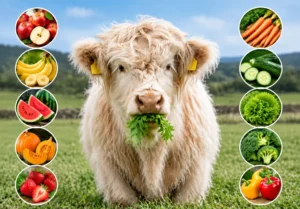
Highland cows can eat some fruits and vegetables as treats. A carrot or a small piece of apple can be a nice reward when you want to get a cow’s attention or make feeding time more enjoyable. But these foods should stay on the treat side of the diet. Grass pasture and good hay should still make up the main food for a Highland cow.
That matters because Highland cattle are ruminants. Their stomach is built to handle plant fiber through fermentation in the rumen. Their natural diet is based around roughage rather than sweet or soft foods. The American Highland Cattle Association also describes roughage such as pasture and stored plant material as the main feed for cattle.
Fruit and vegetables can add variety to a cow’s day. They can also work well during gentle livestock training. A cow may learn to walk toward a familiar bucket or come closer when it knows a small treat is waiting.
Still, not every kitchen leftover belongs in a cow’s feed bucket. Some foods can upset the rumen or cause other health problems. A few plants can even be poisonous to cattle.
So the simple rule is this: use fresh pasture and hay as the main food and think of fruit and vegetables as small extras.
Quick Overview
| Food or feeding point | Simple answer |
| Carrots | A good crunchy treat in small amounts |
| Apples | Fine as an occasional treat |
| Pumpkins | Can be offered as seasonal enrichment |
| Bananas | Small amounts are okay |
| Cucumbers | Can be used as a light treat |
| Grass and hay | Should remain the main food |
| Sweet fruit | Keep portions small |
| Grain snacks | Use carefully and only when suitable |
| Moldy or spoiled food | Never feed it |
| Unknown plants | Check with a veterinarian first |
What Vegetables Can Highland Cows Eat?
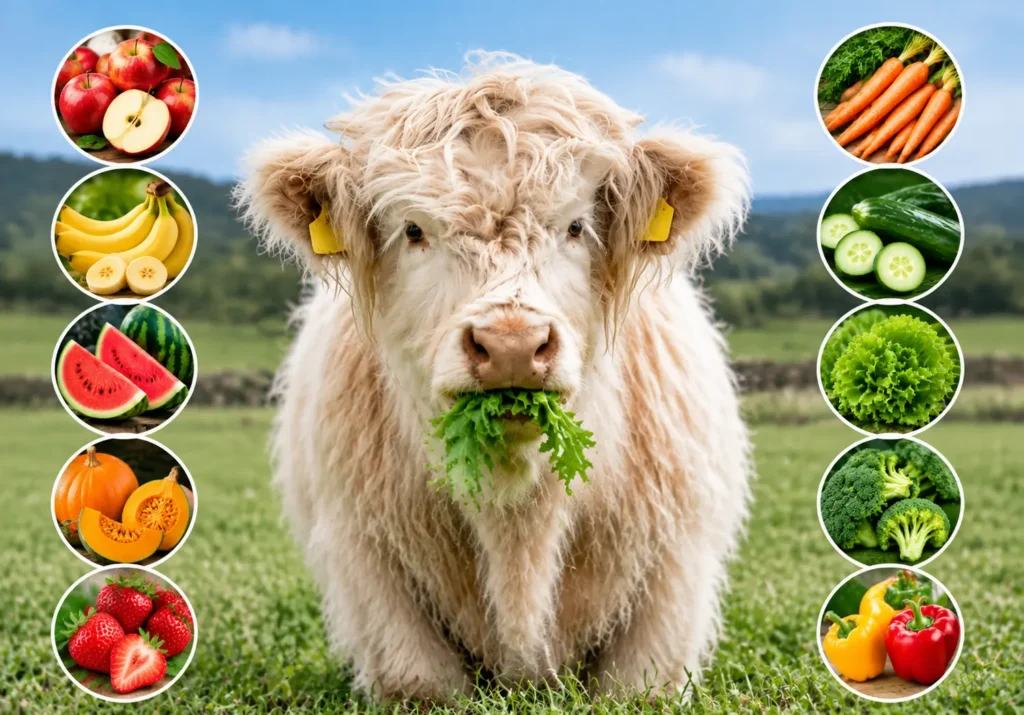
Highland cows can enjoy several vegetables when they are fresh and given in sensible portions. Root vegetables are especially handy because they are easy to carry and easy for cattle to eat.
Carrots are probably one of the simplest choices. They have a nice crunch and contain natural sugars and beta-carotene. A carrot can also be useful during basic livestock training. You can give a small carrot piece after a cow calmly follows you or stands where you ask.
Large carrots can be cut into smaller pieces. This can make them easier to handle and lets you spread a treat over several cows instead of giving one animal a large amount.
Pumpkins can also make a fun autumn treat. Some cattle enjoy breaking apart a whole pumpkin and eating the soft inside. Pumpkin can provide a little pasture enrichment because the cow has to investigate it and work at getting the pieces out.
Other vegetables that can be offered in small amounts include:
- Cucumbers
- Small pieces of pumpkin
- Carrots
- Certain fresh leafy vegetables
- Other suitable produce after checking that it is safe for cattle
The key word is moderation. Vegetables should not push grass and hay out of the diet.
A useful way to think about it is to treat vegetables like a bonus rather than a meal. If a Highland cow has plenty of good forage available and then gets a few carrot pieces as a reward the feeding routine stays much closer to what its rumen is designed to handle.
Some vegetables also need extra care. Cattle can have problems with large amounts of certain brassica crops. Cornell’s livestock safety database lists cabbage broccoli turnips mustard and related plants as potential hazards for cattle in some situations.
That does not mean every tiny piece of these vegetables will make a cow sick. The amount and the plant matter involved matter. Still it is better not to experiment with large amounts.
What Fruits Can Highland Cows Eat?
Fruit can be a tasty treat for Highland cows because many fruits contain natural sugars and plenty of water. Apples are an easy choice for occasional feeding. Small pieces can be offered by hand or placed in a treat bucket.
Bananas can also be used in small portions. They are soft and easy for cattle to eat. Oranges may be another option when offered sensibly. The peel and pulp can both be eaten by cattle.
A few other produce choices can work as occasional snacks:
- Apples
- Bananas
- Oranges
- Pear pieces
- Small amounts of other suitable fresh fruit
Fruit should still be treated as a snack. A cow does not need a fruit-heavy diet to stay healthy.
This is where it is easy for a friendly owner to go a little too far. Highland cows can look very happy when they see a treat bucket coming. Their calm nature can make it tempting to keep feeding them. But a cow asking for another snack does not mean its rumen needs another snack.
I have found that the easiest feeding rule to explain is to make the treat small enough that it never starts looking like the main meal. That same idea works well for a Highland herd. A few pieces can provide enrichment without turning feeding time into a sugar feast.
Fruit also needs to be fresh. Do not use rotten produce simply because the cow might eat it. Spoiled food can create digestive problems and is not worth the risk.
Crunchy Treats Can Be Useful During Training
A crunchy vegetable can do more than satisfy a cow’s appetite. It can become a simple training reward.
For example imagine a young Highland heifer learning to calmly walk toward a handler. The handler does not need to fill a bucket with food. A few small carrot pieces can be enough to create a positive connection.
The same approach can help with simple routines such as:
- Coming toward a familiar feeding area
- Standing calmly
- Moving through a gate
- Getting used to gentle handling
- Following a person without rushing
The treat should not replace calm handling. It is simply a reward.
Highland cattle can be strong animals even though they often have a calm and friendly nature. A small treat can help build trust but owners still need to use safe gates fencing and sensible handling around horns.
What Fruits and Vegetables Should Highland Cows Avoid?
Not every fruit or vegetable is safe for cattle. The biggest mistake is assuming that something safe for people must also be safe for cows.
Avocado is one food that should stay off the treat list. The fruit plant contains persin and different parts of the plant can be harmful to animals.
Green or sprouting potatoes are another concern. Potato plants and immature green parts can contain solanine and related compounds. Cornell lists potato and other Solanum plants among plants that can be poisonous to cattle.
Some vegetables also need caution because cattle can have problems after eating large amounts. Brassica crops such as cabbage broccoli and turnips are listed in livestock poison references because of compounds that can cause problems under certain feeding conditions.
Avoid giving a Highland cow:
- Avocado
- Green or sprouting potatoes
- Unknown plants from the pasture
- Moldy or rotten produce
- Large amounts of cabbage or other brassica crops
- Processed human snacks
- Chocolate and similar sweets
- Food containing unknown ingredients
The pasture itself deserves attention too. A cow may find plants that you never planned to feed. Some wild plants can be poisonous to cattle. Cornell’s livestock database lists plants such as milkweed nightshade water hemlock and several other species as cattle hazards.
If you are unsure about a plant growing in your pasture do not let the cow test it for you. Take a clear photo or a sample and ask a veterinarian or local livestock expert.
How Much Fruit and Vegetables Can Highland Cows Eat?
There is no single fruit or vegetable amount that fits every Highland cow. Body size, age , health , pasture quality and the rest of the diet all matter.
The safest approach is to start with a small amount. If the cow handles it well you can use that food as an occasional treat rather than increasing the portion every day.
A simple feeding routine might look like this:
- Give the cow its normal pasture or hay first.
- Offer a small amount of safe produce.
- Watch for changes in appetite or manure.
- Keep treats as a small part of the total diet.
- Stop feeding a new item if the cow shows digestive trouble.
This is especially important because the rumen works best with a steady supply of forage. Highland cattle are hardy and can make good use of rough grazing but they still need a sensible diet. Their breed guide emphasizes roughage as the main feed and notes that changes in a ruminant ration should be made slowly.
Too much rich or rapidly digested feed can upset the rumen. Grain is a bigger concern than most simple vegetables because large amounts can ferment quickly and lead to serious digestive problems.
So if you have a Highland cow that already has plenty of good grass and hay there is usually no reason to turn fruit and vegetables into a major part of the daily ration.
Can Highland Calves Eat Fruits and Vegetables?
Young Highland calves need more care than adult cattle. A calf’s feeding needs change as it grows and its rumen develops.
Very young calves should not be treated like small adult cows. Milk is a major part of the early diet and the calf gradually starts eating solid feed as the rumen develops.
Because of that it is better not to make fruit and vegetables a regular part of a young calf’s diet without guidance from a veterinarian or livestock nutrition professional.
Once a calf is eating forage and other solid feed well a tiny piece of a suitable fruit or vegetable may be used as an occasional reward. But there is no need to rush it.
A growing calf needs a proper diet for growth. A carrot may be fun but it cannot replace the nutrients supplied by the calf’s normal feed.
This is also a good time to teach gentle feeding habits. Do not encourage a calf to push or chase people for food. Give treats calmly and keep your hands and body in a safe position.
Safe Feeding Practices for Highland Cow Owners
Hand-feeding can be enjoyable when done correctly. Cattle have strong tongues and they can grab food quickly. A cow that gets excited about treats can also become rough without meaning to.
Use a flat open palm when offering a small treat rather than holding tiny pieces between your fingers. You can also place the food into a bucket or feed tub if you are not comfortable hand-feeding.
Keep these simple habits in mind:
- Wash fresh produce before feeding it.
- Cut large pieces into manageable sizes.
- Remove spoiled or moldy produce.
- Introduce new foods slowly.
- Keep clean fresh water available.
- Keep grass and hay as the main food.
- Do not feed unknown pasture plants.
- Watch the cow after trying a new treat.
Clean water matters just as much as food. Highland cattle can handle rough conditions but they still need regular access to fresh water. Their main diet should also stay based on forage such as pasture and hay.
Why Grass and Hay Still Matter Most
A Highland cow may get excited about an apple or carrot but that does not mean fruit is what keeps it healthy.
Grass pasture and hay provide the fiber that supports the rumen. Highland cattle are well suited to forage based feeding and can use rough pasture and stored plant material efficiently.
When pasture is available it can provide much of the daily food. When grass becomes limited because of winter drought or poor pasture hay becomes an important source of forage.
This is also why treats should not be used to make up for poor feeding. If a cow is losing weight or does not have enough good forage the answer is not a bigger bucket of apples.
Instead check the pasture hay water minerals body condition and overall ration. A thin pregnant cow or growing animal may have different needs from a healthy mature cow.
Final Thought
Yes Highland cows can enjoy fruit and vegetables but they should stay healthy rather than become the main diet. Carrots, apples , pumpkins , oranges and small amounts of other suitable produce can add variety and make simple training more enjoyable.
Keep the basic rule easy: good pasture or hay first then a small treat. Avoid risky foods and unknown plants and introduce anything new slowly. That simple approach lets your shaggy companion enjoy snack time without taking away from the food its rumen really needs.