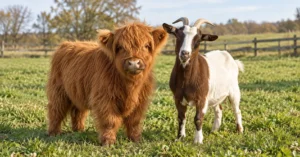
A newborn Highland cow calf may look strong because of its thick coat and sturdy body. Still, the first few hours of life are very important. A calf can become cold, weak, hungry, or sick much faster than an adult cow.
Good care starts as soon as the calf is born. The calf must breathe well, stay warm, stand up, and drink colostrum. It also needs a clean place to rest and protection from rain, wind, mud, and germs.
Highland cattle often handle cold weather better than many other breeds. Their long hair gives them useful protection. However, a wet newborn calf can still lose body heat quickly. Cold wind and damp ground make the problem worse.
The mother will usually do most of the work. She licks the calf, encourages it to stand, and lets it nurse. Your job is to watch closely and step in when something does not look right.
Quick Newborn Highland Calf Care Table
| Care need | What should happen | When to take action |
| Breathing | The calf should breathe steadily after birth | Help clear the nose and call a veterinarian if breathing stays weak |
| Body position | The calf should sit upright on its chest | Assist it if it remains flat on its side |
| Standing | Most healthy calves try to stand within the first hour | Check for weakness, injury, cold stress, or birth problems if it cannot stand |
| Colostrum | The calf should nurse as soon as possible | Provide clean colostrum if it does not nurse within the first few hours |
| Warmth | The calf should feel warm and become dry | Dry and warm it if it is wet, shivering, or cold |
| Umbilical cord | The cord should begin drying after birth | Dip it with a veterinarian-approved navel disinfectant |
| Behavior | The calf should look alert and search for the udder | Call a veterinarian if it stays dull or has a weak suck |
| Manure | The first manure is usually dark and sticky | Watch for watery diarrhea, blood, or severe straining |
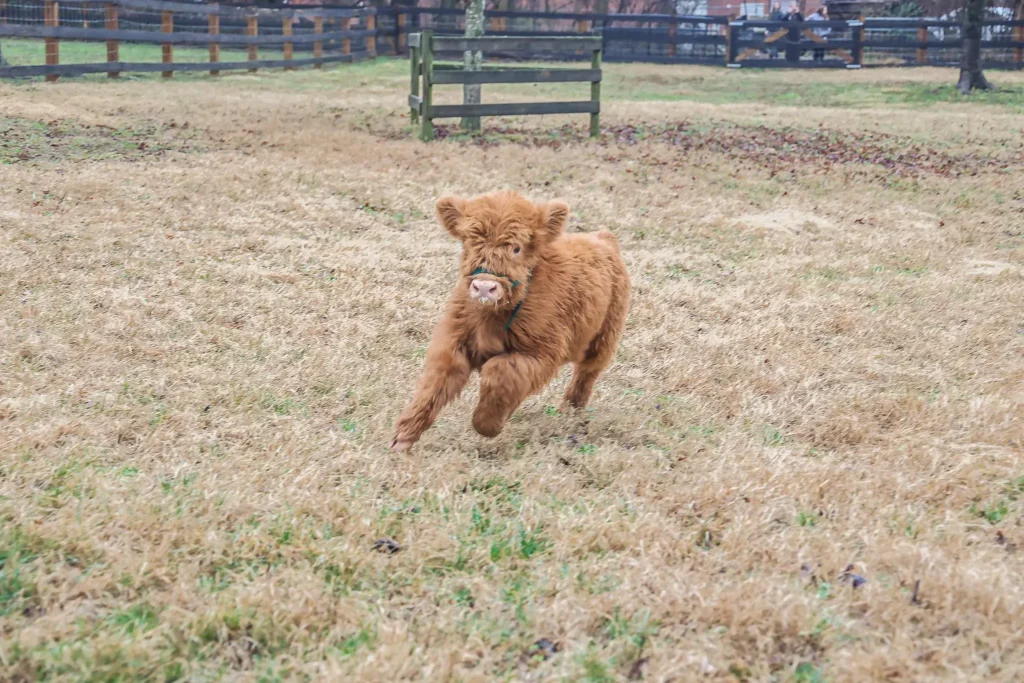
How to Feed a Newborn Highland Calf
A healthy newborn Highland calf will normally drink directly from its mother. Nursing from the cow gives the calf warm milk and helps the pair form a strong bond.
Watch the calf instead of simply assuming it has eaten. A calf may stand near the udder without finding a teat. Long hair around a Highland cow’s udder can sometimes make it harder to see whether the calf has latched on correctly.
Check That the Calf Is Really Nursing
Stand far enough away that you do not disturb the cow. Look for strong sucking movements and a steady tail wag. You may also hear the calf swallowing.
After a good feeding, the calf’s belly should appear fuller. The calf will often settle down and rest. A hungry calf may keep searching around the cow’s legs, bump the udder, cry often, or suck on gates and other objects.
Check the cow’s udder too. Make sure the teats are open and not covered by a thick wax plug. The udder should not be very hard, hot, injured, or painful.
A first-time Highland heifer may feel nervous and move away from her calf. Keep them in a quiet pen and give them time to bond. Use safe handling equipment if you need to guide the calf toward the udder. Never place yourself where the cow can pin or kick you.
Bottle Feeding a Calf
Bottle feeding may be needed when:
- The mother has died or rejected the calf
- The cow does not produce enough milk
- The calf is too weak to nurse
- The cow has an udder or teat problem
- You cannot confirm that the calf drank colostrum
Use a clean calf bottle with a proper nipple. Hold the bottle at a natural height so the calf stretches its neck slightly forward. Do not hold the bottle too high because this can make feeding less comfortable.
The milk should be close to normal body temperature. Cold milk can be difficult for a weak or chilled calf to handle. Very hot milk may burn the mouth.
Feed slowly. Do not squeeze milk forcefully into the calf’s mouth. Milk can enter the lungs if the calf cannot swallow correctly.
If the calf has no suck reflex, stop trying to bottle-feed it and contact a veterinarian. A stomach tube can be useful in some cases, but an untrained person can place it incorrectly and cause serious harm.

Why Colostrum Is Important for Newborn Calves
Colostrum is the thick first milk produced by the mother after birth. It contains energy, protein, vitamins, minerals, and protective antibodies.
A newborn calf enters the world with very little protection against common germs. The cow’s antibodies do not pass to the calf through the placenta before birth. The calf must receive them by drinking colostrum.
Colostrum also gives the calf energy for standing, nursing, and staying warm. This matters during cold weather because a newborn can use its energy stores quickly.
Timing Matters
The calf should receive high-quality colostrum as soon as possible. Its intestine can absorb antibodies best during the first few hours of life. This ability starts falling after birth and becomes very limited by about 24 hours.
Try to confirm that the calf nurses within the first two hours. Calves born after a difficult delivery, in severe weather, or to nervous first-time mothers need closer attention.
A common beef-calf recommendation is to provide about 5 percent of the calf’s body weight in the colostrum within the first four hours, followed by enough additional colostrum to reach about 10 percent of body weight during the first 12 hours.
The exact amount depends on the calf’s size, condition, and ability to drink. Ask your veterinarian for a feeding plan that matches your herd.
Use Good-Quality Colostrum
The mother’s own clean colostrum is usually the first choice. It gives the calf antibodies that match germs found in its home environment.
Do not use colostrum that contains blood, manure, dirt, or signs of mastitis. Keep collection bottles, nipples, buckets, and tubes clean.
A true colostrum replacer can be used when the mother’s colostrum is unavailable or poor. Read the label carefully. A colostrum supplement does not always provide the same level of antibodies as a full replacer.
Frozen colostrum can be useful during calving season. Thaw it slowly in warm water. Avoid boiling it or heating it too quickly because high heat can damage the antibodies.
How Often Should a Newborn Calf Drink Milk?
A calf nursing from its mother may drink several small meals throughout the day. You may not see every feeding, especially when the cow and calf live outside.
A bright calf with a full belly, warm mouth, strong movement, and normal behavior is usually getting milk. A calf that looks hollow behind the ribs, acts weak, or keeps searching for the udder may not be drinking enough.
Feeding an Orphan or Bottle Calf
Bottle calves are often fed two or more times each day. Small, weak, or premature calves may need smaller meals more often because they cannot safely finish a large bottle.
Follow the directions on the milk replacer bag and your veterinarian’s advice. Do not guess the amount by making the mixture thicker. Too much powder can upset the calf’s digestive system and increase the risk of diarrhea and dehydration.
Measure both the water and powder carefully. Mix the replacer the same way every time. Feed it at a steady temperature and on a regular schedule.
Do not suddenly change between different milk replacers. A quick change may disturb digestion.

Offer Water Early
Milk does not replace the need for drinking water. Bottle calves should have access to fresh, clean water from an early age.
Water supports hydration and helps the rumen begin developing. Use a small clean bucket that the calf can reach without stepping into it.
Calf starter can also be offered in a clean container during the first week. At first, the calf may only smell or lick it. Replace old or wet feed before it becomes moldy.
Best Shelter for a Newborn Highland Cow Calf
Highland cattle are famous for their ability to live in rough weather. Even so, newborn calves need a clean and protected place.
The best shelter does not have to be expensive. It must stay dry, block strong wind, provide fresh air, and allow the cow and calf to move safely.
Keep the Ground Dry
Wet bedding pulls warmth from the calf. Mud also coats the hair and lowers its ability to trap warm air.
Use a deep layer of clean straw or another safe bedding material. The calf should be able to lie down without becoming wet.
Test the bedding by kneeling on it for several seconds. If your knees become damp, the bedding is too wet for a newborn calf.
Remove dirty areas each day. Add fresh bedding as needed. Manure and wet straw can hold bacteria that cause scours, navel infections, and other illnesses.
Provide Air Without Drafts
A closed shed may feel warm, but poor airflow allows moisture and germs to build up. Good shelter provides ventilation above the calf while blocking cold air at calf level.
The shelter should protect against:
- Strong wind
- Heavy rain
- Snow and freezing spray
- Deep mud
- Standing water
- Direct drafts
- Unsafe equipment or sharp edges
Do not overcrowd the calving area. Crowding makes bedding dirty faster and increases contact with manure.
Keep sick calves separate from healthy newborns when possible. Use different boots, gloves, and feeding tools or disinfect them between animals.
How to Keep a Newborn Calf Warm in Cold Weather
A Highland calf’s coat helps once it is dry. Right after birth, however, the hair may be covered with birth fluids. Wet hair cannot hold warm air well.
Cold stress becomes more serious when low temperature combines with wind, rain, snow, or mud.
Dry the Calf Quickly
Allow the mother to lick the calf if she is doing a good job. Licking dries the coat, stimulates blood flow, and supports bonding.
Use clean towels if the cow is slow to lick or the weather is severe. Rub the calf firmly but gently. Pay attention to the chest, neck, legs, ears, and belly.
Move the calf and cow into a dry sheltered pen when outdoor conditions are dangerous. Keep the calf close enough for the mother to see and smell it.
A clean calf blanket may help in very cold conditions. Put it only on a dry calf. Check the blanket often because it can become wet, dirty, tight, or tangled.
Check the Calf’s Temperature
A newborn calf’s normal rectal temperature is generally around 101.5°F to 102.5°F. A temperature below about 101°F can be an early warning of hypothermia.
Possible signs of cold stress include:
- Shivering
- Cold mouth
- Cold ears and legs
- Weak sucking
- Slow movement
- Trouble standing
- Dull behavior
- A hunched body position
- Low rectal temperature
A chilled calf must be warmed carefully. Dry it and move it out of the wind. Use warm air, warm towels, or a safe warming box with good airflow.
Do not place the calf too close to an open flame or an unprotected heater. Calves can suffer burns, smoke exposure, or overheating.
Warm a severely cold calf before forcing it to drink. A deeply chilled calf may have slow digestion and poor swallowing. Contact a veterinarian when the calf is very cold, unresponsive, or unable to suck.

Signs of a Healthy Newborn Highland Calf
A healthy calf usually becomes active soon after birth. It should move its head, sit upright, and begin trying to stand.
Not every calf follows the exact same clock. A difficult birth, cold weather, or a first-time mother may slow the process. Still, steady progress should be easy to see.
Healthy Signs to Watch For
A healthy newborn calf should:
- Breathe without constant gasping
- Hold its head up
- Sit upright on its chest
- Show a strong suck reflex
- Try to stand
- Find the udder and nurse
- Have a warm mouth
- Respond to sounds and movement
- Rest calmly after feeding
- Pass its first dark manure
The gums should look pink rather than pale, gray, or blue. Breathing should become calm after the first few minutes.
The calf should not have constant coughing, thick nasal discharge, a swollen tongue, or loud breathing. A blue mouth or tongue can mean the calf is not receiving enough oxygen.
Check the Calf More Than Once
Do not stop checking after the calf stands. Visit the cow and calf several times during the first day.
Make sure the calf continues nursing and the cow accepts it. Look at the navel, breathing, manure, belly shape, and energy level.
A calf that looked normal at birth can weaken later because of cold stress, low milk intake, infection, or birth injury.
Common Health Problems in Newborn Calves
Newborn calves can become seriously ill in a short time. Early action gives them a better chance of recovery.
Calf Scours
Scours means diarrhea. It may result from viruses, bacteria, parasites, feeding mistakes, or a combination of problems.
A calf with scours loses water and body salts. The manure may become loose, watery, unusually pale, bloody, or foul-smelling.
Watch the calf’s eyes and behavior. Sunken eyes, dry gums, weakness, and skin that stays raised after being pinched can point to dehydration.
Do not simply stop all milk without professional guidance. A sick calf still needs energy. Contact a veterinarian for advice about milk, electrolyte fluids, testing, and treatment.
Navel Infection
Germs can enter through the open umbilical cord. An infected navel may become swollen, warm, painful, wet, or filled with discharge.
The calf may develop fever, poor appetite, swollen joints, weakness, or a stiff walk. Bacteria can sometimes spread from the navel into the bloodstream or internal organs.
Pneumonia
Pneumonia can cause fast breathing, coughing, fever, nasal discharge, drooping ears, and poor nursing.
Damp bedding, dirty air, crowding, and weak immunity increase the risk. A calf with breathing trouble needs quick veterinary attention.
Failure to Receive Enough Antibodies
A calf that receives too little colostrum may have failure of passive transfer. It may look normal at first but have a higher chance of infection later.
A veterinarian can use a blood test to check whether the calf absorbed enough antibodies. Testing is especially useful after a difficult birth or when you are unsure whether the calf nursed.
Birth Injuries and Difficult Calving
A hard delivery can leave a calf weak, swollen, short of oxygen, or unable to stand. The tongue or head may be swollen. Ribs, legs, or nerves can also be injured.
A calf that requires strong pulling deserves close attention even if it begins breathing. Difficult births can delay standing and nursing.
How to Care for a Weak or Premature Calf
A weak calf may lie flat, struggle to raise its head, have a poor suck reflex, or make little effort to stand. Premature calves may be smaller and have soft hooves, weak muscles, or a fine silky coat.
First, make sure the calf is breathing. Clear visible mucus from the nose and mouth. Place the calf upright on its chest rather than leaving it flat on its side.
Warmth Comes First
Dry the calf and check its rectal temperature. Move it to a sheltered area with clean bedding.
Do not assume a warm bottle alone will fix severe chilling. A cold calf may not digest or absorb colostrum well until its body temperature improves.
Contact a veterinarian quickly when the calf cannot hold its head up, has no suck reflex, breathes poorly, or remains cold.
Help With Colostrum
Weak calves still need colostrum early. Try a bottle only when the calf can suck and swallow safely.
A calf that cannot nurse successfully within two to four hours may need assisted colostrum feeding. A veterinarian may recommend bottle feeding, tube feeding, fluids, oxygen, or other care based on the calf’s condition.
Never pour milk into the calf’s mouth. This can send liquid into the lungs.
Keep careful notes about the calf’s birth time, temperature, colostrum amount, feeding time, and behavior. These details help the veterinarian choose the right treatment.
When Should a Newborn Calf Stand and Walk?
Many healthy beef calves begin trying to stand within 30 minutes. They often stand and search for the udder during the first hour.
Some take longer. The ground may be slippery, the calf may be tired after a difficult birth, or the mother may keep moving.
A calf should show steady improvement. It may fall several times before learning to balance. That is normal.
When Delay Becomes a Concern
Check the calf closely if it has not tried to rise within the first hour. Look for cold stress, swollen legs, weak muscles, breathing trouble, or signs of injury.
Assistance may be needed when the calf:
- Cannot sit upright
- Makes no effort to stand
- Drags a leg
- Knuckles over on its feet
- Has very swollen joints
- Cries when touched
- Falls to the same side every time
- Has not nursed within the first few hours
Place the calf on a dry surface with good grip. You can support its chest and rear end while it tries to stand. Do not pull it up by the head, ears, tail, or legs.
Call a veterinarian if the calf cannot bear weight, appears painful, or becomes weaker.
How to Clean and Protect a Calf’s Umbilical Cord
The umbilical cord connects the calf to the mother before birth. After the cord breaks, it leaves an opening that germs can enter.
Good navel care includes disinfecting the cord, keeping the calf on clean bedding, providing enough colostrum, and checking the navel during the next several days.
Dip the Navel
Dip the entire cord soon after birth with a product recommended by your veterinarian. A proper navel cup works better than spraying because dipping covers the cord completely.
Use a fresh solution. Do not keep dipping dirty navels into the same contaminated cup. Pour a small amount into a clean container for each calf and throw away the used liquid.
Some farms repeat the dip several hours later when the cord remains wet or the calving area is muddy. Follow your veterinarian’s herd plan and the product label.
Do not cut the cord unless it is unusually long or your veterinarian advises you to do so. Cutting it with dirty equipment can introduce bacteria.
Check the Navel Daily
A normal cord should dry, shrink, and become firm. The area should not feel hot, thick, wet, or painful.
Contact a veterinarian if you notice swelling, pus, bad smell, bleeding, fever, poor nursing, a stiff walk, or swollen joints.
Never try to squeeze discharge out of a swollen navel. A deep infection may extend inside the abdomen and require veterinary treatment.
When to Call a Veterinarian
Call a veterinarian promptly when the calf:
- Has trouble breathing
- Cannot sit upright
- Has no suck reflex
- Does not receive colostrum in time
- Cannot stand or bear weight
- Has a rectal temperature that is too low or too high
- Develops watery or bloody diarrhea
- Has sunken eyes or other signs of dehydration
- Has a swollen, painful, or draining navel
- Shows a blue, gray, or very pale mouth
- Has seizures or unusual head movements
- Refuses milk
- Becomes suddenly weak
- Has a badly swollen tongue or head
- Was injured during a difficult birth
Do not wait for several warning signs to appear. A single serious sign can be enough reason to call.
Final Thought
Caring for a newborn Highland cow calf is mostly about watching the small details. Make sure the calf breathes well, gets dry, stays warm, stands, and drinks enough colostrum.
Keep the cow and calf in a clean shelter with dry bedding and fresh air. Check the calf several times during its first day. Look at its belly, mouth, temperature, breathing, manure, navel, and energy level.
Highland calves are hardy, but they are not unbreakable. Cold rain, delayed nursing, a difficult birth, or a dirty navel can turn into a serious problem quickly.
Give the mother time to care for her calf while staying ready to help. When the calf looks weak, cold, injured, or unable to nurse, contact a veterinarian early. Fast care during the first few hours can make a major difference.