I still remember the first time I milked a Jersey cow at my uncle’s small farm. The milk came out thick and almost yellow. Way different from the thin stuff our neighbor’s Holstein gave us. That day taught me a lot about what Jersey cows are actually good for.
These cows are small but they do a lot of work. They’re not the biggest animal in the barn by any means. But they beat a lot of bigger breeds when it comes to milk quality easy handling and just being a solid pick for someone getting into farm animals for the first time.
This guide walks through 7 real uses for Jersey cows. Stuff actual homesteaders and small farm owners deal with every single day. We’ll cover milk beef temperament cheese breeding and how this breed stacks up against the more common Holstein. By the end you should have a clear picture of whether this breed fits what you’re trying to do.
Quick Overview
| Factor | What You Should Know |
| Milk fat | Higher than most dairy breeds |
| Body size | Smaller than a Holstein |
| Temperament | Calm and easy to handle |
| Beef quality | Decent but not the main use |
| Feed needs | Lower than bigger breeds |
| Best fit | Small homesteads and family dairies |
| Calving | Usually easy with fewer problems |
| Lifespan | Often longer than many commercial breeds |
Jersey Cow Milk Production and Butterfat Content
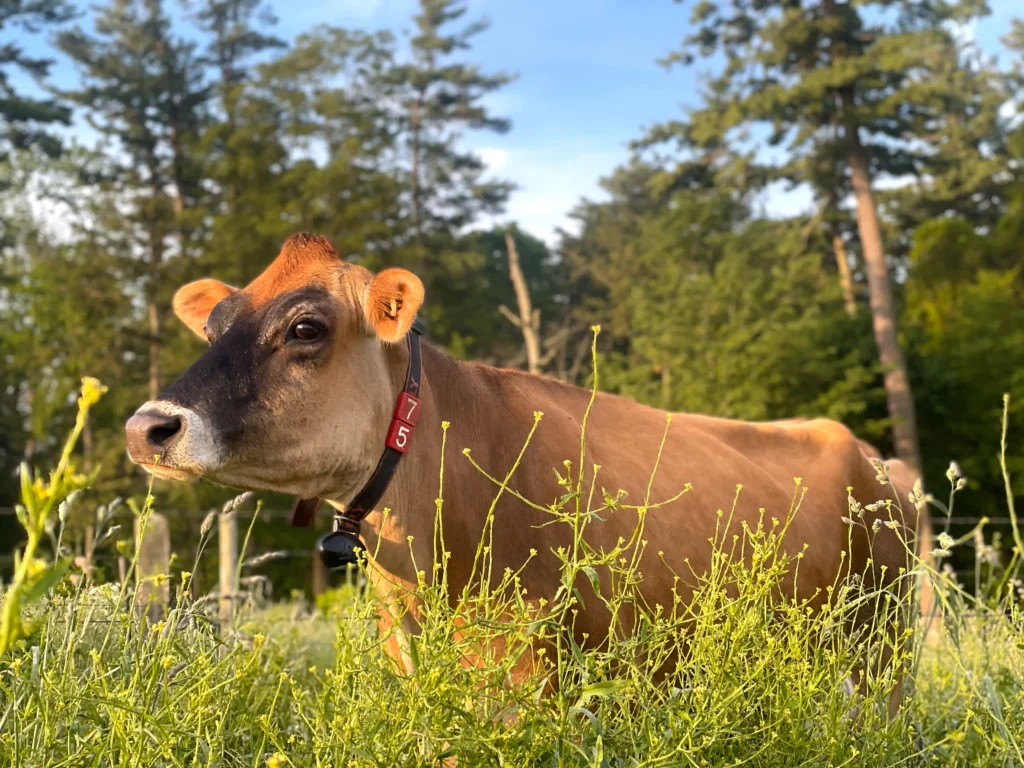
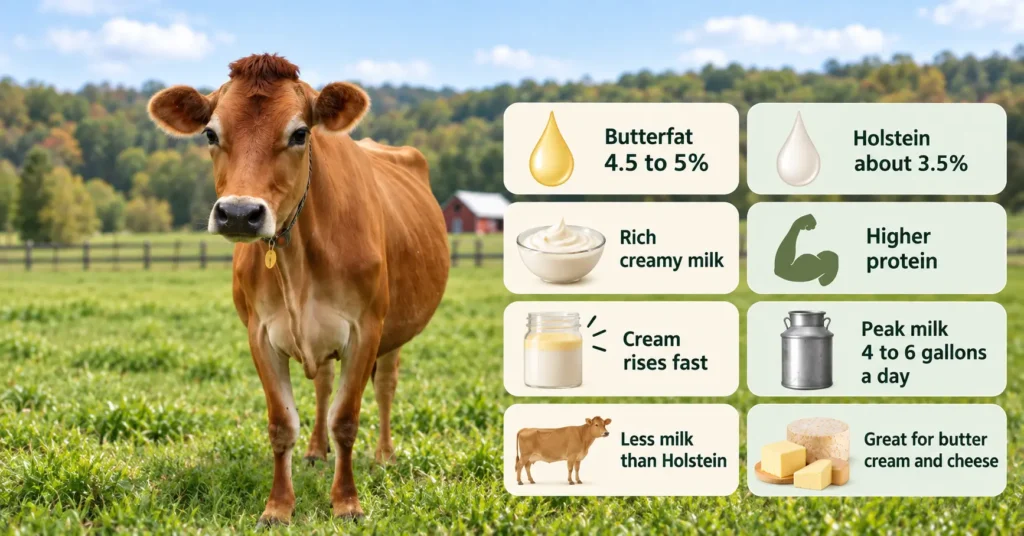
This is the big one. The main reason most people even want a Jersey cow. Jersey milk has more fat than most other dairy breeds. Usually somewhere around 4.5 to 5 percent. A Holstein sits closer to 3.5 percent. That extra fat makes the milk richer. Creamier too. Better taste honestly if you ask anyone who has tried both side by side.
The protein runs higher as well. That matters a lot if you want to make anything besides just drinking milk straight from the jar. Based on my experience helping bottle milk on a small setup that thicker texture shows up almost right away once you start pouring it into a glass.
I noticed this myself the first time I let a jar sit overnight in the fridge. Cream rose to the top fast. Way faster than anything from store bought milk. You could practically scoop it off the top with a spoon the next morning.
One Jersey cow gives less total milk than a Holstein each day. Usually somewhere around 4 to 6 gallons at peak production depending on diet and the individual cow. But the quality more than makes up for the lower amount depending on what you’re actually using the milk for at home.
Some families even notice easier digestion with Jersey milk compared to regular store milk. That’s more of a personal experience thing than something backed by hard numbers but it comes up a lot when talking to small farm owners.
Jersey Cows for Small Homestead Dairy Farming
This is where Jerseys really win people over. They need less land and less feed than bigger dairy breeds which makes them a natural fit for a smaller property that couldn’t support a full size Holstein comfortably.
They also eat less per pound of milk produced. That saves real money over time especially with feed prices doing what they’ve been doing lately. Every homesteader I’ve talked to mentions this as one of the biggest reasons they picked Jerseys over anything bigger.
Before we go further here are two lists worth saving if you’re thinking about adding this breed to your own place.
Reasons small farms pick Jersey cattle:
- Smaller body size needs less pasture space
- Lower feed costs compared to bigger dairy breeds
- Calm temperament makes daily handling easier
- Higher fat content gives more value per gallon
- Longer productive lifespan than a lot of commercial breeds
Things to plan for before bringing one home:
- Reliable fencing since cattle can still push through weak spots
- Shelter setup for both summer heat and winter cold
- A steady milking schedule if you’re milking by hand
- Basic vet access for checkups and any health issues
- A plan for extra bull calves down the road
Most homesteaders I’ve talked to say just one or two Jersey cows cover a family’s dairy needs easily without needing some massive operation. Some families even split one cow’s milk between drinking butter and a bit of homemade cheese without ever running short. That kind of flexibility is honestly hard to find with bigger industrial breeds built purely for volume.
Jersey Cattle Beef Quality and Uses
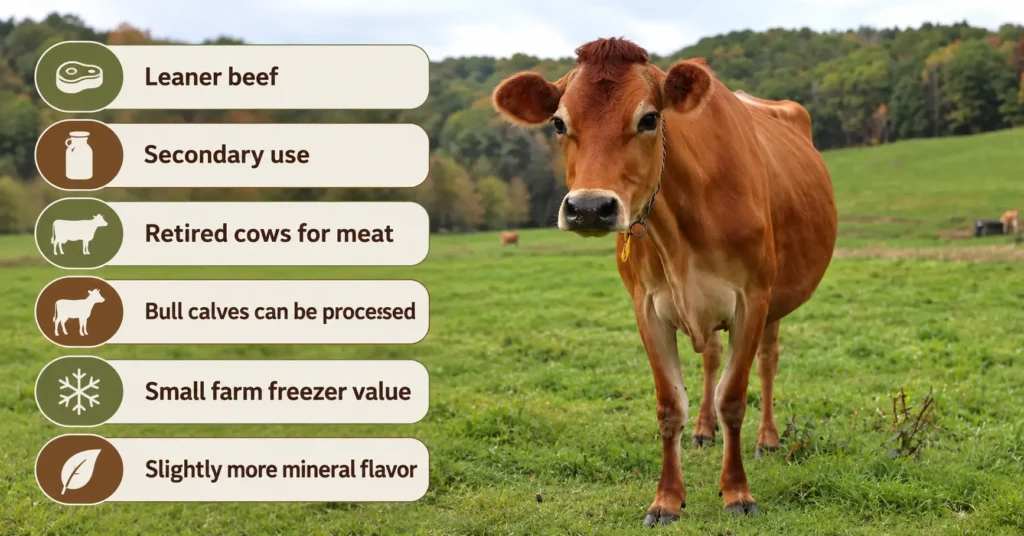
Beef isn’t the main reason people raise Jerseys. But it’s still worth talking about since some farms do use retired dairy cows or extra bull calves for meat instead of letting them go to waste. The beef tends to be leaner than what you’d get from a dedicated beef breed like Angus. The flavor is a bit different too. Some people describe it as slightly more mineral tasting compared to regular grocery store beef.
You won’t find Jersey beef sold commercially at any real scale. But plenty of small farms process a bull calf that isn’t needed for breeding purposes. Gets you decent meat without wasting the animal completely. It’s more of a secondary use than a primary reason to raise this breed though and most people getting into Jerseys aren’t doing it with beef as the main goal.
Still using a bull calf for meat instead of selling it off cheap makes a lot of practical sense for small operations. Turns a low value animal into something genuinely useful for the family freezer. Feels like the more responsible choice honestly if you’re already committed to raising livestock in the first place.
Jersey Cow Temperament and Ease of Handling
This might be the best part about the whole breed if you ask me. Jersey cattle tend to be gentle, curious and pretty easy to work with compared to a lot of other dairy breeds out there. That calm nature makes them a solid pick for beginner owners who’ve never handled cattle before and don’t want a steep stressful learning curve added on top of everything else.
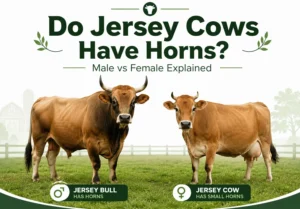
They’re smart too. Sometimes a little too smart honestly. They’ll figure out your daily routine fast and start showing up right at the gate on schedule for milking time without needing to be called or chased down across the pasture. Bulls can get a bit more unpredictable during breeding season though so that’s worth keeping in mind if you’re planning to keep one intact instead of using artificial insemination.
Handling Tips That Actually Help
Slow and steady wins here every time. A Jersey handled gently from a young age usually stays easier to manage for its entire life. Loud noises and sudden movements tend to spook them more than actual physical contact does so keeping things calm and predictable goes a long way.
After testing this myself with a couple different cows over the years the ones handled gently from day one basically walk right up for milking without any fuss. The ones handled roughly early on stay a bit more skittish no matter how gentle you get with them later.
Jersey Cows in Cheese and Specialty Dairy Products
That high fat and protein content makes Jersey milk a real favorite among small scale cheese makers. More fat generally means better cheese yield per gallon of milk which matters a lot if you’re making cheese at home or selling small batches at a local farmers market.
Butter and yogurt also turn out noticeably richer with Jersey milk compared to milk from leaner dairy breeds. A lot of small creameries and farmstead cheese operations specifically seek out Jersey milk for this exact reason. Some even pay a premium price over regular milk just to get that richer base to start with.
Homesteaders making their own butter notice the difference almost immediately too. Jersey cream whips up faster and gives you more butter per batch compared to thinner milk. Makes the whole process feel less like work and more like an actual rewarding kitchen project.
Jersey Cow Breeding and Calving Traits
Jersey cattle are known for calving pretty easy compared to a lot of bigger breeds. That’s a big deal for anyone managing a herd without a vet on speed dial. Calves tend to be smaller at birth which cuts down on complications during delivery and gives new owners a lot less to stress over once calving season rolls around.
Cows usually reach breeding maturity around 15 to 18 months. A bit earlier than some larger breeds. They’re known for strong fertility rates overall too. Based on what small farm owners have told me, repeated breeding problems show up less often with Jerseys compared to some other dairy cattle which saves both time and money over the life of the herd.
Gestation runs close to the standard cattle timeline of around 279 days. Most pregnancies result in just a single calf without much trouble. Twins happen every once in a while but they’re not the norm for this particular breed. Mothering instincts run strong too with most Jersey cows taking right to their calves without needing much help from people.
Jersey Cows vs Holstein Cows for Small Farms
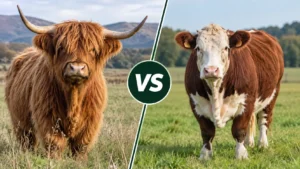
This comparison comes up constantly and honestly it depends a lot on what you’re actually prioritizing. Holsteins produce way more milk volume each day. But that milk carries less butterfat and protein compared to what you’d get from a Jersey.
Jerseys need less feed and less space which matters a ton on a smaller property where every acre actually counts. Holsteins are bigger animals overall and can be harder to manage for someone new to cattle especially if something goes wrong during handling or a health issue pops up unexpectedly. If total volume matters most for a commercial setup Holstein usually wins hands down.
If quality efficiency and easier handling matter more for a small homestead Jersey usually comes out ahead. A lot of small dairy operations that started out with Holsteins end up switching to Jerseys eventually once they realize how much less feed and space they need for a similar quality of life at home.
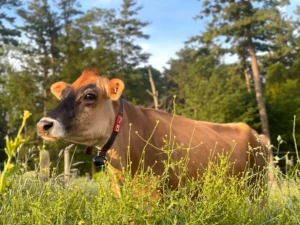
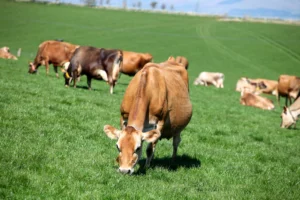
Image here A Jersey cow grazing calmly in a small pasture Alt text jersey cow grazing on small homestead farm. Close up of creamy Jersey milk being poured Alt text jersey cow milk high butterfat content
Image here A farmer milking a Jersey cow by hand Alt text hand milking jersey cow on small dairy farm
Final Thoughts
Jersey cattle really do earn their good reputation once you spend real time around them. Between the rich milk the easy temperament and how well they fit on smaller properties it’s not hard to see why so many homesteaders end up picking this breed over bigger flashier options that honestly don’t fit their day to day reality.
If you’re still on the fence about adding a Jersey cow to your own place take the time to talk to other small farm owners first. Figure out if your setup actually fits what this breed needs before jumping in. Most people who make the switch say they’d never go back and after seeing it firsthand myself I honestly get why.
Frequently Asked Questions
What are Jersey cows used for mainly?
Jersey cows are mainly used for dairy production thanks to their high butterfat and protein content. Their milk works especially well for cheese butter and other specialty dairy products. Some farms also use retired cows or bull calves for beef though that’s more of a secondary use rather than the main reason people raise this particular breed.
Are Jersey cows good for beginners?
Yes Jersey cows are often considered a great choice for beginners thanks to their calm and gentle temperament. They’re smaller than many other cattle breeds which makes handling less intimidating for someone new to livestock. Their lower feed and space requirements also make them more manageable for small farms just getting started with their first dairy animal.
How much milk does a Jersey cow produce daily?
A Jersey cow typically produces less total milk volume per day compared to breeds like Holstein often somewhere around 4 to 6 gallons depending on diet and individual cow. What Jersey milk lacks in volume it usually makes up for in quality thanks to its higher butterfat and protein content that many small farms value more than raw output.
Do Jersey cows need less space than other dairy breeds?
Yes Jersey cattle generally need less pasture space and less feed compared to larger dairy breeds like Holstein. Their smaller body size means lower daily nutritional requirements which translates into real savings on feed costs over time. This makes them a practical option for smaller homesteads with limited grazing land available for raising livestock.
Is Jersey beef good quality?
Jersey beef tends to be leaner than beef from dedicated beef breeds and carries a slightly different flavor profile. It’s not typically raised specifically for beef production though some small farms process retired cows or extra bull calves for meat. Quality is decent but beef remains a secondary use rather than this breed’s primary purpose on most homesteads.