Jersey calves are small. Really small compared with some of the bigger dairy calves. But don’t let that first look fool you. Give these little guys decent milk, clean water, fresh starter, and a dry place to sleep, and they can grow into strong, healthy cattle.
A newborn Jersey calf often comes in around the mid-50s to 60-pound range. One dairy study found an average close to 57 pounds, and male calves were generally a little heavier than females. Younger cows also tended to have smaller calves than mature cows.
That smaller birth size has a nice side to it too. Calving can be easier when the calf isn’t huge. Still, a tiny calf can get cold fast, tire out, or struggle to drink, so “small” isn’t something to ignore.
The first couple of weeks matter a lot. Milk drives early growth, but there’s more going on behind the scenes. The calf is learning to drink, stay warm, fight off disease, nibble starter, and slowly turn that not-yet-working rumen into a proper digestive system.
Here’s a rough look at what changes as the calf gets older.
| Calf Age | What It Mostly Eats | What’s Happening |
| Birth | Colostrum | Immunity and first energy |
| First week | Milk, water, starter offered | Settling in and starting growth |
| 2–4 weeks | Milk + starter | Rumen starts waking up |
| 6–8 weeks | Milk + more starter | Getting close to weaning |
| 3–6 months | Starter/grower feed + forage | Frame and muscle growth |
| 6–12 months | Good forage + balanced feed | Young heifer development |
| Around 1 year | Mostly solid feed | Strong yearling growth |
Don’t get too hung up on exact ages. One calf may race ahead. Another might take a little longer, especially after bad weather, sickness, or a rough weaning. What you want is steady progress.
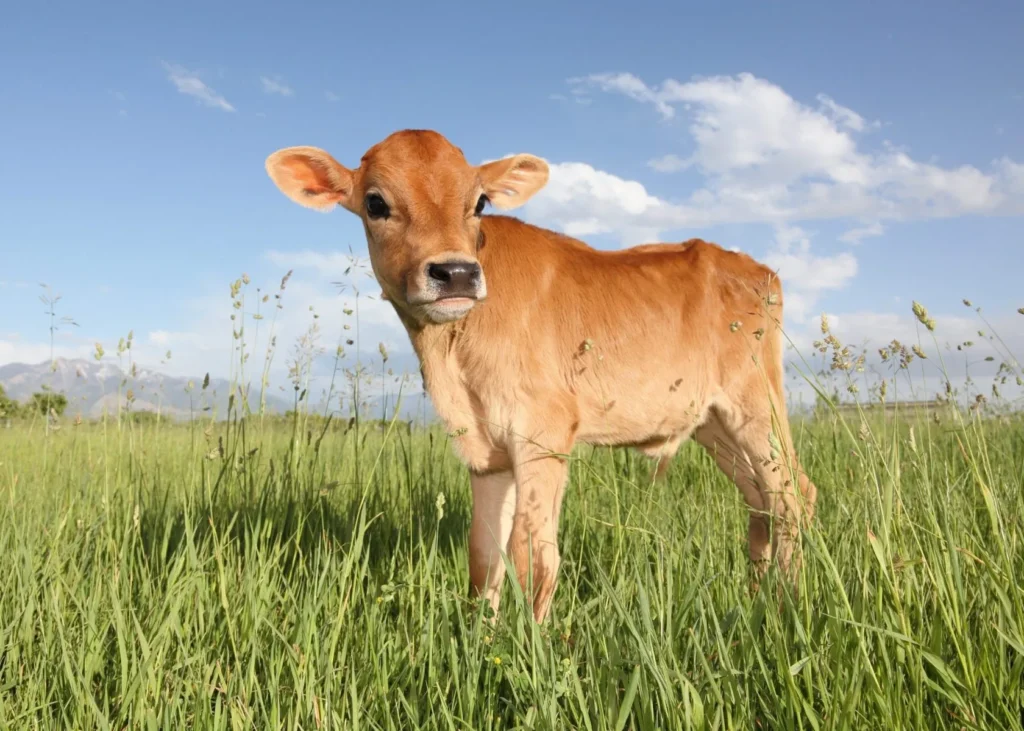
Jersey Calf Weight at Birth
Birth weight gives you a useful starting point, but it doesn’t tell the whole story.
Jersey calves are among the lighter dairy calves at birth. In one long-running dairy study, Jersey calves averaged about 57 pounds. Male calves in that study were heavier than females, and mature cows generally produced bigger calves than younger cows. So if a calf lands somewhere around 55 to 60 pounds, that isn’t strange at all.
Some will be lighter.
Some will surprise you and come out quite a bit heavier. Genetics can shift the number, and so can the age of the dam. Calf sex also plays a part. A bull calf may come in a few pounds heavier than a heifer, though there’s plenty of overlap.
Now, here’s the bit people sometimes miss: a scale can tell you weight, but it can’t tell you how well the calf is doing. A 52-pound calf that gets up, looks bright, finds milk, and keeps warm can be in better shape than a 65-pound calf lying flat and not sucking.
That’s why behavior counts.
What a Healthy Newborn Usually Looks Like
Keep an eye on these basic things during the first hours:
- The calf tries to stand and can get its legs under it.
- It drinks colostrum well.
- Its mouth and body feel warm rather than cold.
- The eyes look bright, not dull or sunken.
- The navel stays clean and begins drying.
- The calf reacts when the cow moves or when you come close.
- Milk appetite stays strong.
Nothing fancy there, but those little signs tell you a lot.
Colostrum matters big time. It’s not just rich milk. It carries antibodies that help the newborn during the period when its own immune defense is still getting going. And if the calf is weak? Don’t just assume it’s because it was born small. Cold stress, low milk intake, a difficult birth, or disease can all make a calf look flat.
How Fast Jersey Calves Grow
Jersey calves don’t need to shoot up overnight.
Nice, steady gain is the better target.
Growth comes from a bunch of things working together — milk, starter intake, health, genetics, weather, bedding, water, and how much stress the calf is dealing with. A simple way to watch growth is average daily gain, or ADG. Say a calf weighs 27 kg at the start and later reaches 67 kg after 60 days.
That’s 40 kg of gain.
40 ÷ 60 = about 0.67 kg per day.
Pretty simple.
You don’t need to run this calculation every few days, either. Daily weighing can turn into noise because gut fill, water, and feeding time move the scale around.
Every couple of weeks tells a much cleaner story.
A healthy calf that gets enough milk may put on weight quickly before weaning. Then growth can wobble a bit during weaning because milk is disappearing and the calf has to lean harder on starter.
That little slowdown isn’t always a disaster.
The question is whether growth picks back up. If the calf keeps losing weight, eats poorly, has loose manure, coughs, or looks tucked up around the belly, then something is off. A weight tape can help when there’s no scale, although a proper scale will give you the more reliable number.
And don’t trust your eyes too much. Jersey calves aren’t super fluffy, but even a little hair plus a full belly can throw you off.
Best Milk Feeding Schedule for Jersey Calves
Milk is where early growth starts.
Right after birth, though, ordinary milk takes second place. Colostrum comes first.
Once that first colostrum period is over, the calf can move onto a regular milk-feeding routine. The exact amount depends on body weight, weather, growth target, and whether you’re feeding whole milk or milk replacer.
A smaller Jersey calf shouldn’t automatically be fed exactly like a much larger dairy calf.
That doesn’t mean starving it down, either.
The calf still needs enough energy for growth, keeping warm, and staying active. Many feeding programs split milk into two meals a day. Some use more frequent meals, especially for young calves or higher milk intakes.
Whichever schedule you use, consistency is the boring little secret that matters.
- Same sort of time.
- Same concentration.
- Similar temperature.
- Clean bottle or bucket.
No random huge changes because somebody was in a rush that morning. Milk mixed too weak can short the calf on nutrients. Too concentrated, especially when mixed carelessly, can upset the gut.
Water gets overlooked surprisingly often. Milk is liquid, yes, but the calf still needs plain fresh water. Once starter starts going in, water becomes even more important because rumen microbes need it.
A Simple Daily Feeding Pattern
A basic setup can look like this:
- Feed the planned milk amount at regular times.
- Keep fresh water available all day.
- Offer a little fresh calf starter early.
- Toss out stale or wet starter instead of topping it up forever.
- Watch appetite while the calf drinks.
- Clean bottles, buckets, and nipples well.
- Change milk amounts slowly rather than all at once.
The amount may change. Good habits really shouldn’t.
When to Start Grain and Hay
This is where a lot of new calf owners get a little confused.
A calf is born with a rumen, sure, but that rumen isn’t doing adult-cow work yet. At first, milk more or less skips past it and goes where it needs to go for digestion.
Starter feed helps change that.
You can offer a small amount of calf starter during the first week or so. Don’t expect the calf to dive into it like an adult cow. It may sniff it, lick a bit, mouth it, walk off, then come back later.
Totally normal.
Keep the amount small and fresh.
A fresh starter beats a big bucket of stale feed every time.
As the calf eats more starter, fermentation increases inside the rumen. That encourages the rumen lining to develop and helps prepare the calf for life without milk.
Hay has a place too, just not as the star of the show in a very young calf.
A little clean hay can be introduced as the calf gets older, but filling a tiny calf with coarse hay too early isn’t clever. Young calves have limited stomach space, and bulky poor-quality forage can crowd out feed that carries more energy and protein.
So, starters first.
Then more forage as the rumen develops. And water right there alongside it.
Jersey Calf Weaning Age and Weight
Weaning is where people love using the calendar.
“Eight weeks old? Done. No more milk.”
That can work for some calves.
For others, it’s too soon.
Current dairy-calf guidance says calves shouldn’t be weaned before about six weeks, and they should be eating roughly 2 to 3 pounds of starter each day before milk disappears.
That starter intake matters because it tells you the rumen is actually doing some work. A calf that barely touches grain but happens to be eight weeks old isn’t magically ready.
Watch the calf, not just the date.
Body weight gives another clue. Many good calf systems like to see strong growth from birth and a calf that has gained a lot of its starting weight before full weaning. For a small Jersey born near 57 to 60 pounds, that means you’d like to see a very noticeable jump in body size before milk is gone.
Gradual weaning is often easier.
You might reduce milk step by step while starter intake climbs. That’s a much softer landing than milk today, nothing tomorrow. And try not to pile stress on top of stress. Don’t wean the calf, move it to a strange pen, mix it with a new group, change the grain, and handle it heavily all in one shot if you can help it.
That’s asking for trouble.

Jersey Calf Growth by Month
Calf growth looks different depending on which month you’re standing in.
The first month is milk-heavy.
The middle months are all about the rumen and the switch to solid feed. Later on, you start looking more at frame, muscle, height, and whether that little calf is turning into a well-grown heifer.
Birth to 1 Month
The first month can feel slow because the calf is still tiny, but a lot is happening.
It’s learning the whole basics of being alive outside the cow — drinking, standing, staying warm, resting, and fighting off germs.
Milk is doing the heavy lifting.
Still, starter and water can already be offered. Scours can knock a calf down fast in this stage. So can a navel infection or respiratory problem. That’s why appetite is worth watching every day. A calf that suddenly drinks half its usual milk is telling you something.
Maybe it’s nothing huge.
Maybe it’s the first clue.
1 to 3 Months
Now things start moving.
Starter intake rises.
Milk gradually drops away.
The rumen becomes far more useful.
This is also the time when poor weaning shows itself. A calf may have looked great while milk was carrying the diet, then flatten out once milk disappears.
If that happens, don’t just dump more random feed into the pen.
Look at starter intake, water, forage quality, manure, worms, and general health.
3 to 6 Months
At this age, a Jersey calf starts looking less like a baby and more like a young heifer.
You’ll see longer legs, a deeper body, and more frame.
This is a growth stage, not a fattening contest.
The calf needs protein for muscle, energy for growth, minerals for bone, and enough good forage to keep the rumen working.
Poor hay can slow things down.
So can crowded pens.
So can parasites.
You may not notice the loss in one week, but check again in a month and the difference can be pretty obvious.
6 to 9 Months
By now, forage matters a lot more.
A healthy Jersey heifer should have a good appetite, solid manure most of the time, a smooth enough coat, and steady frame growth.
Worm trouble can sneak in here, especially when calves are grazing the same ground heavily.
The animal may keep eating but never seem to put on much size.
That’s one of those “hmm, something’s not right” moments worth checking properly.
9 to 12 Months
A one-year-old Jersey is still growing.
She is not a finished cow squeezed into a smaller package.
Bone and body frame are still developing, and you want that development to continue without making her overly fat.
A heifer can be heavy and still not be growing well if a lot of that weight is simply body fat.
Frame counts.
Height counts.
Body condition counts.
Weight is useful, but it isn’t king.
Common Health Problems in Jersey Calves
Young calves have one annoying habit — they can look okay in the morning and pretty rough by evening.
That’s why early signs matter.
Scours is one of the big ones.
Loose manure can lead to water and salt loss, and a small calf doesn’t have endless reserves to play with. The eyes may sink, the calf may stop drinking, ears may feel cold, and standing can become harder.
Respiratory disease is another common headache.
Look for coughing, nasal discharge, fast breathing, fever, droopy ears, or a sudden loss of interest in milk.
Navel trouble shows up too.
A swollen, wet, painful, hot, or bad-smelling navel deserves attention.
As calves get older, parasites may start slowing growth. Not every skinny calf has worms, but worms belong on the list when a calf eats yet fails to gain.
Watch for these warning signs:
- Refusing milk or starter
- Repeated watery diarrhea
- Blood in manure
- Sunken eyes
- Fast or difficult breathing
- Strong, repeated coughing
- Swollen joints
- A hot or swollen navel
- Sudden weight loss
- Weakness or trouble standing
- Fever or an unusually cold body
- A calf that just looks “off” and keeps getting worse
That last one sounds vague because it is.
But anyone watching calves every day starts noticing normal behavior. When a lively feeder suddenly stands in the corner and doesn’t care about breakfast, that change matters.
Serious or worsening signs need veterinary attention.
Best Shelter and Bedding for Jersey Calves
Fancy calf housing can look great in photos.
The calf mostly cares about something simpler — is it dry, clean, draft-free, and comfortable?
Fresh air is good.
A cold draft hitting the calf all night isn’t.
Those two things aren’t the same.
Good ventilation removes moisture, stale air, odors, and airborne dirt. Poor airflow lets dampness build up. Modern calf-housing guidance still puts strong emphasis on enough fresh-air exchange while avoiding cold air blowing directly on young calves.
Bedding needs the same common-sense treatment.
If the top looks clean but your knee gets wet when you press down, the bed isn’t dry. Deep straw works nicely in cold weather because calves can nest into it.
Other dry bedding can work too.
The key word is dry.
Wet bedding steals body heat and gives manure and germs a nicer place to hang around. Feeders and water buckets need a clean spot as well. A bucket full of clean water under a manure-splattered wall doesn’t stay clean very long.
Warm weather brings flies into the picture.
Wet bedding, spilled feed, and manure buildup turn into a fly party fast. Regular cleaning helps way more than letting the mess build for three weeks and then trying to fix everything at once.
Jersey Calf Weight at 1 Year Old
Yearling weight is useful, but this is another place where people start chasing one “perfect” number.
There isn’t one.
The right weight depends on mature cow size, genetics, feeding level, health history, and how well the calf grew after weaning. A Jersey heifer at 12 months should look like she’s heading toward mature size — not there yet, but clearly on the road.
Modern dairy-heifer growth systems often use mature body weight as the reference instead of handing every breed one fixed target. Breeding targets are commonly based on reaching a set percentage of mature body weight rather than age alone.
That makes sense.
A smaller-framed Jersey line shouldn’t be forced to match a much larger cow line pound for pound.
Look at the whole heifer.
- Is the frame growing?
- Are the legs and feet sound?
- Is she carrying enough condition without getting soft and fat?
- Has weight moved steadily upward?
- Did she hit a growth slump after weaning and never quite recover?
Those questions tell you more than one scale reading. Birth weight, weaning weight, six-month weight, and yearling weight are four really handy points to record.
Nothing complicated.
Just four checkpoints.
Put them together and suddenly you can see the story of the calf’s first year.
Simple Daily Care That Keeps Jersey Calves Moving Forward
Good calf care is mostly boring stuff done well.
That’s the truth of it.
Fresh water every day.
Milk at the right concentration.
Starter that doesn’t smell old.
Bedding that isn’t wet underneath.
A pen with air moving through it but no nasty draft. And five minutes spent actually looking at the calf instead of just dumping feed and walking away. Watch how it approaches milk.
Look at the ears.
Check the nose.
Notice the manure.
Run a hand along the ribs once in a while. Little things show changes before the scale does. If feed intake suddenly drops, ask why. If growth slows, don’t immediately assume the calf “just grows small.” Check the diet, health, water, environment, and parasite load.
Sometimes the fix is surprisingly basic.
The water bucket is dirty. The starter is stale. Hay looks okay on top but is moldy underneath. The bedding is damp. A draft hits the calf every night. Nothing dramatic. Just small problems quietly stealing growth.
Final Thought
Jersey calves start small, but they’re not fragile little animals forever.
Give them a good first feed, enough milk, fresh water, early starter, decent forage, clean bedding, and a close eye during the first few months, and they can grow very nicely.
Don’t obsess over being the biggest calf in the group.
Steady gain matters more.
A Jersey calf that eats well, stays bright, keeps gaining, and builds a good frame is heading in the right direction. And when something changes appetite drops, manure turns watery, coughing starts, growth stalls catch it early.
That simple habit can make a bigger difference than any fancy feeding trick.