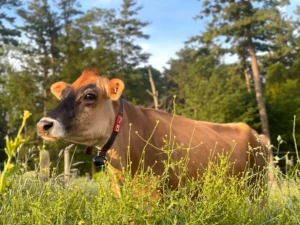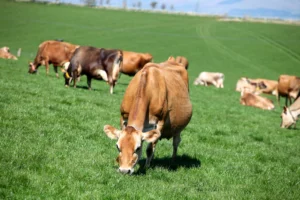
Jersey cow size is one reason this dairy breed works well on both commercial farms and small homesteads. A Jersey is smaller than a Holstein. She also needs less body-maintenance energy than many large dairy cows.
Small does not mean weak.
A mature Jersey has a deep middle and a strong dairy frame. She can carry a calf and produce rich milk without having the huge body of some other breeds. Her compact size also makes her less scary for a new owner.
Most mature Jersey cows weigh between 800 and 1,200 pounds. That equals about 363 to 544 kilograms. Medium-sized females are usually preferred. Many healthy mature Jerseys stay close to 900 or 1,000 pounds. Jersey bulls are much heavier and may weigh from 1,200 to 1,800 pounds.
Height can be harder to explain because people do not always measure cattle at the same point. Some measure at the withers near the shoulders. Others measure at the top of the hips.
A traditional mature Jersey may stand close to 46 inches at the withers. Many modern standard Jerseys reach around 50 inches or more depending on their bloodline and the place used for measurement.
The table below gives a simple picture of Jersey cattle size at different life stages.
| Jersey cattle stage | Common weight | General size notes |
| Newborn Jersey calf | About 60 pounds | Common range is 42 to 72 pounds |
| Six-month-old Jersey heifer | 259 to 321 pounds | Still small and growing fast |
| Yearling Jersey heifer | 471 to 548 pounds | Often reaches breeding age soon |
| Two-year-old Jersey | 790 to 893 pounds | May have her first calf but still grows |
| Mature Jersey cow | 800 to 1,200 pounds | Average is often near 900 to 1,000 pounds |
| Mature Jersey bull | 1,200 to 1,800 pounds | Much heavier through the neck and shoulders |
These are useful breed guides. They are not strict rules. Feed and health change body weight. Genetics also create small and large family lines.
Average Height of a Mature Jersey Cow
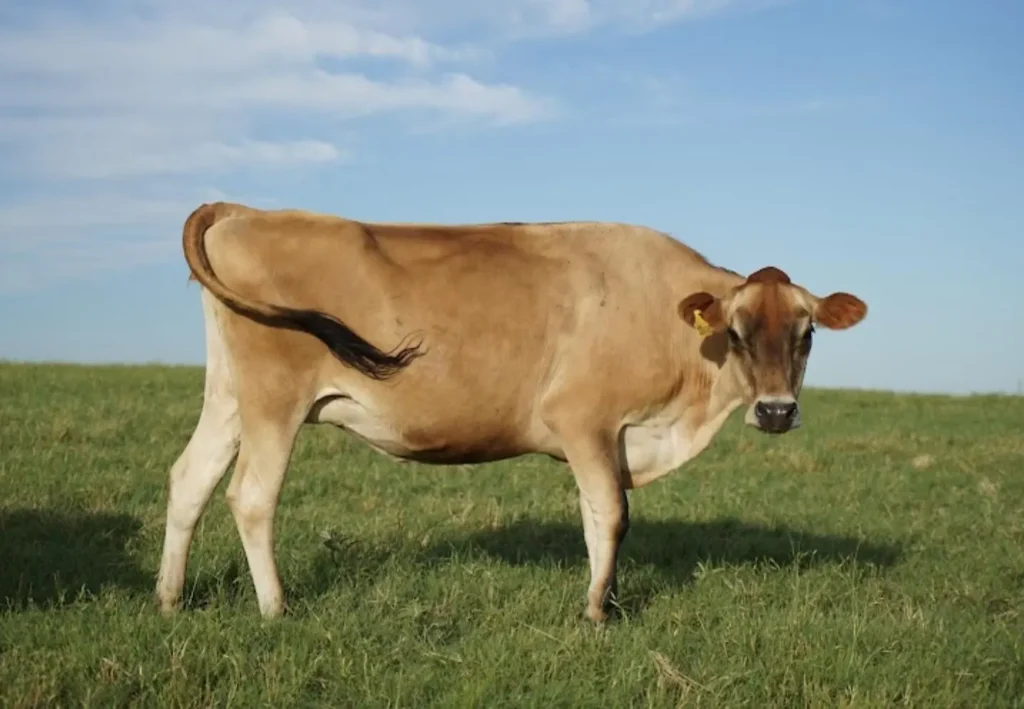
A mature Jersey cow is shorter than most large dairy cows. She often stands around 46 to 50 inches tall. That equals about 117 to 127 centimetres.
The exact number depends on the measuring point.
Measuring at the Withers
The withers sit between the shoulder blades. This point stays fairly firm and gives a useful height measurement.
Place the cow on level ground. Let her stand in a natural square position. A measuring stick should stand beside the back of her front leg. The crossbar then rests across the withers.
Historical Jersey records describe an average mature cow near 46 inches at the withers. Modern bloodlines may grow taller because some breeding programmes have selected larger cows with more scale and production capacity.
Measuring at the Hip
Some miniature cattle groups measure at the top of the hip. This often creates a different result from the withers.
One modern miniature Jersey association describes standard Jerseys as reaching around 50 inches or taller while miniature females stay no taller than 44 inches at the hip at three years old. This is one reason online height claims can look confusing. Two people may measure the same animal in two different places.
Height alone does not show quality. A short cow may have a deep body and strong milk capacity. A taller cow may have weak feet or a poor udder.
Farmers should study balance. The cow should have enough body depth for feed. Her legs should support her without pain. Her back should appear strong.
I always think of Jersey height as compact instead of tiny. A mature cow may look small beside a Holstein. She still stands large enough to knock over a person who handles her carelessly.
How Much Does an Adult Jersey Cow Weigh?
An adult Jersey cow usually weighs between 800 and 1,200 pounds. That equals around 363 to 544 kilograms.
Oklahoma State University gives an average near 900 pounds. Other dairy education material places the average mature Jersey close to 1,000 pounds. Both figures fit within the wider breed range.
Why Weight Changes Between Cows
A cow from a small Island-type family may stay close to 800 pounds. A modern production-type Jersey may become larger.
Pregnancy also changes weight. A cow near calving carries the calf and extra fluids. Her digestive tract may also hold a large amount of forage and water.
A cow weighed after eating may appear heavier than the same cow weighed early in the morning. It helps to weigh cattle under similar conditions when tracking growth.
Body condition matters too. A 1,050-pound cow may be healthy on a large frame. Another cow at the same weight may carry too much fat on a smaller frame.
Farmers should not judge health from weight alone. They should feel the cow over the ribs and spine. The hooks and pins near the hips also give useful signs.
A dairy cow naturally looks leaner than a beef animal. Lean does not always mean underfed. Still sharp ribs and a deep hollow around the tail may show a real loss of body condition.
Why Jersey Weight Matters
Correct weight helps with medicine doses. It also helps the farmer plan feed and transport.
Guessing too low may cause an animal to receive too little treatment. Guessing too high may cause an unsafe dose.
Weight also matters when buying a trailer. A trailer carrying two 1,000-pound cows also holds equipment and bedding. The tow vehicle and trailer must stay within their safe limits.
The long-term trend is often more useful than one number. If a cow loses weight month after month then something may be wrong with her feed or health.
Jersey Bull Size Compared With Jersey Cows
Jersey bulls are much larger and stronger than Jersey cows.
A mature bull may weigh 1,200 to 1,800 pounds. This equals about 544 to 816 kilograms. Mature cows usually remain between 800 and 1,200 pounds.
A bull may not look huge beside a beef bull. He still carries far more muscle around the neck and shoulders than a Jersey female.
Body Shape Differences
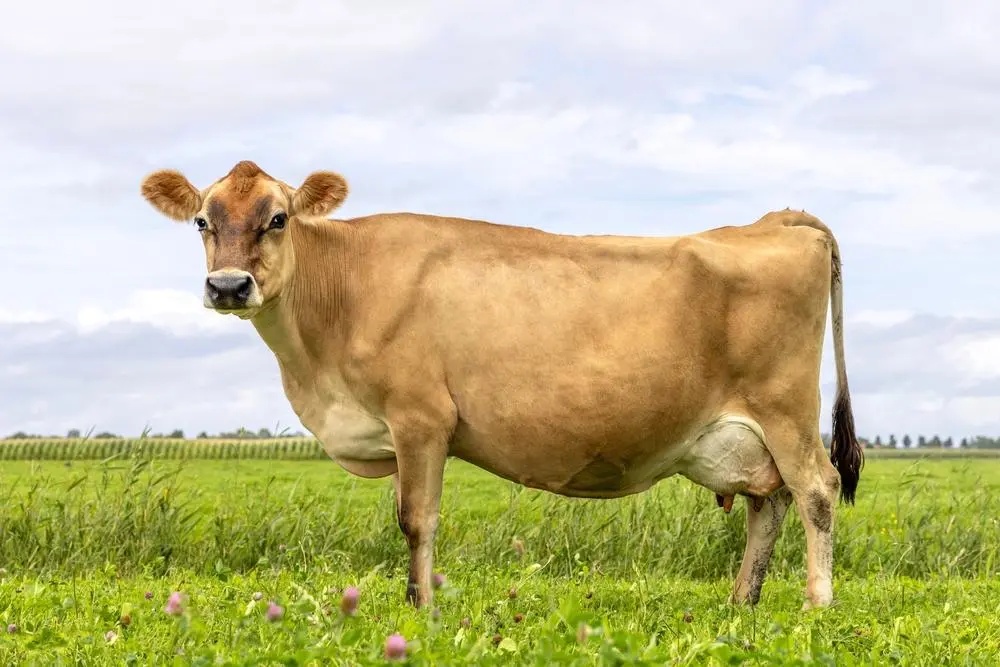
A Jersey cow has a refined dairy look. Her head and shoulders appear lighter. Her body looks long and deep. The bull has a thick crest and a muscular front end. His head may look broader. His bones also appear heavier.
Male hormones drive part of this difference. Bulls direct more growth into muscle. Females use energy for pregnancy and milk. A young bull can keep adding size after two years of age. He may look mature before his body finishes developing.
Bull Safety Matters More Than Size
Jersey bulls have a reputation for difficult behaviour. Oklahoma State University warns that Jersey bulls are among the least docile common cattle breeds and should not be trusted after maturity.
A bottle-fed bull may become even more dangerous because he loses fear of humans. He may treat a person as another member of the herd.
A farmer should never choose a bull only because he looks small. Even a 1,200-pound animal can crush a person against a gate.
Strong fencing and a proper handling system are necessary. The bull should also have enough room to move without entering public areas.
Artificial insemination may be a safer choice for small homesteads. It removes the daily risk and feed cost of keeping a mature bull.
Jersey Calf Size at Birth and Growth Rate
A Jersey calf usually weighs around 60 pounds at birth. That equals about 27 kilograms.
The common birth-weight range is 42 to 72 pounds. This is much lighter than the birth weight of a typical Holstein calf. The small calf is one reason Jersey cows often have easier births. A smaller calf usually passes through the cow’s pelvis with less trouble.
Calving ease is still not guaranteed. A calf can lie in the wrong position. A young heifer may have a narrow pelvis. Twins may also cause problems.
Growth During the First Year
A Jersey calf needs strong nutrition to grow well. Small birth size does not mean the farmer should accept slow growth.
At about six months a healthy Jersey heifer may weigh 259 to 321 pounds. By one year she may reach 471 to 548 pounds.
These growth targets can help the farmer spot problems early.
A calf that falls far behind may have received poor colostrum. She may also have parasites or a hidden illness. Weak milk feeding and low-quality starter feed can slow growth too.
By two years a Jersey female may weigh around 790 to 893 pounds. She may have her first calf at this age but her body can keep growing for several more years.
The following practices support healthy Jersey calf growth:
- Give enough clean colostrum soon after birth
- Keep bedding dry and warm
- Offer clean water from an early age
- Use a good calf starter
- Wean slowly after solid-feed intake becomes strong
- Group calves by similar age and body size
- Check weight and health at regular times
A Jersey calf can look round because of her fluffy coat. Hands-on body checks and scale records give a better answer.
The goal is steady growth. Pushing a calf to become fat does not help. She needs strong bones and muscle before her first pregnancy.
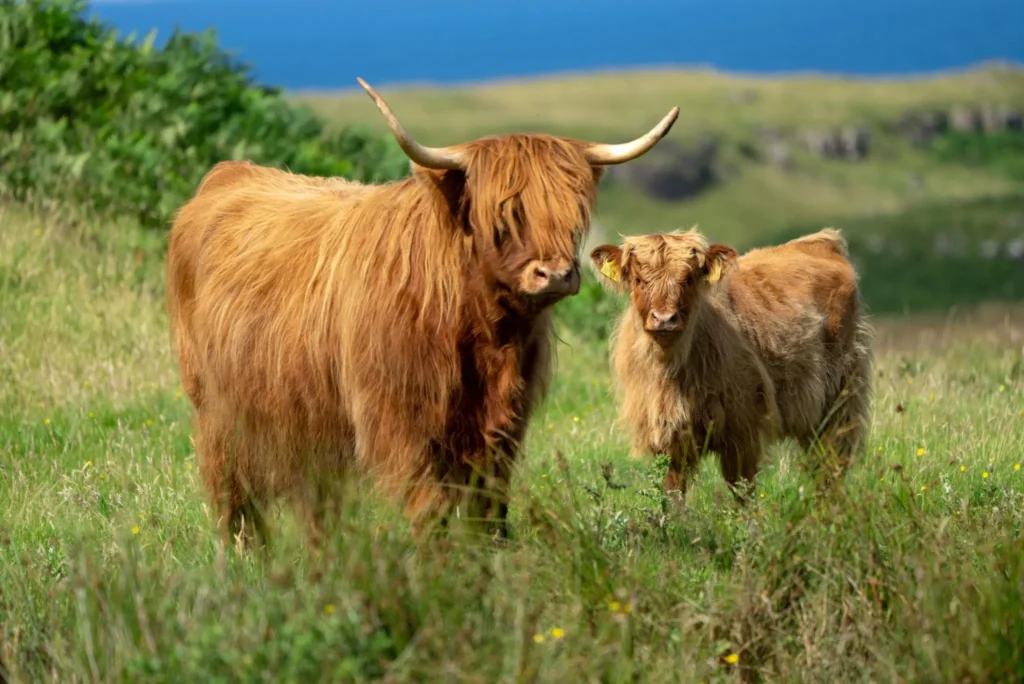
Jersey Cow Size Compared With Other Dairy Breeds
Jerseys are one of the smallest major dairy breeds.
A mature Holstein cow commonly weighs around 1,500 pounds and stands about 58 inches at the shoulder. This makes her about 500 to 600 pounds heavier than an average Jersey. Ayrshire cows are medium-sized dairy animals. They generally weigh more than 1,200 pounds at maturity.
Guernsey cows also have a larger frame than most Jerseys. They sit between Jerseys and Holsteins in general body size.
Jersey vs Holstein
The Holstein wins for total body size and usually for liquid milk volume. The Jersey offers more concentrated milk from a smaller frame.
A Jersey may need less maintenance feed because she has less body tissue to support. She also places less total weight on flooring.
The Holstein needs larger stalls and stronger equipment. She may also need more total feed each day.
Jersey vs Ayrshire and Guernsey
Ayrshires look rugged and strong. They carry a larger mature frame than Jerseys.
Guernseys have a medium dairy frame. They usually look taller and heavier than a Jersey while staying smaller than a Holstein.
The Jersey often suits a farmer who values rich milk and easy handling. The smaller size can help in old barns where stalls may not fit modern large cows.
Small size does not always mean lower costs. A Jersey with high milk production still needs a rich ration. She cannot make butterfat and protein from weak hay.
Farmers must compare milk income with feed and housing costs. Size is only one part of the dairy decision.
Factors That Affect Jersey Cattle Body Size
A breed range tells you what is common. It cannot predict the exact size of one cow.
Genetics
Genetics create the basic body frame. Large parents often produce larger calves. Small family lines may stay closer to the lower end of the Jersey range.
Modern Jersey breeding has produced some cows with more height and scale than older Island-type animals.
Nutrition
A calf needs enough protein and energy to reach her genetic size. Poor nutrition can delay growth.
Too much energy can also create problems. An overfat heifer may carry extra body weight without developing the best frame or udder.
Age and Maturity
A first-calf Jersey has not finished growing. She may give birth near two years of age but continue adding body size after that.
A mature five-year-old cow should not be compared with a young heifer.
Health
Parasites can steal nutrients and slow growth. Chronic respiratory disease may also reduce weight gain.
Lameness can affect adult body weight because a sore cow spends less time walking to feed. Dental trouble may make eating harder in older cattle.
Pregnancy and Lactation
Pregnancy adds calf and fluid weight. After calving the cow may lose weight because milk production rises faster than feed intake.
Some body loss during early lactation can happen. A deep and fast drop needs attention.
Farm Environment
Heat stress can lower feed intake. Cold weather raises energy needs. Mud and poor footing may keep cattle away from feed and water.
Pasture quality also matters. A lush field can support growth. Short overgrazed land cannot.
The best Jersey cow is not always the tallest or heaviest. She should have enough frame to stay healthy and produce milk without requiring more resources than the farm can provide.
How Much Space Does a Jersey Cow Need?
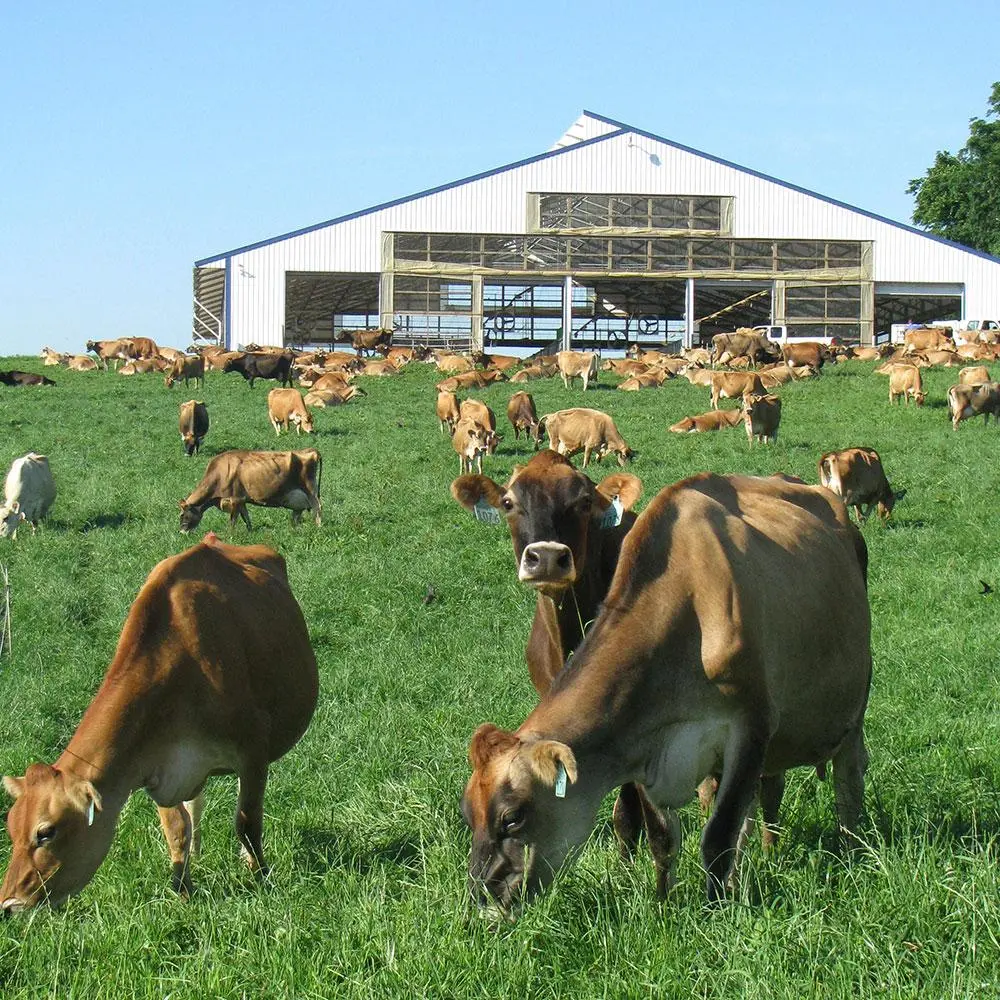
A Jersey needs less physical room than a large Holstein. She still needs enough space to rest and move naturally.
The right amount depends on the housing system. A tie stall needs different measurements from a free-stall barn. A bedded pack needs more open floor area.
Stall and Resting Space
Stall size should match the cow rather than the breed name alone.
Good dairy welfare guidance says a stall should allow a cow to lie down and rise with ease. It recommends a lying-surface length of at least 1.2 times the cow’s rump height and a width near twice her hip-bone width.
This approach works better than using one stall size for every Jersey.
Measure the largest mature cows in the herd. Build for them rather than the smallest heifer.
Each cow should have access to her own stall when possible. Crowding reduces lying time and increases competition. Welfare guidance shows clear comfort benefits as farms move toward one cow per stall.
Bedded packs need more area. General dairy guidance may suggest around 100 square feet per cow as a starting point. The ideal number changes with cow size and bedding management. Climate matters too.
Feeding and Walking Space
Jerseys often eat at the same time after fresh feed arrives or after milking. Limited bunk space allows dominant cows to push smaller animals away.
General recommendations call for at least 24 inches of linear feed-bunk space per lactating cow. Transition cows may need around 30 inches because they are more vulnerable to competition. Alleys should be wide enough for cattle to pass each other. Floors need grip. Slippery concrete can cause falls and fear.
Use these steps when planning Jersey cow space:
- Measure the height and hip width of mature cows.
- Fit stalls to the largest animals in the group.
- Give each cow a dry resting place.
- Avoid placing more cows in the barn than the stalls support.
- Provide enough feed space for shy cattle.
- Keep water close to the feed and milking area.
- Make alleys wide enough for easy movement.
- Add a separate pen for sick or fresh cows.
- Check how cows use the space after building it.
- Change rails or stalls when cows kneel or perch.
Pasture needs cannot be decided from cow size alone. Rainfall and grass growth control the real carrying capacity.
A small Jersey may eat less than a Holstein. Keeping too many Jerseys on one field can still destroy the pasture.
Watch the grass and soil. Bare areas and mud show that the stocking rate is too high. Extra hay may be needed during drought or winter.
Final Thought
Jersey cow size makes this breed useful for many dairy systems.
A mature cow often stands around 46 to 50 inches tall. Her weight usually falls between 800 and 1,200 pounds. Many healthy cows stay close to 900 or 1,000 pounds.
Jersey bulls grow much heavier. They can reach 1,200 to 1,800 pounds and need strong facilities.
A Jersey calf may weigh only 60 pounds at birth. With good care she can reach close to 500 pounds by one year. She may calve near two years old but continue growing after that.
Jerseys are smaller than Holsteins and most medium dairy breeds. Their small frame can reduce housing and maintenance needs. It does not remove the need for good feed and enough space.
Do not choose a cow only because she is short or light. Look at her feet and udder. Study her body condition and health.
The best Jersey has a balanced size for her frame. She should move well and eat well. She should also produce rich milk without struggling to maintain her body.