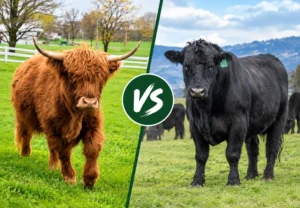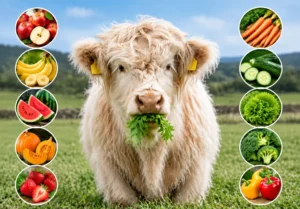
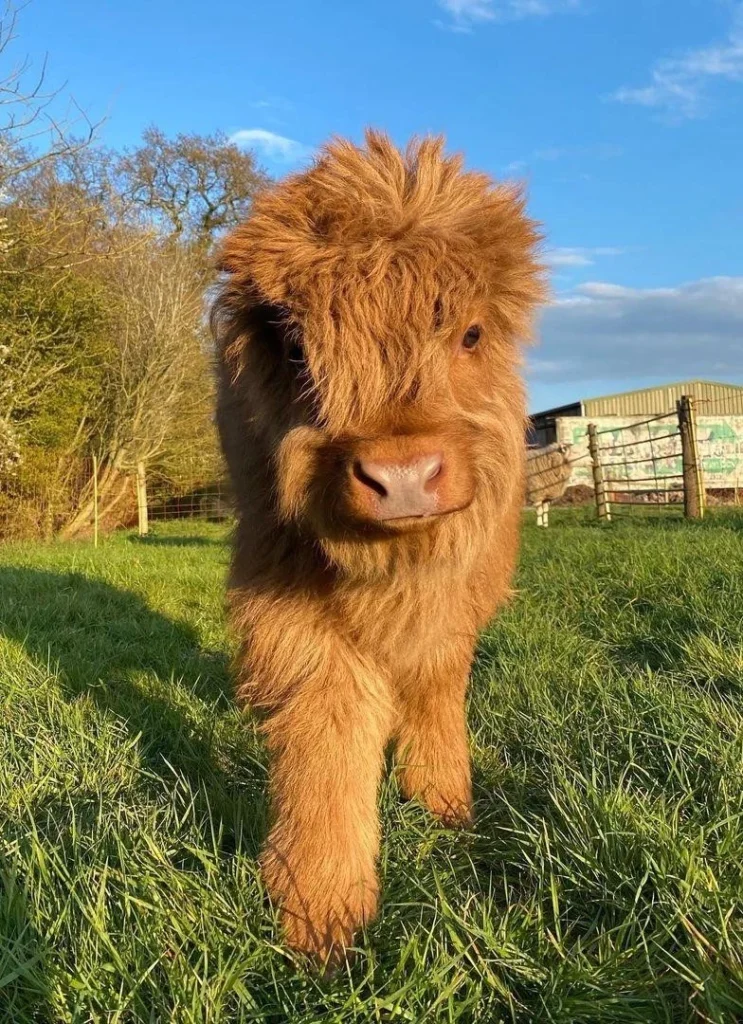
Mini Highland cows look like giant fluffy teddy bears. That’s probably a big reason people fall in love with them so fast. They have long shaggy hair, cute faces, short-looking legs, and those big Highland horns. Scroll past a few photos of them standing in a green pasture and, yeah, it’s pretty easy to start thinking, “I need one.”
But are Mini Highland cows actually good pets?
The short answer is yes, Mini Highland cows can make very good pets for the right family. They’re often calm, curious, social, and easier to handle than their size might make you think. Highland cattle are also known for a generally docile temperament. Still, don’t let all that fluffy hair throw you off the scent. A mini cow is still cattle. It needs land, fencing, food, clean water, shelter, cattle friends, and regular health care.
And there’s another thing worth clearing up right away. “Mini Highland” usually describes size, not a completely separate cattle breed. Some smaller Highlands come from generations of selecting naturally smaller animals. Others may be crossed with another cattle breed. Different miniature cattle groups also use different height rules, so the word “mini” can mean slightly different things depending on who is using it. That’s why mature parent size, pedigree, health history, and genetics matter more than a cute sales label.
Here’s the basic picture before we get into the details.
| Question | Simple Answer |
| Are Mini Highland cows friendly? | Usually yes, especially when handled calmly from a young age |
| Are they good family pets? | Yes, if the family has enough land and understands livestock |
| Are they safe with children? | They can be, but children always need supervision |
| Are they easy to care for? | Fairly hardy, but they still need daily livestock care |
| Can they live alone? | Not a good idea; cattle are social herd animals |
| Can they live with other animals? | Often yes, but introductions and management matter |
| Are they indoor pets? | No. They belong outside with proper pasture and shelter |
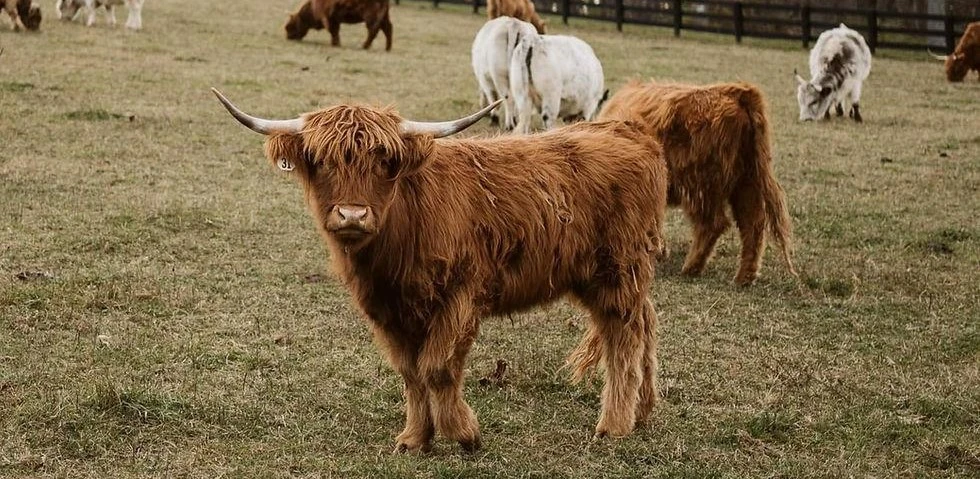
Are Mini Highland Cows Friendly Pets?
For most people, personality is the big question. Nobody wants to spend years caring for a cow that charges across the field every time somebody opens the gate.
The good news is that Highland cattle have a strong reputation for being calm and manageable. Research and breed information commonly describe Highlands as docile or even-tempered. That doesn’t mean every single cow will act exactly the same, though. Cattle have individual personalities, just like horses, dogs, and goats do.
A Mini Highland that gets gentle human contact while young will normally be much easier to work with than one that barely sees people. A calm calf may learn to walk on a halter, come when food arrives, stand for brushing, and follow familiar routines.
Some become pretty attached to their caretakers too. They may walk over when they see you, stand nearby while you’re working, or wait at the gate because they know feeding time is coming. It isn’t dog-style affection. Your cow probably isn’t going to fetch your slippers. Still, a real bond can form.
Early handling makes a huge difference here. Cattle learn from experience. Calm handling usually builds confidence, while rough handling, chasing, shouting, or frightening an animal can make future jobs harder. Socialization and halter training are especially useful when you later need to move the cow, inspect it, load it into a trailer, or have a livestock veterinarian check it.
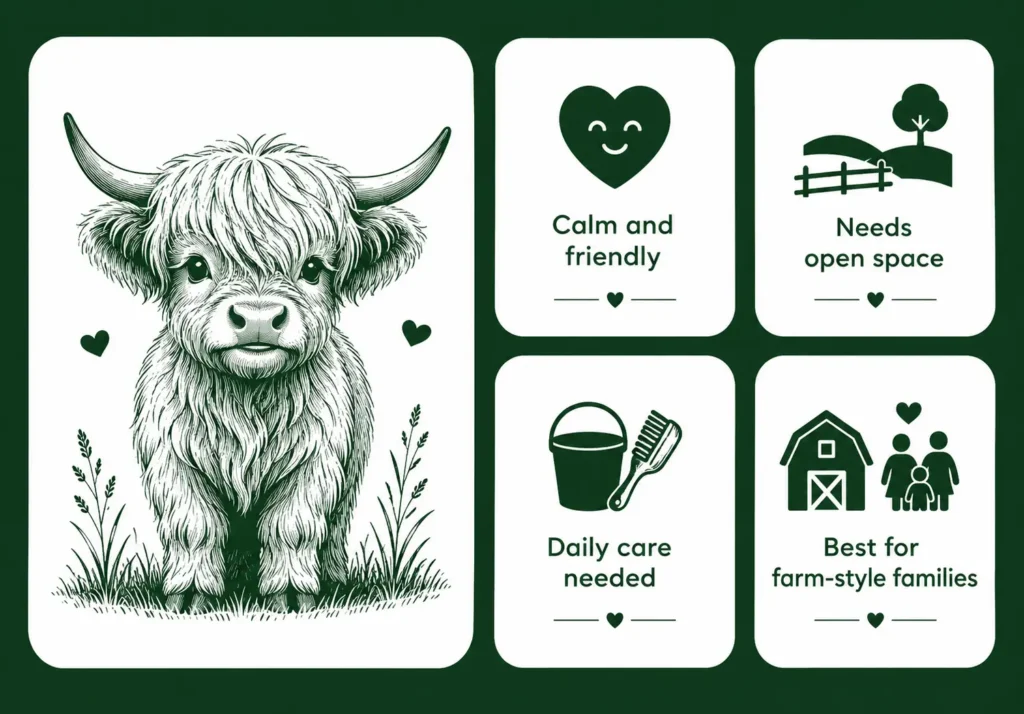
Friendly Does Not Mean Tiny
This part is super crucial.
A friendly cow is still a strong animal.
Mini Highlands can weigh hundreds of pounds when grown. Their exact mature size varies quite a bit because there isn’t one universal “mini” standard. Many also have full Highland horns. A cow doesn’t need to be angry to hurt somebody. It can simply turn its head at the wrong moment or push toward somebody who has treats.
That’s why good manners matter.
If you constantly let a cute little calf shove against you for snacks, that same habit becomes a lot less cute when the animal grows. Don’t teach calves that pushing people earns food. Give them space and expect them to respect yours too.
Even experienced cattle handlers are taught to respect the size, movement, and horns of Highland cattle. A quiet animal can suddenly react when scared or stressed.
So yes, Mini Highlands can be friendly pets. Just treat them like friendly cattle, not oversized puppies.
Are Mini Highland Cows Good Family Pets?
Mini Highland cows can fit really well into family farm life.
They’re interesting animals to watch, they develop routines, and caring for them gives kids and adults something useful to do together. Feeding hay, checking water, cleaning shelter areas, brushing coats, and walking around the pasture checking fences can become part of normal family life.
But a good family setup matters way more than simply having people who love cows.
Think of a Mini Highland as a pasture pet. That description makes much more sense than house pets.
Your cow needs an outdoor area where it can walk, graze, rest, chew its cud, and spend time with other cattle. Cattle naturally live in groups, and they spend a large amount of the day eating or ruminating. They aren’t built to sit alone in a tiny backyard waiting for humans to come outside.
A Family Pet Still Needs a Farm Setup
You don’t necessarily need a huge cattle ranch, but you do need proper livestock space.
Some Mini Highland guides suggest roughly half an acre to an acre of decent pasture for each animal. But don’t get hung up on one magic acreage number. A lush pasture in one area and dry, weak grass in another area are totally different things.
The amount of land needed depends on rainfall, soil, forage growth, season, animal weight, and how long cattle stay on that land. Proper stocking rate is actually based on how much usable forage the pasture grows compared with how much the animals eat.
If there isn’t enough grass, you’ll feed more hay. If too many animals stay in a small area, the pasture can quickly turn into dirt and mud. And cows make manure. Plenty of it. Cute Instagram photos usually leave that part out.
A family also needs secure fencing, a dry place or windbreak for bad weather, shade for hot weather, and reliable access to fresh water.
Then there’s the time commitment. Highlands are known for longevity, and cattle from this breed may stay around for many years. Getting one isn’t really a short experiment. You need to think ahead. Will you still have suitable land several years from now? Will somebody be there every day to check the animals?
If the answer is yes, they can become pretty special family pets.
Mini Highland Cows Good With Children?
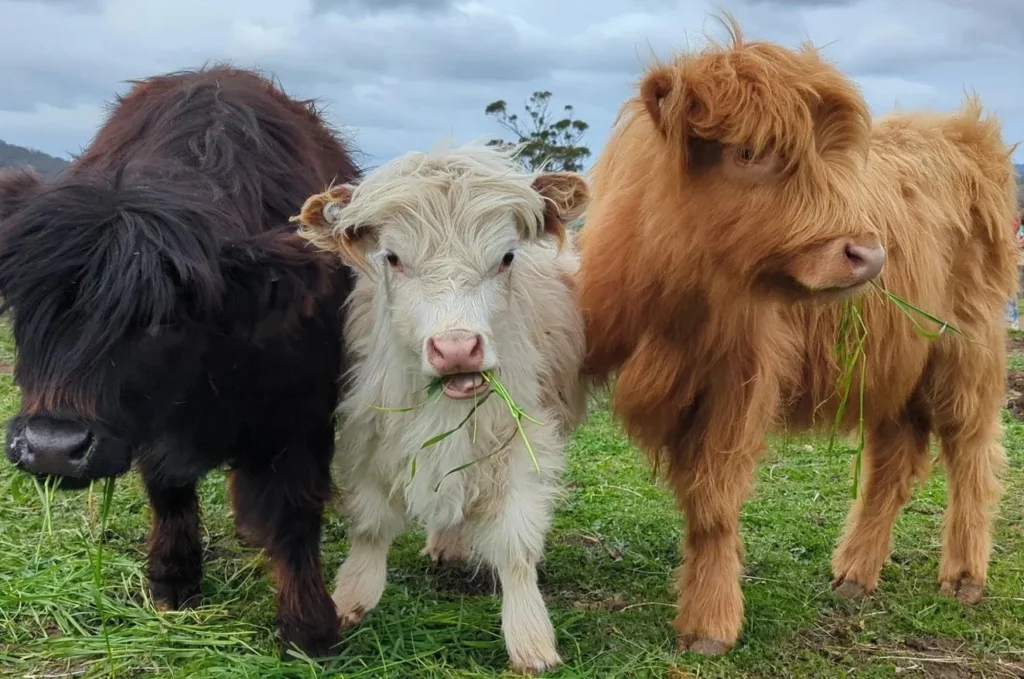
This is where people sometimes get a little too relaxed.
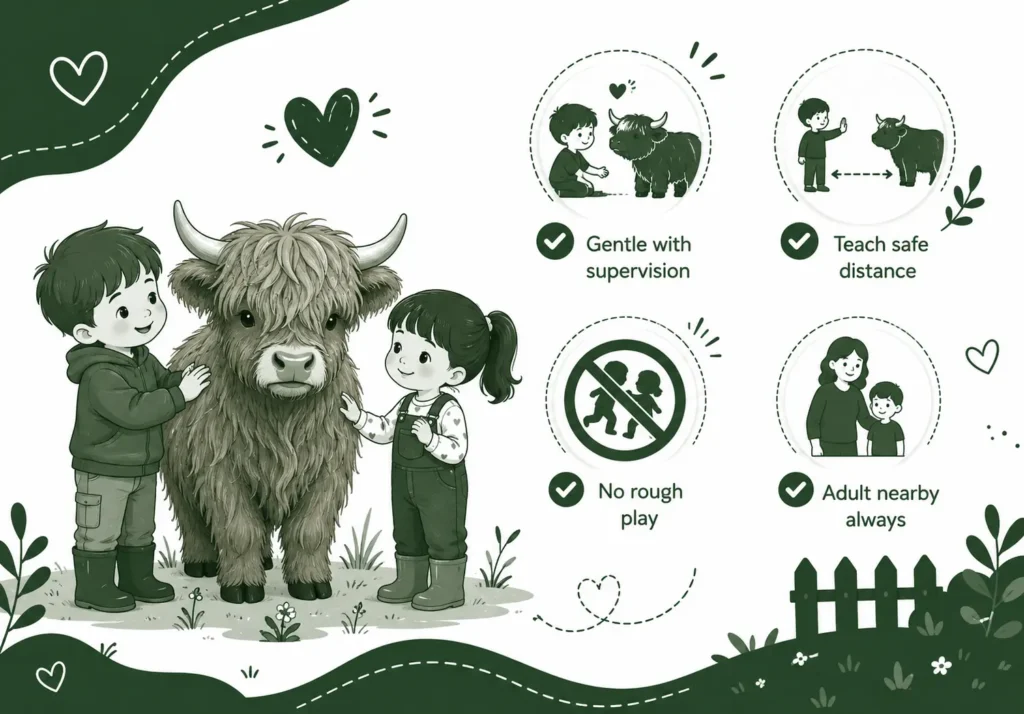
Mini Highland cows can behave very calmly around children, especially when the cattle were raised around people and taught good manners from an early age. But calm does not mean risk-free.
A child should never be left alone with cattle.
The horns are the most obvious concern. Highland horns can spread far out from the animal’s head. A cow might simply swing its head to look at something and accidentally catch a child standing too close.
Body weight matters too. Even a smaller Highland is much stronger than a child. A gentle bump that barely seems like anything to another cow could knock a kid straight onto the ground.
Then there are special situations. A cow with a new calf may become more protective than normal. Cattle safety guidance warns that mothers with young calves can be dangerous to handle because protective behavior can appear quickly. Bulls require even more caution and generally aren’t the smart choice for someone wanting a simple family pet.
Kids can still enjoy plenty of safe interaction.
An adult can teach them to approach calmly, avoid running behind cattle, stay away from tight spaces between a cow and a fence, and pay attention to the animal’s body language. Children should also learn that feeding a cow doesn’t mean letting it push, rub, or crowd them.
I’d also avoid turning food into a game where kids get surrounded by excited cattle. It looks funny until several heavy animals decide they all want the same bucket.
Quiet interaction works much better.
Older children can help fill water troughs, brush a calm animal, place hay in a feeder, or help an adult check fences. That gives them the fun part of having cattle without pretending the animals are harmless toys.
The basic rule is simple: respect their size, supervise kids closely, and never trust an animal only because it was gentle yesterday.
Are Mini Highland Cows Easy to Care For as Pets?
Compared with some livestock breeds, Highlands are pretty hardy animals.
Their famous shaggy coat developed around the rough, cold, wet conditions of Scotland. They have a thick double coat that helps protect them from cold weather, wind, and rain. Highland cattle are also known as strong foragers and can use rougher vegetation than many people expect.
That sounds easy. And in some ways, it is.
But “hardy” doesn’t mean you can put two cows in a field and forget about them.
Food and Grazing
Grass and good-quality hay usually form the main part of a pet Highland’s diet. Cattle also need the right minerals and nutrients for their age, body size, and stage of life. Growing calves, adult steers, pregnant cows, and nursing cows don’t all need exactly the same nutrition.
This is one area where treating them too much like pets can backfire.
People love giving treats. The cow loves treats too. No surprise there.
But constantly feeding grain or rich snacks because your fluffy cow makes a cute face isn’t good management. Body condition matters. You want the animal healthy, not fat.
Good pasture and properly stored hay do most of the heavy lifting.
Fresh Water Is a Big Deal
Clean water should be available all the time.
And cattle can drink a surprising amount.
For a rough idea, a 400-pound growing beef calf may need around 5.8 gallons of water per day at 70°F and about 9.5 gallons when the temperature reaches 90°F. A 600-pound growing animal may need about 7.8 gallons at 70°F and roughly 12.7 gallons at 90°F. Actual intake changes with body size, weather, feed, pregnancy, milk production, humidity, and other factors.
So that little water bucket beside the fence? It can become a bit pointless pretty fast.
A proper trough that stays clean and full makes life much easier.
Shelter, Shade, and That Giant Fluffy Coat
Highlands handle cold weather really well, but hot weather deserves more attention.
Their thick hair is wonderful when the wind is freezing. During a hot, humid summer, that same coat can make getting rid of body heat harder.
Shade, plenty of clean water, and moving air can help cattle manage hot conditions. Keep a close eye out for heavy breathing, crowding around water, unusual drooling, or animals standing around instead of eating normally.
A simple livestock shelter doesn’t need to look like a fancy horse barn. It mainly needs to give the animals a dry, safe place away from harsh wind, rain, strong sun, or other nasty weather. Bedding should stay reasonably dry too. Wet bedding mixed with manure becomes messy in a hurry.
Fencing and Pasture
Mini doesn’t mean weak.
These little guys can lean, push, rub, and test a bad fence. Secure livestock fencing is one of those jobs worth doing properly the first time. Woven livestock wire, suitable cattle panels, correctly designed electric fencing, or other cattle-safe systems can work depending on the property.
Long Highland hair and horns also deserve extra thought around fencing. You don’t want animals getting caught or injured.
And check gates. Cattle are surprisingly good at finding the one weak spot you forgot about.
Hooves, Coat, Parasites, and Vet Care
That fluffy coat needs checking too.
Brush it now and then, especially when dirt and loose hair build up. Look underneath the hair for skin trouble, ticks, lice, cuts, or anything strange. Mud around the feet shouldn’t be ignored either.
Hooves may need trimming depending on the animal and the ground it lives on. Soft, muddy conditions don’t wear hoof growth the same way harder ground can.
Vaccines and parasite control should be planned with a local livestock veterinarian because disease risks change from place to place. Don’t just copy somebody else’s schedule from the internet.
Basically, Mini Highlands are not crazy difficult to care for. A person with a good setup can handle the routine pretty easily once they learn it.
But there’s still something to check every day.
Can Mini Highland Cows Live With Other Pets?
Yes, Mini Highland cows can often share a farm with other animals.
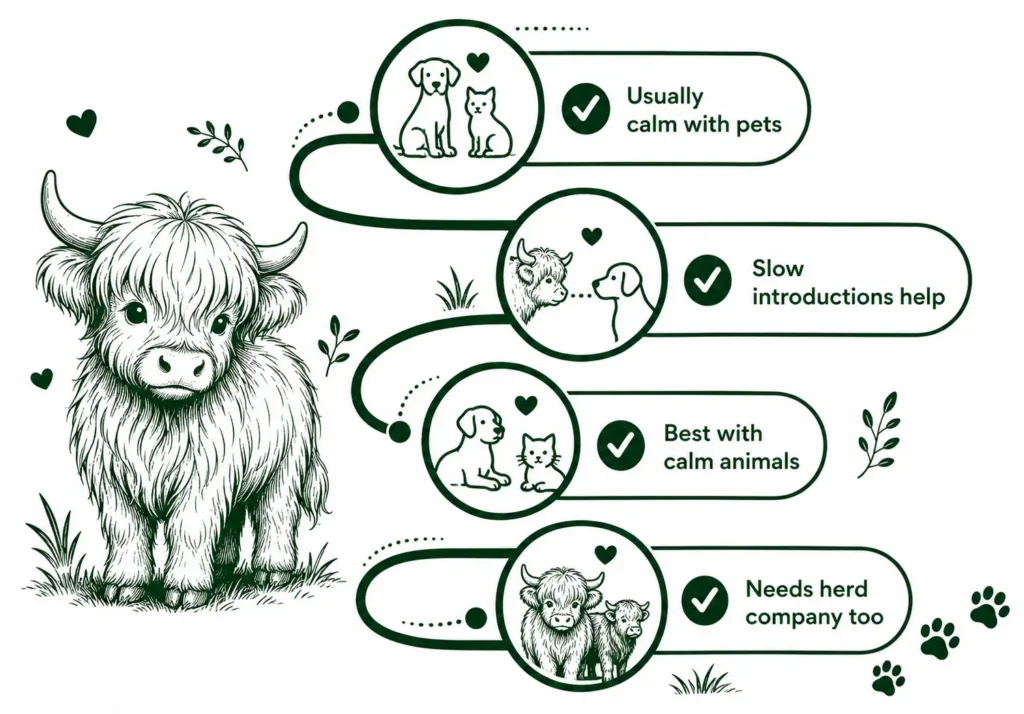
But the most important thing to understand is that cattle are herd animals. Another cow usually makes a much better companion than a dog, cat, or human does.
Cattle naturally form social groups. Keeping one animal completely alone can cause stress and unusual behavior. Research on cattle also shows that social contact and group living matter to their behavior and ability to cope with new situations.
That’s why buying only one cute calf isn’t always the great idea it first sounds like.
Another calm bovine is normally the easiest social match.
Goats, sheep, horses, and other livestock may sometimes share space with cattle too, depending on the animals involved, fencing, pasture size, feeding setup, and temperament. Just don’t assume that because two species eat grass they automatically need the same feed or minerals.
Dogs need special attention.
A calm farm dog that already knows livestock may be fine around cattle. A dog that chases, barks, or runs at their legs can make a cow defensive very quickly. A mother with a calf may see an unfamiliar dog as a threat.
Cats normally aren’t much of a problem because cattle usually pay little attention to them, but again, a barn cat doesn’t replace another herd animal.
Introductions should be slow. Give everybody room. Watch them instead of throwing new animals into the same little pen and hoping they become best friends before dinner.
Pros and Cons of Mini Highland Cows as Pets
There’s plenty to love about them. There are also a few parts that aren’t nearly as cute as the photos.
Pros of Keeping Mini Highland Cows as Pets
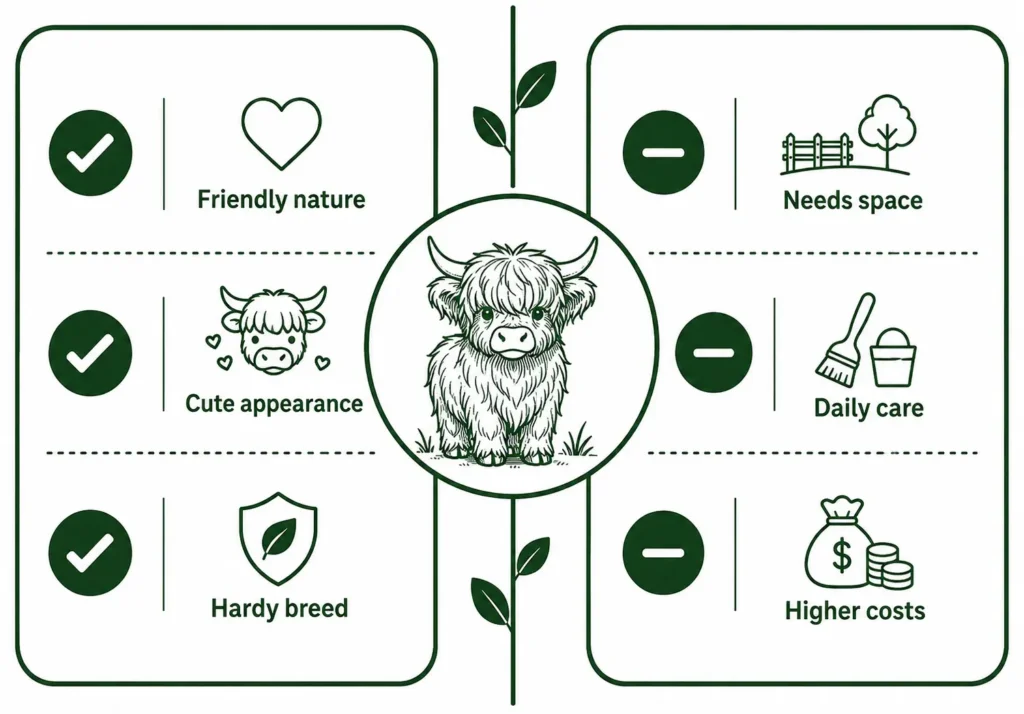
- Usually calm temperament: Well-handled Highlands are often docile, curious, and pleasant to work around.
- They can bond with people: Regular gentle handling can make them comfortable around familiar family members.
- Hardy animals: Their thick coat and Highland background help them deal with cold and rough weather.
- Great pasture pets: They spend lots of time grazing, resting, and quietly hanging around the field.
- Fun personalities: One might be curious and bold while another hangs back until feeding time.
- Smaller than many full-size cattle: A genuinely smaller animal can be easier to manage, although it is still a serious livestock animal.
- Long-term companions: Highland cattle are known for longevity, so good care can mean many years together.
Cons of Keeping Mini Highland Cows as Pets
- They still need real land: A tiny suburban yard isn’t enough for normal cattle life.
- You probably need more than one: Their herd instinct means companionship is important.
- Strong fencing costs money: Cheap fencing can turn into an expensive headache later.
- Their horns require respect: Even a gentle animal can accidentally hurt somebody.
- Daily care doesn’t take vacations: Water, food, health, fences, and weather still need checking every day.
- Veterinary care can be harder to find: Not every pet veterinarian works with cattle, so find a livestock vet before an emergency.
- The “mini” label can be confusing: Some animals sold as miniatures may grow bigger than expected or may not have the breeding background a buyer assumes. So the pros are pretty nice. The cons aren’t deal breakers either.
They just mean you need to buy the cow you can actually care for, not the cow that looks cutest in a photo.
Cows the Right Pet for You?
This question matters more than whether Mini Highland cows are good pets in general.
They might be great pets.
That doesn’t automatically make them great pets for you.
Start with your property. Do you have enough grazing space for at least two animals, or enough room to safely provide hay when pasture can’t support them? Can you keep that area fenced? Is there shade during summer and protection from ugly weather?
Think about water next. Can you provide plenty of clean water every single day, including freezing mornings and hot summer afternoons?
Now think about care.
Can somebody check the cattle every day? Not just toss hay over the fence. Actually look at them. Is one limping? Is the water running? Did somebody get through the fence? Is a cow breathing strangely? Is one standing alone and acting different?
Those small observations matter.
You should also check local zoning and livestock rules before buying anything. Some properties look rural but still have rules about cattle, animal numbers, fencing, manure, or minimum acreage.
Then find a livestock veterinarian. Do that before bringing cattle home. Waiting until your cow is sick to start searching for somebody who treats cattle is a rough way to learn this lesson.
If your main goal is simply having a friendly pasture companion, think carefully before buying an intact bull. Bulls are breeding animals, and their behavior can change as they mature. A steer or suitable heifer may make more sense for many pet homes.
And be picky when buying.
Ask the animal’s real age. Asking for mature measurements of its parents. Ask whether it is pure Highland or crossed with another breed. Look at body structure, health, feet, eyes, coat, movement, and general condition. A tiny calf is supposed to be tiny. That doesn’t tell you its adult size.
Some breeders and cattle groups also warn about extremely small animals being marketed with words such as “micro” or “teacup.” Those words don’t automatically tell you anything useful about health, genetics, or mature size.
The number on the measuring stick is important, but it isn’t the only thing.
A healthy, well-built animal with a calm temperament is a much better pet than an extremely tiny animal with poor health.
Final Thought
So, are Mini Highland cows good pets? Yes — they can be awesome pets when you have the right setup.
They’re fluffy, funny, curious, and often surprisingly gentle. A well-socialized Highland may learn your routine, walk over when it sees you, enjoy a good brushing, and become one of those animals everybody in the family talks about.
Still, don’t let the cute face fool you.
You’re bringing home cattle.
They need pasture or suitable forage, hay when needed, cattle minerals, lots of clean water, secure fencing, shelter, shade, health checks, hoof care, parasite control, and access to a livestock veterinarian. Most importantly, they need company. Cattle are social animals, and another compatible bovine is normally a much better friend than leaving one cow alone.
For families with enough land and some willingness to learn livestock care, Mini Highland cows can be wonderful pasture pets. They can also be good around children when adults supervise every interaction and teach kids to respect the animal’s space, strength, and horns.
For somebody wanting a pet that can live in a small backyard, stay alone all day, or be cared for like a large dog, they’re probably not the right choice.
That’s really the whole story.
Mini Highland cows can be sweet family companions, but the best owners never forget there’s a real cow underneath all that fluff.