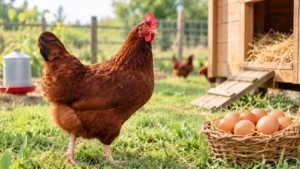
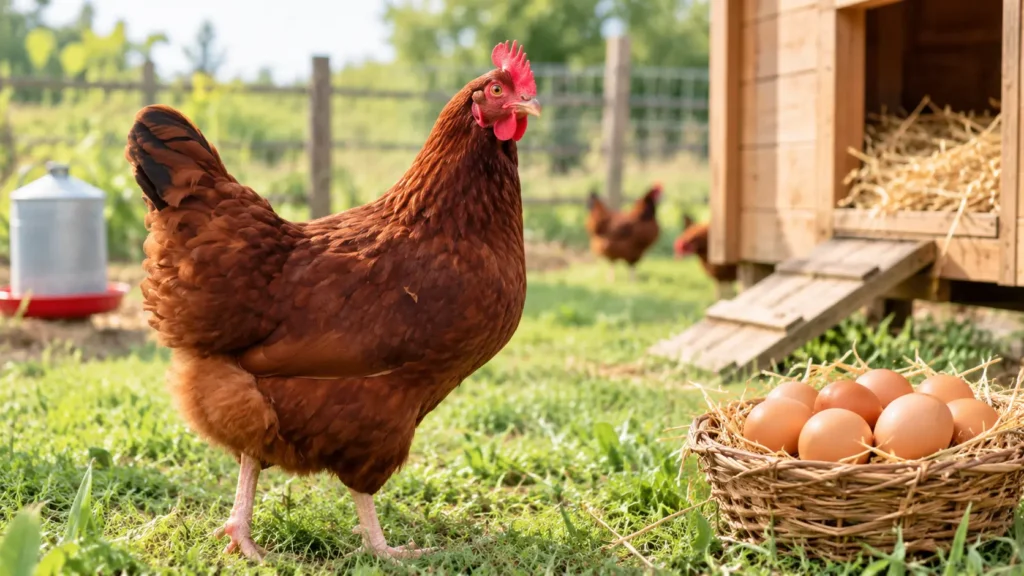
Rhode Island Red chickens are a great choice for people who want fresh eggs at home. These birds are strong and active. They can live in different weather conditions and are easy for new chicken keepers to raise. Their hens lay brown eggs and can produce about 250 to 300 eggs each year with good care.
Raising Rhode Reds for eggs is easy when you plan ahead. You need a safe coop and clean nesting boxes. Your hens also need good feed and fresh water every day. They need enough space to walk and move around.
Young Rhode Island Red hens do not lay eggs right away. Many start laying at about 18 to 20 weeks old. Some take a little longer. Once they start laying you can collect fresh eggs from their nesting boxes.
This guide will show you how to plan your flock and build a good home for your hens. You will also learn what to feed them and how to collect and store their eggs. These simple steps can help your hens stay healthy and lay fresh eggs for your family.
Quick Look
| Care Topic | What You Need to Know |
| Main purpose | Fresh brown eggs |
| First egg | Often around 18 to 20 weeks |
| Yearly egg count | About 250 to 300 eggs |
| Hen weight | Around 6.5 pounds |
| Coop space | About 3 to 5 square feet indoors per bird |
| Nesting boxes | One box for every 4 to 5 hens |
| Main feed | Complete layer feed for laying hens |
| Daily care | Feed water egg collection and health checks |
How to Plan Your Rhode Island Red Chicken Flock for Egg Production
Before you bring home Rhode Island Red chickens think about how many eggs you need each week. This will help you choose the right number of hens. A small group of chickens can give your family plenty of fresh eggs without needing too much space.
Rhode Island Red hens are good egg layers. A healthy hen can lay about 250 to 300 brown eggs each year. But egg production can change with age and season. Young hens often lay more eggs than older hens.
How Many Rhode Island Red Hens Should You Start With?
If you are new to raising chickens start with a small flock. Three to five hens can be a good choice for many homes. You can add more chickens later if you have enough space and time to care for them.
Think about these things before choosing your flock:
- Check your local rules before keeping backyard chickens.
- Decide how many eggs your family needs each week.
- Make sure you have enough room for a coop and outdoor run.
- Choose healthy chicks or young hens from a trusted seller.
- Plan for feed costs and daily care before bringing them home.
A pullet is a young female chicken that has not started laying eggs yet. Buying pullets that are close to laying age can help you get eggs sooner than raising baby chicks.
Do You Need a Rooster for Eggs?
No. Hens can lay eggs without a rooster. You only need a rooster if you want eggs that can hatch into chicks.
You can keep only hens in a backyard egg flock. This also means less noise and no need to care for a rooster.
Best Housing and Nesting Box Setup for Rhode Island Red Hens
A clean and safe coop helps your hens stay healthy and lay eggs in a good place. Rhode Island Red chickens are active birds. They need enough space to walk and stretch their wings.
Give each chicken about 3 to 5 square feet of space inside the coop. They also need a safe outdoor run where they can walk and scratch the ground.
The coop should keep your chickens safe from rain and strong winds. It should also protect them from predators at night. Use strong wire and secure doors to keep wild animals away.
Set Up Comfortable Nesting Boxes
Hens need quiet nesting boxes to lay their eggs. A good rule is to have one nesting box for every 4 to 5 hens. Place the boxes in a quiet and slightly dark area of the coop.
Add clean and dry bedding such as straw or wood shavings. Change the bedding when it gets dirty. This helps keep the eggs clean and gives your hens a comfortable place to lay.
Make sure your coop has these basic features:
- Strong walls and secure doors
- Good airflow without cold drafts
- Dry bedding on the floor
- Nesting boxes for laying hens
- Roosting bars for sleeping at night
- Clean feeders and water containers
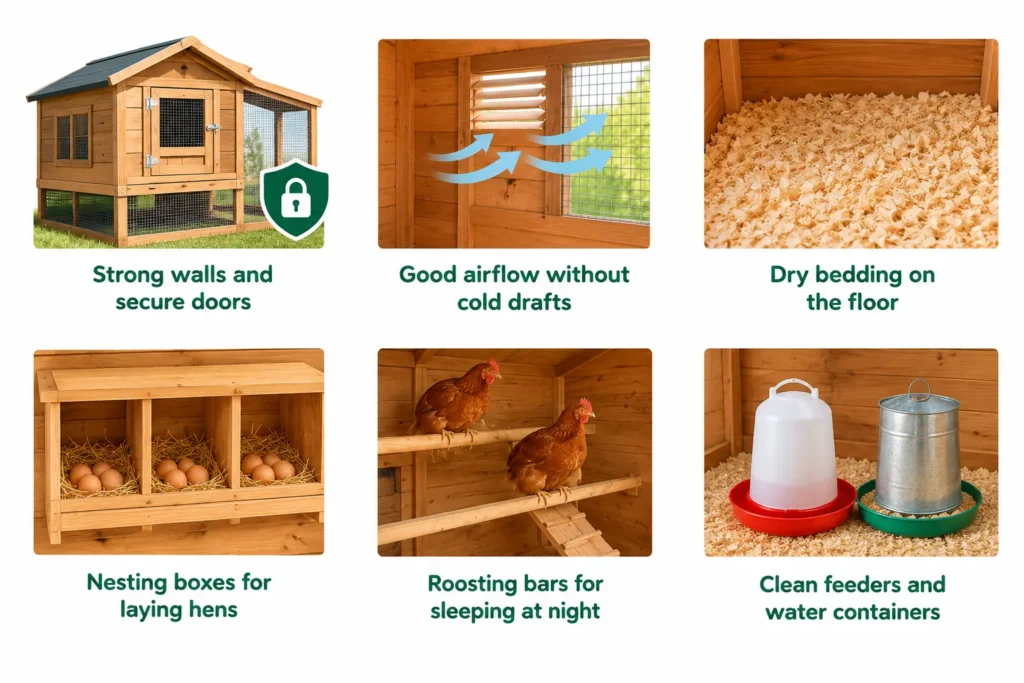
Good airflow keeps the coop fresh and helps remove damp air and bad smells. Clean the coop often and replace dirty bedding. Check for small holes where rats or other wild animals could get inside.
What to Feed Rhode Island Red Chickens for Healthy Egg Production
Good food helps Rhode Island Red hens lay healthy eggs. They need a balanced diet with enough protein and minerals to stay strong and make good eggs.
When your pullets start laying eggs give them complete layer feed. This feed has the nutrients adult hens need to lay eggs. Keep fresh water available all day. Clean water is very important during hot weather.
Choose the Right Feed for Each Age
Chickens need different food as they grow. Do not give layer feed to young chicks because it has too much calcium for their growing bodies.
| Chicken Age | Suitable Feed |
| Baby chicks | Chick starter feed |
| Growing pullets | Grower feed |
| Hens that lay eggs | Complete layer feed |
| Adult birds not laying | Suitable all-flock feed |
Follow the feeding guide on the feed bag. The right amount depends on the chicken’s size and activity.
Add Calcium and Grit
Laying hens need enough calcium to make strong eggshells. Crushed oyster shells are a good source of extra calcium. Place them in a separate dish so hens can eat them when needed.
Chickens also need grit to help break down their food. If your hens cannot find small stones outside then give them poultry grit.
You can also give your chickens small amounts of fruits and vegetables as treats. But treats should not replace their regular feed. Too many scraps can stop them from eating enough healthy chicken feed.
How to Collect and Store Rhode Island Red Eggs Properly
Collecting eggs is a fun part of raising backyard chickens. Rhode Island Red hens lay brown eggs. They often use the same nesting box when it is clean and comfortable.
Check the nesting boxes once or twice a day. Collecting eggs often helps keep them clean and safe. It also lowers the chance of eggs breaking or hens eating broken eggs.
Simple Steps for Collecting Eggs
Follow these easy steps:
- Check each nesting box.
- Pick up the eggs with clean hands.
- Check for cracks or broken shells.
- Place the eggs in a clean carton.
- Remove dirty bedding when needed.
Do not leave eggs in the nesting boxes for too long. Collecting them often helps keep them in good shape. You can also keep a daily egg record to see how many eggs your hens lay.
How to Store Fresh Eggs
Keep fresh eggs in a clean and cool place. It is best to store them in the fridge in a clean carton. Keep them away from foods with strong smells because eggs can take in those smells.
If an egg has dirt on its shell do not wash it right away. The shell has a natural layer that helps protect the egg. Washing can remove this layer. If you need to wash dirty eggs follow safe food handling steps and keep them in the fridge.
Throw away eggs with cracked or badly damaged shells. Do not eat eggs that smell bad or look strange when you open them.
How to Manage Egg Production and Keep Your Hens Laying Consistently
Rhode Island Red hens are good egg layers. But not every hen will lay an egg every day. Egg production can change with age and the season.
Many hens start laying eggs around 18 to 20 weeks old. Some need more time to grow. Hens often lay the most eggs during their first few years.
Give Your Hens Enough Daylight
Daylight helps hens lay eggs. Shorter days in fall and winter can lead to fewer eggs. Hens often need about 12 to 14 hours of light each day to support regular egg laying.
Natural light may not be enough during winter. You can use a light in the coop to give your hens extra light. Keep the lighting schedule steady and give them time in darkness to rest. Never keep the lights on all night.
Keep Your Flock Healthy
Healthy hens are more likely to lay eggs regularly. Check your chickens every day and learn how they normally act.
Watch for these signs:
- Eating less than usual
- Sitting alone for a long time
- Feeling weak or moving less
- Losing feathers or having skin problems
- Changes in droppings
- Laying fewer eggs than usual
Clean the coop and outdoor run often. Wash feeders and water containers regularly. Give your hens a dry place for dust baths. Dust baths help keep their feathers and skin clean. If a hen looks sick or stops eating contact a poultry vet.
Understand Changes in Egg Production
Your hens may lay fewer eggs when they molt. Molting is when chickens lose old feathers and grow new ones. Their bodies need energy to grow new feathers so egg production may slow down.
Hot weather can also make hens eat less and lay fewer eggs. Give them shade and plenty of fresh water on warm days. During cold weather keep the coop dry and protect it from strong winds.
A drop in egg production does not always mean your hens are sick. Check their age and the weather. Also look at their food and living conditions. If the change happens suddenly or continues for a long time ask a vet for help.
Daily and Weekly Care Checklist for Rhode Island Red Hens
A simple daily routine makes chicken care easier. Your hens need food and fresh water every day. Regular checks also help you find problems early.
| How Often | What to Do |
| Every morning | Give fresh water and check the feed |
| Every day | Watch your hens for signs of illness |
| Once or twice a day | Collect eggs from the nesting boxes |
| Every few days | Check the bedding and remove dirty spots |
| Every week | Clean the coop and wash the feeders and waterers |
| Regularly | Check the fence and coop for damage |
Try to follow the same routine every day. Chickens feel comfortable with a regular schedule. Clean housing and fresh water also help keep your hens healthy.
Final Thought
Rhode Island Red chickens are a great choice for a backyard flock. They are strong birds and their hens can lay about 250 to 300 brown eggs each year with good care. Most hens start laying eggs at around 18 to 20 weeks old.
Give your hens a safe coop and clean nesting boxes. Feed them good layer feed and provide fresh water every day. Collect eggs often and check your hens for any changes in their health or behavior.
Daily care will help your Rhode Island Red hens stay healthy and lay fresh eggs for your family.